
Best Japandi Bedroom Ideas: Some nights you climb into bed and your mind won’t stop racing, not because of anything big, but because your room feels loud. Too many decorations, too many colors, too much stuff crammed onto every surface. Your eyes never get a chance to rest, so your mind doesn’t either.
Japandi design exists for exactly this problem. It takes the calm, functional simplicity of Japanese interiors and blends it with the cozy, human warmth of Scandinavian style. The result is a bedroom that feels quiet without feeling cold, minimal without feeling empty. Here are 11 of the best Japandi bedroom ideas to help you build a space that finally lets you unwind the moment you walk in.
Ground the Room With a Low-Profile Bed
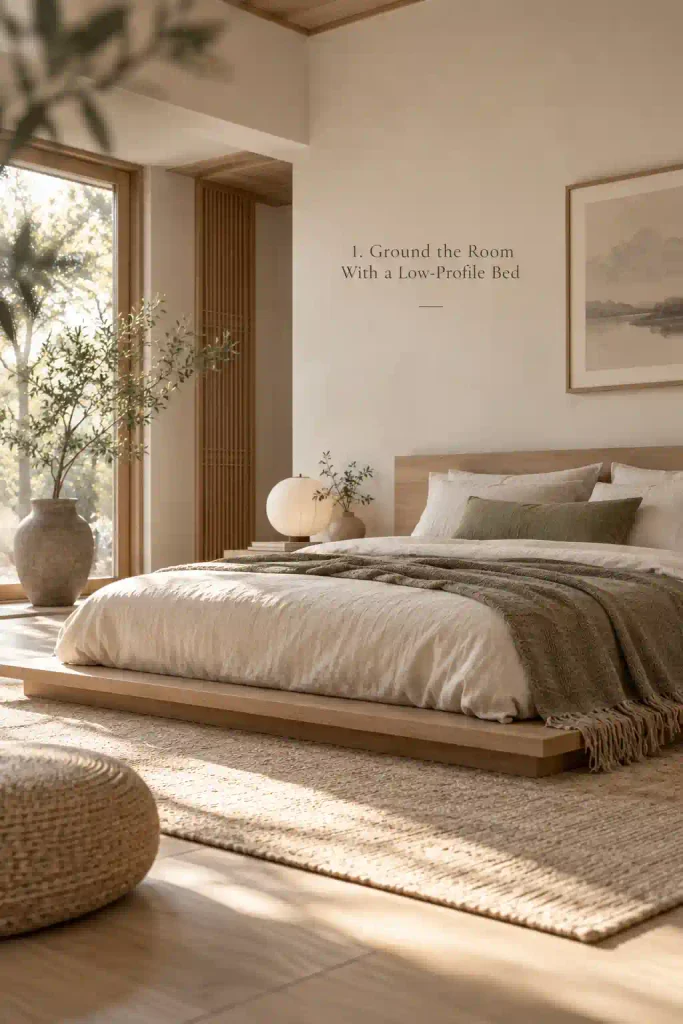
A low platform bed is one of the clearest signals of Japandi style. It sits close to the floor, has clean, simple lines, and skips the tall, ornate headboards common in other styles. This lower silhouette makes the whole room feel more spacious and calm, almost like the bed is part of the floor itself rather than a big piece of furniture taking over the space.
Pick a Palette Inspired by Nature
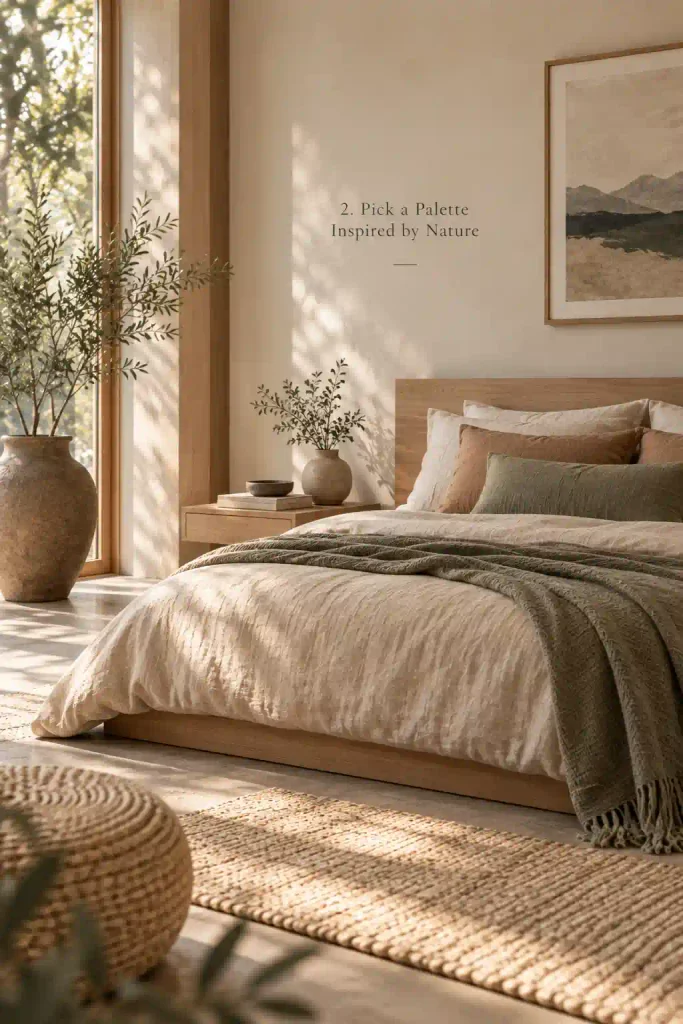
Instead of bright or trendy colors, Japandi bedrooms lean on the soft tones you’d find outdoors: warm sand, soft clay, muted sage, oat, and deep charcoal. These shades don’t compete for attention. They sit quietly in the background, which lets your mind settle instead of constantly noticing the room around you. Even one wall in a warm, muted tone can shift the whole feel of the space.
Let Real Wood Do the Talking

Furniture in this style tends to favor natural wood over painted or lacquered finishes. Oak, ash, walnut, and bamboo all work beautifully. The wood grain itself becomes the decoration, so there’s no need for extra carvings or hardware. A simple wood dresser or nightstand often looks more expensive than a heavily detailed piece, simply because it’s honest about what it is.
Treat Empty Space as Part of the Design
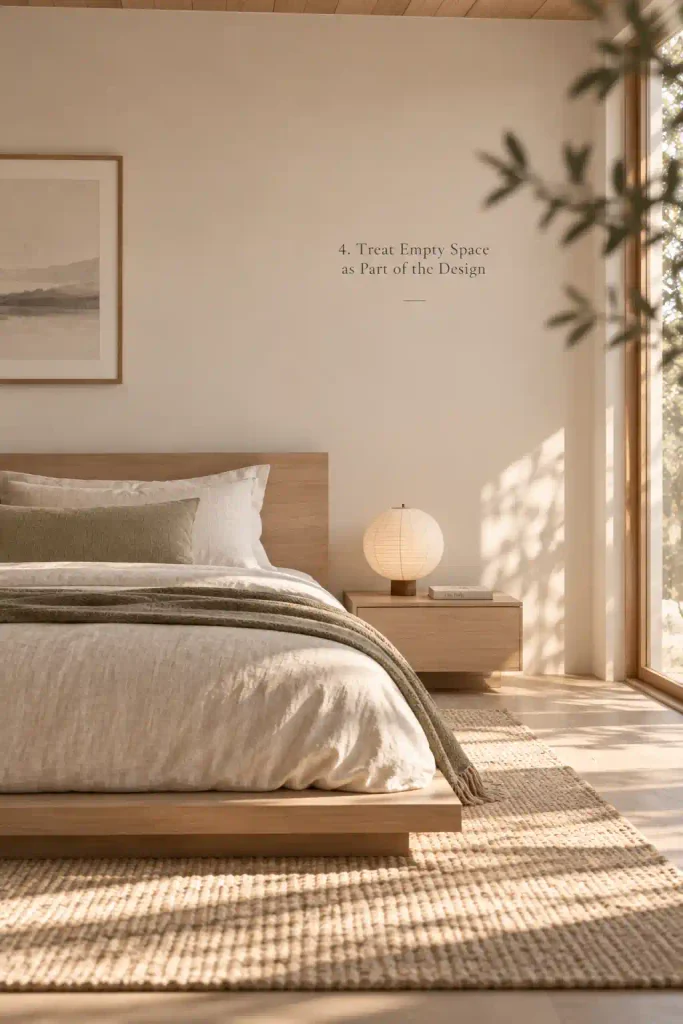
This might be the hardest habit to build, but it’s the most important one. In Japandi rooms, blank wall space and clear surfaces aren’t a sign that something is missing. They’re intentional. Leave a nightstand with just a lamp and a small book. Leave a wall bare instead of filling it with three different frames. That open space is what gives your eyes, and your mind, somewhere to land.
Bring in Soft, Layered Textiles
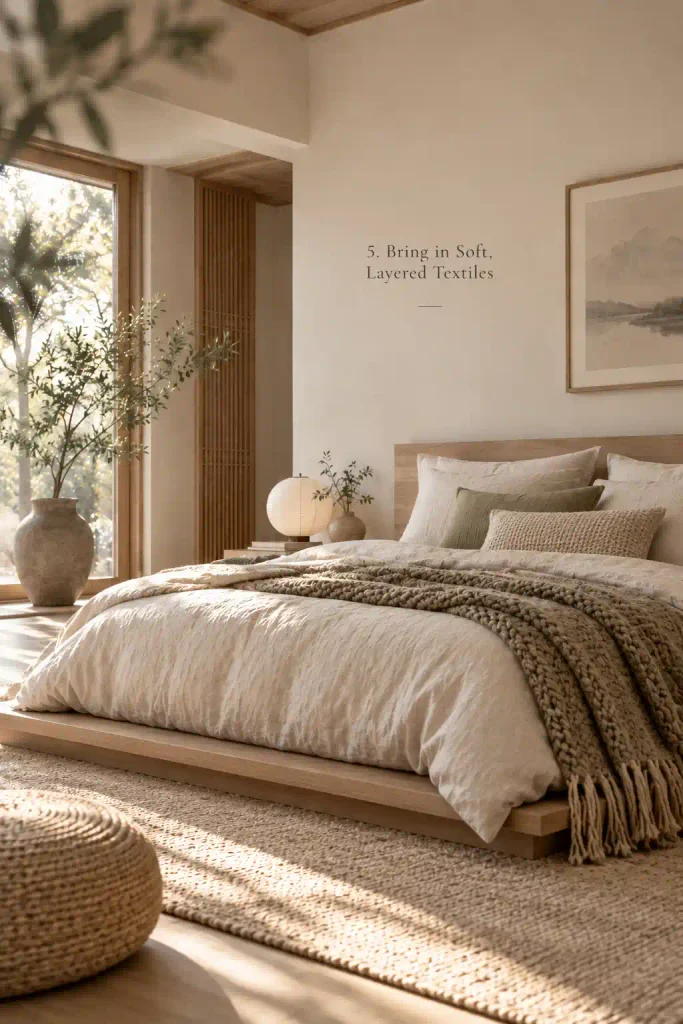
Even with a quiet color palette, the room shouldn’t feel bare or cold. Add a linen duvet cover, a chunky wool throw folded at the foot of the bed, and a woven cotton pillow cover. These natural fabrics add warmth and comfort, the kind you want to sink into after a long day, while still keeping the overall look simple and uncluttered.
Choose Warm, Low Lighting Over Bright Overheads
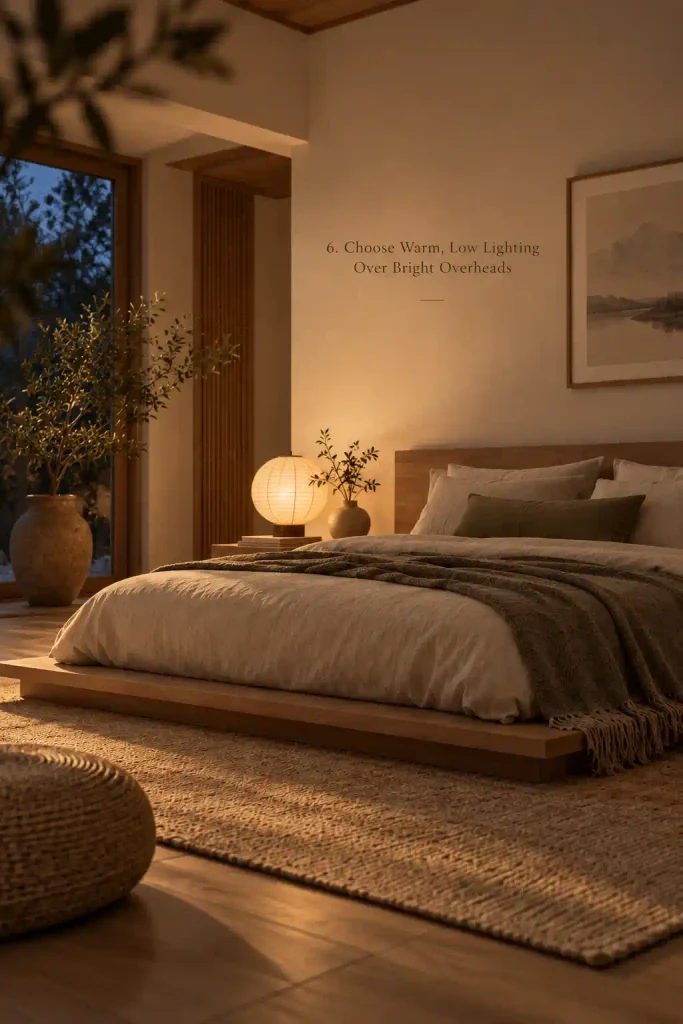
Harsh ceiling lights don’t belong in a Japandi bedroom. Instead, use a simple table lamp with a paper, linen, or wood shade, or a floor lamp tucked in a corner. Warm bulbs cast a gentle, amber glow that feels like the last light of evening rather than an office. This kind of lighting makes the whole room feel like it’s exhaling.
Add One Meaningful Plant
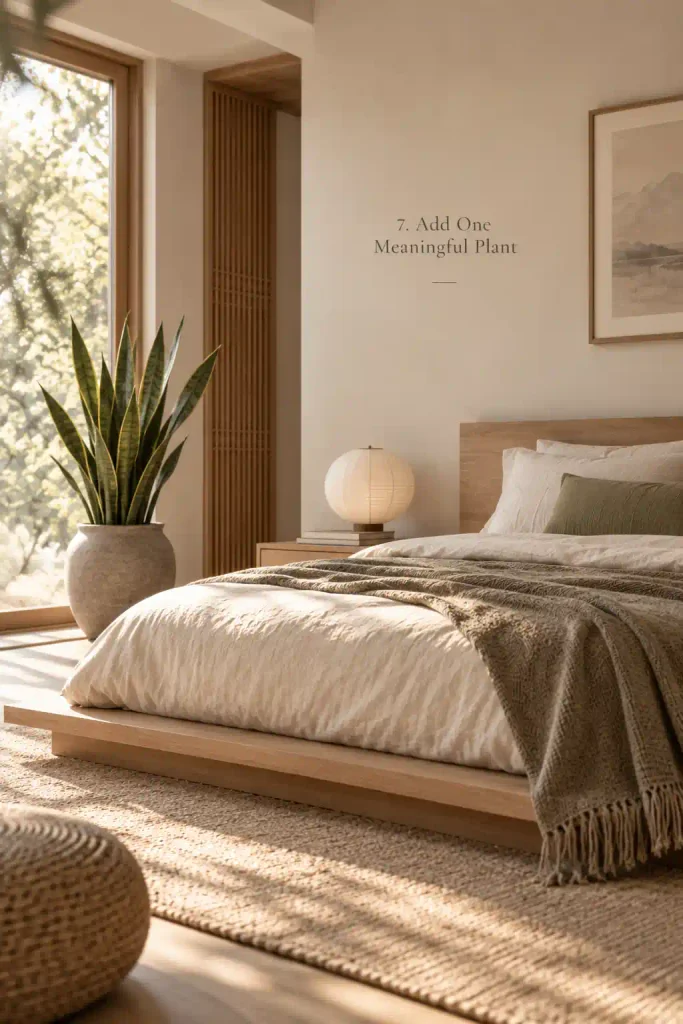
You don’t need a jungle of greenery here. One well-placed plant, like a snake plant, a small fig tree, or even a single branch in a simple ceramic vase, brings life into the room without adding clutter. In Japandi design, less truly is more, so let that one plant be a quiet focal point rather than one of many competing decorations.
Dress Windows Simply
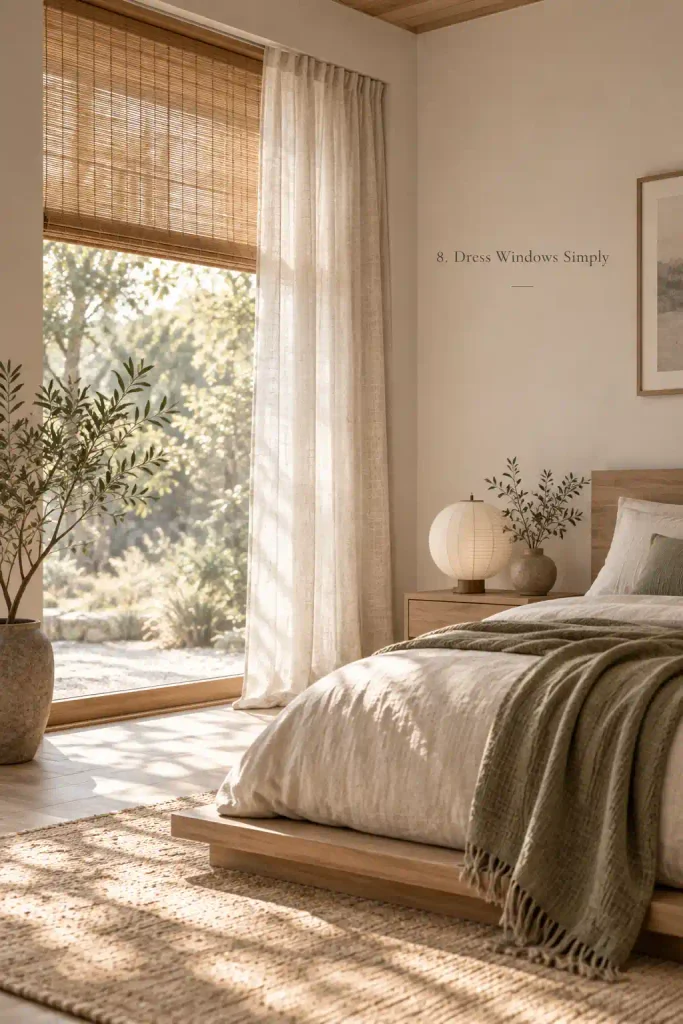
Skip the heavy, layered drapery. A single panel of linen or a woven bamboo shade lets soft daylight filter through without blocking it out completely. If you need more privacy or light control at night, add a simple roller shade underneath. The goal is a window that feels open and natural, not boxed in by fabric.
Choose Handmade Over Mass-Produced
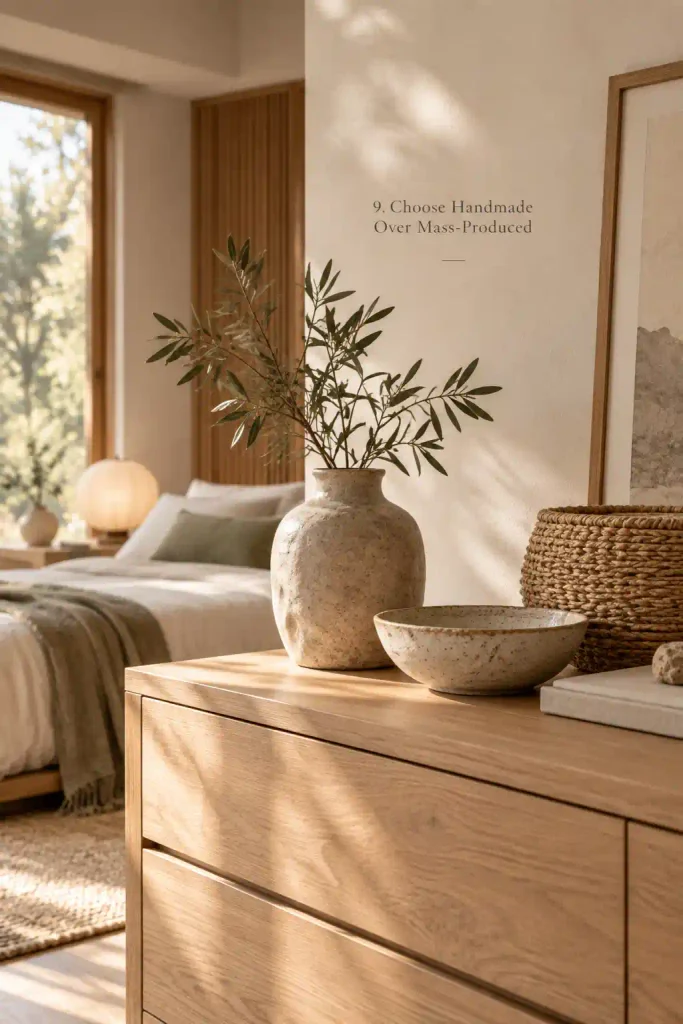
A ceramic vase with a slightly uneven shape, a hand-thrown bowl on your dresser, or a woven basket with visible texture all bring warmth and character into a Japandi room. These small imperfections reflect a Japanese design idea called wabi-sabi, which finds beauty in things that are simple, natural, and not quite perfect. It’s a gentle reminder that your space doesn’t need to be flawless to feel good.
Create a Small Corner Just for You
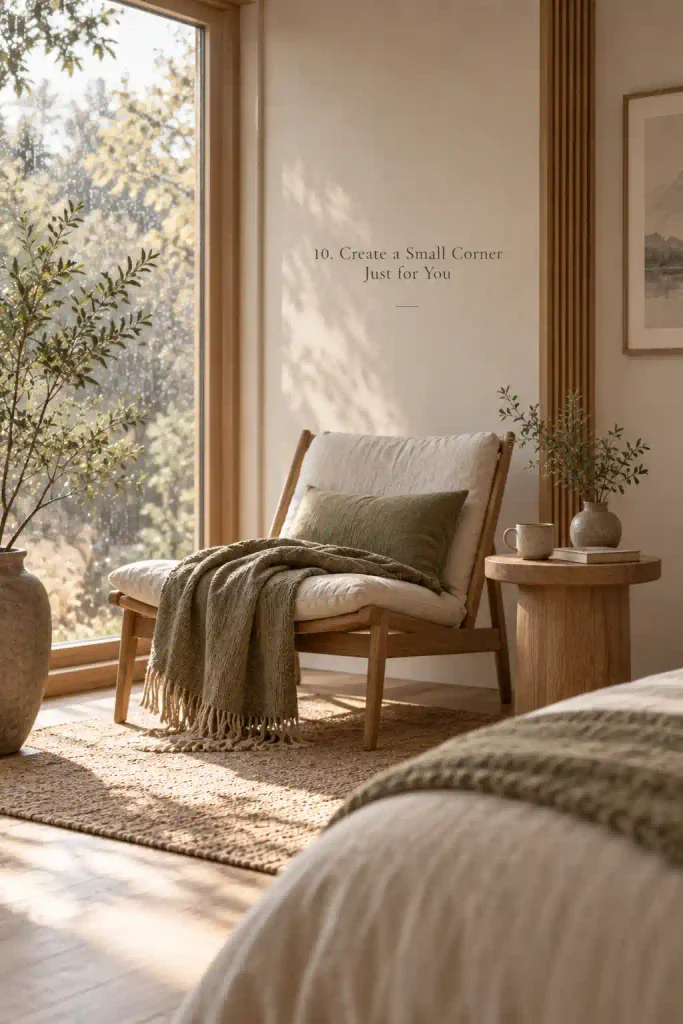
Even a tiny nook can become your favorite part of the room. A low chair by the window, a folded blanket, and a small side table are enough. This is where you’ll sit with your coffee, read a few pages before bed, or simply watch the rain. In a home that often feels busy, having one small, quiet corner makes a bigger difference than most people expect.
Limit Yourself to a Few Core Materials
Part of what makes Japandi rooms feel so peaceful is repetition. Stick to two or three main materials, like wood, linen, and stone or ceramic, and repeat them throughout the room. When too many different metals, patterns, and finishes get mixed in, the calm starts to disappear. Restraint here isn’t boring. It’s what makes the whole room feel intentional.
Budget-Friendly Ways to Bring Japandi Home
This look doesn’t require an expensive shopping trip. Try these instead.
- Start by removing, not adding. Clearing surfaces often does more than any new purchase.
- Shop secondhand for wood furniture. Thrift stores and online marketplaces are full of solid wood pieces at a fraction of retail cost.
- Update your textiles first. A linen duvet cover and a jute rug can change the whole feel of a room for a modest price.
- Buy slowly and intentionally. One well-chosen piece is worth more than five quick, cheap ones.
Mistakes to Watch Out For
A few small missteps can pull this look off track fast. Adding too many colors. Stick to your muted, natural palette so the room stays calm. Filling every surface. Empty space is part of the design, not a gap to fill. Mixing too many wood tones. Keep your wood finishes in the same family for a cohesive feel. Choosing furniture that feels heavy or ornate. Simple, low, clean lines are the whole point.