
Modern Bathroom Ideas: There’s a reason designers keep reaching for green herringbone tile right now, and it’s not just because it photographs well for a portfolio. Green has this quiet confidence to it. It’s not as loud as navy, not as trendy as terracotta, but it still makes a bathroom feel like someone actually thought about it instead of grabbing whatever was on sale.
And the herringbone pattern? That zigzag layout does something flat subway tile just can’t. It catches the light differently depending on where you’re standing. It makes even a small powder room feel like it has movement, like it was designed on purpose rather than just tiled and called done.
If you’re staring down a bathroom remodel and green herringbone keeps showing up in your saved photos, here’s how to actually pull it off.
Start with the shade of green, because it changes everything
Not all green tile reads the same. A deep forest or hunter green feels moody and rich, almost like a boutique hotel bathroom. A soft sage or olive feels calmer, more spa-like. A bright emerald leans bold and a little dramatic. Before you commit to a full wall or shower surround, grab a single tile sample and bring it home. Look at it under your actual bathroom lighting, not the store’s fluorescent glow, because the difference can honestly be shocking.
1. A Full Shower Wall in Deep Forest Green
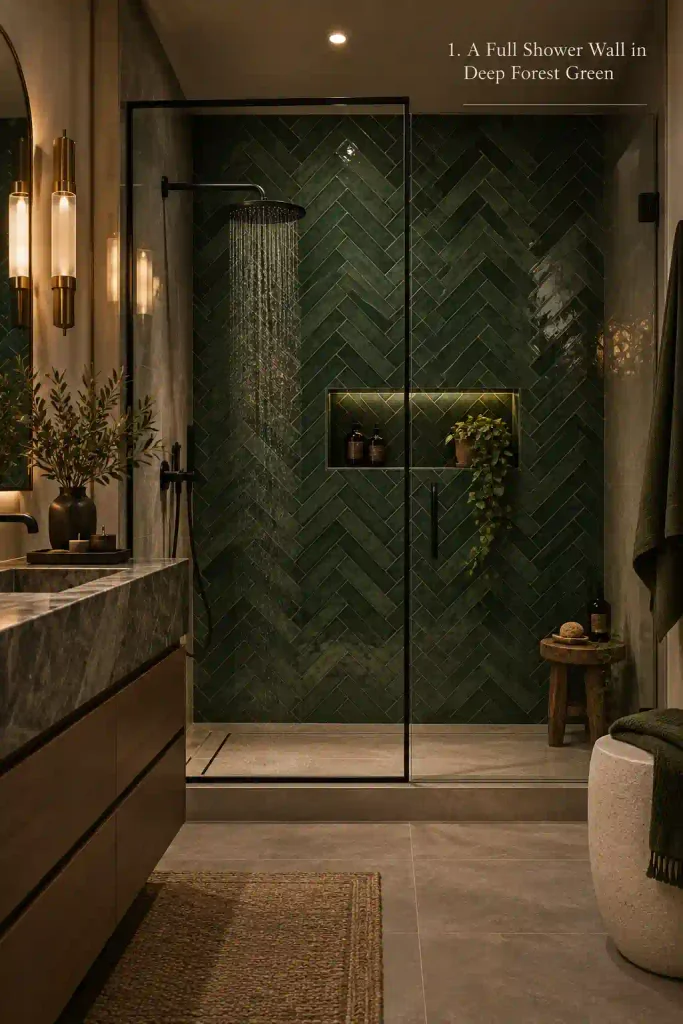
This is the showstopper option. Floor-to-ceiling herringbone in a deep forest shade turns your shower into the focal point of the entire room. Pair it with matte black fixtures and a frameless glass enclosure so nothing blocks the view of all that tile work. It’s bold, yes, but it reads as intentional luxury rather than overwhelming.
2. Herringbone as a Backsplash Only
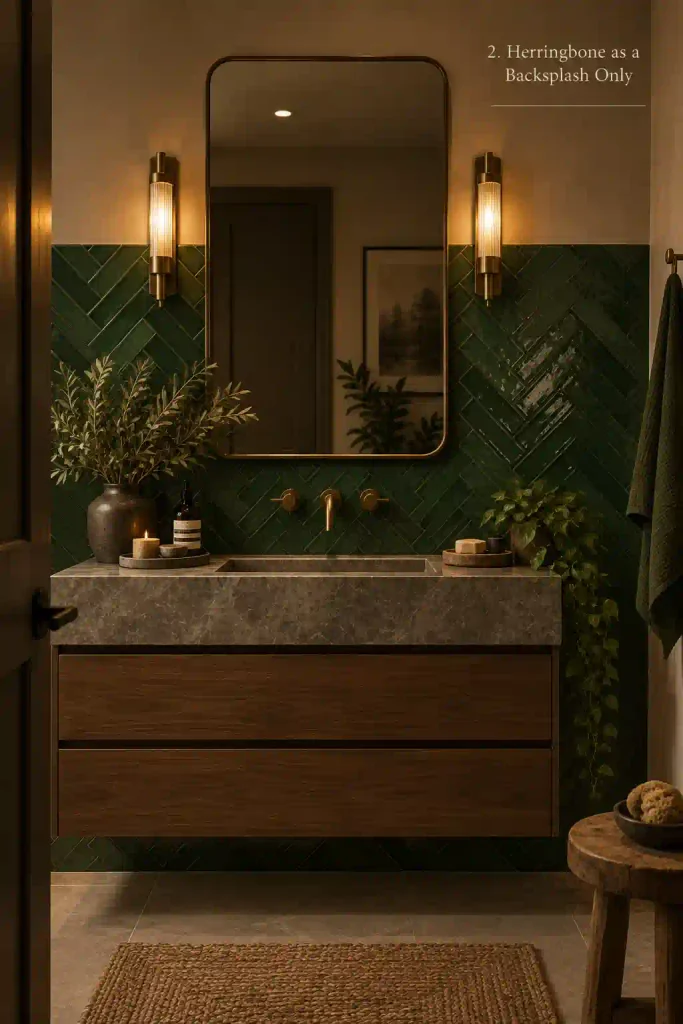
Not ready to commit to a full wall? Use green herringbone as a tall backsplash behind the vanity instead, running it up about two-thirds of the wall. This gives you all the texture and color payoff with a smaller tile budget, and it still reads as a real design choice rather than an afterthought.
3. Pair It With Brass or Gold Hardware
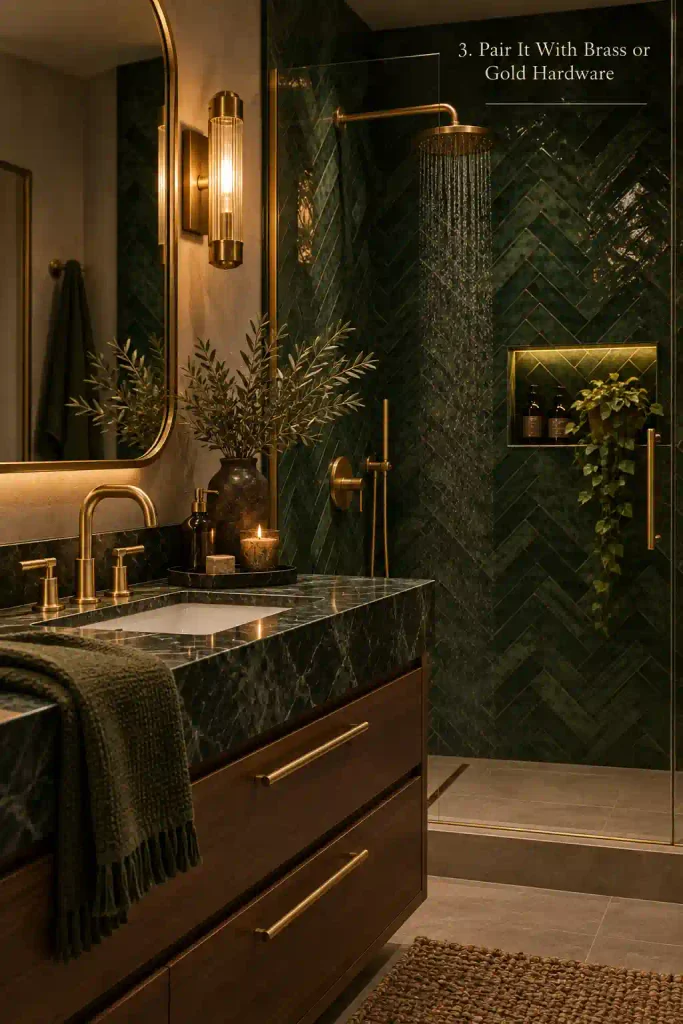
Green and gold together have that old-world, almost art deco glamour to them. Brass faucets, a gold-framed mirror, and brushed brass cabinet pulls against green herringbone tile create a warmth that matte black alone can’t match. It’s the combination that tends to show up in those bathrooms you scroll past and think, “okay, that’s a hotel bathroom, not a house bathroom.”
4. Go Half Wall, Half Paint
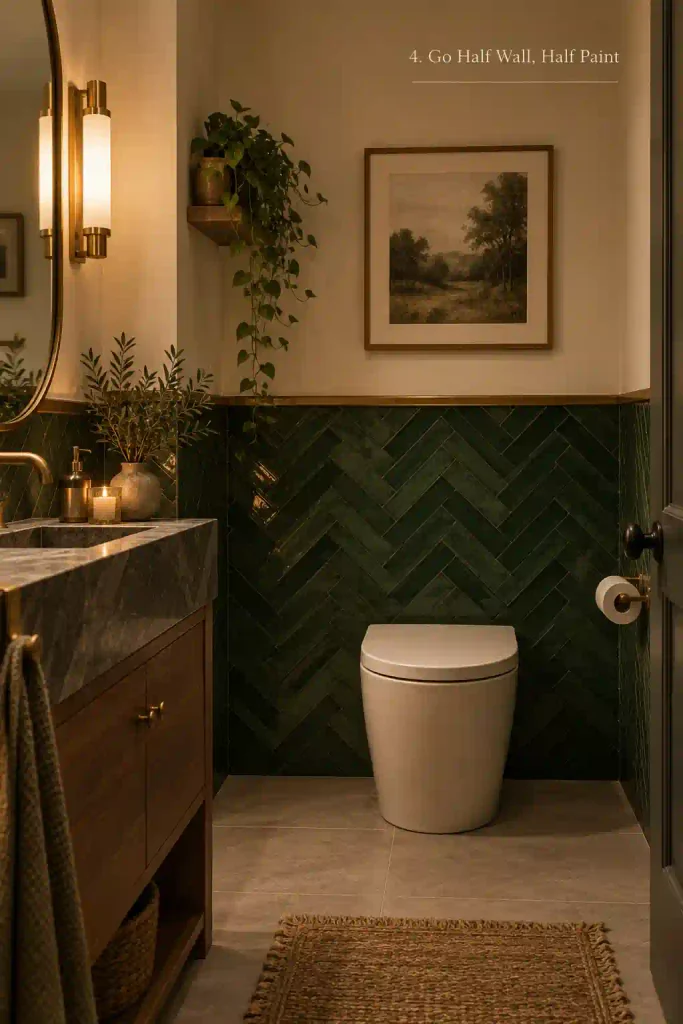
Here’s a budget-conscious trick that still looks custom. Tile the lower half of the wall in green herringbone, then paint the upper half in a complementary warm white or soft cream. Finish the transition with a simple wood or brass trim strip. You get the texture and color impact without tiling an entire room floor to ceiling.
5. Use It on the Floor Instead of the Walls
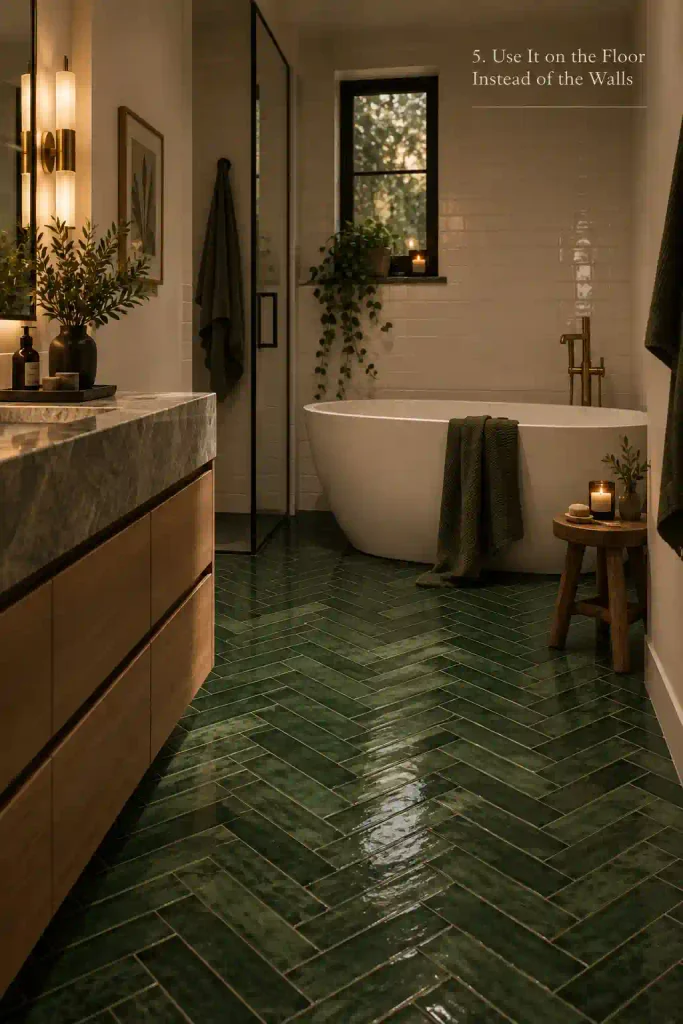
Most people default to walls, but herringbone on the bathroom floor is a seriously underrated move. Keep the walls simple, white subway tile or plain paint, and let the green herringbone floor do all the talking. It’s a quieter way to use the pattern, but it still feels custom and considered underfoot.
6. Add Warm Wood Vanity Cabinetry
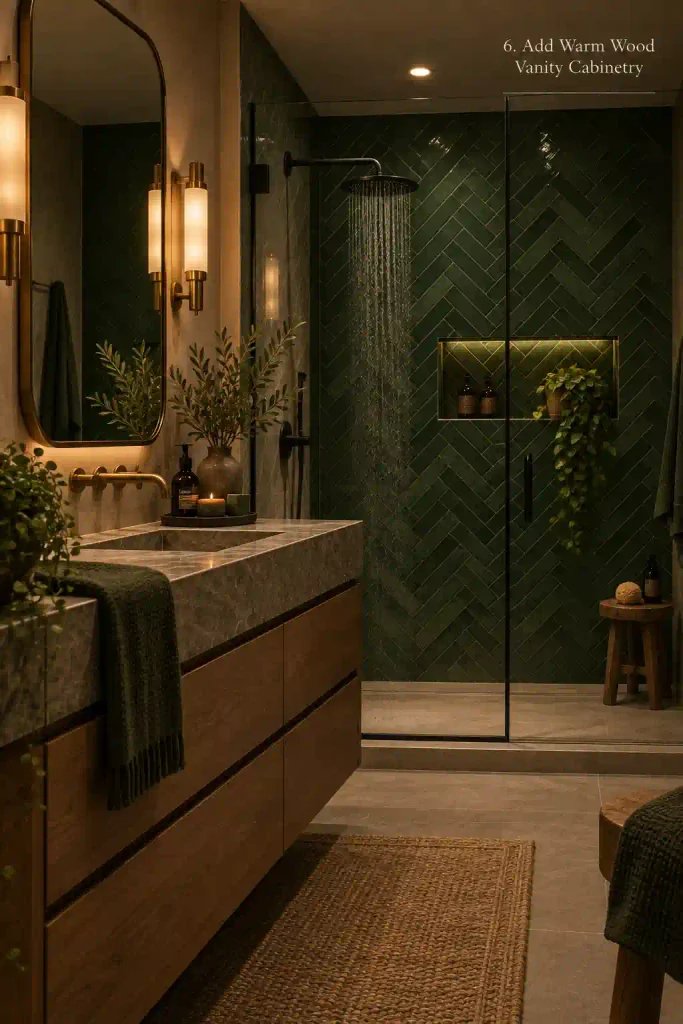
Green and wood were basically made for each other. A warm walnut or oak vanity against green herringbone tile grounds the whole room and keeps it from feeling too cold or too “showroom.” It’s the same reason this color combo works so well outdoors, green and natural wood just make sense together.
7. Keep Fixtures Minimal and Let the Tile Lead
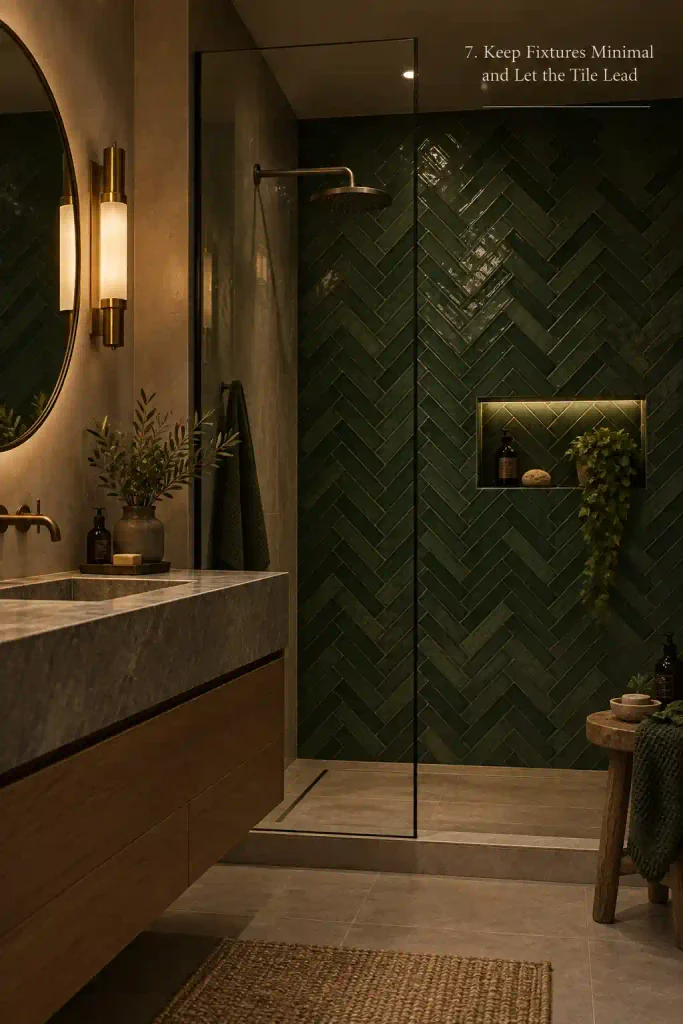
Sometimes the most luxurious move is restraint. Skip ornate mirrors and fancy light fixtures. Choose a simple round mirror, a clean black or brass sconce, and let the herringbone pattern be the star of the show. Busy fixtures on top of a busy tile pattern can start to feel chaotic fast.
8. Try a Two-Tone Herringbone Layout
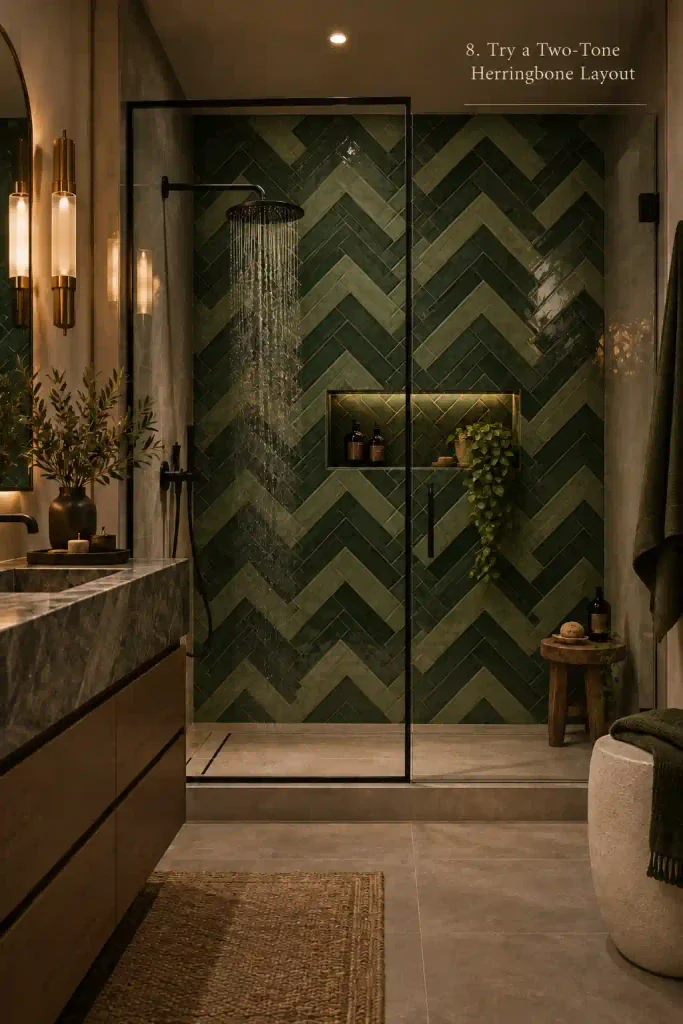
For something a little more unexpected, mix two shades of green herringbone tile, maybe a deep forest paired with a lighter sage, in alternating sections or as a border detail. This adds depth and a custom, high-end feel without needing a completely different material.
9. Add a Statement Soaking Tub
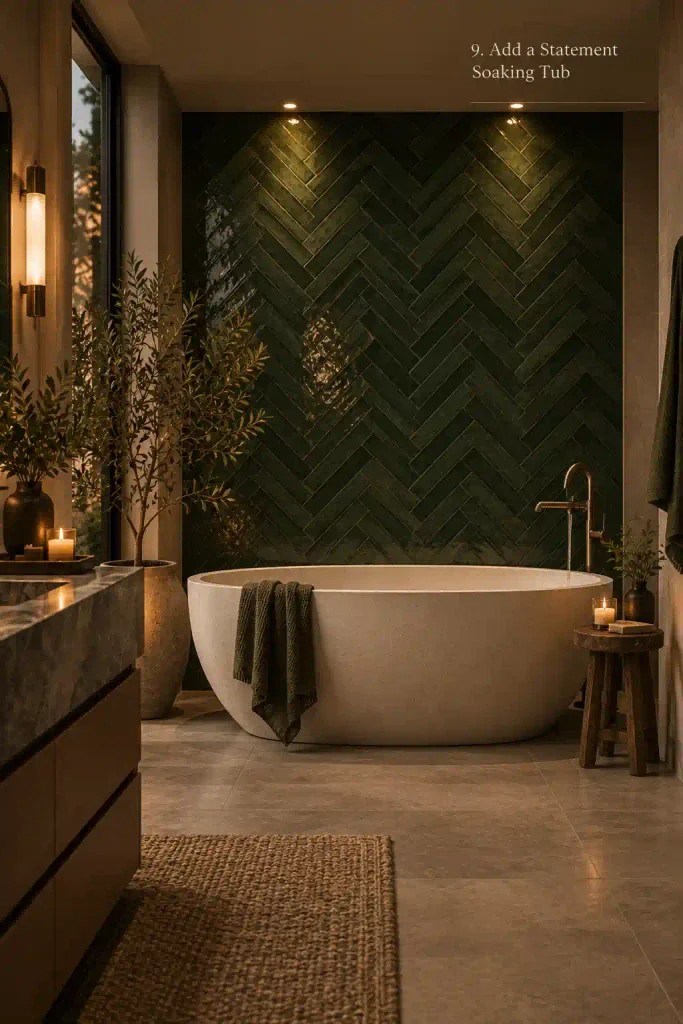
If your bathroom has the space, a freestanding soaking tub against a green herringbone accent wall creates that true spa-at-home moment. Add a simple floor-mount faucet and a small side table for candles or a book, and suddenly your regular bathroom feels like a weekend retreat you never have to leave the house for.
10. Use Green Herringbone in a Small Powder Room
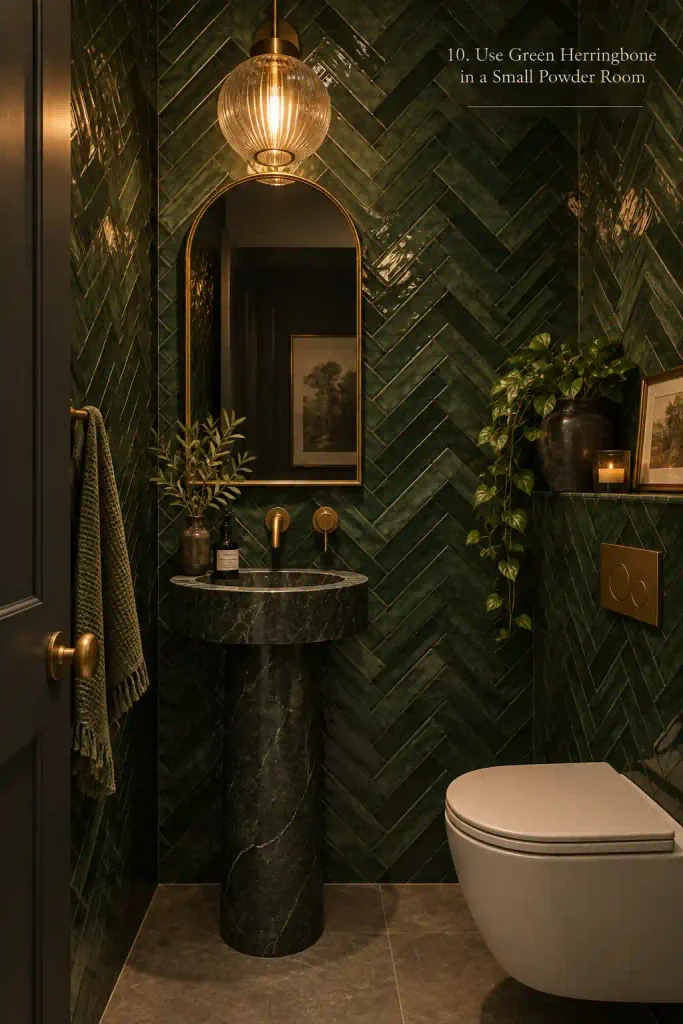
Small spaces are actually the perfect place to go bold. A powder room with floor-to-ceiling green herringbone tile, paired with a single statement light fixture and a small pedestal sink, punches way above its square footage. Guests remember a bold powder room long after they’ve forgotten everything else about your house.
A Few Practical Notes Before You Commit
Herringbone patterns take more time and skill to install than straight-laid tile, since every piece has to line up at an angle. This usually means a higher labor cost, so budget a little extra for installation, not just the tile itself.
Also, test your tile against your existing fixtures if you’re not doing a full remodel. Green can clash with certain whites and off-whites in unexpected ways, so bring a sample tile home and set it next to your tub, sink, or toilet before ordering anything in bulk.
Budget Tips If You Love the Look But Not the Price Tag
- Tile a smaller area first. A backsplash or accent wall costs far less than a full shower surround.
- Look for porcelain over natural stone. Porcelain mimics the look for a fraction of the price and holds up better long term.
- Watch for overstock and discontinued tile sales. Specialty colors like green often go on clearance when a line gets updated.
- DIY the simpler layouts. A half-wall backsplash is far more forgiving for a first-time tile project than a full herringbone shower wall.