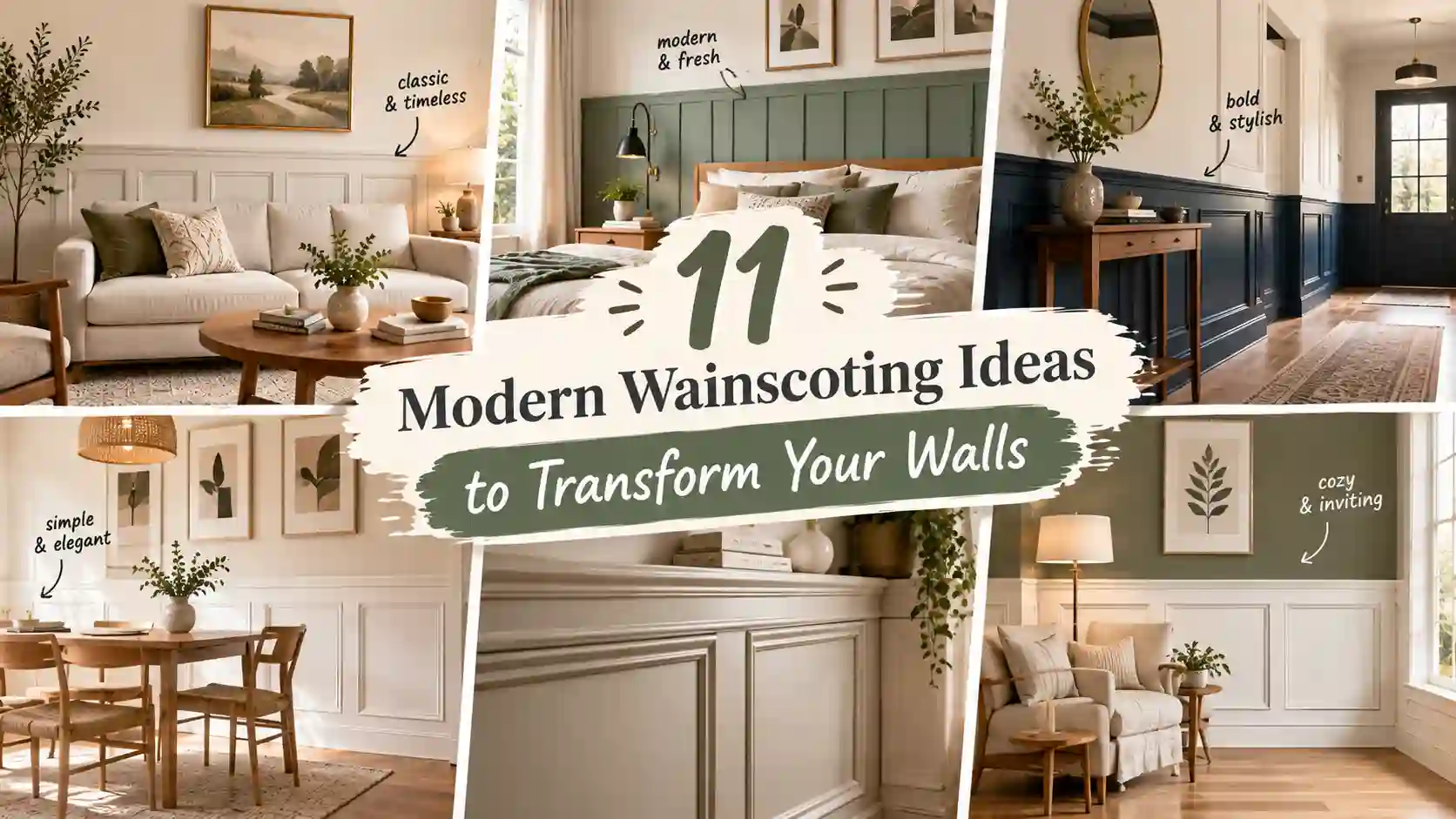
Say “wainscoting” to most people and they picture their grandmother’s dining room. Fussy white panels, maybe some dark wood trim, a room that feels a little stiff and formal. Understandable. That’s what wainscoting used to mean for a lot of households.
But walk into a newly renovated home right now, and there’s a good chance you’ll spot wainscoting again, just not the kind you remember. It’s been stripped down, squared off, painted in moody colors, and turned into one of the most popular ways to add texture to a flat wall without hanging a single piece of art. Here are 11 ways people are using it today, and none of them look like your grandmother’s dining room.
Board and batten keeps winning for a reason
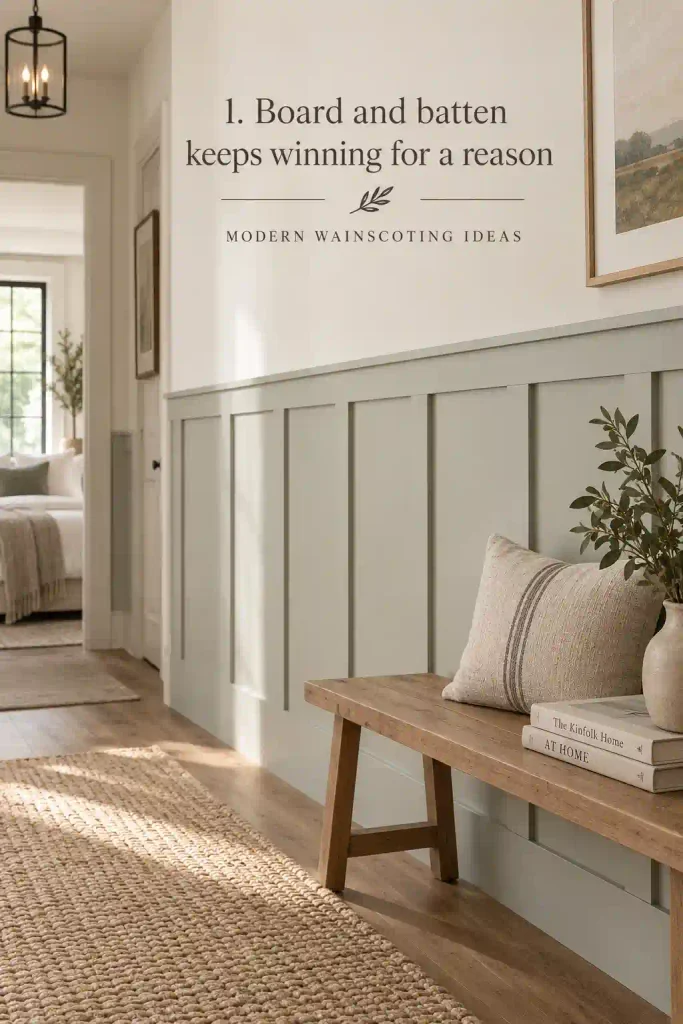
If you’ve scrolled any home renovation account in the last few years, you’ve seen this one. Flat vertical boards, evenly spaced, with a simple cap rail on top. It’s clean, it’s modern, and it works in almost any room, hallways, bedrooms, even a kid’s playroom. The spacing is really what makes it feel current. Wider gaps between boards read as more modern than the tight, fussy spacing of traditional paneling.
Painted black for serious drama
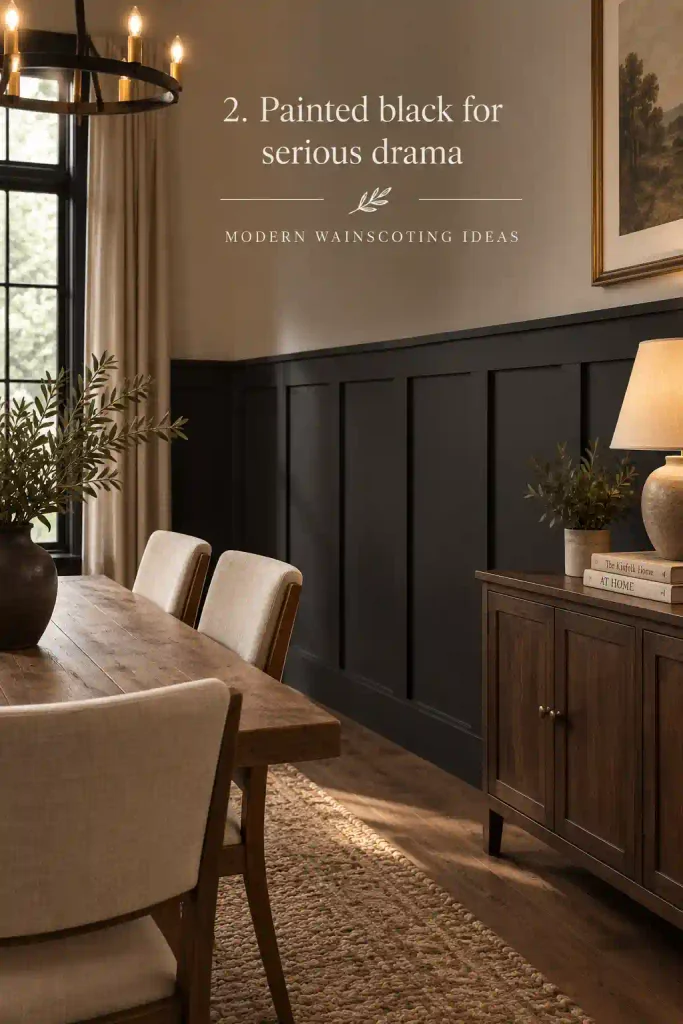
Here’s a combination that keeps showing up in design magazines: classic wainscoting shape, but painted deep black or charcoal instead of the expected white. It takes something that usually reads as formal and turns it moody and a little unexpected. Pair it with warm wood furniture so the room doesn’t feel cold, and you’ve got a space that photographs beautifully in any lighting.
Half-wall wainscoting with a bold paint pairing
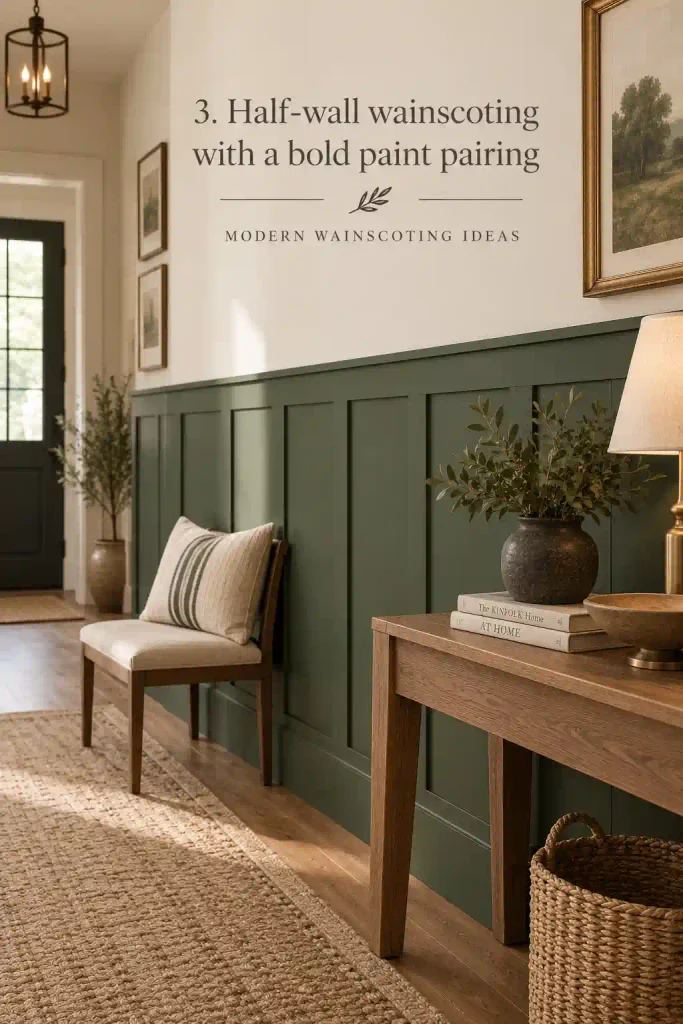
Traditional wainscoting almost always went white on white, white panels, white wall above. Flip that now. Paint the lower wainscoting section in a deep color, forest green, navy, terracotta, and leave the upper wall in a soft contrasting neutral. The two-tone effect adds so much more visual interest than a single flat wall ever could.
Shiplap wainscoting for texture without the full farmhouse look
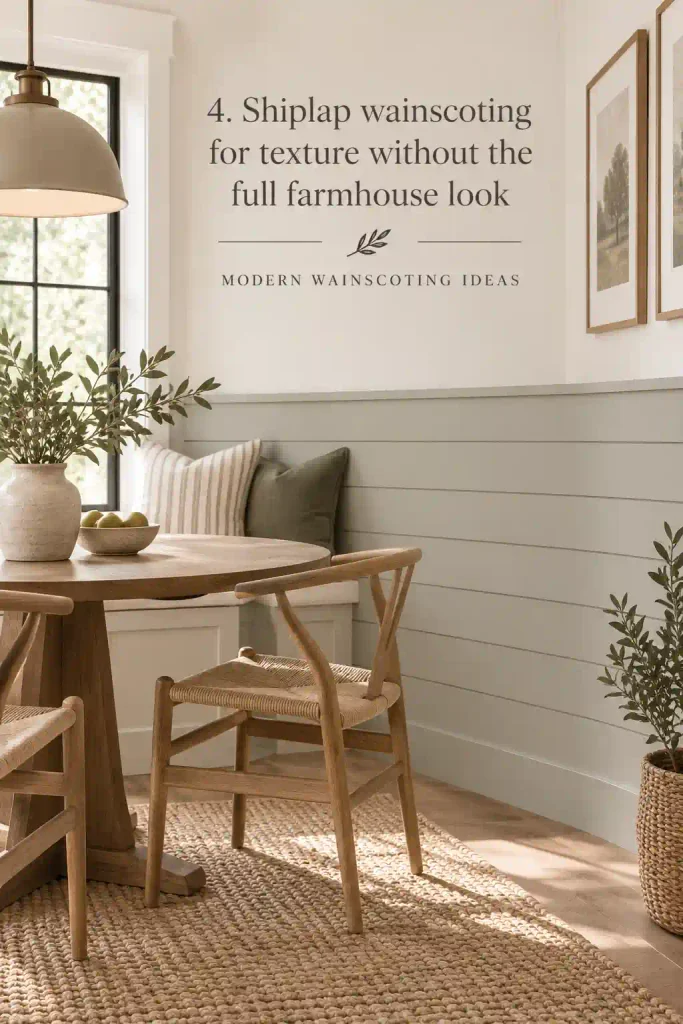
A lot of people love the texture of shiplap but don’t want their whole room to read as farmhouse style. The fix is simple: use it only as wainscoting on the lower half of the wall instead of covering everything floor to ceiling. You get all that lovely horizontal line texture without committing your entire room to one specific aesthetic.
Picture frame wainscoting, but simplified
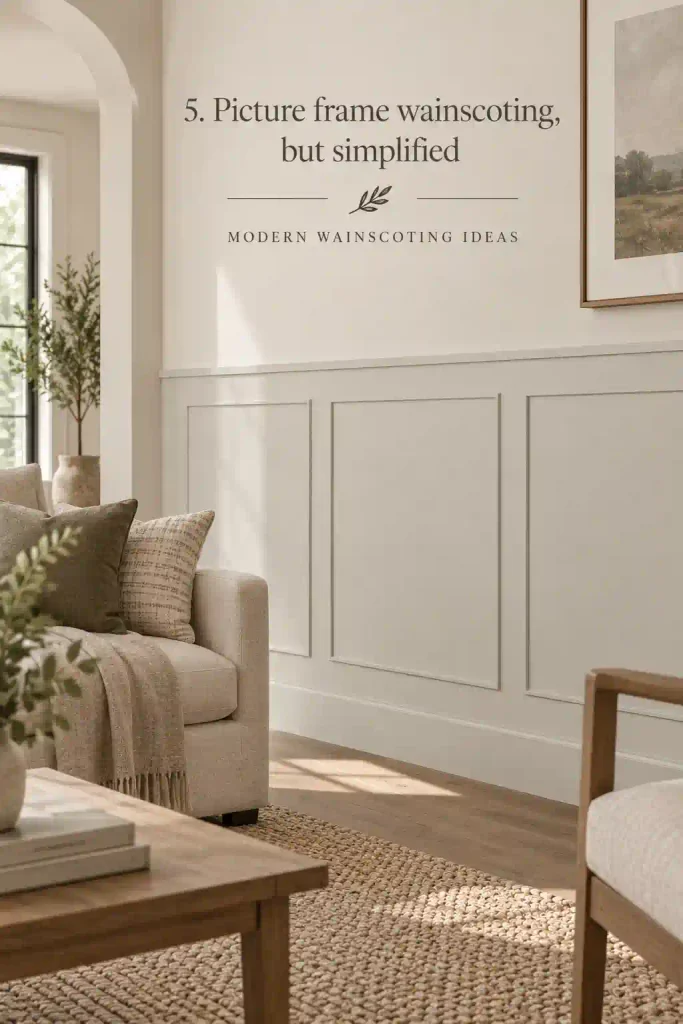
Classic picture frame molding, those raised rectangular panels, can feel really busy in a modern space. The updated version strips it down to simple, thin rectangular outlines with more breathing room between each one. Less ornate detail, more clean geometry. It still reads as elegant, just without the fuss.
Wainscoting that wraps the whole room, ceiling included
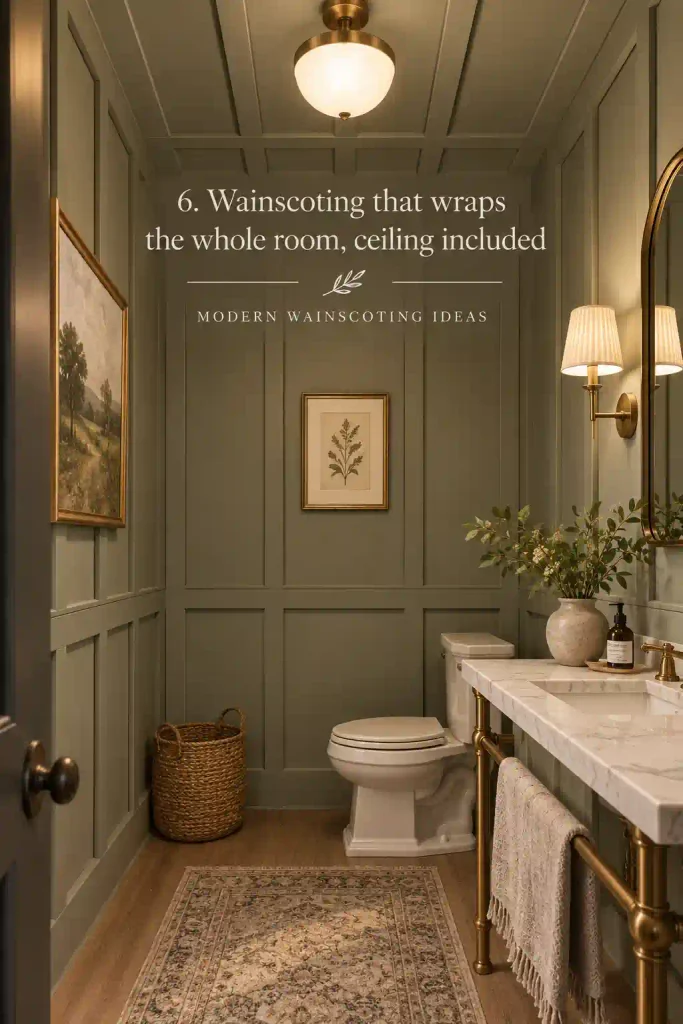
This one surprises people the first time they see it. Instead of stopping wainscoting at the usual chair-rail height, some modern homes are running board and batten detail all the way up the wall and across part of the ceiling. It’s bold, it adds serious architectural interest, and it’s especially striking in a small room like a powder bathroom or a reading nook.
A textured accent wall using tall, slim panels
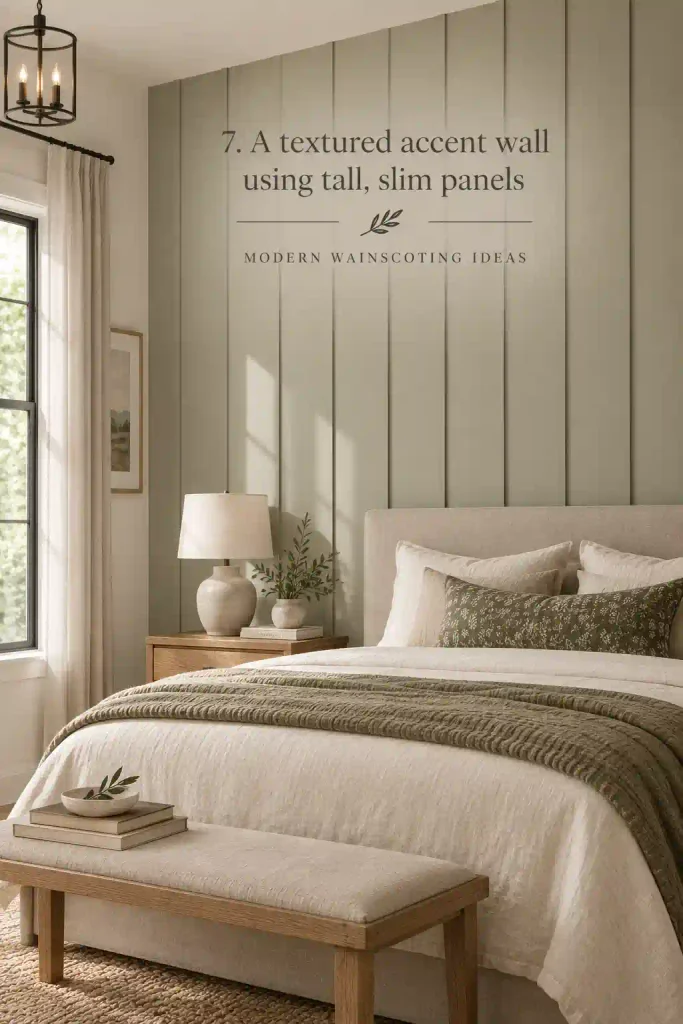
Rather than going around an entire room, some homeowners are using tall, slim wainscoting panels on just one wall as a design feature behind a bed or a sofa. The panels run almost ceiling height, giving the effect of a feature wall without the commitment (or cost) of covering the whole room.
Wainscoting painted to match the wall above it
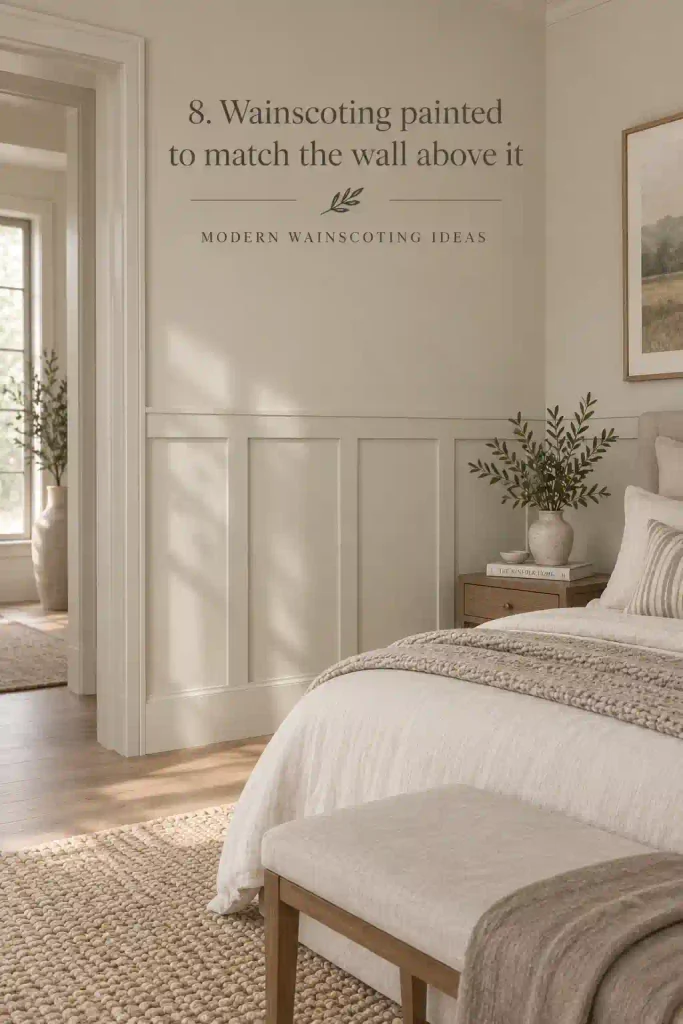
Here’s a subtler move for anyone who loves texture but isn’t ready for bold contrast. Paint the wainscoting the exact same color as the wall above it. You lose the color contrast, but you keep all the shadow and texture from the panel lines, which still adds depth and interest to an otherwise flat wall, just in a much quieter way.
Wainscoting in unexpected rooms
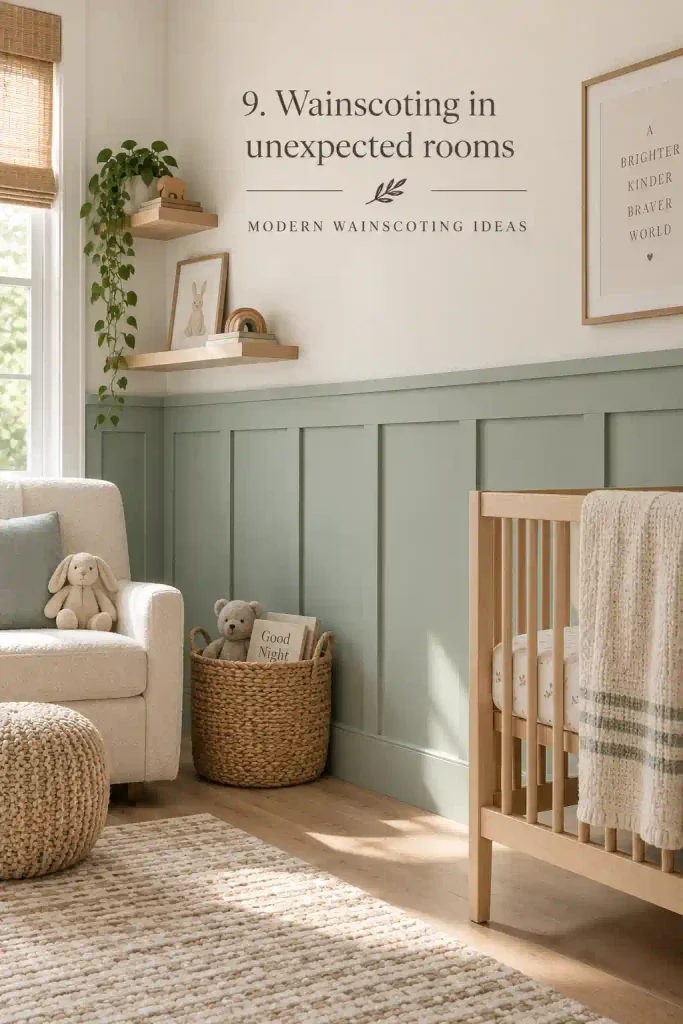
Traditionally, wainscoting showed up in dining rooms and formal entryways. The modern version shows up everywhere, laundry rooms, mudrooms, even a kid’s nursery. A simple board and batten wall in a nursery, painted in a soft sage or dusty blue, feels both classic and completely fresh at the same time.
Mixed materials for a layered look
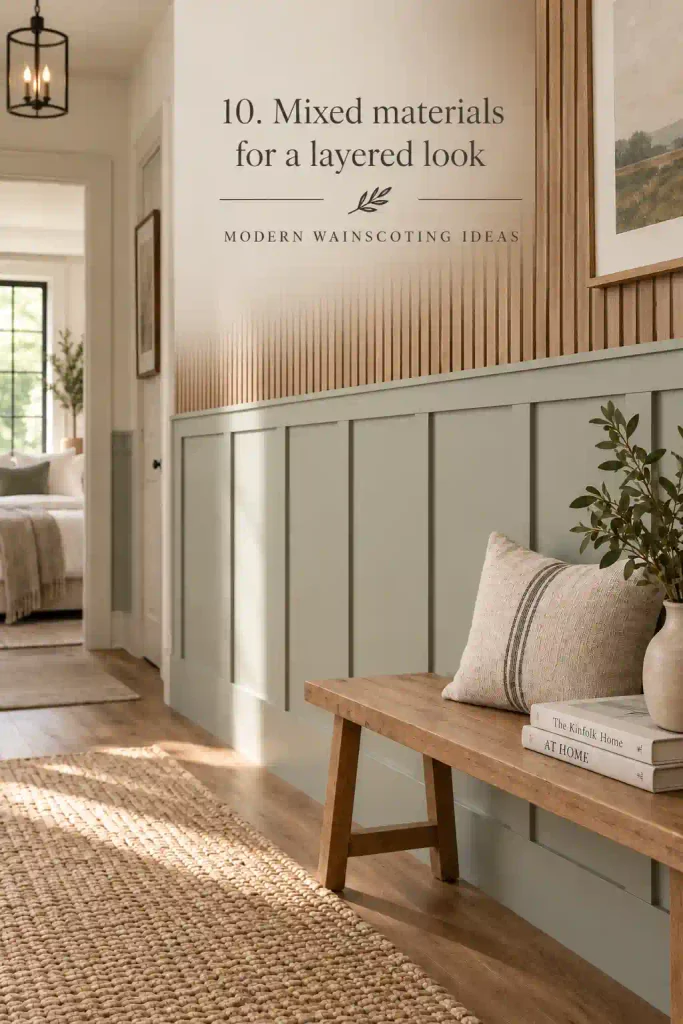
Some newer designs combine wainscoting with another material, like a wood slat accent above the panel line, or a strip of tile along the bottom edge. This layered approach adds texture variety within the same wall, which keeps things visually interesting without relying on a bunch of extra decor.
DIY-friendly peel-and-stick versions
For renters or anyone not ready for a full carpentry project, peel-and-stick wainscoting panels have genuinely gotten good. They mimic the look of real wood trim convincingly from a few feet away, cost a fraction of the price, and come off clean when you move. It’s a legit option if you want the look without the commitment of actual construction.
A quick reality check before you start measuring
Not every room needs wainscoting on every wall. One accent wall often does more for a space than wrapping the entire room in panel detail. Start small if you’re unsure, a single wall in a hallway or a powder room is a low-risk way to see if you actually love the look before committing to a bigger space.
What it actually costs to add
Real wood wainscoting installed by a contractor runs higher than most people expect, so budget accordingly if you’re going that route. MDF versions cost quite a bit less and still look great once painted. And if you’re handy with a miter saw, DIY board and batten is one of the more approachable weekend projects out there, no special skills required beyond patience and a level.
A few mistakes worth avoiding
Going too tall with the panel height in a room with low ceilings can make the space feel shorter, not taller, so measure carefully first. Skipping a cap rail at the top edge leaves the whole thing looking unfinished, even if the panels themselves are installed well. And painting wainscoting a completely different sheen than the wall above (like glossy panels under flat paint) can look mismatched instead of intentional, so try to keep your finishes consistent.