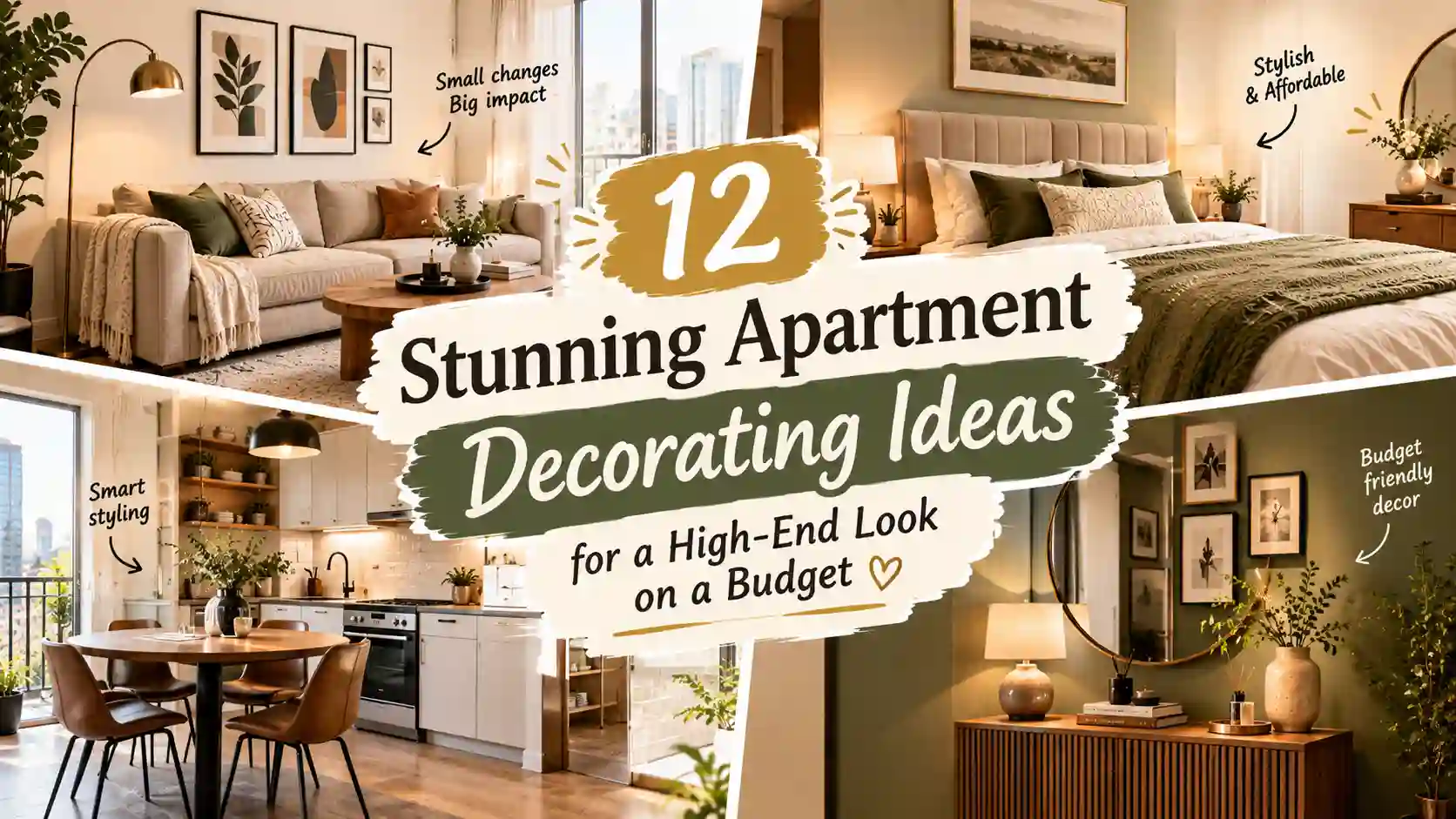
Apartment Decorating Ideas: My cousin moved into her first apartment last year with exactly $400 left over after the security deposit. Four hundred dollars. For an entire apartment. And yet, somehow, the place looked like something out of a design magazine within a month. I asked her how, expecting some secret discount furniture store. Her answer was simpler than that: “I just stopped buying things that look cheap, even when they’re cheap.”
That one sentence is basically the whole philosophy behind decorating on a budget without it looking like a budget. It’s not about how much you spend. It’s about what you choose to spend it on. Here are 12 ways to pull off that same high-end-on-a-low-budget magic in your own place.
Upgrade your lighting before anything else
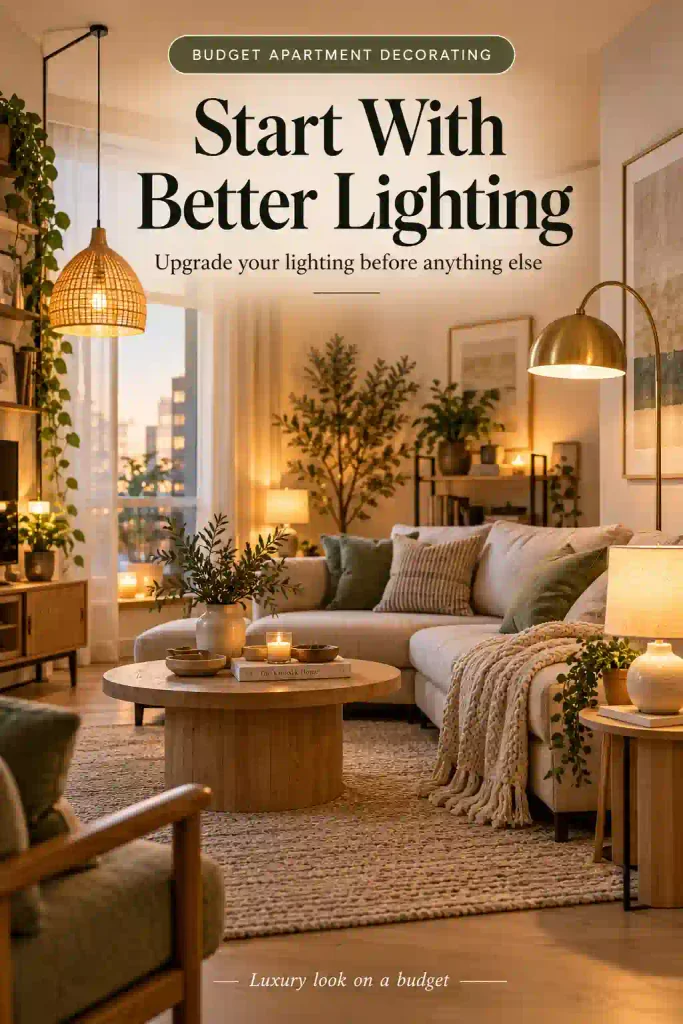
Builder-grade overhead lighting is often the single biggest thing making a rental feel cheap, and it’s one of the easiest to fix. A plug-in pendant light, a stylish floor lamp, or even just swapping a boring light fixture cover can change the entire mood of a room. Warm bulbs over cool white ones, every single time.
Hunt for real wood furniture secondhand
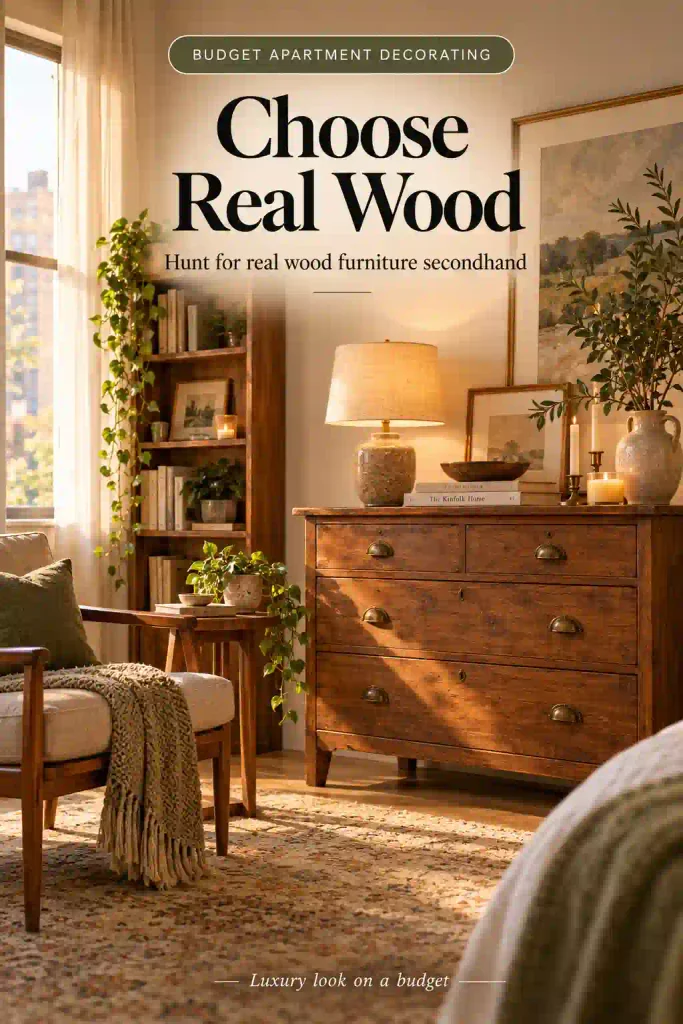
Here’s the thing about expensive-looking furniture: it’s almost always solid wood, not particle board with a printed finish. You can find real wood dressers, side tables, and bookshelves at thrift stores and estate sales for a fraction of retail price, often with some surface wear that sanding and a little oil or paint can fix completely.
Paint is still the cheapest transformation around
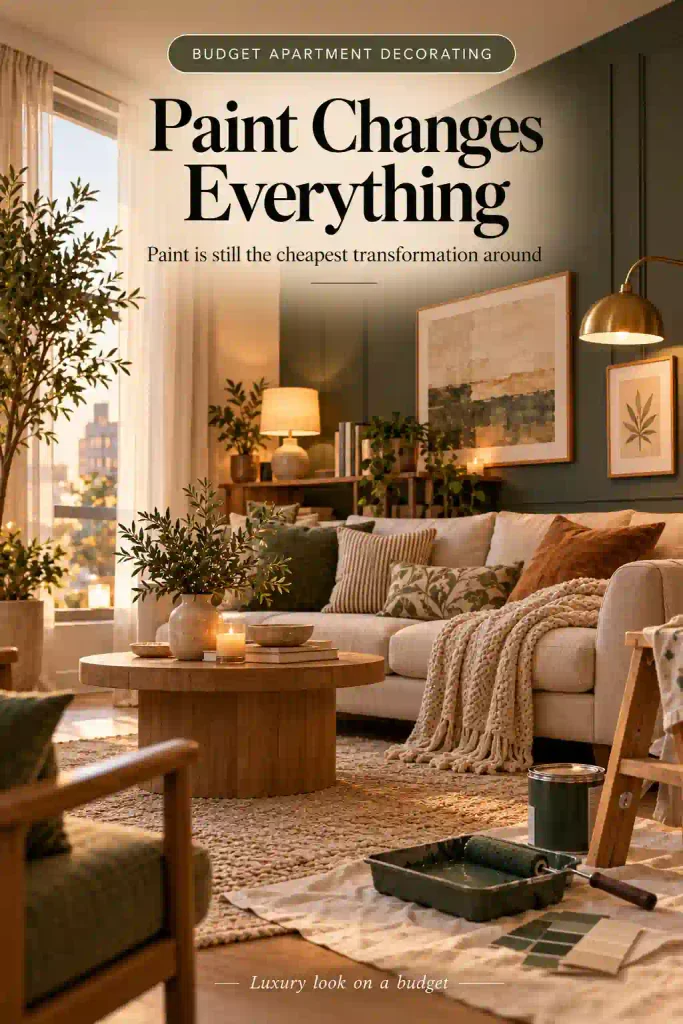
One accent wall in a deep, moody color, or a full room in a soft, warm neutral, costs maybe $40 to $60 and changes everything. Skip stark white if you can. Warmer off-whites and muted tones photograph (and feel) far more expensive than builder-basic white walls.
Swap your hardware
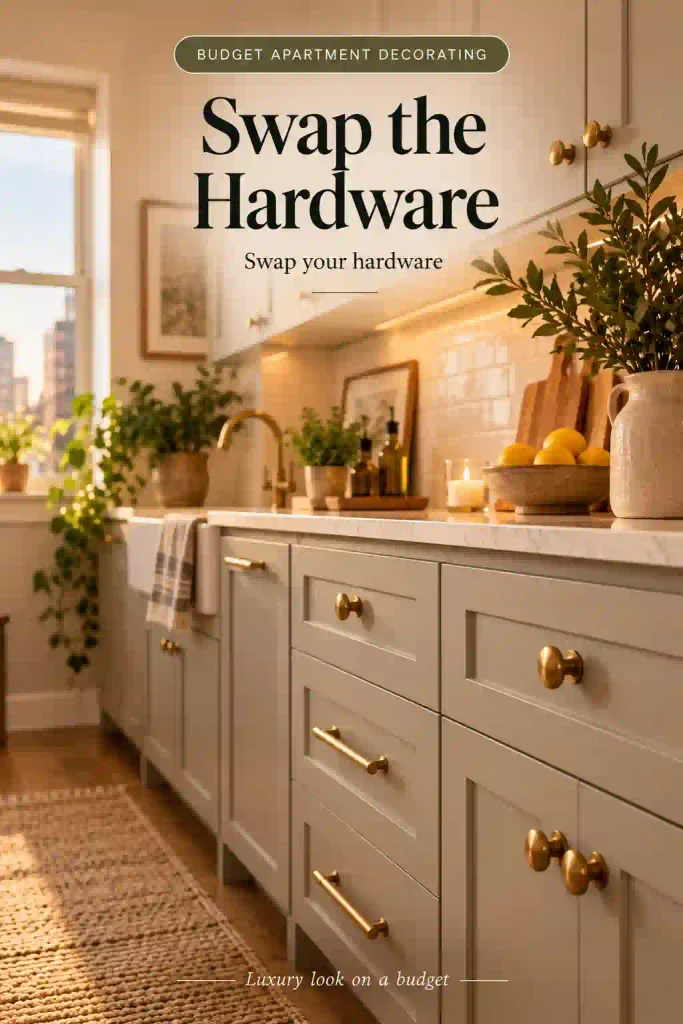
Cheap plastic knobs on cabinets and dressers are a dead giveaway. A pack of brass, matte black, or ceramic knobs costs under $20 and takes fifteen minutes with a screwdriver. It’s genuinely one of the highest-impact, lowest-effort swaps on this entire list.
Invest in one really good throw blanket
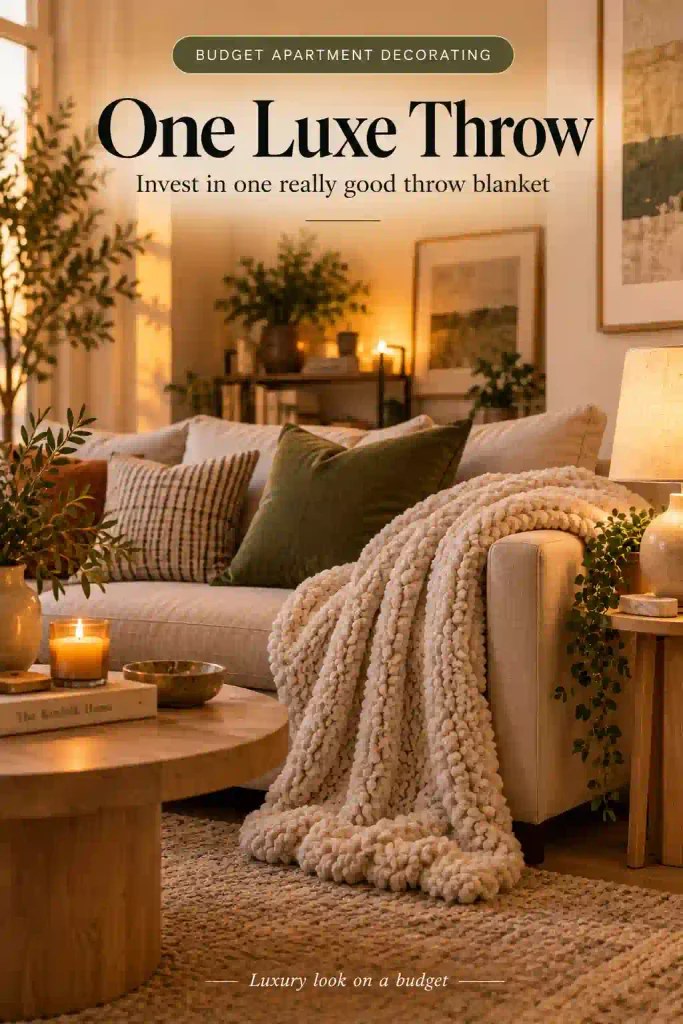
You don’t need five mediocre blankets. You need one really nice one, a chunky knit or a soft bouclé, draped over the arm of your couch. One quality textile does more for a room’s perceived value than a pile of cheap ones ever will.
Frame things you actually love, not what came with the frame
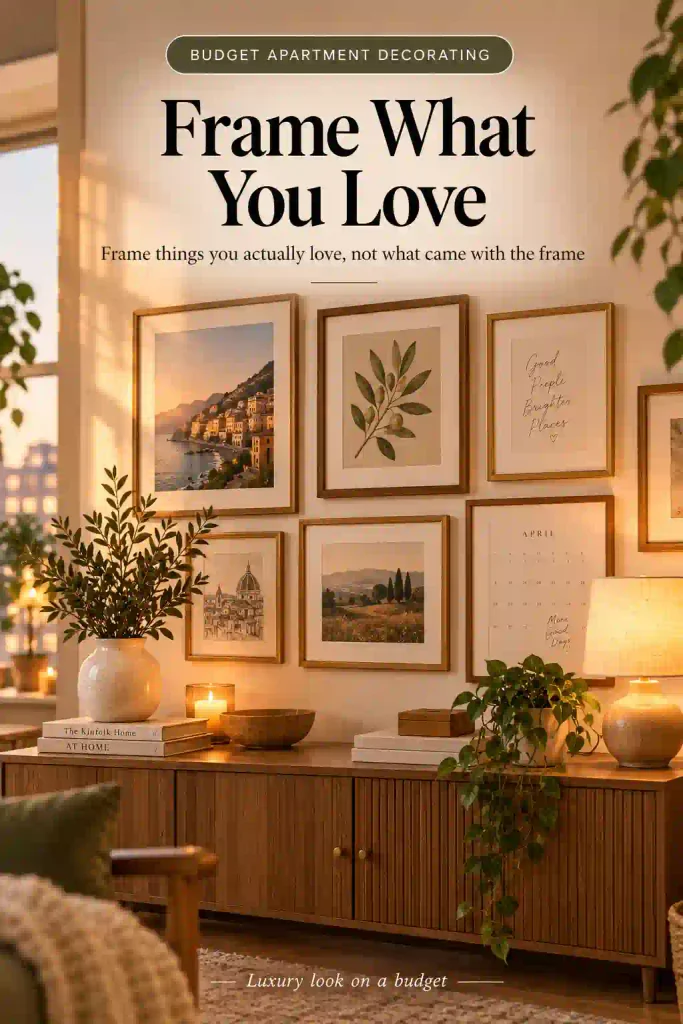
Thrift store frames are everywhere, usually for a dollar or two. Ignore what’s inside them. Swap in a print you love, a photo from a trip, even a page from a calendar. A well-chosen frame with meaningful art inside looks collected and intentional, not random.
Add a big mirror
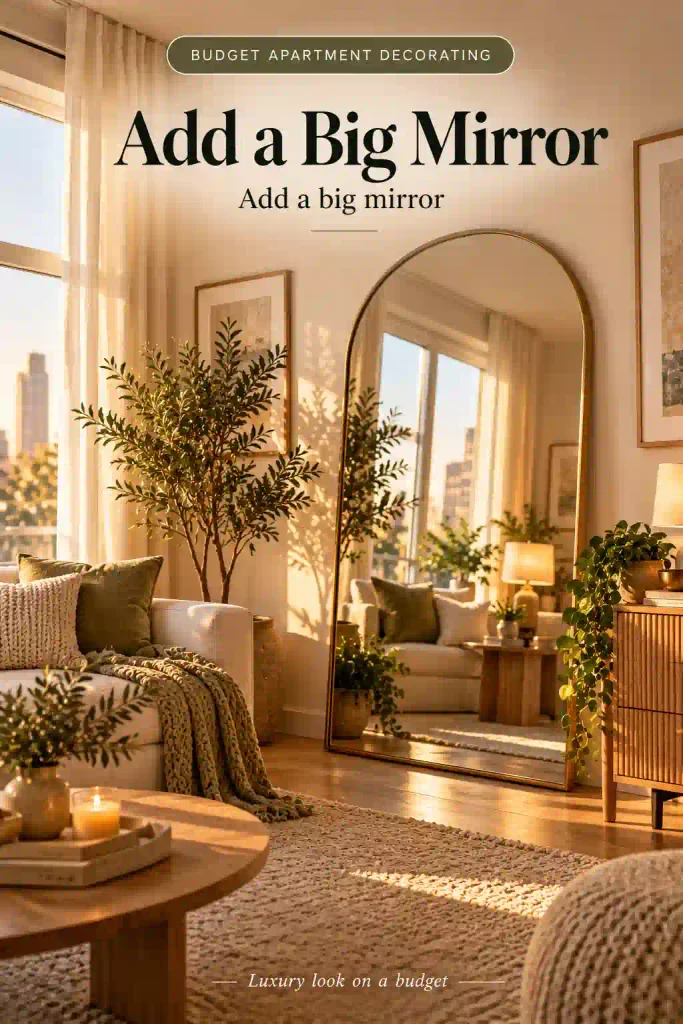
A large mirror does two things at once: it looks expensive, and it makes any room feel bigger by bouncing light around. Look for one with an interesting shape, arched, round, slightly irregular, rather than a plain rectangle, since the shape alone can make it look like a designer piece.
Layer rugs instead of buying one big expensive one
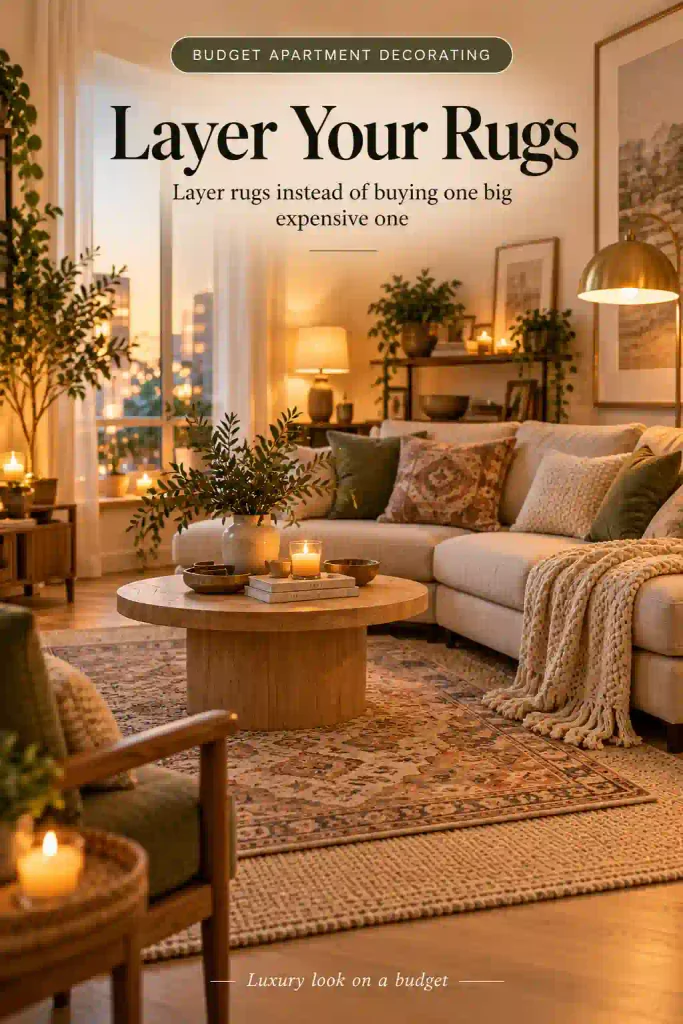
A large, quality rug can run hundreds of dollars. Instead, buy an affordable large base rug in a plain neutral, then layer a smaller, patterned rug on top near your seating area. It creates that boutique, layered look for a fraction of what one big statement rug would cost.
Keep your color palette tight
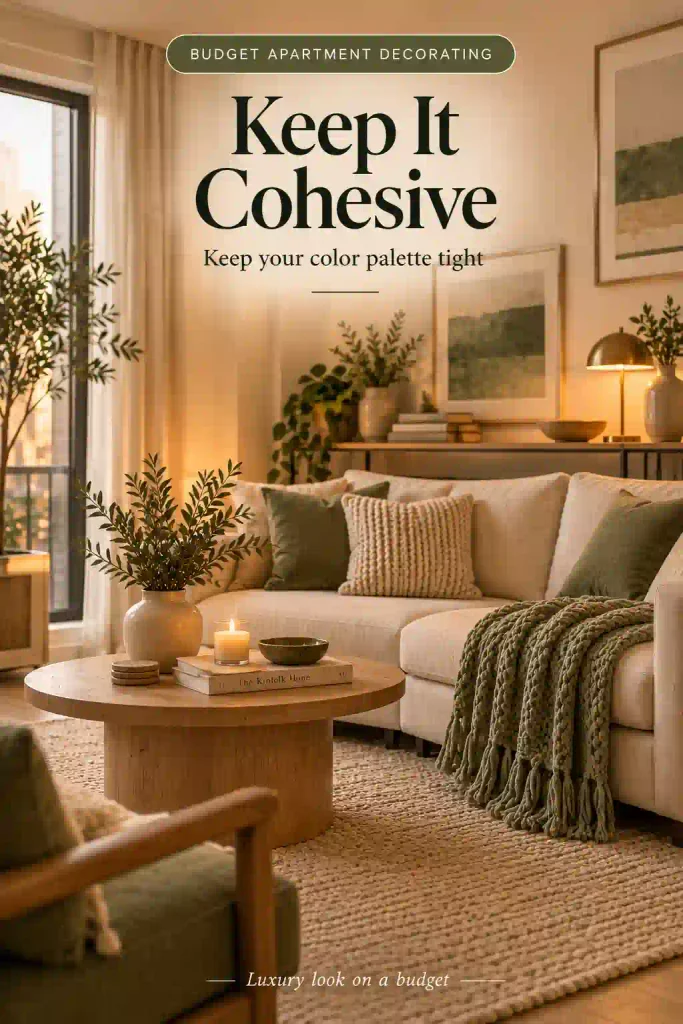
Rooms that look expensive almost always stick to two or three colors, repeated throughout. A chaotic mix of colors and patterns reads as cluttered no matter how much money was spent. Restraint, more than anything else, is what separates a high-end look from a thrown-together one.
Add plants, real or convincingly faux
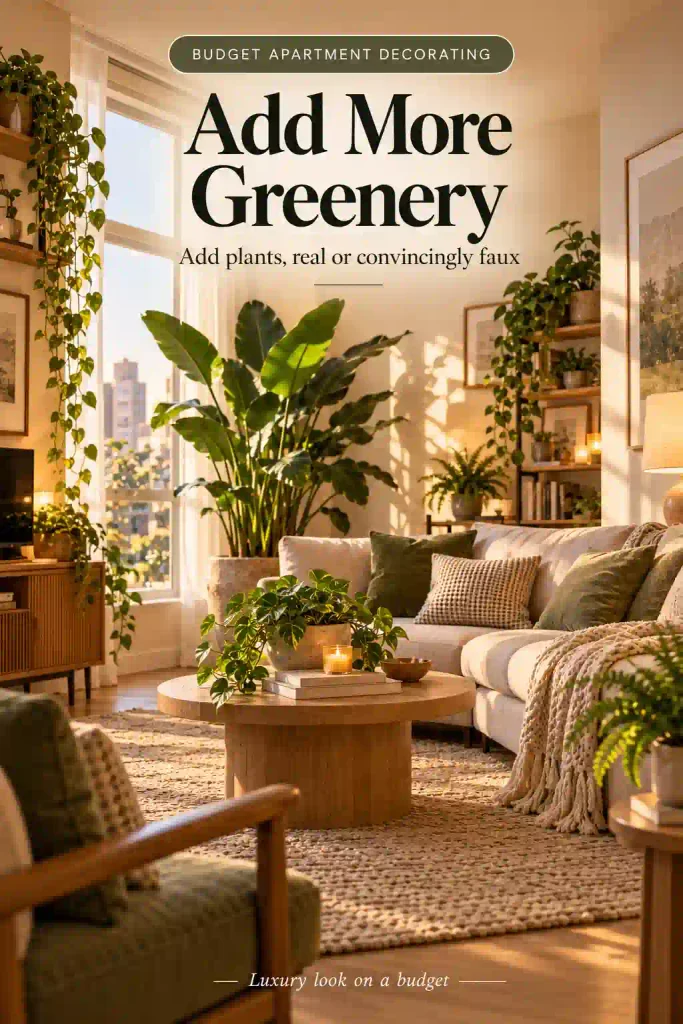
A living room without a single plant tends to feel unfinished, even if everything else is done well. A large leafy plant in the corner adds warmth and life for the cost of a single trip to a garden center. If your thumb isn’t particularly green, quality faux plants have gotten good enough that most guests won’t know the difference.
Declutter before you decorate anything else
This one’s free, and it might matter more than every other item on this list combined. Clear surfaces, minimal knick-knacks, nothing crammed onto every shelf. A sparse, intentional room reads as expensive. A cluttered one reads as cheap, no matter how nice the actual furniture is underneath all the stuff.
Style your shelves like a stylist would
Instead of filling every inch of a bookshelf, leave some open space. Group items in threes, mix heights, add one plant, a few books, and one meaningful object. This kind of curated styling, the kind you see in catalogs, costs nothing beyond rearranging what you already own.
A quick gut check before you buy anything new
Hold the item up and ask yourself honestly: would this look expensive in someone else’s apartment, or only in a dimly lit product photo? If the answer feels like a stretch, skip it and save the money for something that’ll actually earn its spot.
Where the real deals are hiding
Facebook Marketplace and estate sales are full of people downsizing or moving who are practically giving away solid, well-made furniture. Thrift stores rotate stock constantly, so a slow weekly visit often beats one big shopping trip. And don’t sleep on clearance sections at home stores, especially after major holidays, when decor and lighting get marked down fast.
Mistakes that undo all this effort
Buying a bunch of small, cheap decor items instead of saving for one good piece is probably the most common misstep. So is skipping the lighting upgrade entirely, since no amount of nice furniture fixes a room lit by a single harsh bulb. And rushing the whole apartment in one weekend tends to backfire, a slowly built room almost always looks more intentional than one assembled in a single frantic shopping trip.