
Studio Apartment Layout Ideas: There’s a specific kind of envy that hits when you scroll past a studio apartment online that somehow looks like an entire home distilled into one gorgeous room. The bed looks intentional instead of crammed in a corner. The seating area feels like a real living room, not a leftover patch of floor. It all seems effortless, which is exactly what makes it feel so far out of reach when your own studio still looks like everything was just placed wherever it fit on move-in day.
Here’s the part that doesn’t always get said: those effortlessly chic studio layouts aren’t the result of luck, or a bigger apartment, or a design degree. They come down to a handful of layout principles that anyone can apply, regardless of square footage or budget. The difference between a studio that feels chaotic and one that feels curated almost always comes down to arrangement, not money. Here are eleven layout ideas to help you get there.
Anchor the Room With a Rug, Not a Wall
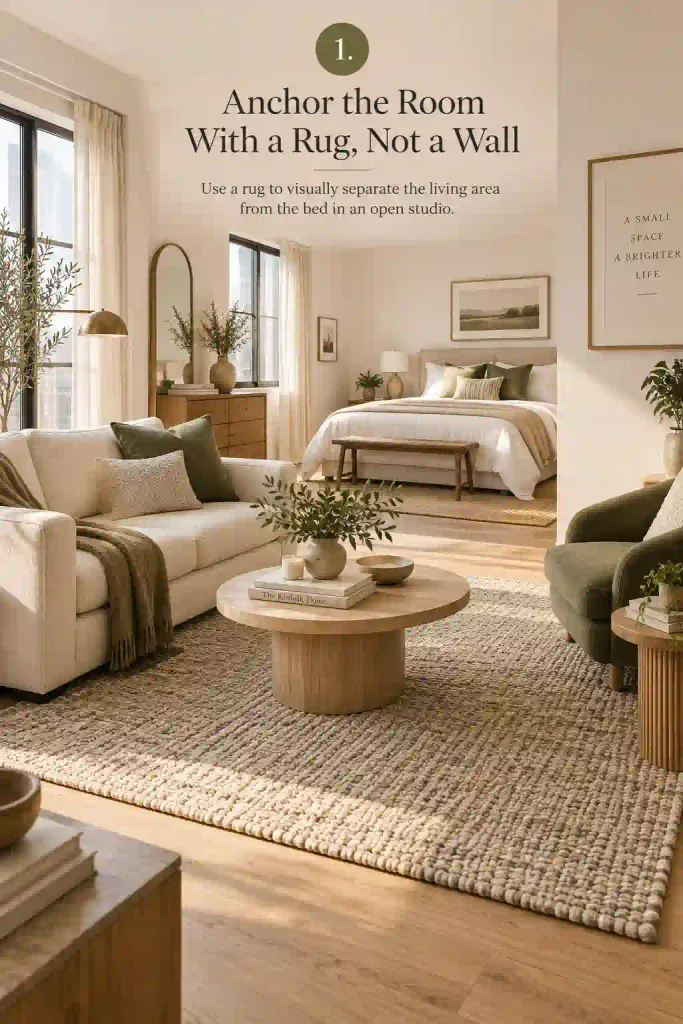
Since a studio doesn’t offer the walls to naturally separate spaces, a rug becomes one of your most powerful layout tools. Placing a rug under your living area, and a different one, or none at all, under your bed, visually signals where one “room” ends and another begins, even though there’s technically nothing dividing them. This single move does more for a chic, intentional feel than almost any other layout trick available.
Angle the Bed Instead of Pushing It to a Wall

Most studio dwellers instinctively shove the bed flush against the nearest wall, but angling it slightly, or floating it away from the wall entirely with a slim console table behind it, creates a more considered, boutique-hotel feeling. This small adjustment also naturally creates a subtle boundary between your sleeping area and the rest of the room.
Use a Bookshelf as a Room Divider
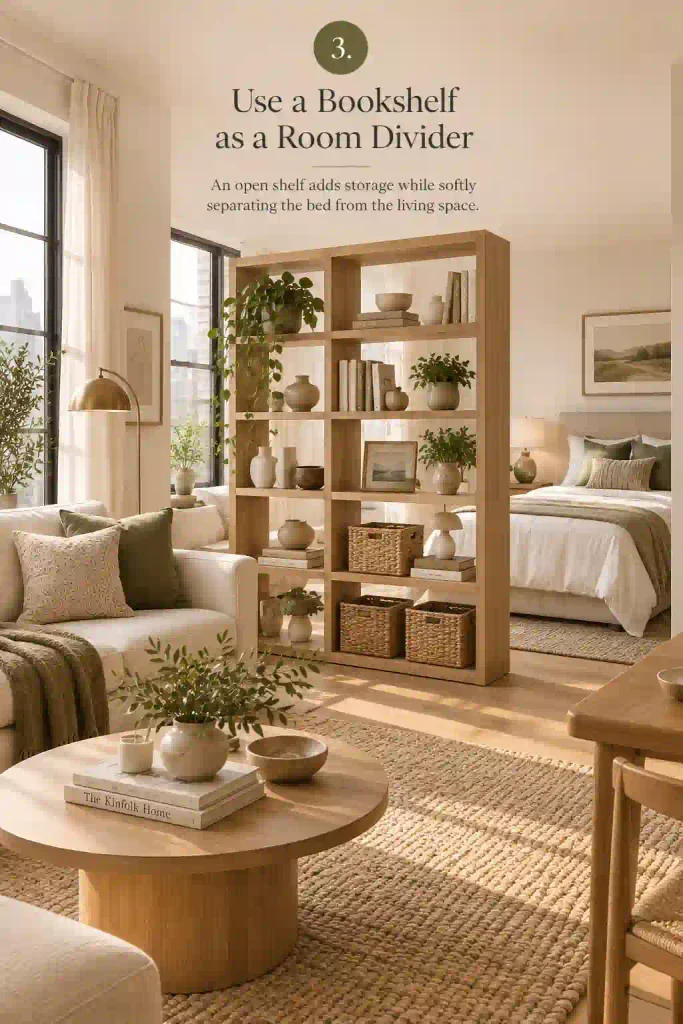
A tall, open-backed bookshelf placed perpendicular to a wall can double as both storage and a soft visual divider between your bed and your living space. Because it’s open rather than solid, light and sightlines still pass through, keeping the room from feeling chopped up or closed off, while still giving each zone its own sense of identity.
Float Your Seating Area Toward the Center
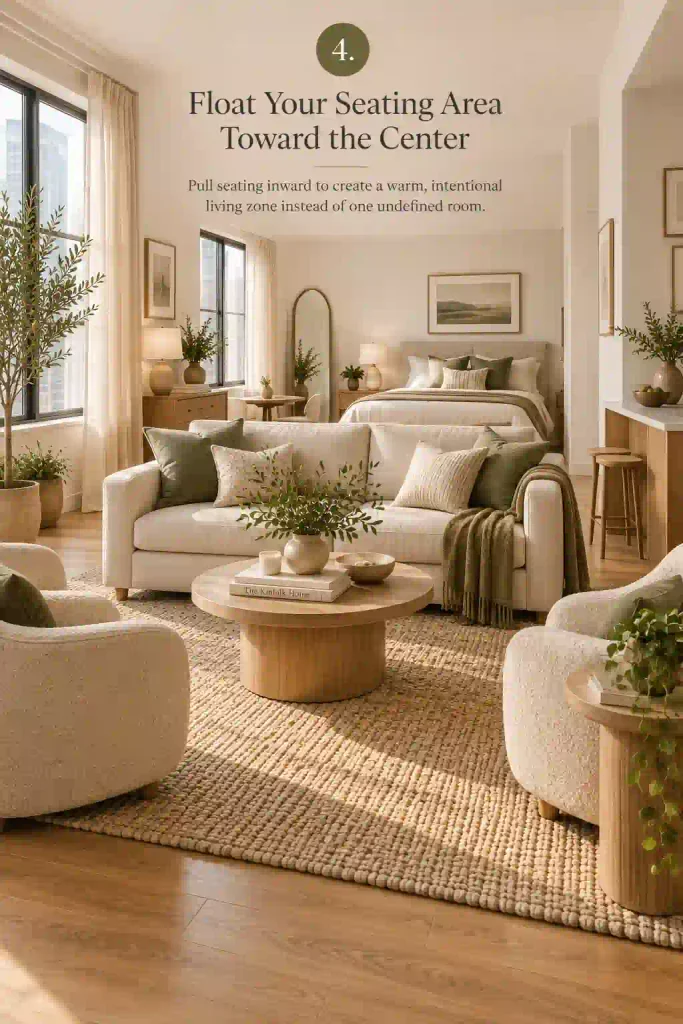
Rather than pushing your sofa and chairs against the walls to maximize open floor space, pulling seating a few feet inward and angling pieces toward each other creates a warmer, more intentional living area, even within a small footprint. This arrangement mimics how a full living room would naturally be laid out, giving your studio a sense of proper “rooms” rather than one continuous, undefined space.
Choose a Low-Profile Bed Frame
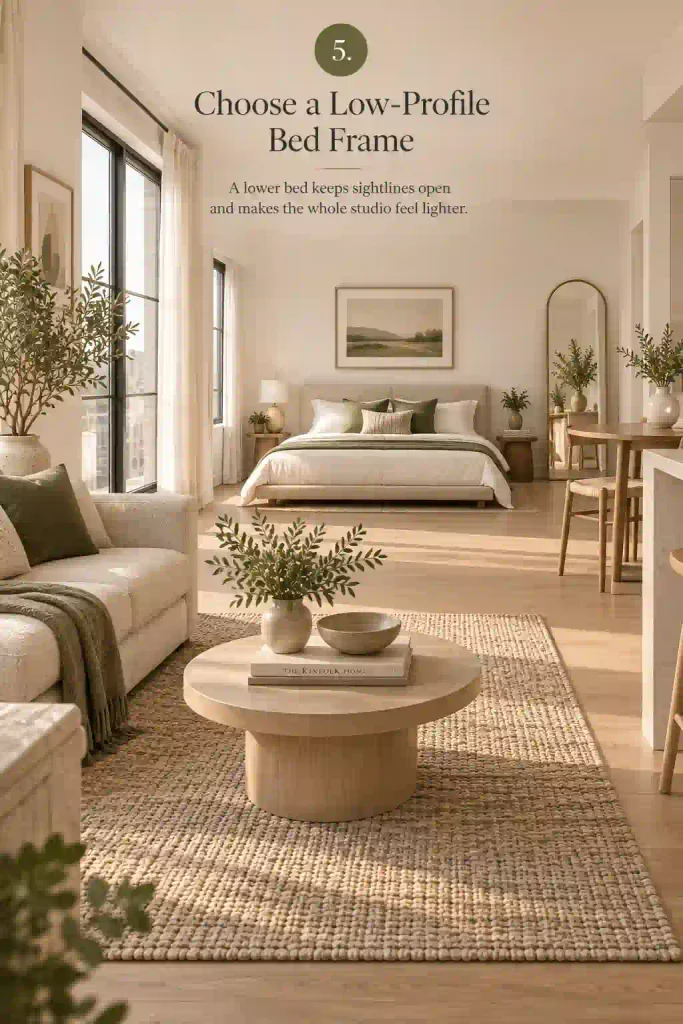
A bed with a low, sleek frame takes up less visual weight in the room than a tall, bulky bed frame, helping to keep sightlines open across the studio. This matters more in a studio than almost any other type of home, since the bed is often the largest single piece of furniture competing for visual space in the room.
Create a Dedicated Entry Moment
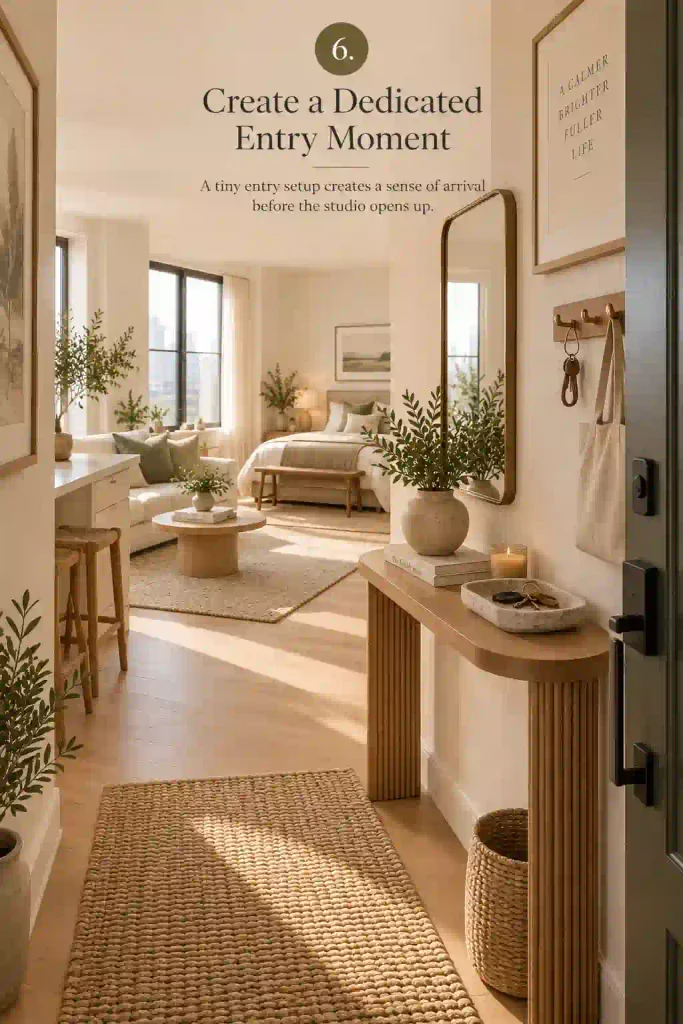
Even a few square feet by the front door can be styled into a small, intentional entryway with a slim console table, a hook for keys, and perhaps a small piece of art above it. This tiny transition space signals a sense of arrival the moment you walk in, rather than dropping you directly into the middle of your bed and living area at once.
Use Furniture With Consistent Sightlines
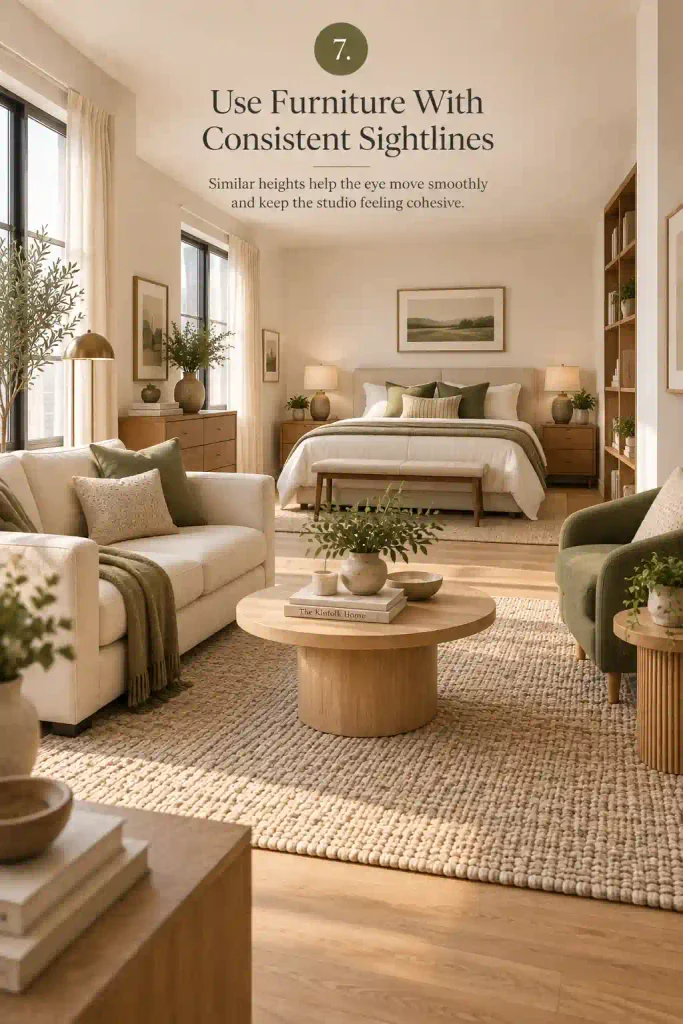
Choosing furniture at similar heights throughout the main living areas, rather than a jumble of tall and short pieces, creates a more visually calm and cohesive layout. This doesn’t mean everything needs to match exactly, but keeping key pieces like your sofa arm height and side table height relatively consistent helps the eye move smoothly across the room instead of jumping around.
Tuck the Workspace Into an Underused Corner
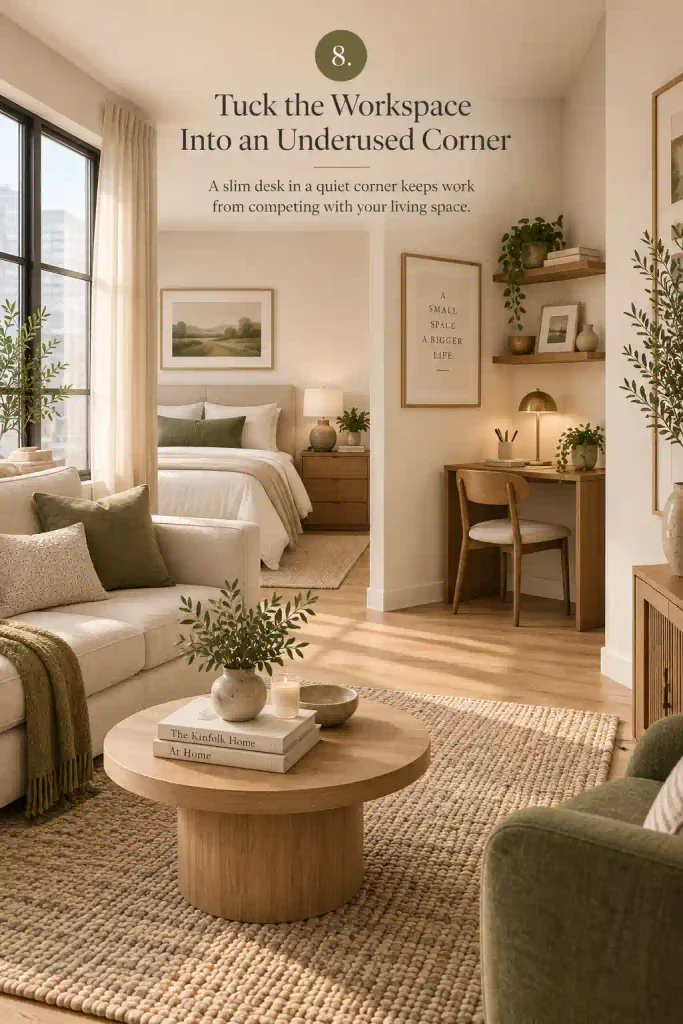
A slim desk positioned in an overlooked corner, rather than placed prominently in the center of the room, keeps your workspace from visually competing with your living and sleeping areas. A simple desk with a chair that can slide fully underneath when not in use also helps this zone disappear when you’re not working, keeping the overall layout feeling clean and multi-purpose.
Let One Statement Piece Lead the Room
Rather than filling a studio with many small decorative accents, choose one larger, more impactful piece, a bold piece of art, a striking light fixture, a unique accent chair, to anchor the whole space. This single, intentional choice does more for the room’s chic factor than a scattered collection of smaller items ever could, especially in a space where every square foot is visible from nearly every angle.
Use Curtains to Create Soft Separation
A simple curtain track mounted to the ceiling can create a soft, flexible divider between your sleeping area and the rest of the studio, offering privacy and definition without the permanence of a wall. This is a particularly good option for renters, since it requires no structural changes and can be opened fully during the day to keep the space feeling connected and open.
Keep a Clear Path Through the Whole Room
No layout, however beautifully styled, will feel chic if you have to awkwardly squeeze past furniture just to move through the space. Before finalizing your layout, walk the room the way you actually would each day, from the door to the bed, from the bed to the kitchen, from the seating area to the bathroom. Leaving clear, unobstructed paths throughout keeps the whole studio feeling open and effortless, rather than like an obstacle course dressed up with nice furniture.
The Real Secret Behind Effortless Studio Living
What makes a studio apartment feel effortlessly chic almost never comes down to having more money or more square footage than everyone else. It comes down to treating the space with the same intention you’d bring to a full house, giving each zone, sleeping, living, working, entering, its own sense of purpose, even without the walls to separate them. That intention is what creates the feeling people are actually responding to when they scroll past a beautifully laid out studio online.
You don’t need to start over to get there. Look at the furniture and layout you already have, and ask whether each zone in your studio has a clear identity of its own. Pull your seating away from the wall. Add a rug to define your bed area. Tuck your desk into a quiet corner. These small, thoughtful shifts, done with the furniture you already own, are often the entire difference between a studio that feels like a compromise and one that feels like it was designed exactly for the way you actually live.