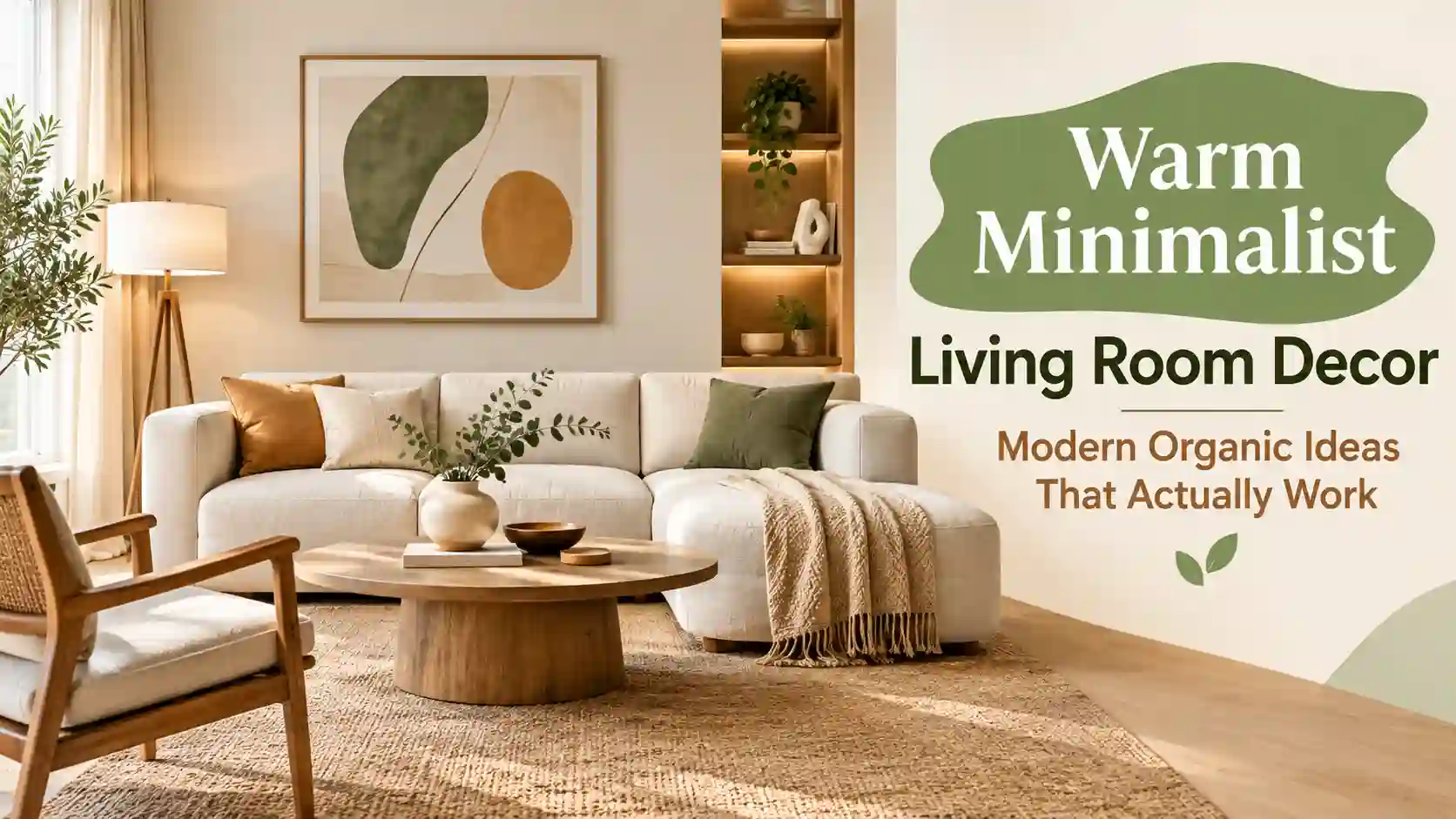
Warm Minimalist Living Room Decor: Let’s address the elephant in the room first. A lot of people hear “minimalist” and picture a sterile white box with one sad chair and nothing on the walls. A place that looks great on Instagram and feels absolutely nothing like home.
That’s not what we’re talking about here.
Warm minimalism, the modern organic kind, is a completely different animal. It keeps the “less is more” bones of minimalism but fills the space with texture, natural materials, and soft light instead of stark white everything. Think fewer things, but better things. Simple, but never empty.
Here’s how to actually make that work in your own living room, without it feeling like a showroom nobody’s allowed to touch.
The myth that’s holding people back
So many people avoid minimalism because they assume it means getting rid of everything they love. That’s simply not true. Warm minimalism isn’t about owning less for the sake of a number. It’s about keeping only what adds something real, comfort, beauty, or meaning, and letting go of the rest.
If a pillow makes you smile every time you see it, keep it. If a pile of mail has been sitting on your side table for three weeks, that’s clutter, not decor. The difference matters more than most people realize.
Start with furniture that has soft edges
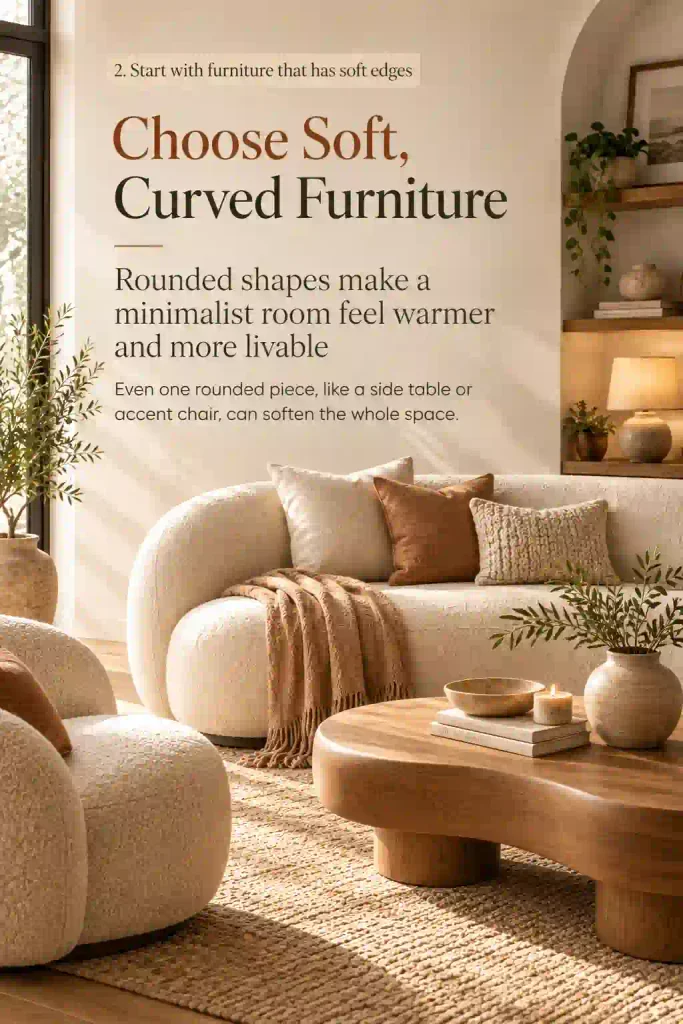
Hard, angular furniture tends to feel cold no matter what color you paint the walls. A sofa with gently rounded arms, a coffee table with curved edges, a chair with a soft, organic silhouette. These shapes feel more human, almost like they were made to be lived in rather than just looked at.
You don’t need a full furniture overhaul to get this. One rounded piece, maybe a side table or an accent chair, can shift the whole energy of the room.
Color: think “quiet,” not “boring”
Here’s where a lot of warm minimalist rooms go wrong. People hear “neutral” and reach for the coldest, most clinical white on the shelf. Don’t do that.
Reach for warm shades instead. Think:
- Oatmeal and cream instead of stark white
- Soft clay and terracotta instead of bright orange
- Warm taupe and greige instead of cool gray
- Deep olive or forest green for a grounding accent
These colors feel calm without feeling empty. They’re the difference between a room that feels peaceful and one that just feels unfinished.
Natural materials are non-negotiable
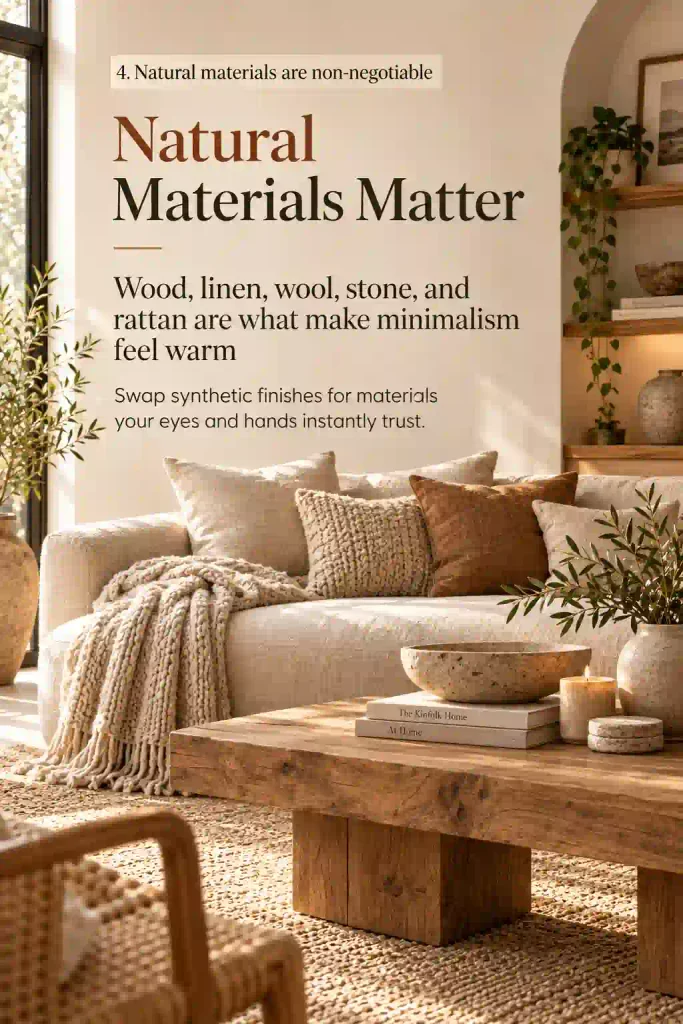
This is the detail that actually separates warm minimalism from the cold, sterile version everyone’s scared of. Wood, linen, wool, stone, rattan. These materials carry a kind of quiet richness that no amount of white paint can replace.
A linen sofa instead of a synthetic microfiber one. A solid wood coffee table instead of glass and metal. A wool throw instead of a polyester blanket. Small swaps, but your hands and your eyes notice the difference immediately.
Texture is doing more work than you think
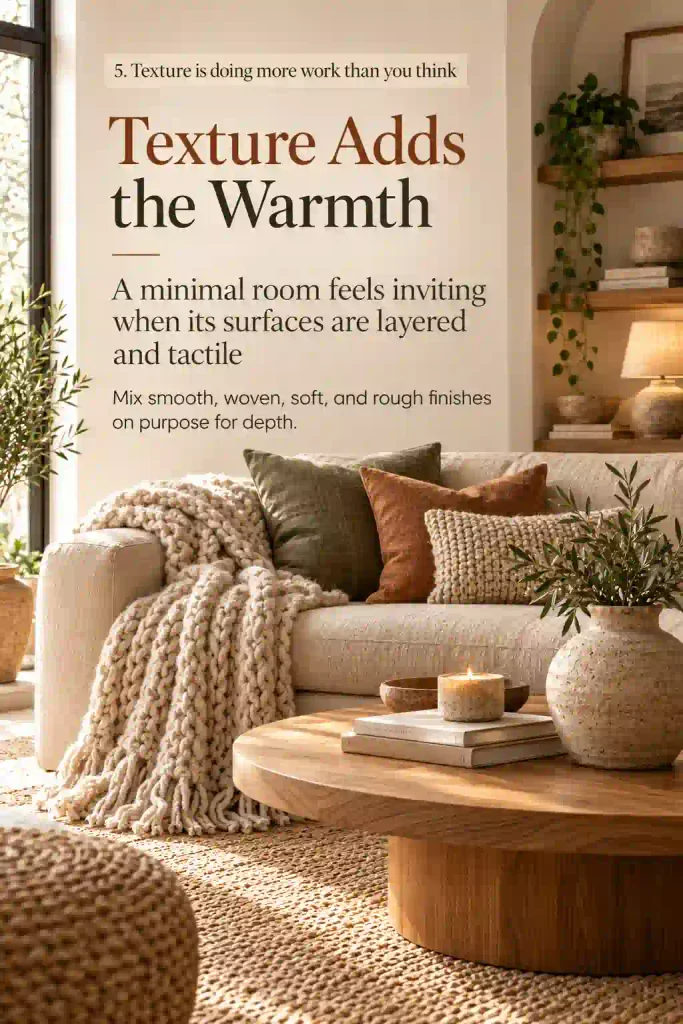
Picture a room painted entirely in soft cream, but every surface is smooth and flat. It would feel strangely cold, right? That’s because texture is what makes a minimal room feel warm instead of empty.
A chunky knit throw over a smooth leather chair. A woven jute rug under a sleek wood table. A rough ceramic vase next to a polished lamp base. Minimalism doesn’t mean uniform. It means intentional, and intentional rooms almost always mix textures on purpose.
Lighting changes everything, and it’s the cheapest fix on this list
A minimalist room under harsh white light feels like an office. The exact same room under warm, layered lighting feels like a retreat.
Swap cool white bulbs for warm ones. Add a floor lamp with a linen or paper shade in the corner. Light a candle or two in the evening. This is maybe the lowest-effort change on this entire list, and it might be the one that matters most.
Let a few plants be the “clutter”
In warm minimalism, plants are basically the one thing you’re encouraged to add more of. A big leafy plant by the window. A small cluster of pots on a shelf. They bring life and softness into a room that’s otherwise kept pretty quiet, and unlike most decor, they actually grow and change over time.
One good thing beats five okay things
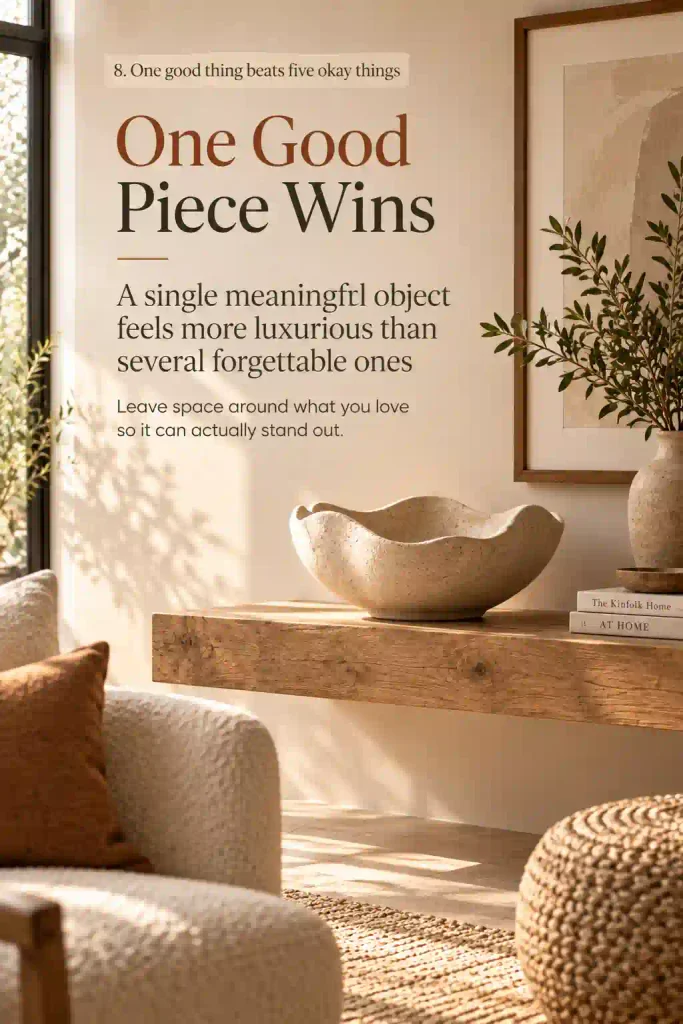
This is the rule I wish more people followed before they go shopping. Instead of buying five small decorative objects for a shelf, save up for one that you genuinely love. A handmade ceramic bowl. A sculptural wood object. One great piece of art.
A room with one meaningful item and a lot of open space feels more luxurious than one crammed with mediocre finds. It’s a strange psychological trick, but it works every time.
Give your eyes somewhere to rest
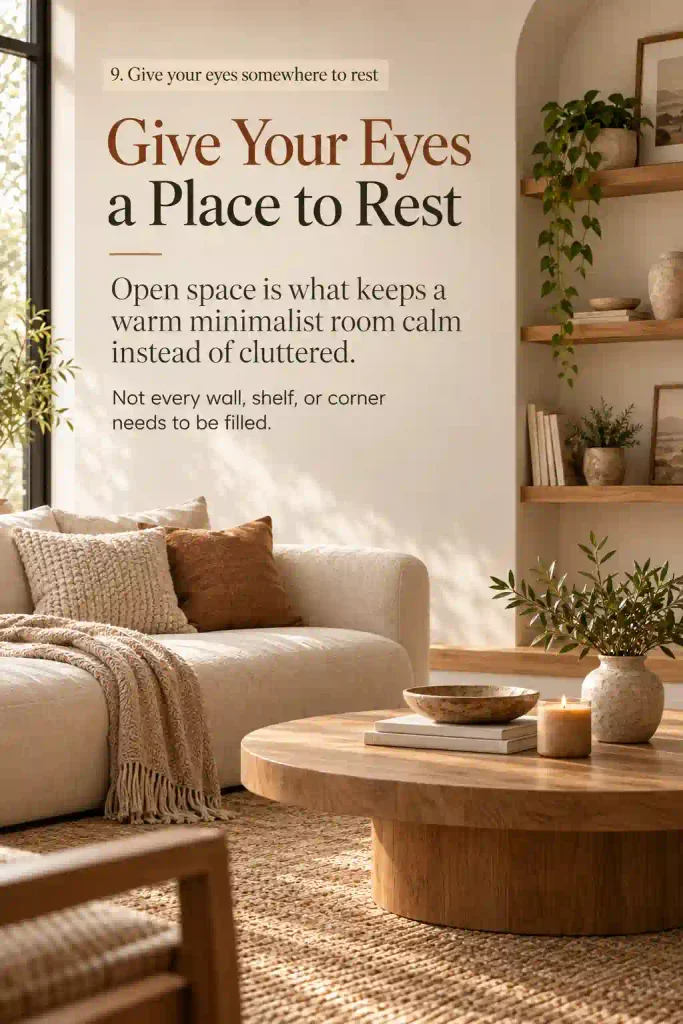
Every room needs at least one spot with nothing going on. An empty stretch of wall. A clear corner with no furniture at all. A shelf with gaps between objects instead of every inch filled.
This breathing room is what keeps warm minimalism from tipping into either extreme, too sterile on one side, too cluttered on the other. It sounds simple, but it’s honestly one of the hardest habits to build, especially if you’re used to filling every available surface.
A gentle reality check before you start
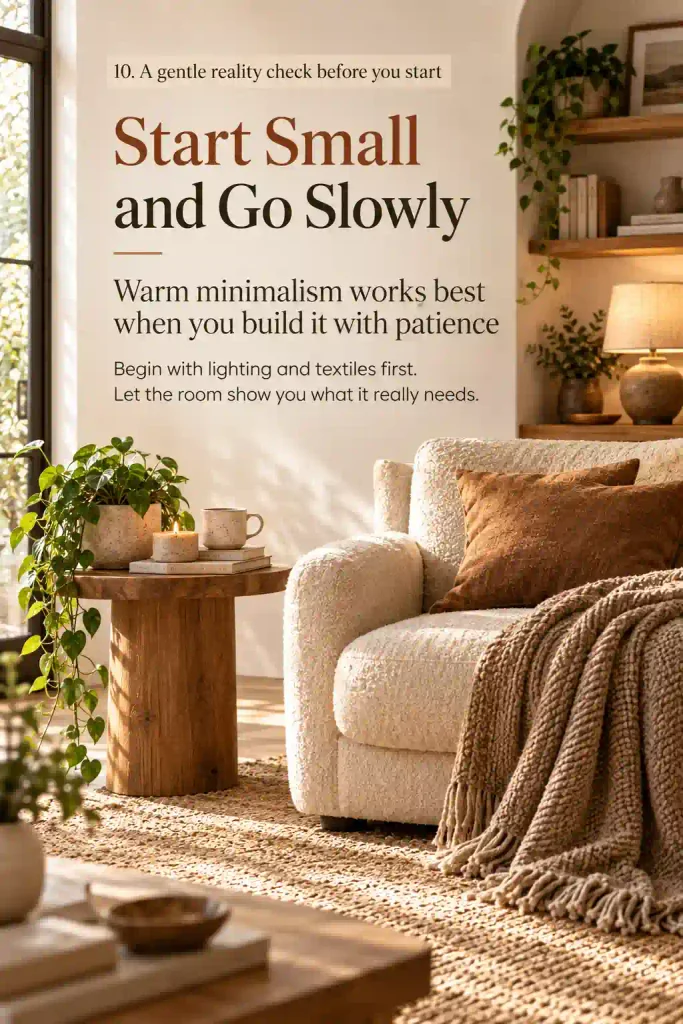
You don’t need to do all of this in one weekend, and honestly, you shouldn’t try. Warm minimalism rewards patience. Live with your space for a bit before adding anything new. Notice which corners already feel calm and which ones feel chaotic, then make changes from there instead of starting from scratch.
If money is tight, start with lighting and textiles. A warm bulb and a linen throw cost very little and change the whole feel of a room almost instantly. Furniture and bigger investments can come later, once you know exactly what the space actually needs.