
Modern Organic Living Room Decor Ideas: My friend Rachel redid her living room last spring, and the first time I walked in, I genuinely stopped at the doorway. Nothing about it screamed “look at me.” There was no bold accent wall, no matching furniture set from a catalog. Just curved wood, soft linen, a big plant leaning toward the window, and light that felt like it belonged there. I asked her what she called the style. She shrugged and said, “I just wanted it to feel like outside, but comfortable.”
Turns out, that’s exactly what modern organic decor is. It’s minimalism’s structure mixed with nature’s imperfection. Clean, but not cold. Simple, but never sterile. If you’re craving that same feeling in your own space, here are 10 ideas to get you there.
Swap sharp corners for soft curves
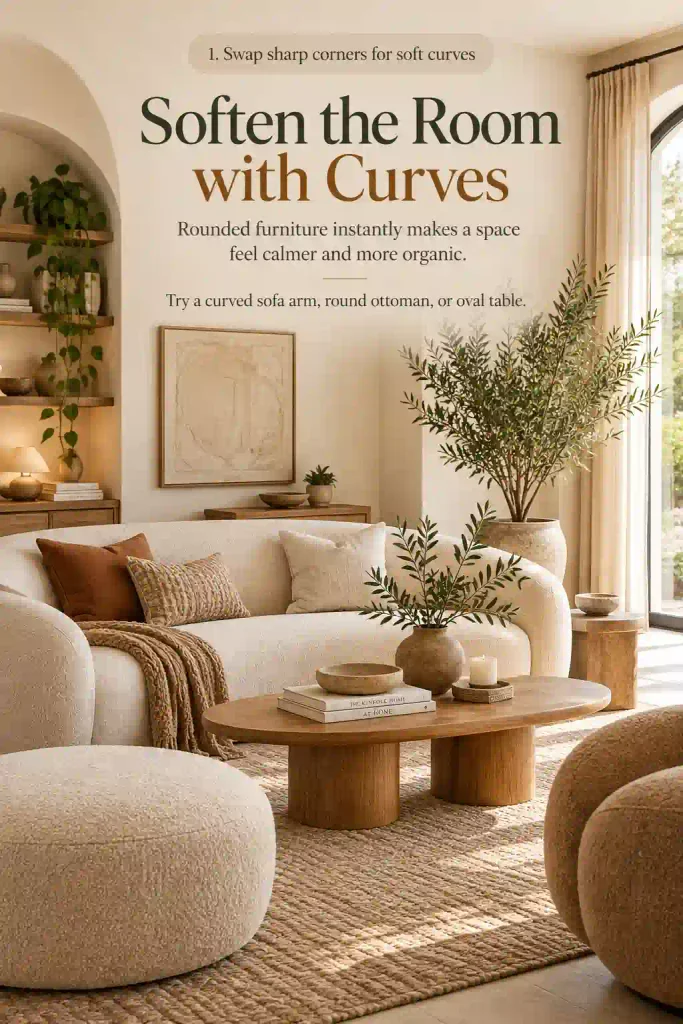
Start by looking at your furniture’s actual shape. Boxy sofas and square coffee tables feel heavy in an organic room. A curved sofa arm, a round ottoman, or an oval dining table immediately softens the whole space. You don’t have to replace everything at once. One rounded piece, like a side table, can shift the entire mood of a room.
Build your palette around what’s outside your window
Forget trendy paint chips for a second. Go stand outside and actually look around. Sand, bark, moss, clay, stone. These are your colors. Warm beige walls, olive green pillows, terra cotta accents, and a touch of deep charcoal for contrast. Nothing stark white, nothing neon. Even black should feel more like charred wood than hardware store jet black.
Let natural materials carry the room
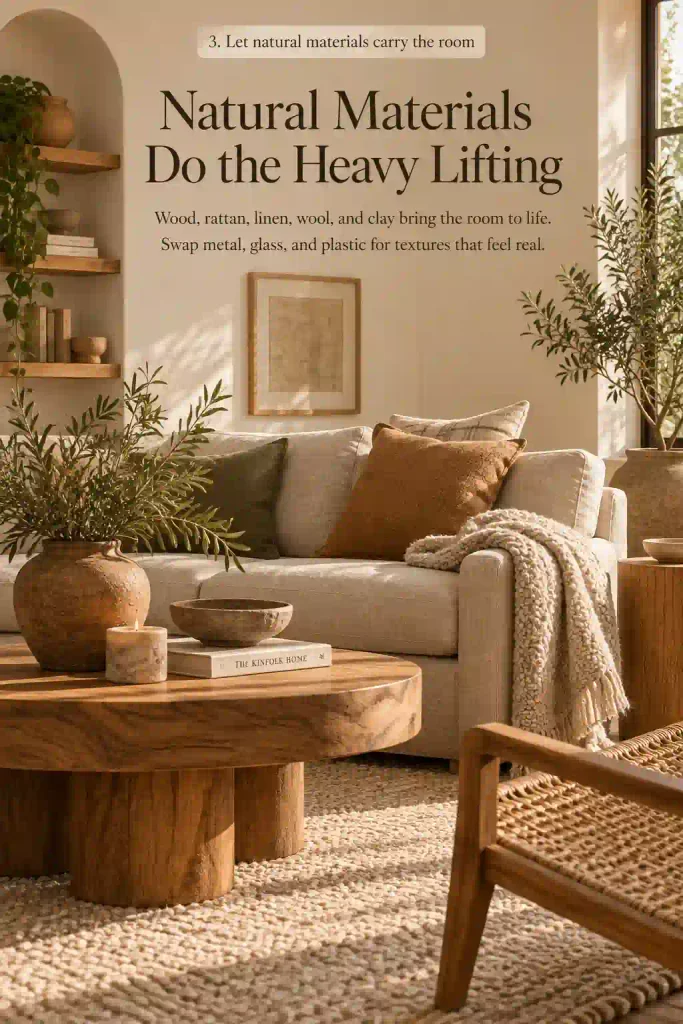
Here’s the thing nobody tells you: this style lives or dies on texture and material, not furniture shape alone. Wood grain, rattan weaving, raw linen, wool, unglazed clay. These materials have depth that plastic just can’t fake, no matter how nice the finish looks.
A few swaps that make a real difference:
- Trade glass or metal side tables for solid wood
- Replace synthetic throw pillow covers with linen or wool
- Swap plastic planters for terra cotta or stone pots
Don’t just add plants. Let them take over a little
A single sad plant in the corner doesn’t cut it here. Go bigger, or go in groups. A large fiddle leaf fig stretching toward a window. A cluster of smaller pots at different heights on the floor. Trailing vines creeping down a bookshelf. Plants in this style aren’t decoration. They’re basically part of the architecture.
Bad luck with plants in the past? Start with something nearly impossible to kill, like a snake plant or pothos, and build your confidence from there.
Rethink your lighting completely
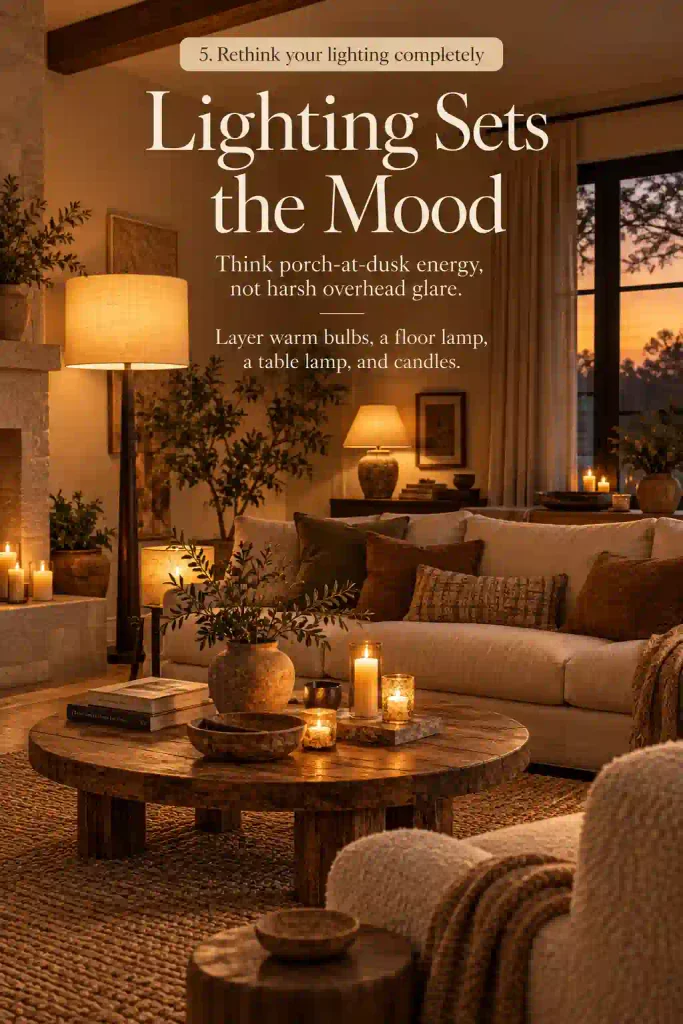
Picture candlelight on a porch at dusk. That’s the energy you’re going for, not a bright white ceiling fixture that makes the room feel like a waiting room. Layer in a floor lamp with a woven or linen shade, a small table lamp glowing in the corner, maybe even real or flameless candles on the coffee table.
Quick win: swap any cool white bulbs you own for warm ones. It’s maybe five bucks and it changes the entire feel of the room by evening.
Mix textures like you mean it
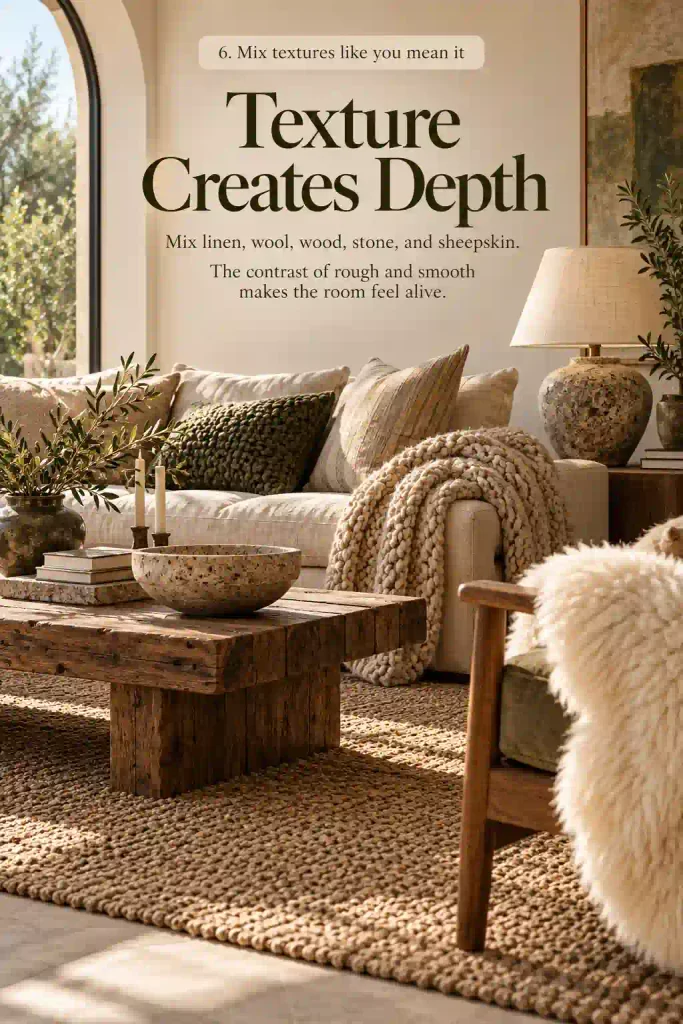
A linen sofa. A chunky wool throw. A smooth stone lamp base. A rough wood coffee table. A sheepskin draped over a chair arm. None of these match in the traditional sense, and that’s the whole point. The contrast between rough and smooth, matte and soft, is what gives organic rooms their depth. Rooms that use only one texture tend to feel flat, even with a great color palette.
Choose one statement piece, not ten small ones
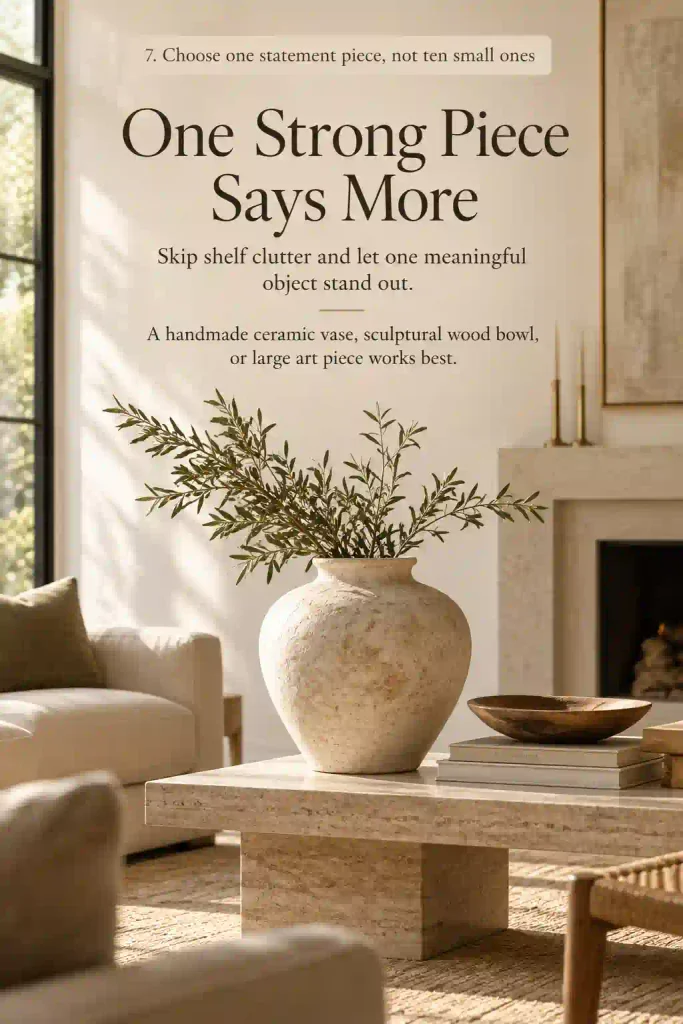
Instead of filling shelves with a dozen little trinkets, pick one piece that actually earns its spot. A large handmade ceramic vase. A sculptural wood bowl. One big piece of abstract art leaning against the wall rather than hung with a nail. Organic design trusts restraint. A single meaningful object says more than a crowded shelf ever could.
Bring in natural light wherever you can
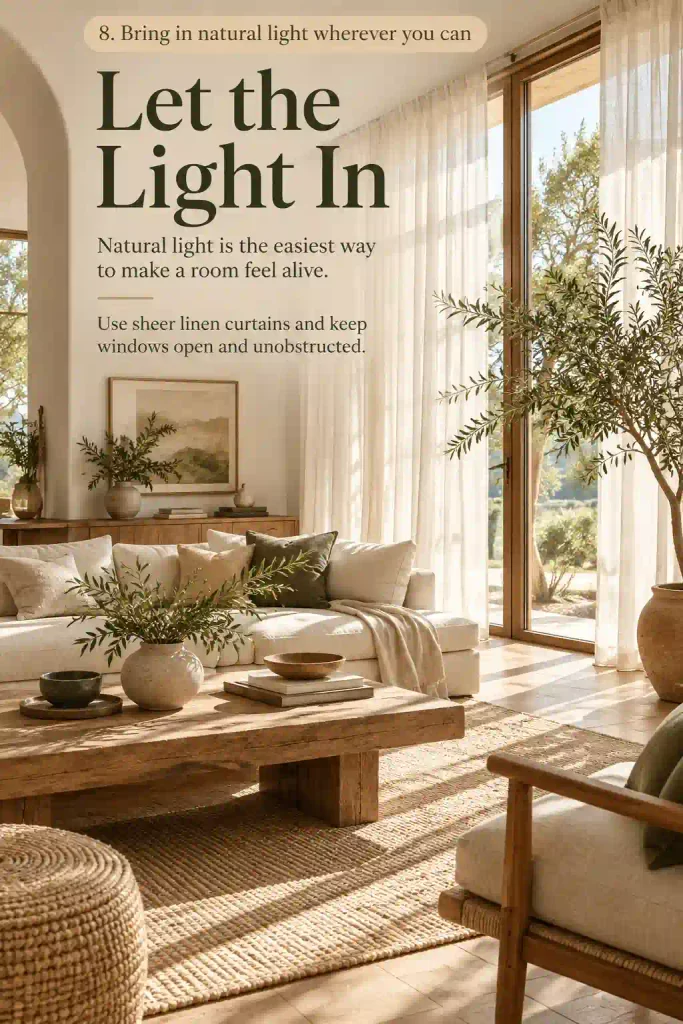
If your windows are currently blocked by heavy drapes, this is your sign to let them breathe. Sheer linen curtains, left mostly open during the day, let soft daylight pour in and change character from morning to evening. Natural light is basically free decor, and it’s the single biggest thing separating a flat, staged room from one that feels genuinely alive.
Add a rug that feels like it was woven by hand
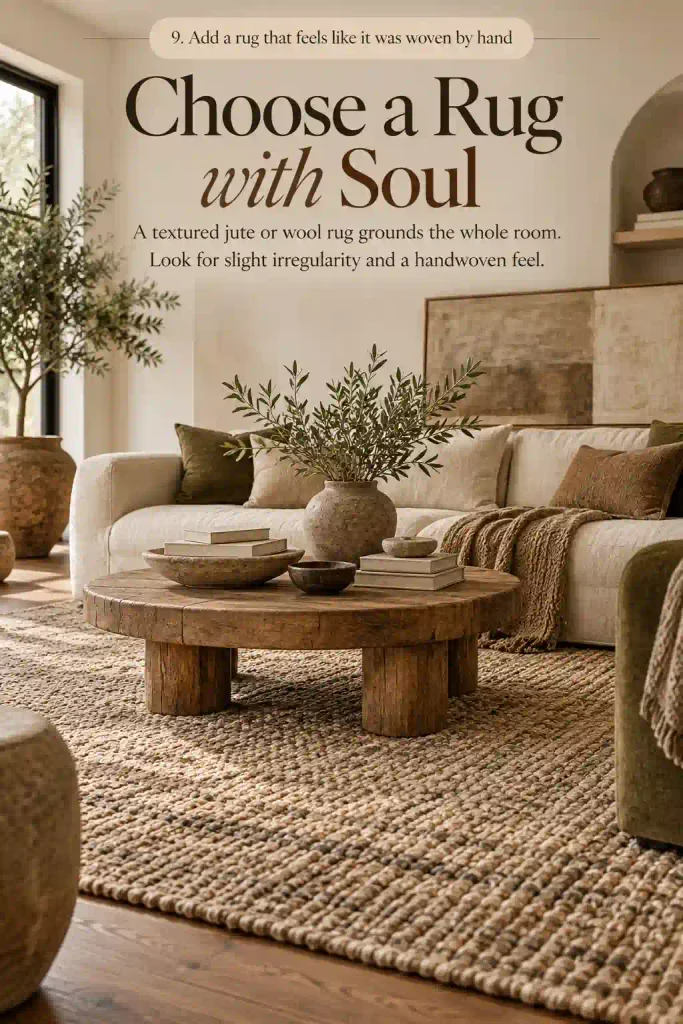
A jute or wool rug with slight texture and irregularity does more for an organic room than almost anything else on this list. Skip anything with a glossy sheen or a perfectly uniform machine-made pattern. You want something that looks like it has a story, even if it came from a regular furniture store.
Leave some space empty, on purpose
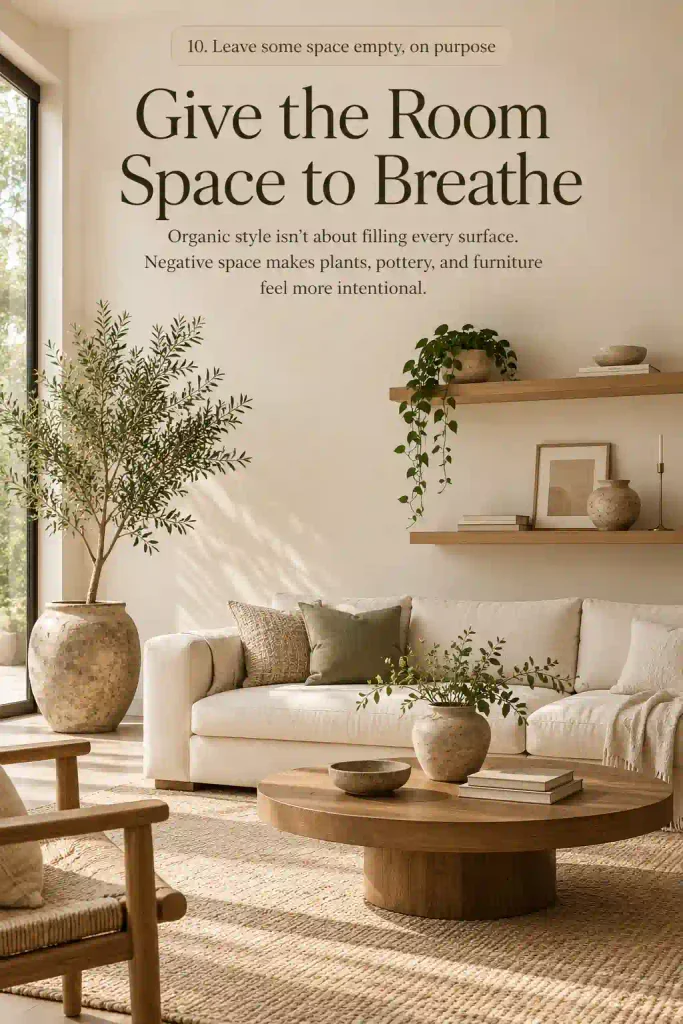
This one trips people up the most. Organic doesn’t mean filling every surface with plants and pottery. It means curating. Leave a stretch of wall bare. Let a shelf have breathing room between objects. A room that’s allowed to breathe feels calmer than one stuffed wall to wall, no matter how beautiful each individual piece is.
A few honest notes before you start
If you’re working with a tight budget, don’t try to do all 10 of these at once. Start with lighting and textiles first; a warm lamp and a couple of linen pillow covers will shift the feel of a room more than you’d expect, and for a fraction of what new furniture costs. Thrift stores and estate sales are also worth a slow Saturday morning if you’re hunting for solid wood pieces. A little sanding and some oil can turn a scratched-up table into something that looks like it belongs in this style on purpose.
And try not to rush the color choices. Tape up fabric swatches or paint samples and actually live with them for a week. Watch how they shift under morning light versus lamp glow at night. This style rewards patience more than quick decisions.