In 2019, my house looked like a gas station.
I’d bought every strand on sale: blinking multicolor, chasing white, a plastic Santa with a cracked face. I hung it all on a cold Saturday and flipped the switch. My wife stood in the driveway, tilted her head, and said, “Well… it’s bright.”
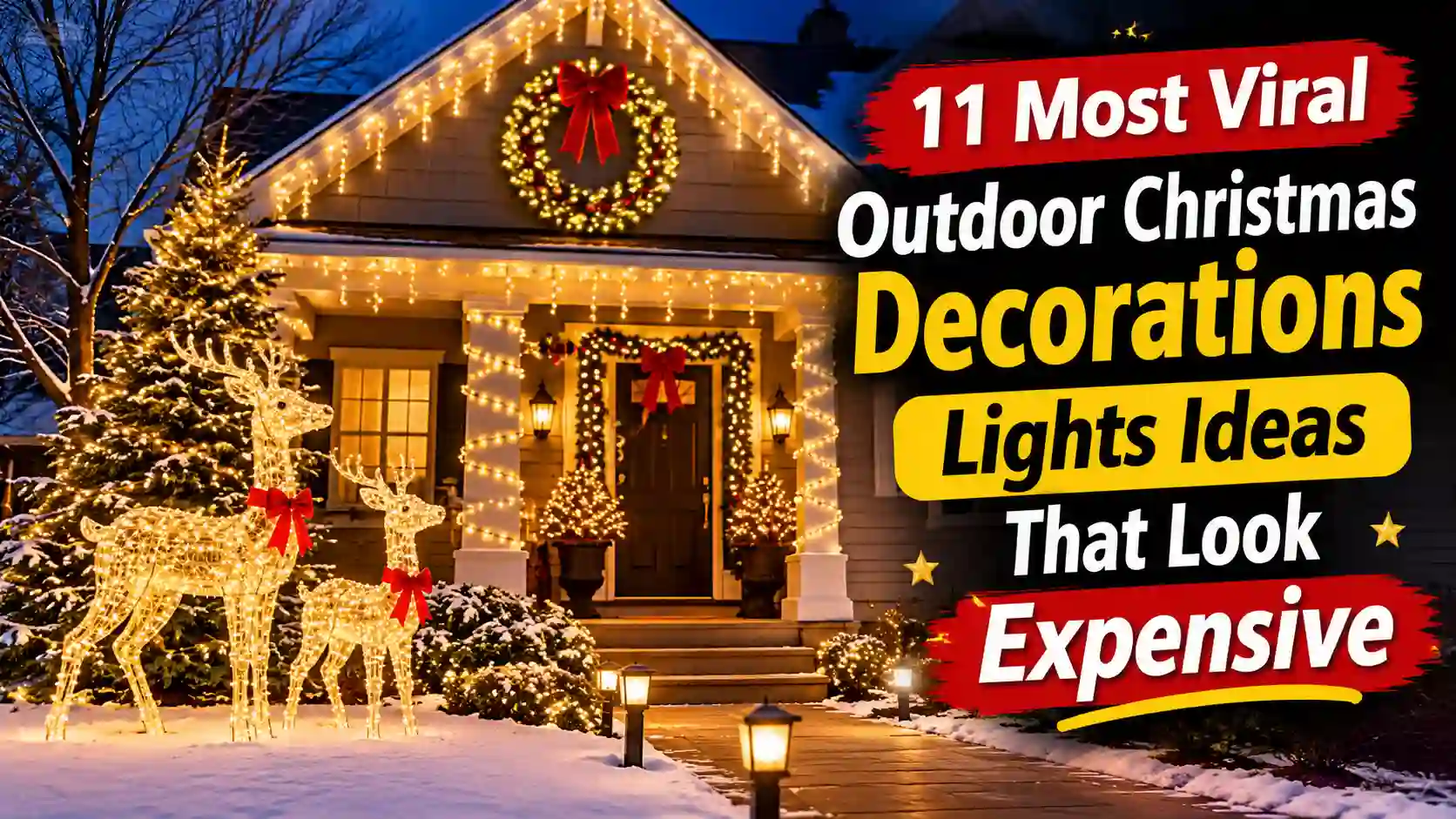
Across the street, Mr. Alvarez had done something different. His house just glowed. Soft white lines, a wreath in every window, and a few trees lit from below. Nothing flashy, and it looked like a million bucks.
I walked over and asked what he’d spent. He laughed. “Probably less than you. I just stopped adding stuff.”
That sentence changed how I decorate. Here are the 11 swaps I learned from him, and from a few years of trial and error.
The Swaps
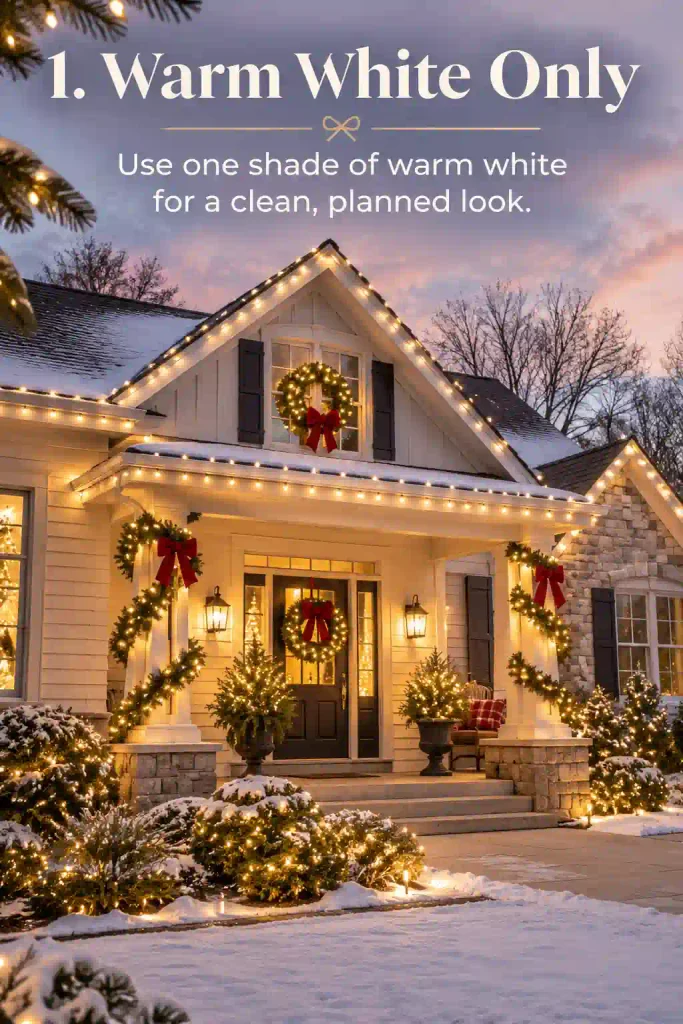
Warm white only
Instead of: multicolor blinkers on every surface.
Try: one shade of warm white (look for “2700K” on the box) everywhere. A single color makes the whole house look planned. If you love color, pick one accent, like red bows, and stop there.
A straight, tight roofline
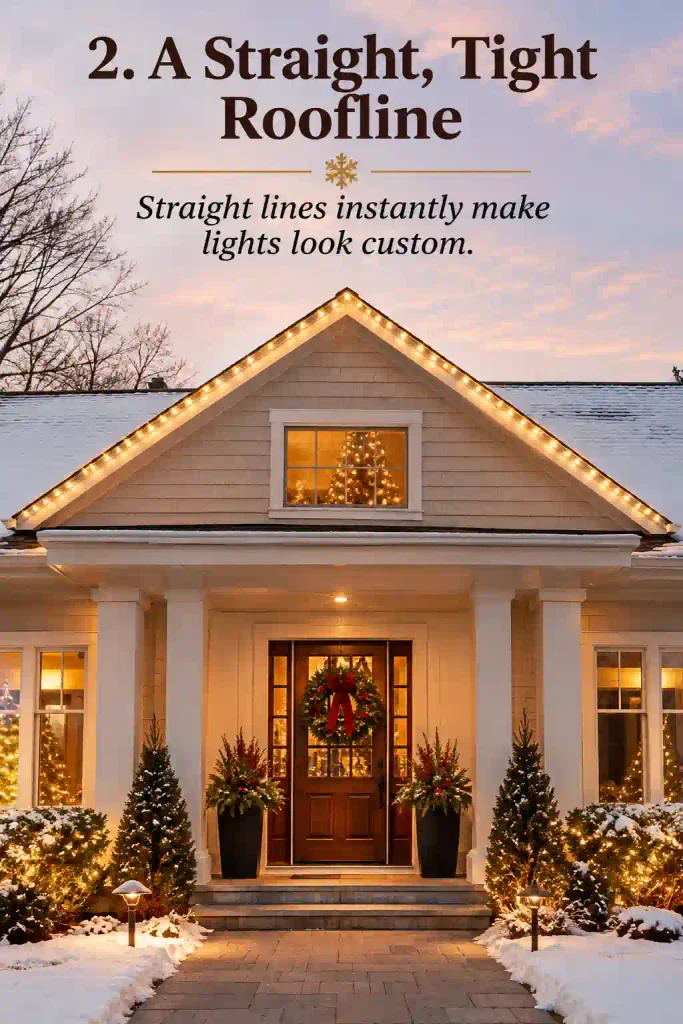
Instead of: sagging strands with gaps and bunches.
Try: plastic clips spaced every 8 to 10 inches, pulled snug. It’s the most boring step and the one that matters most. Crooked lines look cheap, and straight ones look custom.
Outline the windows and door
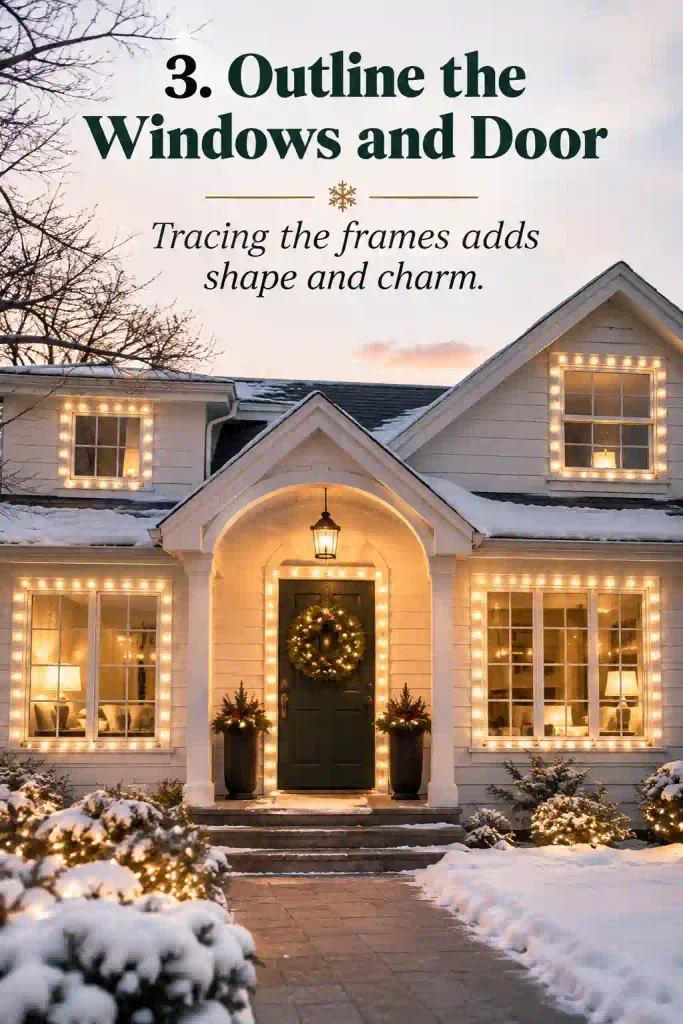
Instead of: lights stuck only on the roof.
Try: tracing the frames of your front windows and your door. This highlights the shape of your house, the same way a good picture frame does for a painting.
Wrapped trunks with even spacing
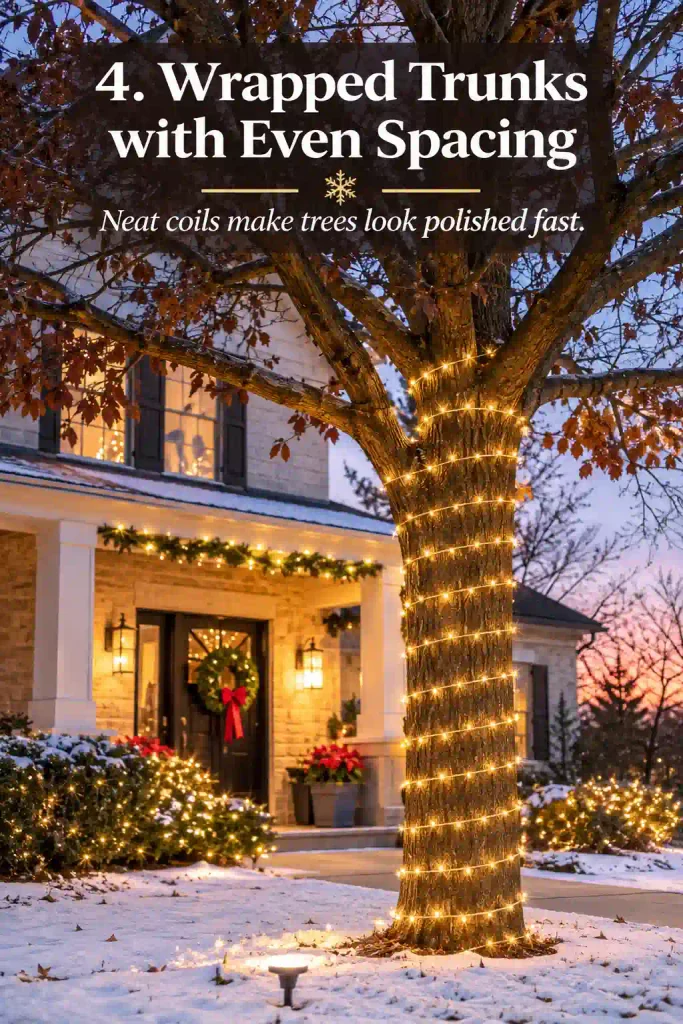
Instead of: random loops tossed over branches.
Try: wrapping the trunk from the bottom up, with coils about four inches apart. Stop at the first big branch. It looks neat, and it takes about 15 minutes per tree.
The same wreath in every window
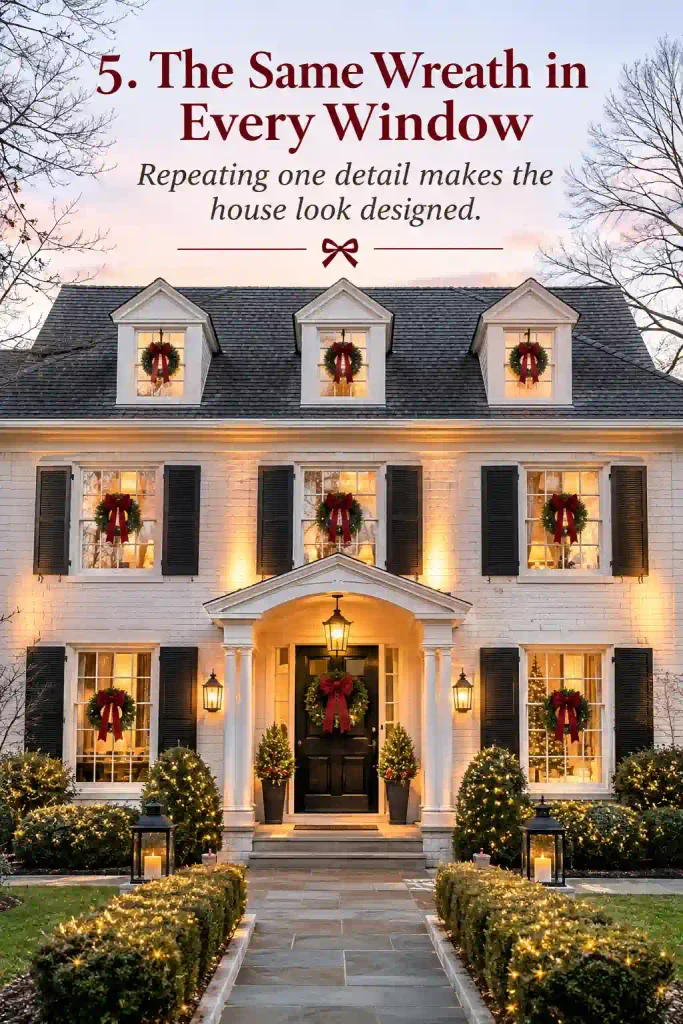
Instead of: one small wreath on the door and nothing else.
Try: a matching wreath in each front window, all with the same wide ribbon. Repeating one thing is what makes a house look designed. Battery-powered lit wreaths keep cords out of the picture.
Full, fluffy garland
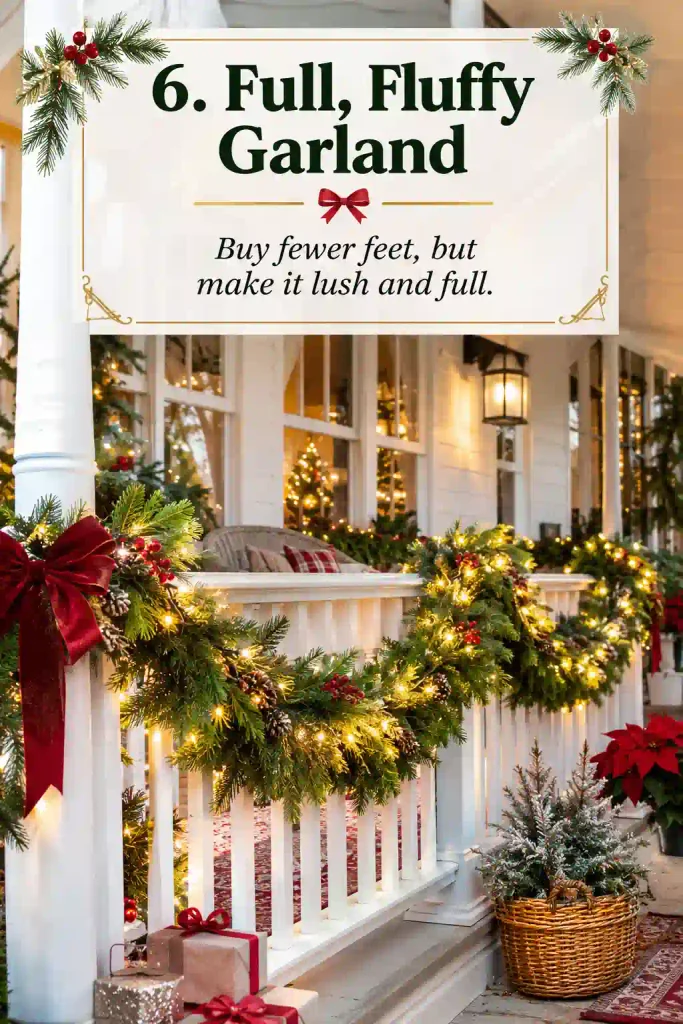
Instead of: thin garland drooping across the porch.
Try: pre-lit garland with real body, fluffed out branch by branch. Fastening it with zip ties every foot keeps the swoop even. Thin garland is a classic budget trap, so buy fewer feet of the good stuff.
Planters with lit greenery
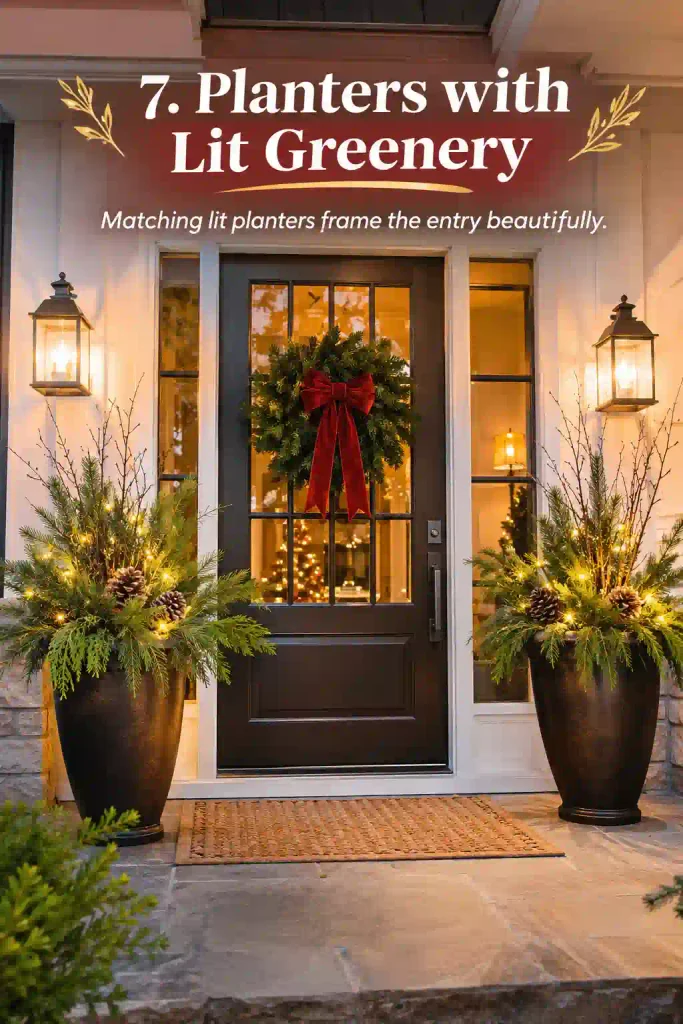
Instead of: empty pots by the door in December.
Try: two matching planters filled with evergreen branches, a few pinecones, and a battery light strand tucked inside. They frame the entry like a hotel lobby, and you can build both for under $40.
Uplighting on trees and the house
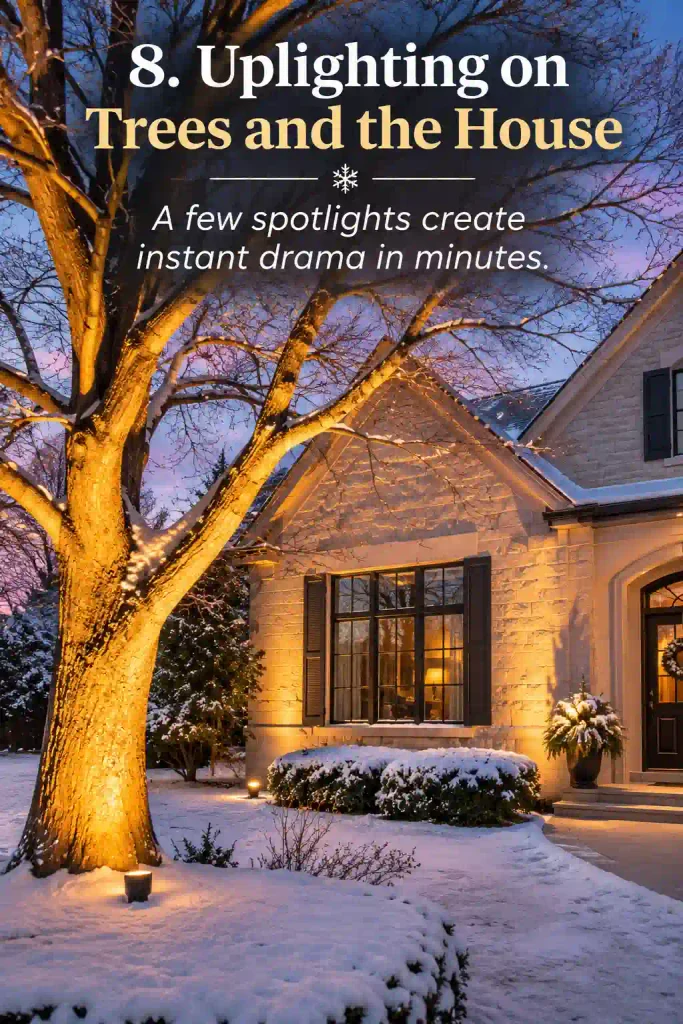
Instead of: covering every branch with strands.
Try: two or three outdoor spotlights aimed up at your biggest tree or the front of the house. It looks dramatic and a little mysterious, and it takes 10 minutes. This is the trick Mr. Alvarez used.
Evenly spaced path lights
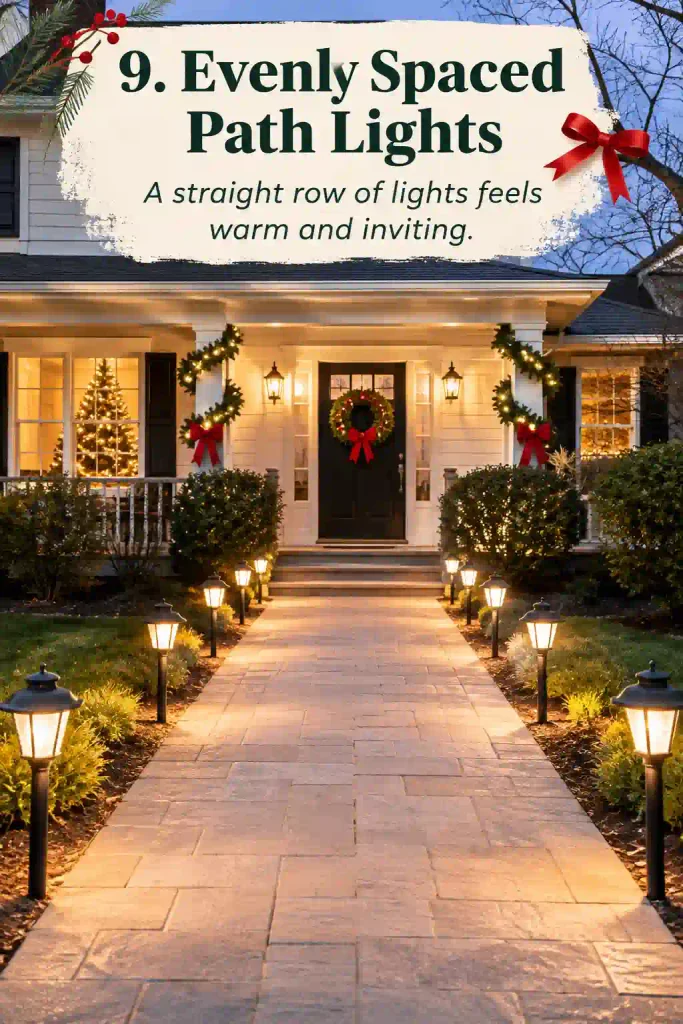
Instead of: a random cluster of stakes near the front step.
Try: pathway lights spaced about six feet apart, running straight to the door. Even spacing makes a walkway feel like an invitation. Warm white or simple lantern styles look best.
Hidden cords
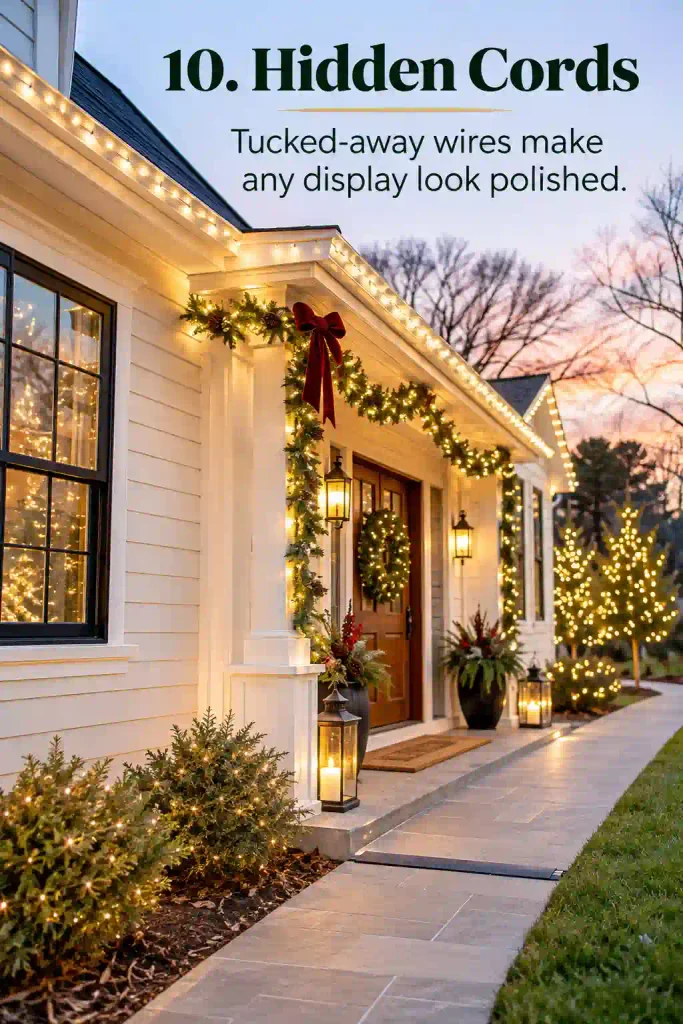
Instead of: orange extension cords snaking across the lawn.
Try: green or brown cords tucked along the siding, with a cord cover where they cross a walkway. Hidden wires are a small detail, but they’re the first thing that makes a display look amateur.
Leave some darkness
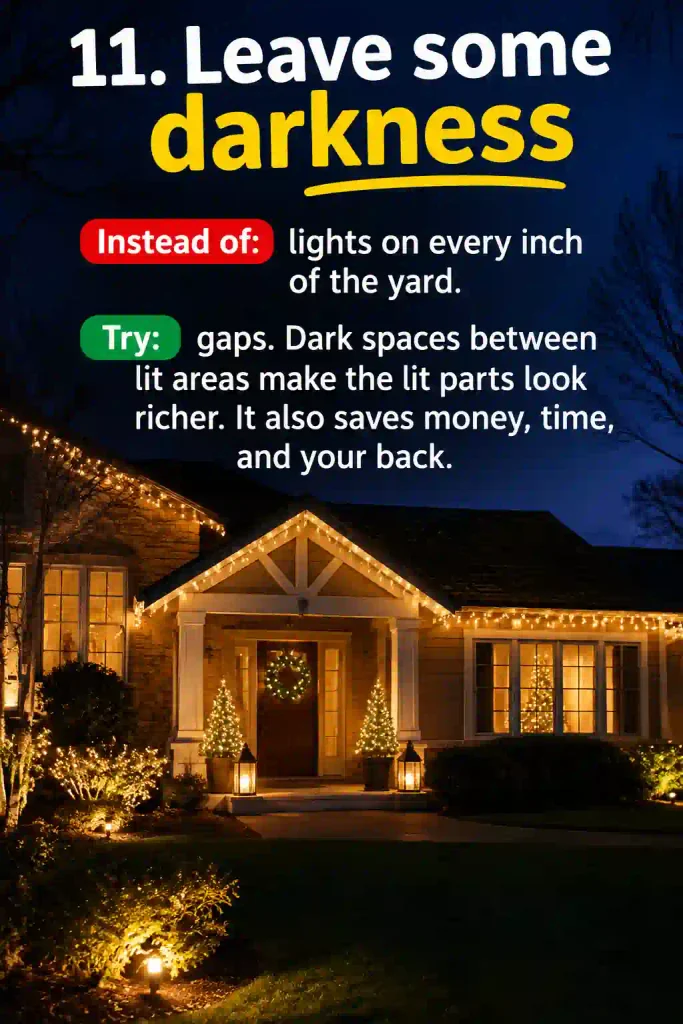
Instead of: lights on every inch of the yard.
Try: gaps. Dark spaces between lit areas make the lit parts look richer. It also saves money, time, and your back.
What You’ll Spend
You don’t need a big budget. Here’s a rough idea for a small home:
- Roofline and window lights: $40 to $70
- Two wreaths with ribbon: $30 to $50
- Two spotlights: $25 to $40
- Path lights: $20 to $35
- Timer and cord covers: $15
Total: about $130 to $210. Not bad for a house people slow down for.
Safety First, Because Cold Nights Are Slippery
- Use outdoor-rated lights and cords only. Indoor ones aren’t made for rain or snow.
- Plug into a GFCI outlet. It shuts off the power if things get wet.
- Don’t link too many strands. The box tells you the limit, so follow it.
- Use a spotter on the ladder. I’m serious about this one. No light display is worth a broken wrist.
- Test every strand on the floor first. Finding a dead section while you’re up on the roof is no fun.
The Part I Didn’t Expect
My dad used to hang our lights every year. He did it with a thermos of coffee, a lot of muttering, and a tangle of cords that never untangled. As a kid, I thought it was the most boring job on earth. I stood at the bottom of the ladder, holding the end of a strand and wishing I could go inside.
Now I’m the one on the ladder, and my daughter is at the bottom, holding the end of a strand. She’s eight. She’s bored. She keeps asking if it’s time for hot chocolate.
And somewhere between the clips and the cold fingers, I got it. Those weren’t boring Saturdays. They were Saturdays my dad spent with me, doing something small so the house would feel like ours.
When I flipped the switch that first night after Mr. Alvarez’s advice, nobody gasped. There was no big show. My daughter just leaned against my side and said quietly, “It looks cozy.”
Cozy is better than impressive. And funny enough, cozy is what looks expensive.
So pick three swaps from this list. Start with the warm white and the straight roofline. Make a thermos of something hot. Hand a kid the end of a strand, even if they’re bored, because one day they’ll remember it.
Then flip the switch and take a minute to stand in the driveway. You earned it.
FAQ, Outdoor Christmas Lights
How do I make my house look expensive with Christmas lights?
Stick to one color, usually warm white, and keep your lines straight and evenly spaced. Add a few matching details, like wreaths in each window and lit planters by the door. Hide cords and leave some dark gaps so the lit areas stand out.
What color Christmas lights look the most high-end outside?
Warm white is the top choice for a classic, upscale look. Cool white can look icy and modern, but it can feel harsh on some homes. If you want color, use it sparingly as an accent.
How many Christmas lights do I need for my house?
A common guide is one strand of about 100 lights per 4 to 5 feet of roofline. Measure the areas you plan to light, then add about 10 percent extra for corners and surprises.
Are LED Christmas lights worth it for outdoor decorating?
Yes. LEDs use much less electricity, stay cooler, and last longer than older incandescent bulbs. They cost a little more up front but usually save money over a few seasons.
How do I hang Christmas lights without damaging my roof or gutters?
Use plastic clips made for gutters, shingles, or siding instead of nails or staples. Start at the outlet end and work in one direction, with someone holding the ladder.