Roll down your window. It’s a cold December night, the heater is humming, and your kid is pressed against the glass in the back seat, whispering, “Slow down, Dad, slow down.”
You know this drive. Every family has one. You turn onto a street you’d normally ignore, and suddenly the whole neighborhood is glowing. Someone’s porch looks like a snow globe. Someone’s tree is wrapped in light. And you think, I want my house to feel like that.
So let’s take that drive together. Each stop below is a different part of your home, from roof to curb. Pick what fits your budget and your Saturday.
Stop One: The Roofline
Clean, simple warm white lights
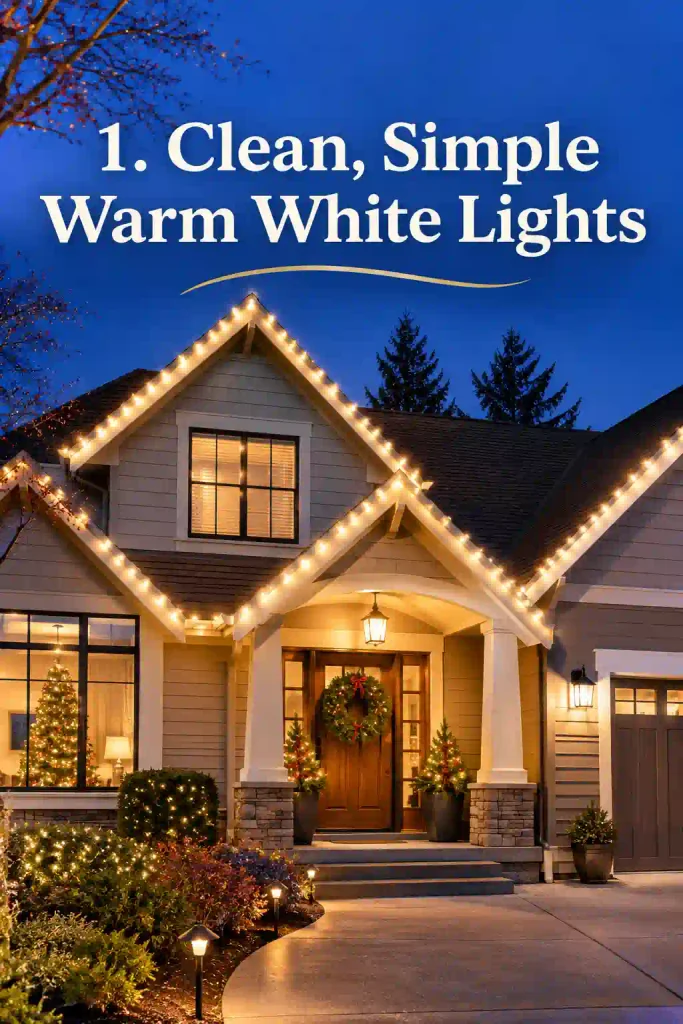
Run one strand along the edge of the roof, and your house looks like it’s wearing a crown. Plastic clips made for gutters and shingles work better than nails, and they come off without damage. Warm white looks classic and a little bit nostalgic.
Icicle lights on the eaves
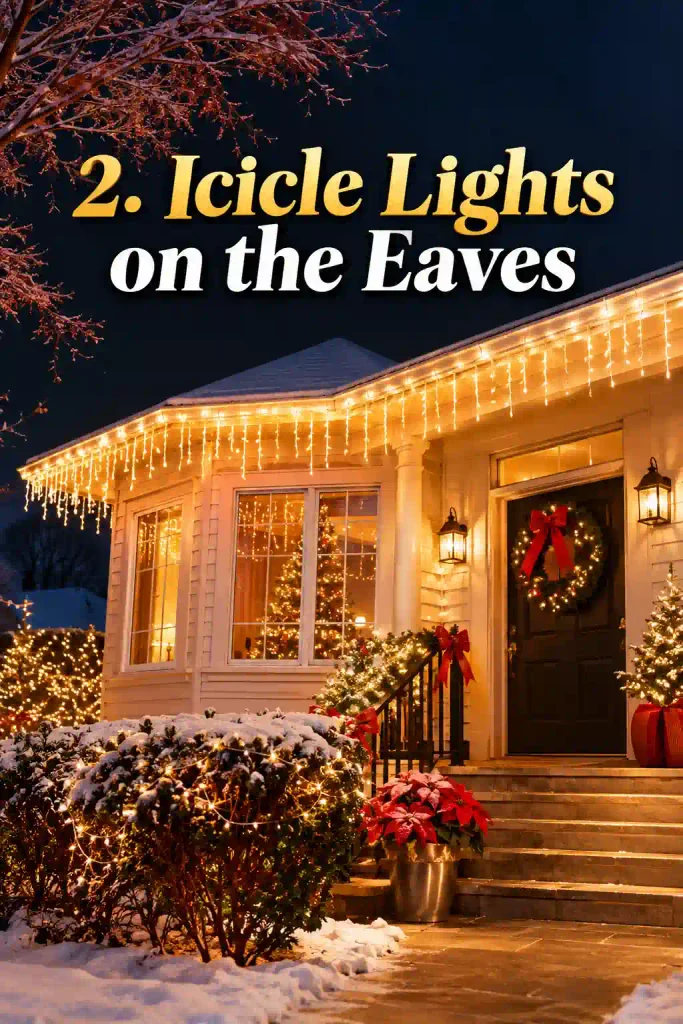
These hang down like frozen drips and shimmer when the wind moves them. Measure your roofline first so you buy enough. Nothing is more annoying than running out four feet from the corner.
A lit star or wreath at the peak

One big focal point up high gives the eye somewhere to land. A battery or plug-in star above the garage or front gable looks bold, even with nothing else around it.
Stop Two: The Front Door
A glowing wreath
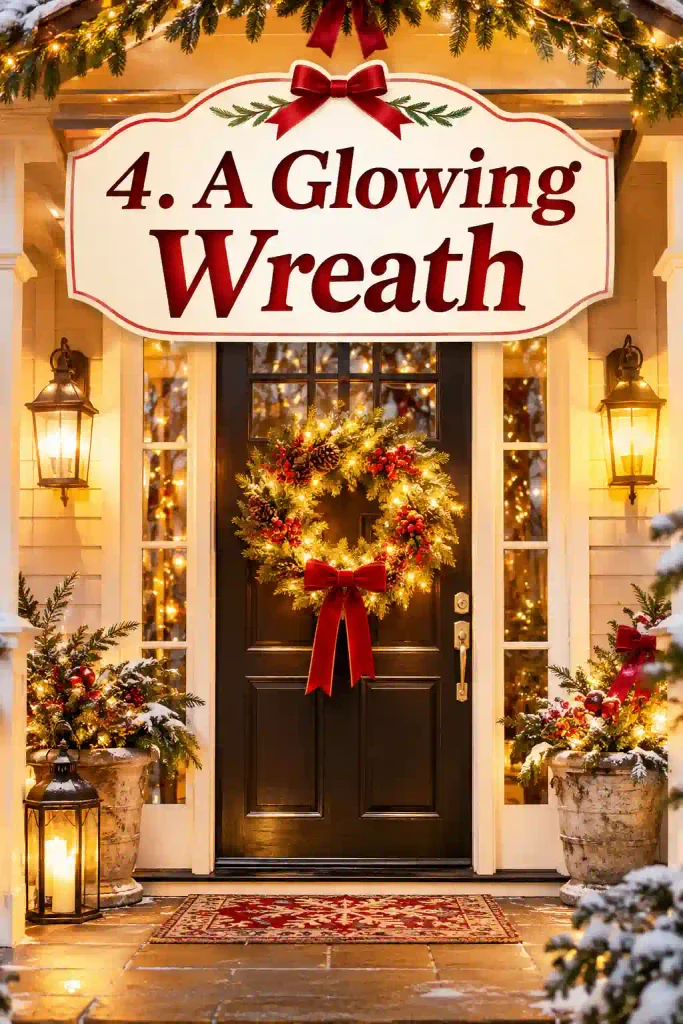
Pick one with built-in lights, or add a small battery strand to the one you already own. When you pull into the driveway after a long shift and see that little glow, the whole day softens.
Garland along the porch railing
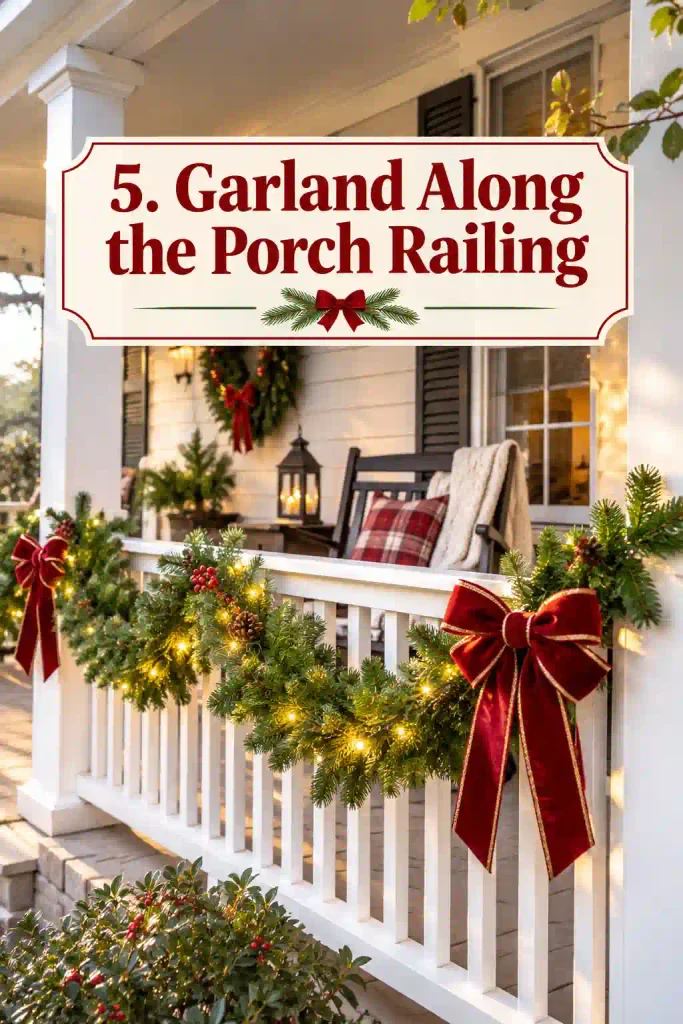
Wind a pre-lit garland around the rail and tuck in a few ribbon bows. If you rent, use zip ties or removable hooks and skip the staples.
Wrapped porch columns
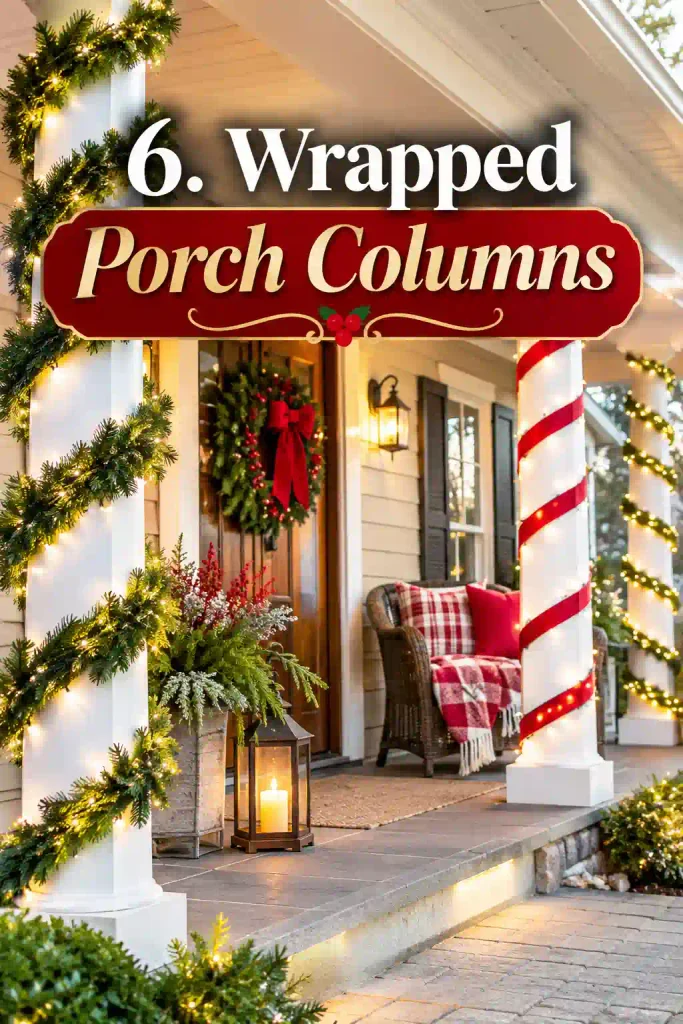
Spiral lights up each post, or wrap them red-and-white like a candy cane. It’s easy, and it makes the porch feel like an invitation.
Stop Three: The Yard
This is where the neighborhood starts to slow down.
Wrapped tree trunks
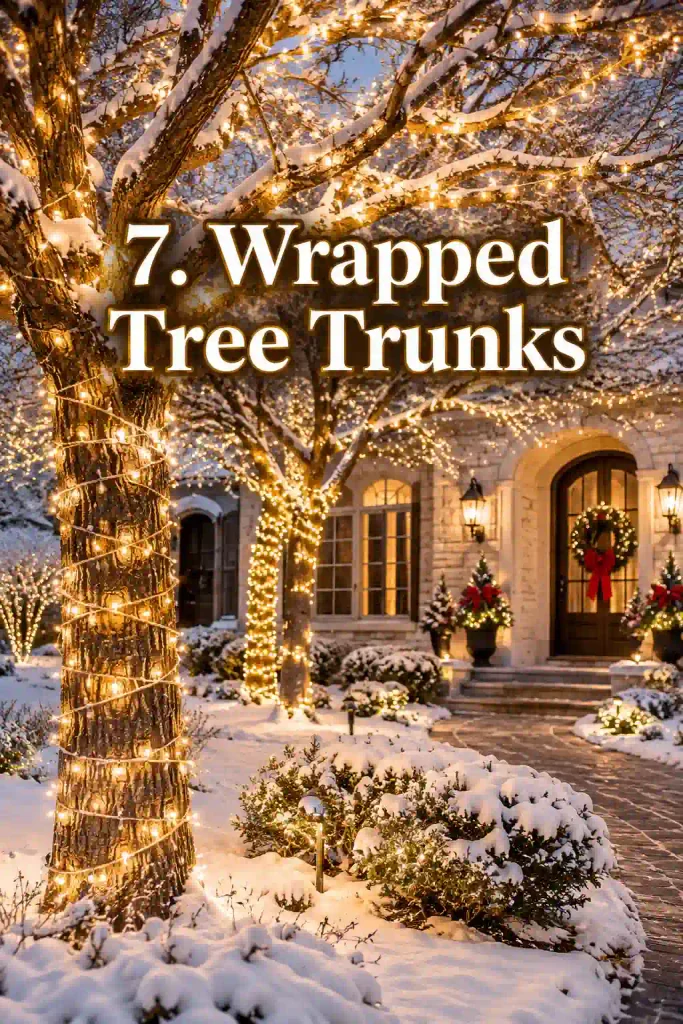
Wind a strand of lights up the trunk and out onto the lower branches. Start at the bottom and work upward, spacing the coils about four inches apart. In a bare winter yard, glowing trees feel like something out of a storybook.
The mega tree
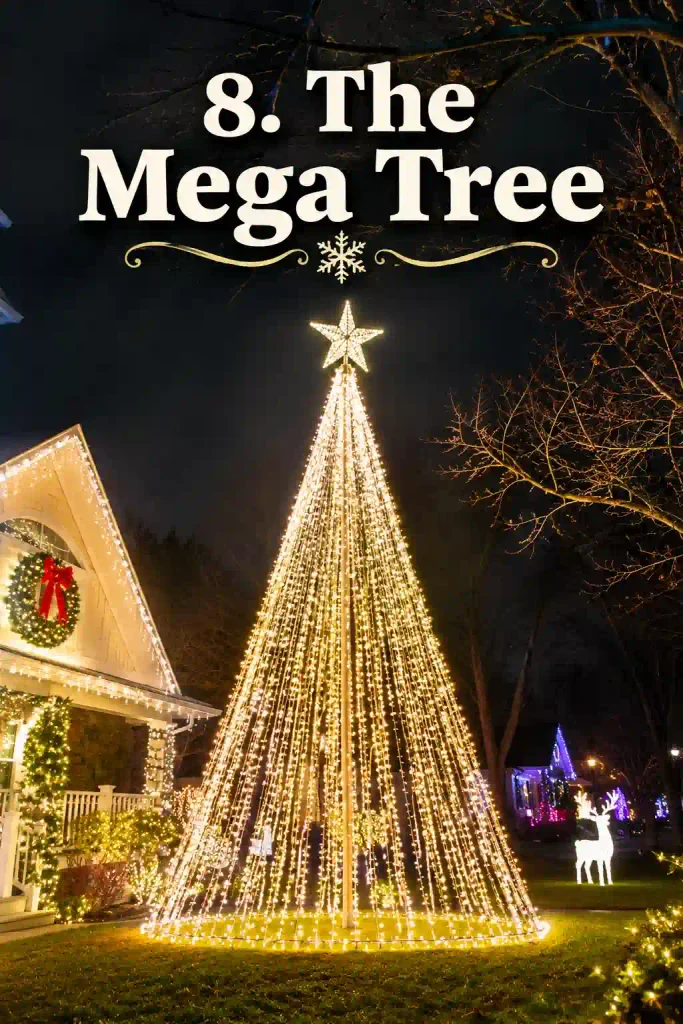
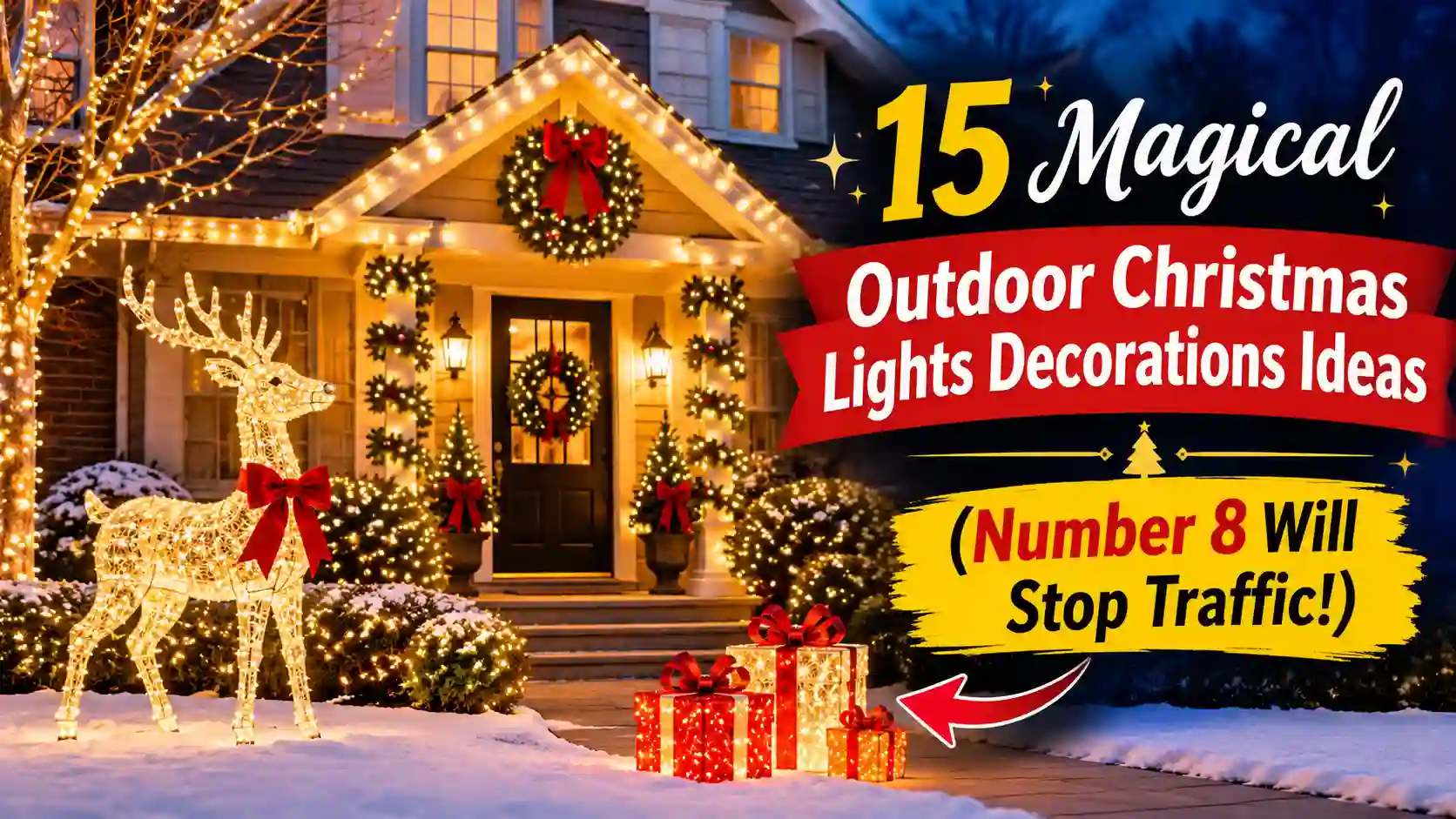
Here it is, the one that stops cars.
Set a tall metal pole in the middle of your yard, anchored deep, or use a sturdy post with a bracket. Attach a ring or topper at the top. Then run 12 to 16 long strands of lights from the peak down to stakes spread around the ground, like the lines of a giant tent. The result is a cone of light that looks like a huge Christmas tree, standing 10 to 15 feet tall.
The first time my neighbor built one, we all noticed within an hour. Cars slowed. Kids on bikes circled it twice. An older man down the block walked over in his slippers, stood there with his hands in his pockets, and said quietly, “Reminds me of when my kids were little.” He stayed ten minutes.
You can build one for about $80 to $150, depending on how many strands you buy. Use outdoor-rated lights only, and have a helper hold the ladder while you work.
Net lights on shrubs
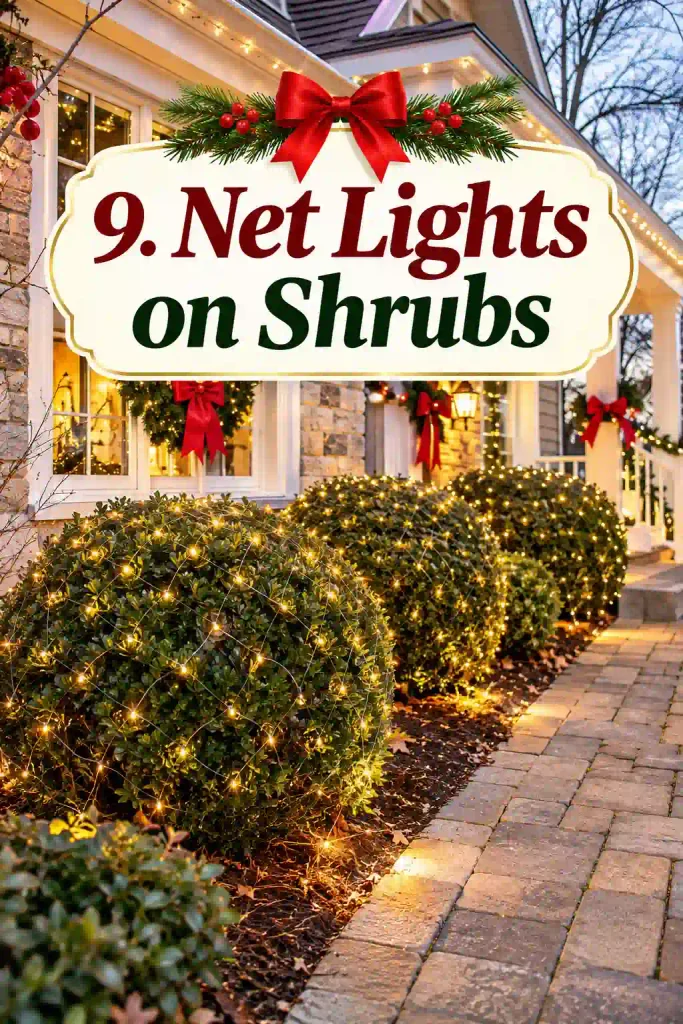
Toss a net of lights over a bush, and you’re done. No weaving, no tangles, and no going bush to bush with a single string. It’s the biggest return on effort in this whole list.
Hanging orbs or snowflakes from branches

Light-up spheres or big snowflakes dangling from a tree look like floating stars. Use fishing line or clear ties so they seem to hover.
Spotlights on the house or a tree
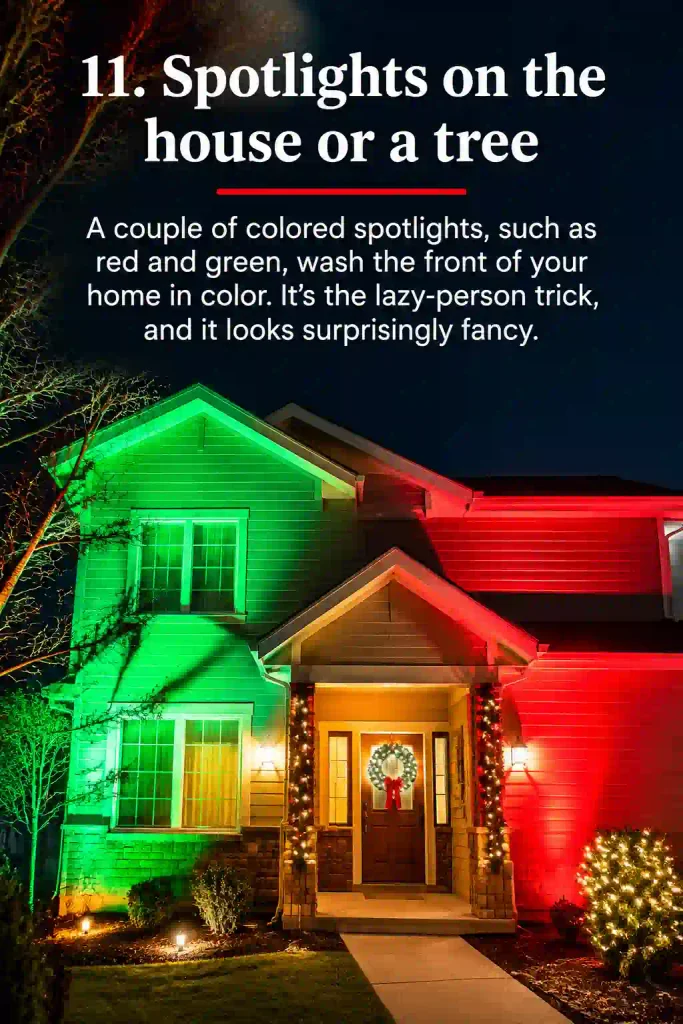
A couple of colored spotlights, such as red and green, wash the front of your home in color. It’s the lazy-person trick, and it looks surprisingly fancy.
Stop Four: The Driveway and Walkway
Candy cane path lights
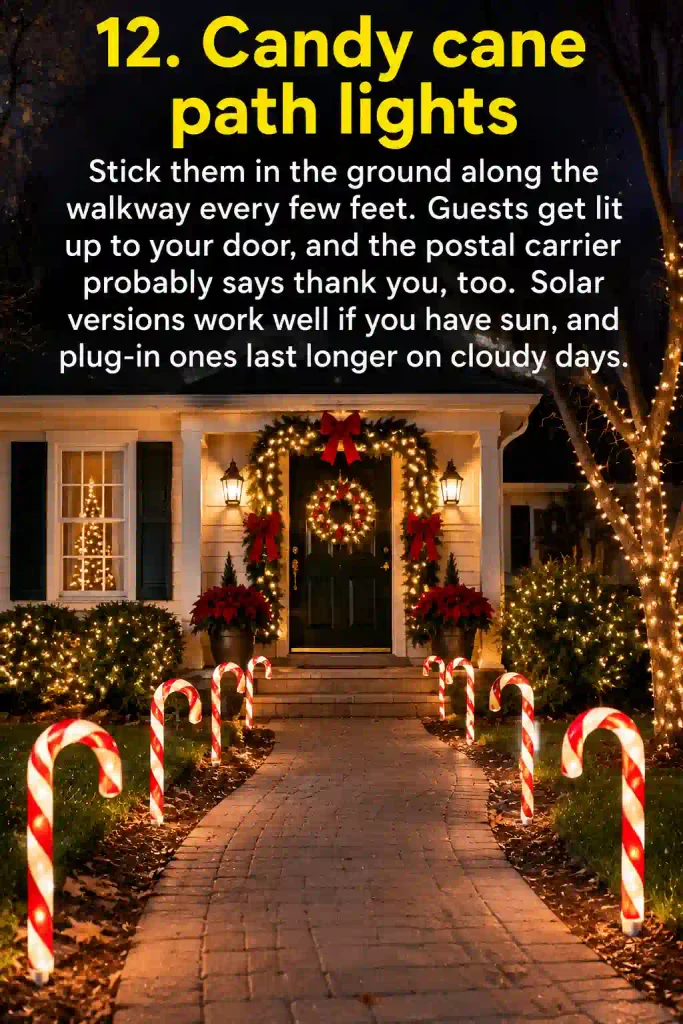
Stick them in the ground along the walkway every few feet. Guests get lit up to your door, and the postal carrier probably says thank you, too. Solar versions work well if you have sun, and plug-in ones last longer on cloudy days.
Lanterns on the steps
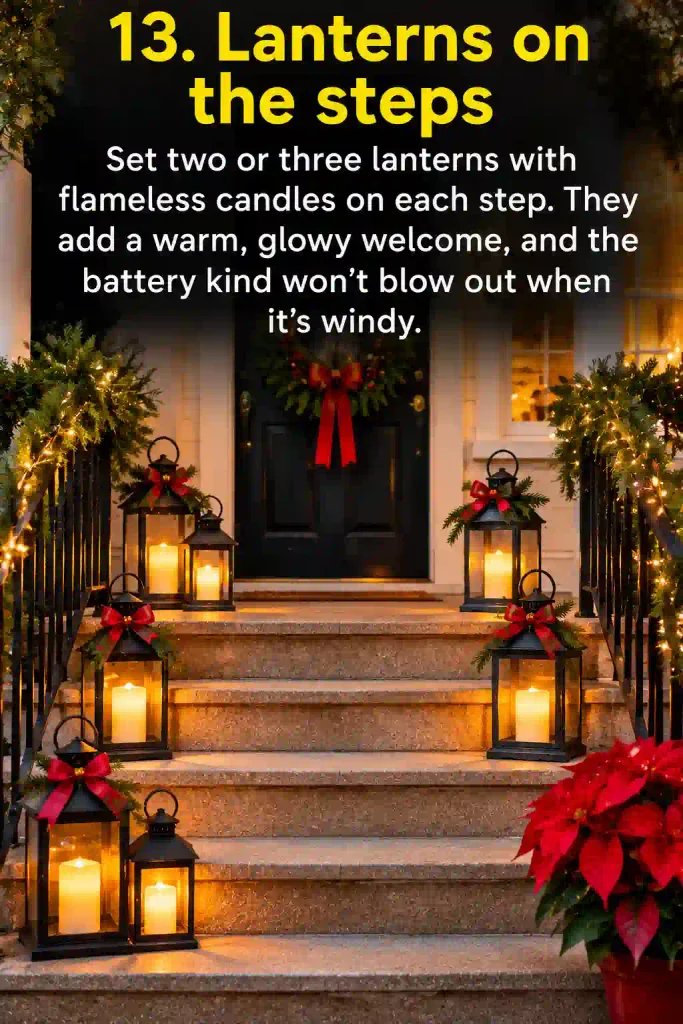
Set two or three lanterns with flameless candles on each step. They add a warm, glowy welcome, and the battery kind won’t blow out when it’s windy.
Stop Five: The Little Touches
Window candles
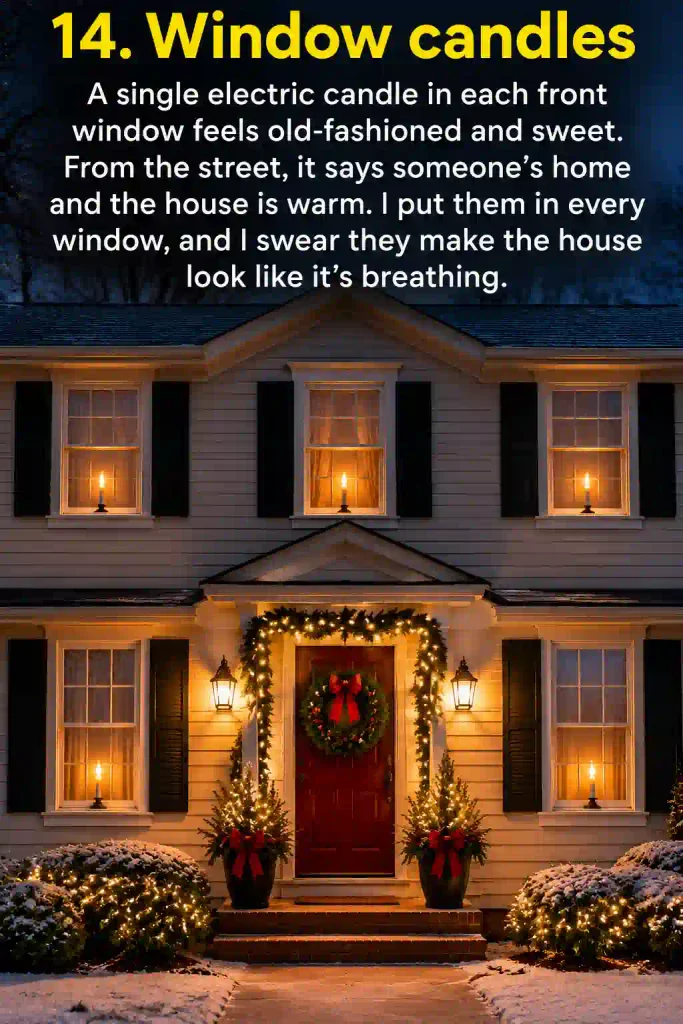
A single electric candle in each front window feels old-fashioned and sweet. From the street, it says someone’s home and the house is warm. I put them in every window, and I swear they make the house look like it’s breathing.
A lit reindeer or yard figure
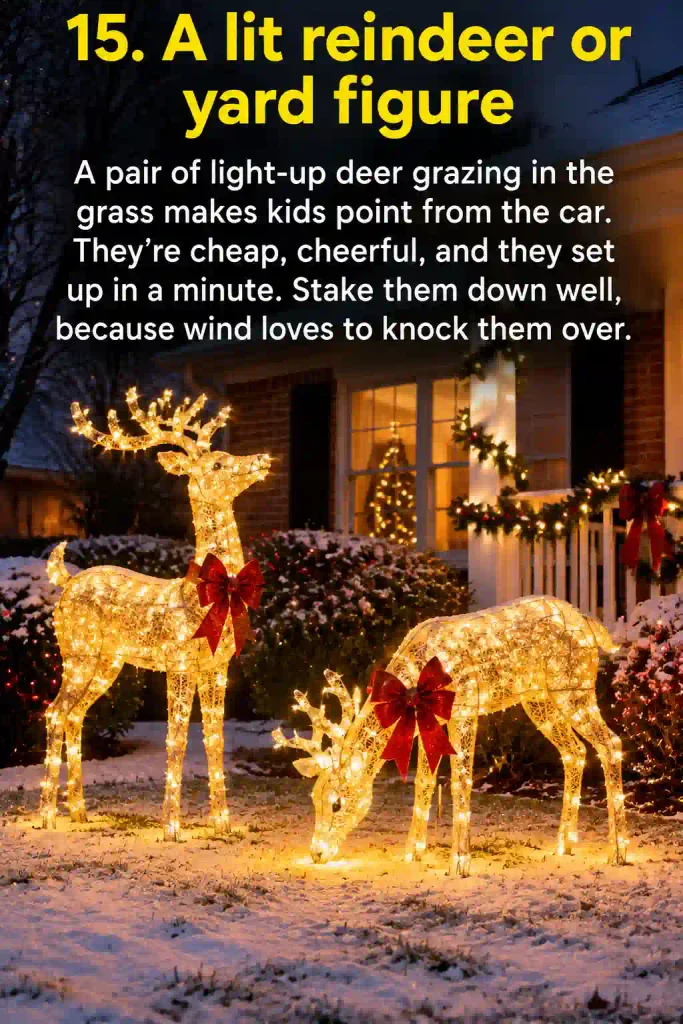
A pair of light-up deer grazing in the grass makes kids point from the car. They’re cheap, cheerful, and they set up in a minute. Stake them down well, because wind loves to knock them over.
What I Wish I’d Known Before My First Year
- Test every strand before you hang it. Plug it in on the living room floor first. Climbing a ladder to discover a dead section is a bad time.
- Use outdoor-rated lights and cords. Indoor lights aren’t built for rain, snow, or cold. Look for the “outdoor” label on the box.
- Plug into a GFCI outlet. These shut off the power if something gets wet, and they’re worth the peace of mind.
- Use a timer. A $10 outdoor timer turns your lights on at dusk and off at bedtime. You won’t have to go out in the cold to flip a switch.
- Don’t overload one outlet. Check the box for how many strands can connect end to end, and stay under the limit.
- Mind your ladder. Have a helper, wear shoes with grip, and don’t lean. No decoration is worth a trip to the ER.
Why We Do This
On the first night my lights went up, I stood in the driveway with cold fingers and tangled cords, a little cranky. Then I flipped the switch.
My daughter, who was seven at the time, gasped. She grabbed my sleeve and said, “Dad, it’s like we live inside a Christmas card.” I’ve forgotten plenty of things from that year, but I remember that sentence.
That’s what outdoor lights really do. They tell the neighborhood you’re here. They give a tired commuter something to smile at. They make a kid believe, for a minute, that magic is real and lives at your address.
You don’t need a mega show or a thousand strands. Start with one strand along the porch. Add a wreath. Next year, build the tree. Light a little more each year, and one day you’ll hear a kid in a passing car whisper, “Slow down.”
FAQ, Outdoor Christmas Lights
How many Christmas lights do I need for the outside of my house?
A common rule is about 100 mini lights for every 3 to 4 feet of roofline, or one strand for every 25 feet. Measure your roofline, trees, and shrubs, then add 10 percent extra.
What’s the best way to hang Christmas lights on a roof?
Use plastic clips made for gutters or shingles, not nails or staples. Start at the outlet end and work in one direction, always with a spotter holding the ladder.
Are LED or incandescent Christmas lights better for outdoors?
LEDs use far less electricity, stay cooler, and last longer, so most people prefer them. Incandescent bulbs give a warmer, old-school glow but cost more to run.
Can I leave outdoor Christmas lights on all night?
It’s safer to use a timer, so they turn off after a few hours. This saves power and lowers the risk of overheating or electrical problems.
How do I make my house stand out with Christmas lights?
Pick one big focal point, like a mega tree or a wrapped roofline, and keep the rest simple. Stick to two or three colors, and use warm white for a classic look.