
My first apartment had beige carpet, a wobbly ceiling fan, and a living room that felt like a dentist’s waiting area. I had about $300 and no design training. What I did have was a stubborn belief that a rented space could still feel like mine.
It can. After years of trial and error (including a $90 rug I returned twice), I’ve learned that a custom-designed look has very little to do with money. It comes from choices that look intentional. Here are ten that work, whether you’re in a studio in Chicago or a one-bedroom in Phoenix.
Give One Wall Some Courage
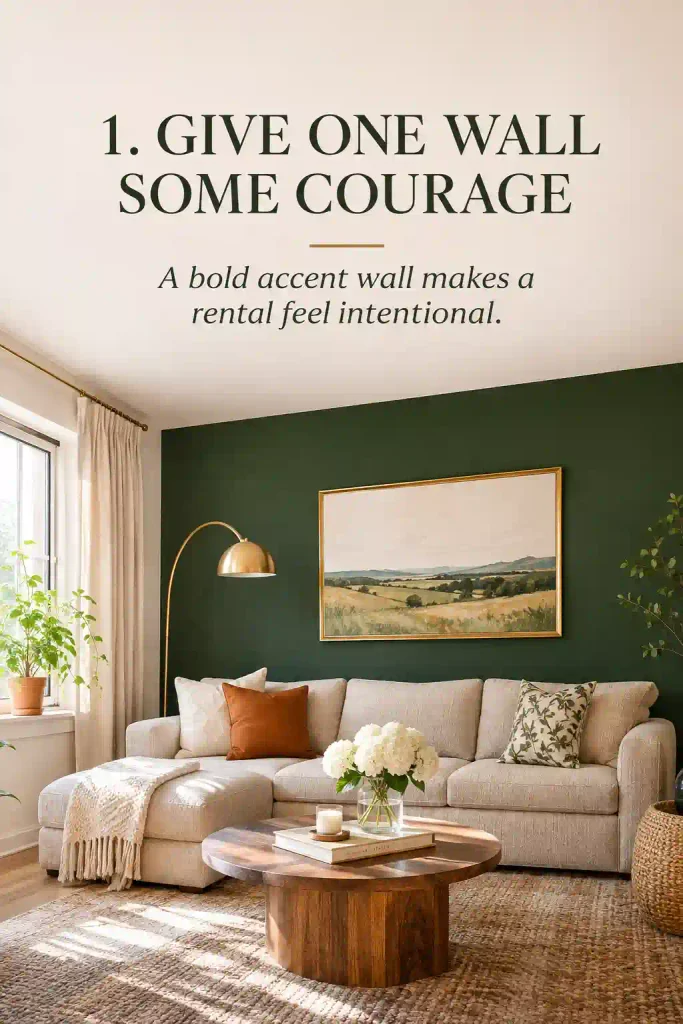
Plain white walls make a room feel temporary. Pick the wall behind your sofa and give it a deep color like forest green, navy, or a warm terracotta. If your landlord says no to paint, peel-and-stick wallpaper runs about $30 to $60 a roll and comes off clean. One bold wall tells visitors you made a decision, and decisions are what designers get paid for.
Hang Curtains Higher Than Feels Normal
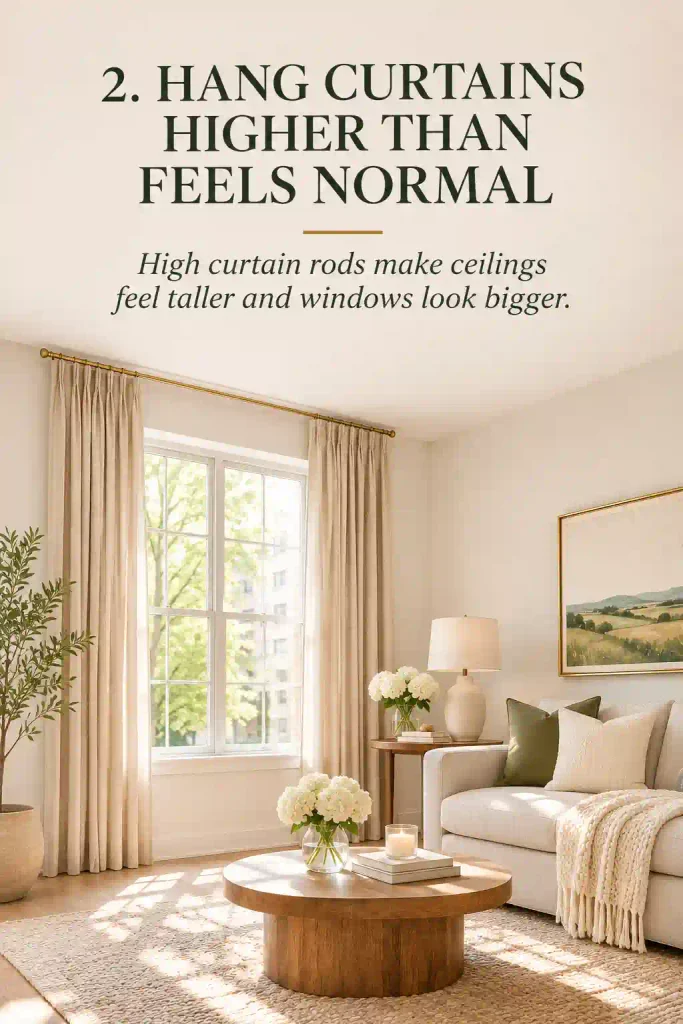
This is the cheapest trick I know. Mount the curtain rod four to six inches above the window frame, or even close to the ceiling, and let the panels fall to the floor. Suddenly the ceiling looks taller and the window looks bigger. Basic linen-look panels from Target or IKEA cost under $40 a pair. Skip the skimpy, short ones. Fullness matters, so buy two panels per window.
Size Your Rug Like You Mean It
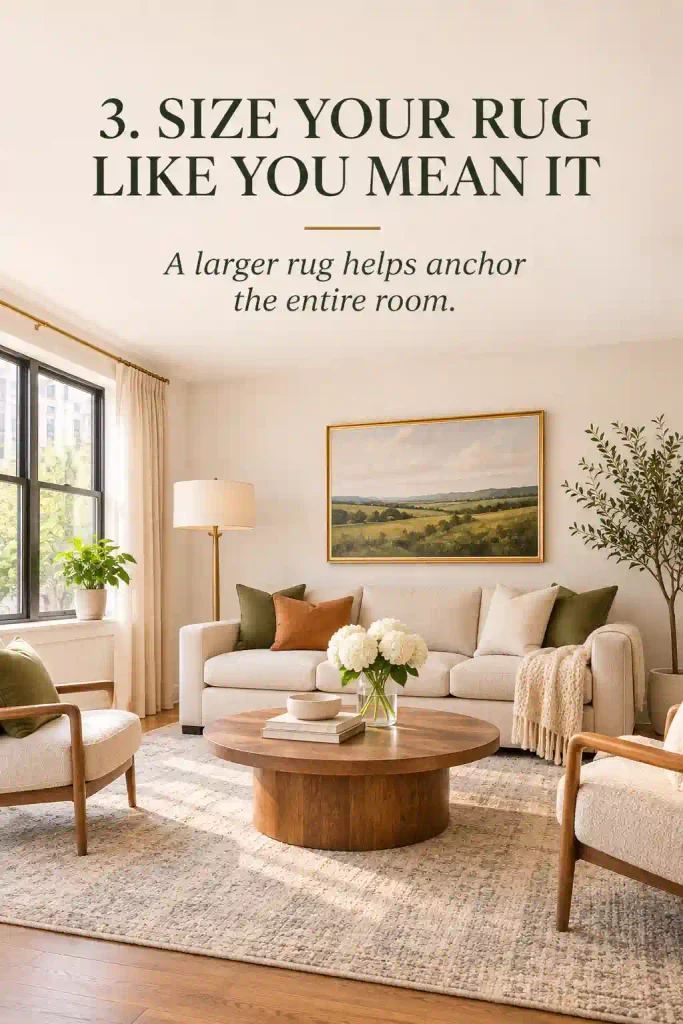
The most common mistake I see in apartments is a rug that’s too small, floating in the middle of the room like a lost postage stamp. In most living rooms, an 8×10 works best, with at least the front legs of your sofa and chairs resting on it. Yes, it costs more. Watch for sales at Home Depot, Wayfair, and Rugs USA, and check Facebook Marketplace for barely used ones. A properly sized rug ties the whole room together.
Build a Gallery Wall Slowly
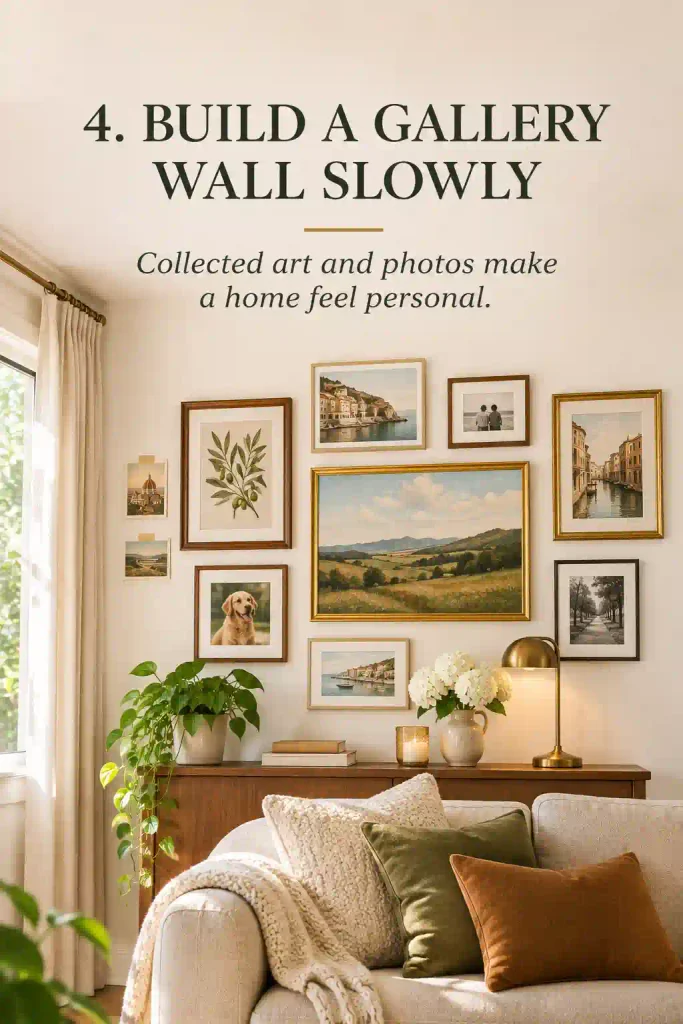
Nothing feels more personal than art that means something to you. Start with frames from thrift stores, which often cost $3 to $8, and spray-paint them all one color for a cohesive look. Mix in a few family photos, a postcard from a trip, a kid’s drawing, a print from Etsy. Lay everything on the floor first and trace each frame on kraft paper to plan the arrangement. And use removable hanging strips if you’re renting. I’ve saved my security deposit more than once that way.
Layer Your Lighting
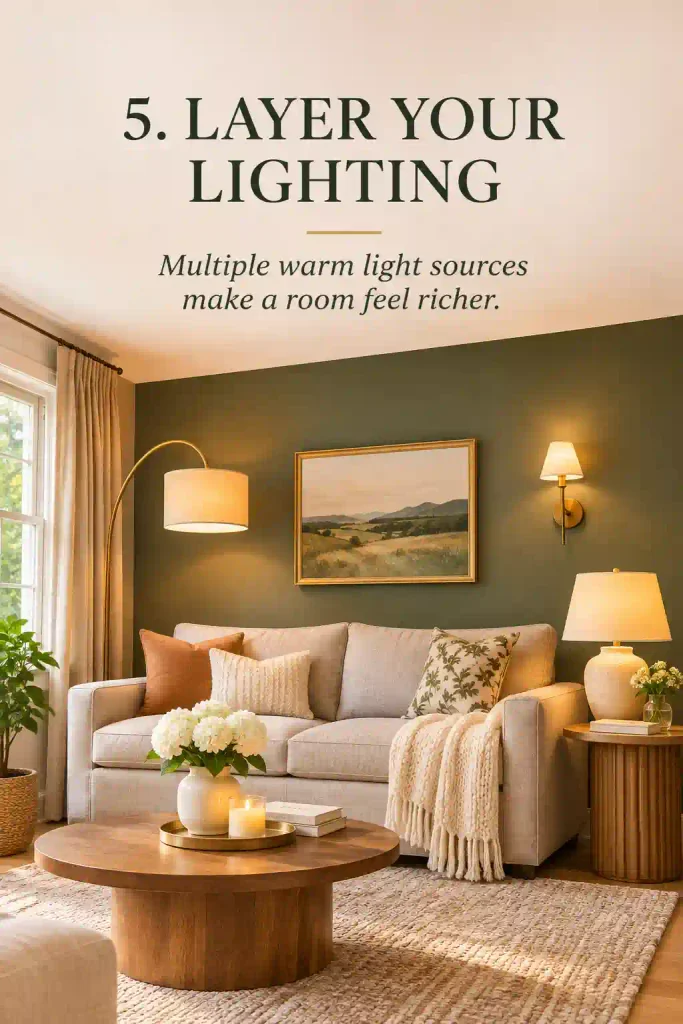
Overhead lights are harsh, and they flatten everything. Fix this with three light sources at different heights: a floor lamp in a corner, a table lamp on a side table, and maybe a small plug-in sconce. Swap cool white bulbs for warm ones, around 2700K. Evening in a room lit this way feels like a hug. This one change makes a $400 sofa look like a $1,400 one, and a good lamp is often just $25 secondhand.
Shop Secondhand for One Statement Piece
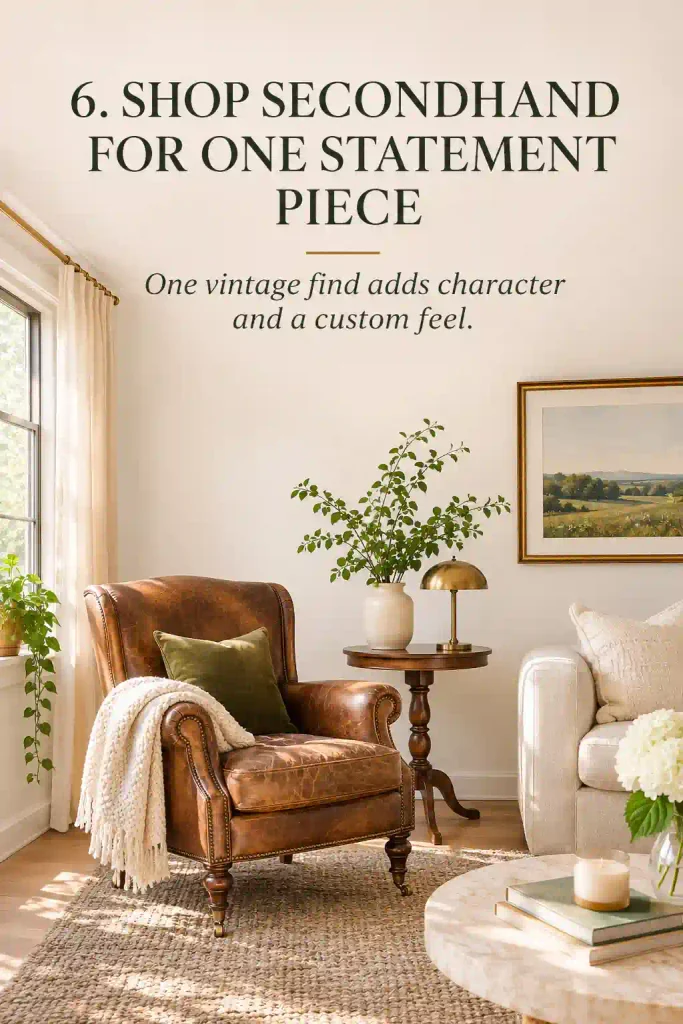
Every room that looks custom has one thing with a little history. Try estate sales, Facebook Marketplace, Goodwill, or your neighborhood Buy Nothing group. A solid wood coffee table, a brass mirror, or a vintage armchair can anchor the space. I once paid $60 for a 1970s walnut side table that people still ask about. If it needs work, a quick sanding and a new coat of finish goes a long way.
Bring in Real Plants (or Good Fake Ones)
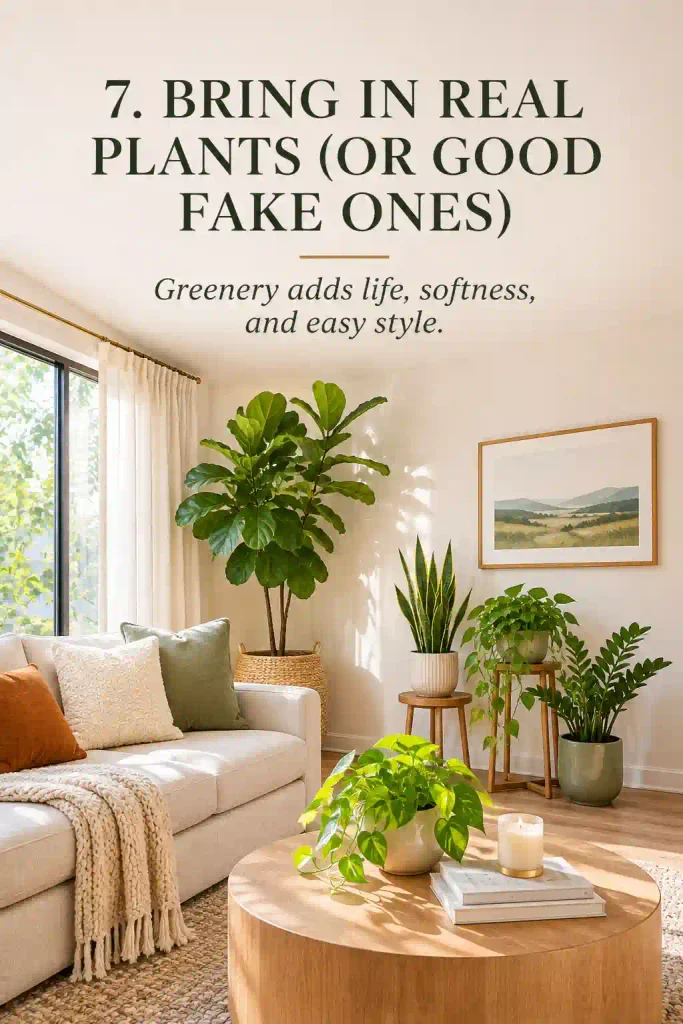
Greenery adds life, color, and softness in one move. Pothos, snake plants, and ZZ plants forgive neglect, and I’ve killed enough plants to know. If you have no light or no patience, high-quality faux plants from IKEA or Target look surprisingly real, as long as you skip the shiny plastic ones. Group plants in odd numbers, and vary the heights. A tall plant in the corner softens the sharp edges of a room instantly.
Swap Out the Small Hardware
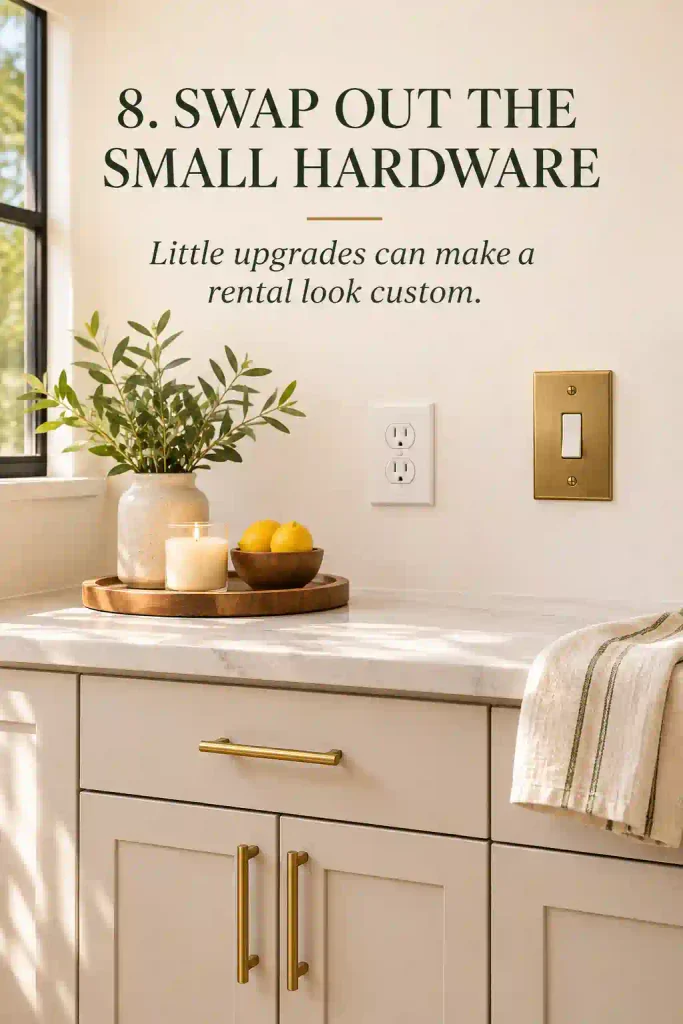
Here’s one most renters overlook. Replace boring cabinet pulls, light switch plates, and outlet covers with something nicer. Matte black or brushed brass hardware costs a few dollars each and takes ten minutes with a screwdriver. Just save the originals and put them back when you move out. These tiny details are exactly what separates a space that looks styled from one that looks default.
Mix Textures, Not Just Colors
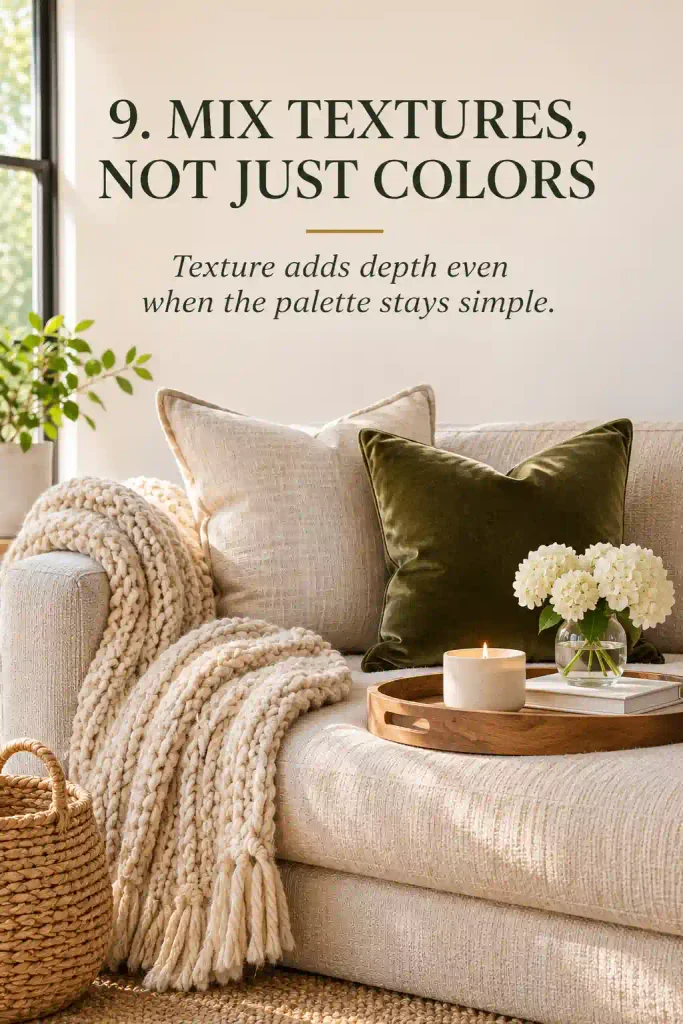
If your living room feels flat, the problem usually isn’t color. It’s texture. Combine a chunky knit throw, a linen pillow, a velvet cushion, a woven basket, and a wooden tray. Stick with two or three colors, but let the materials do the talking. Throw pillows are the easiest place to start, and covers only (not inserts) from HomeGoods or Amazon run about $8 to $15 each. Change them with the seasons and the room feels new again.
Style Your Surfaces With Restraint
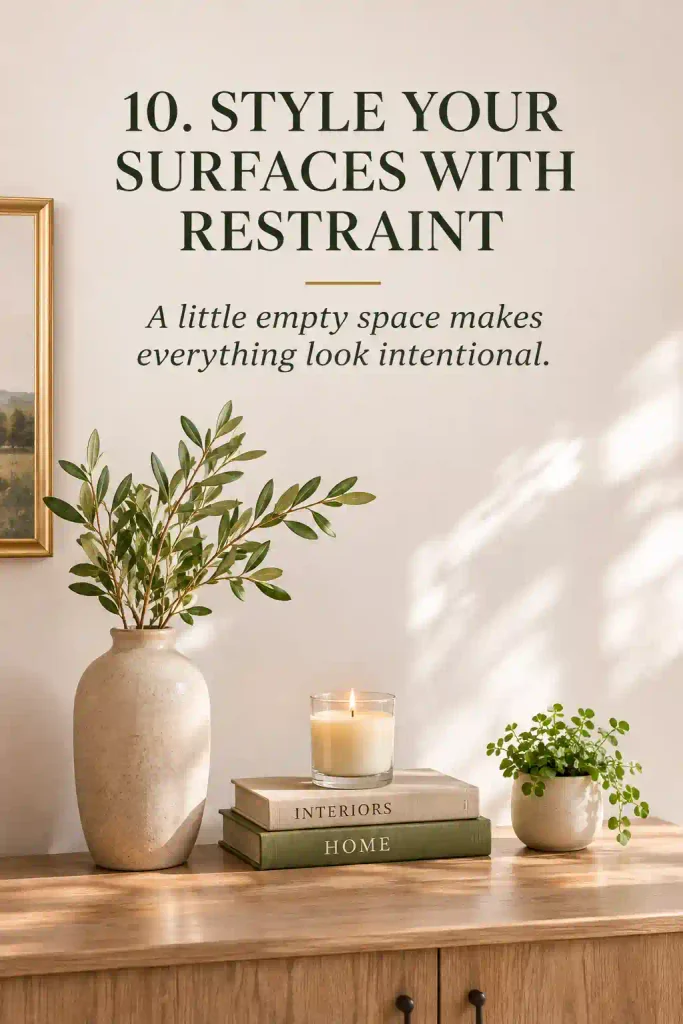
This last one is where many people stumble, myself included. Crowded shelves read as clutter, not personality. Try the rule of three: one tall item, one medium, one small, with some empty space around them. Add a stack of books, a candle, and a small plant. Leave breathing room. Empty space tells the eye that everything in the room was placed on purpose, and that’s the whole secret behind a custom look.
A Few Mistakes Worth Avoiding
Don’t buy everything in one weekend. Rooms that look custom were built slowly, piece by piece. Live in your space for a couple of weeks and notice what’s missing. Also, resist matching sets. A coordinated furniture bundle looks like a showroom, while mixed pieces look like a home.
And measure twice, buy once. I still wince thinking about the sofa that wouldn’t fit through my door.
Make It Yours, One Small Step at a Time
You don’t need a big budget or a designer’s eye to love where you live. You need a few smart moves, a bit of patience, and the willingness to try things. Start with one idea from this list this weekend, maybe the curtains or a better lamp, and see how it feels. Then do another.
Some evenings, when the lamp is on and the rug is soft under my feet, I still can’t believe this is the same kind of space that once felt so cold. Yours can get there too.
Frequently Asked Questions
How can I decorate my apartment living room on a tight budget?
Start with the changes that make the biggest difference for the least money: warm lighting, higher curtains, a properly sized rug, and secondhand finds. Add new pieces gradually instead of buying everything at once.
How do I make a rental apartment look expensive?
Focus on lighting, texture, and one standout piece. Use peel-and-stick wallpaper, full-length curtains, and matching frames. Keeping colors limited to two or three also helps.
What is the cheapest way to update a living room?
Swapping throw pillow covers, changing light bulbs to warm tones, and rearranging furniture cost almost nothing and can change the feel of a room right away.
Where can I find cheap living room decor?
IKEA, Target, HomeGoods, and Walmart are good starting points. For one-of-a-kind items, check thrift stores, estate sales, Facebook Marketplace, and Buy Nothing groups.
How do I decorate a small apartment living room without making it feel cramped?
Choose furniture with exposed legs, use mirrors to bounce light, hang curtains high, and keep surfaces uncluttered. Lighter colors and a few well-chosen pieces make a small room feel bigger.