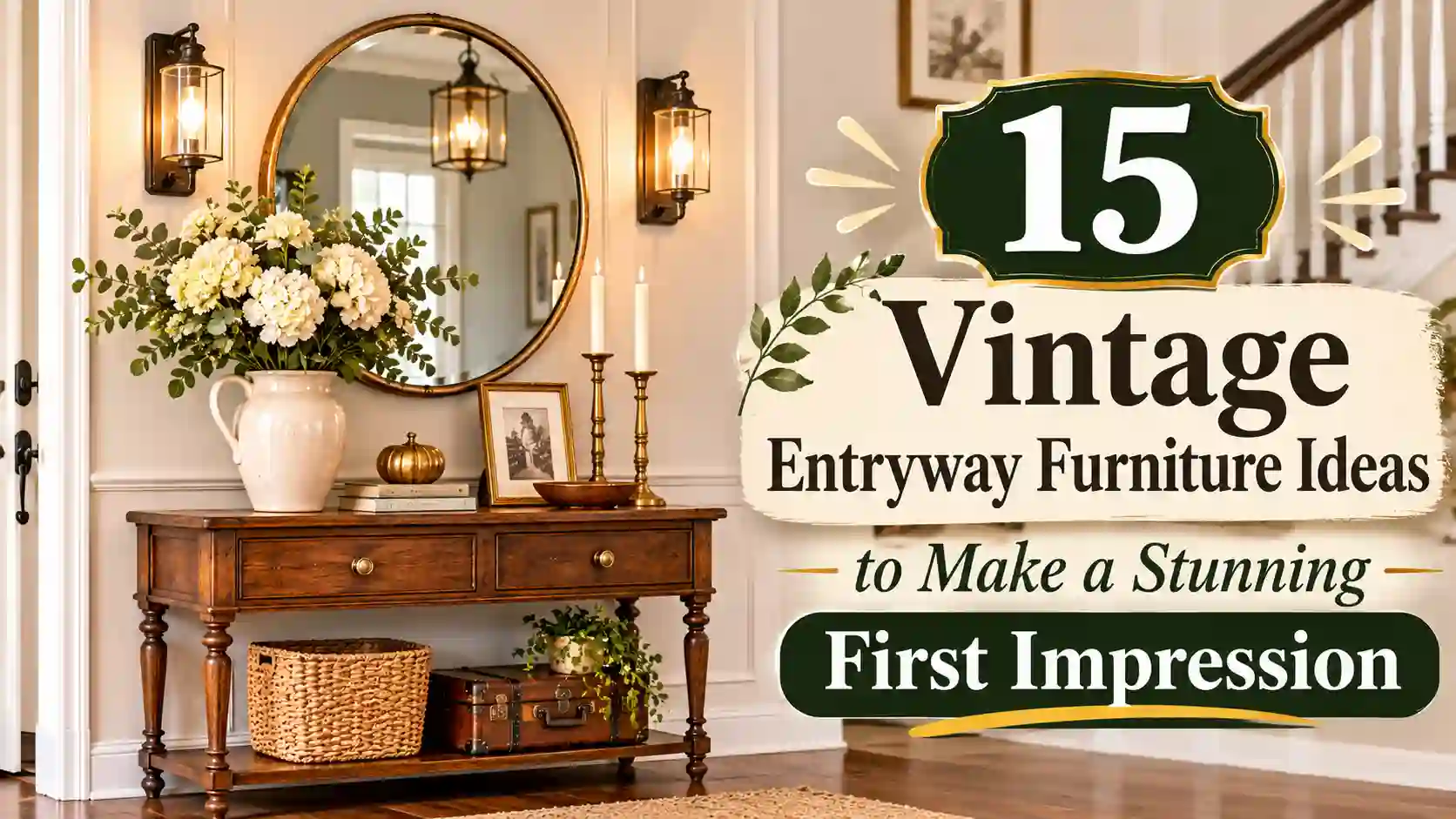
A walking tour of one front hall, from the doormat to the staircase. Wipe your feet. Mind the umbrella stand.
My grandmother’s front hall was about four feet wide, and it was the most welcoming room I’ve ever stood in. There was a worn oak bench with a cushion she’d sewn herself, a mirror with a speckled gold frame, and a little brass bowl for keys that had been dented by decades of being dropped.
Nobody ever walked through that hall quickly. You stopped, took off your coat, and felt expected.
My own entryway was a pile of shoes and a hook that fell off the wall twice. So I spent a year hunting through estate sales, flea markets, and thrift stores, and I learned what works. Let’s walk it together, one stop at a time.
At the Door
A Sturdy Wooden Bench
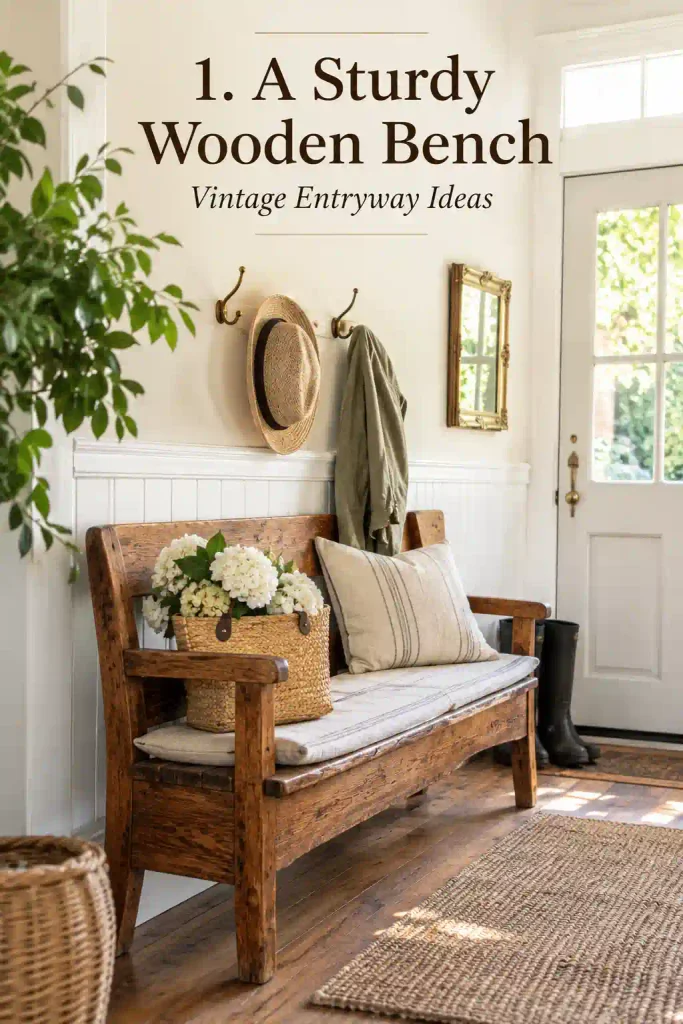
Start with a place to sit. A vintage oak or pine bench, with a few scratches and a worn seat, tells guests this house is lived in. Look for solid joints and no wobble.
Estate sales and online marketplaces often have benches for $40 to $150. A little furniture oil brings tired wood back to life, and a cushion in linen or wool adds comfort.
A Slim Console Table
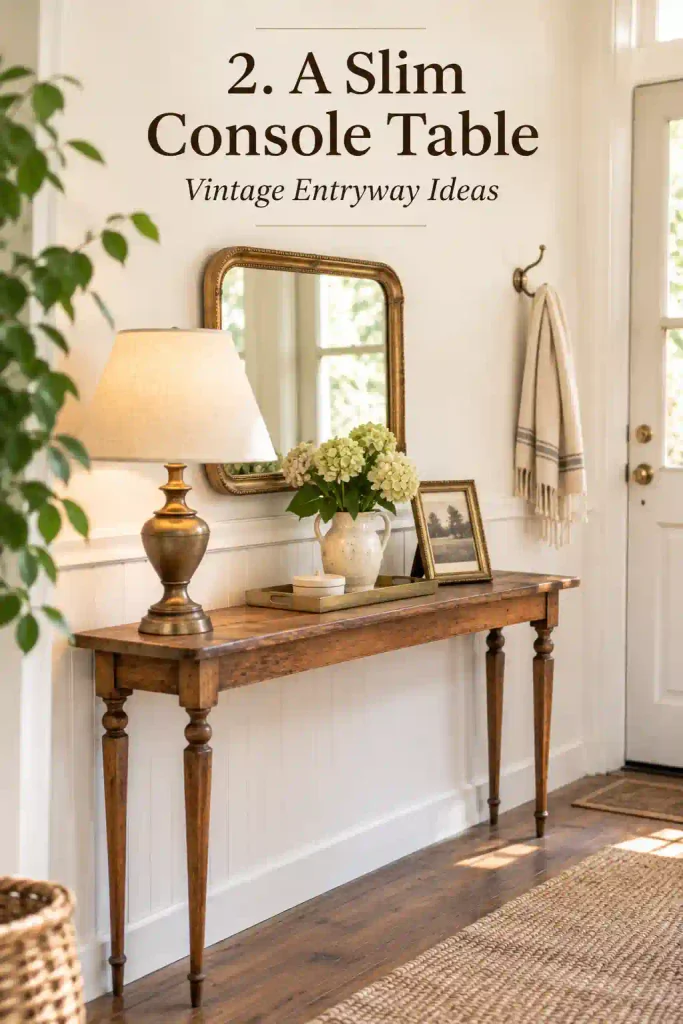
If your hall is narrow, choose a console that’s 10 to 14 inches deep. A vintage one with tapered legs or turned spindles looks graceful and leaves room to walk.
Prices run $60 to $250 secondhand. Keep the top mostly clear, with a lamp, a small tray, and one personal piece.
A Hall Tree With Hooks
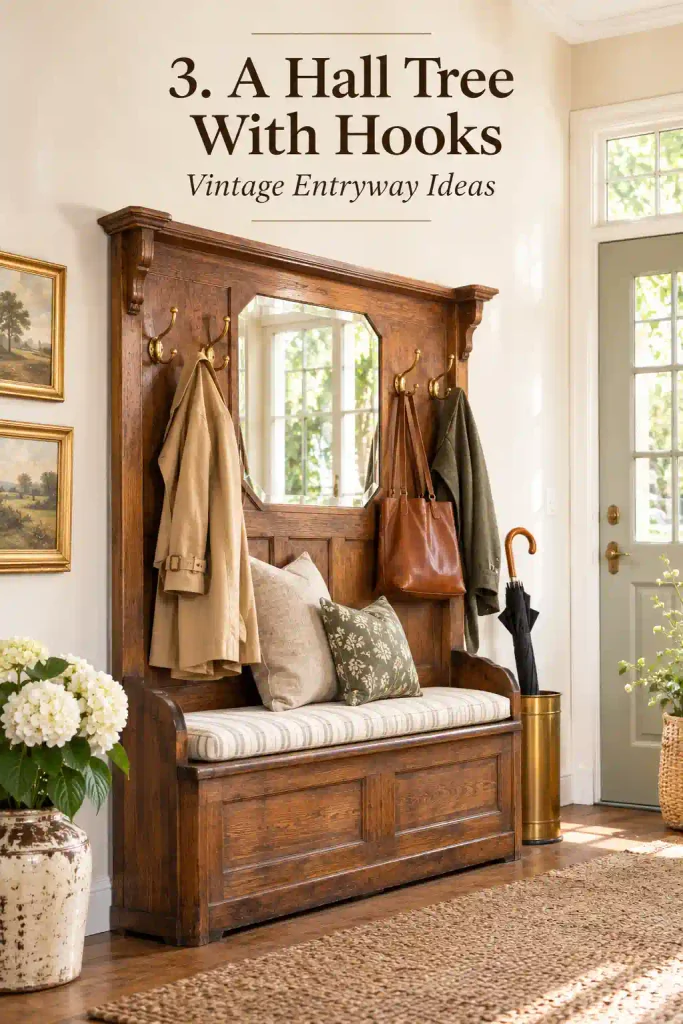
This old-fashioned piece holds coats, bags, and umbrellas, and has a seat built in. Look for one with a beveled mirror and brass hooks, and check that it’s stable before buying.
Vintage hall trees cost $100 to $300. They’re also a lovely way to hide clutter in plain sight.
A Small Settee or Narrow Sofa
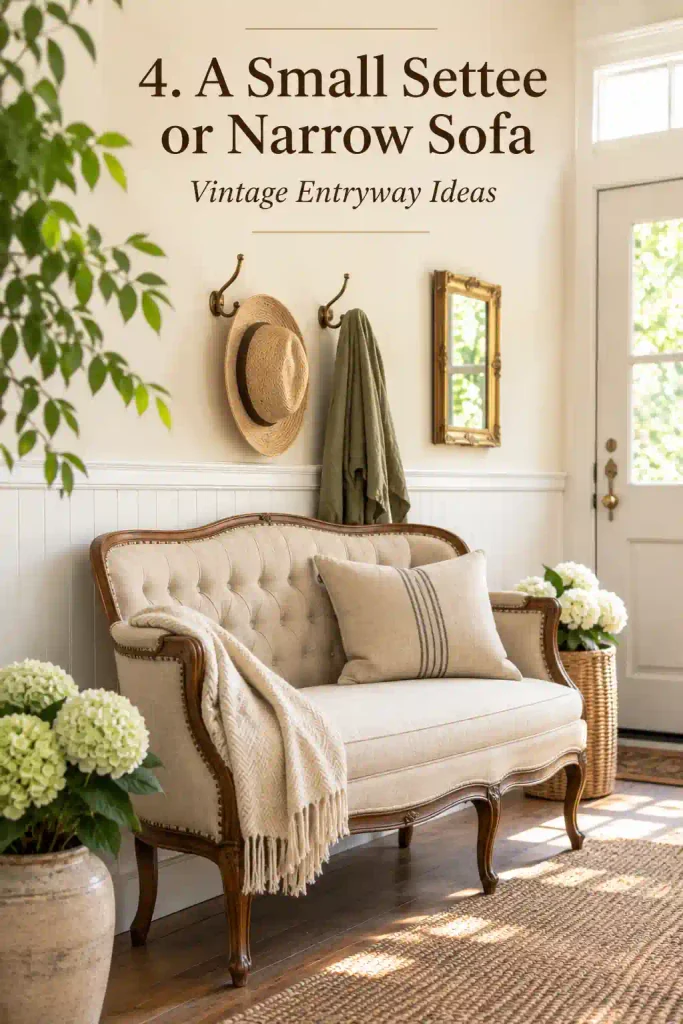
If you have a wider foyer, a short settee or a slim, tufted bench adds charm. Upholstery can be refreshed with a washable slipcover or a new coat of velvet.
Secondhand ones run $80 to $250. Make sure the springs still feel firm before you buy.
Along the Wall
A Tall Mirror in an Old Frame
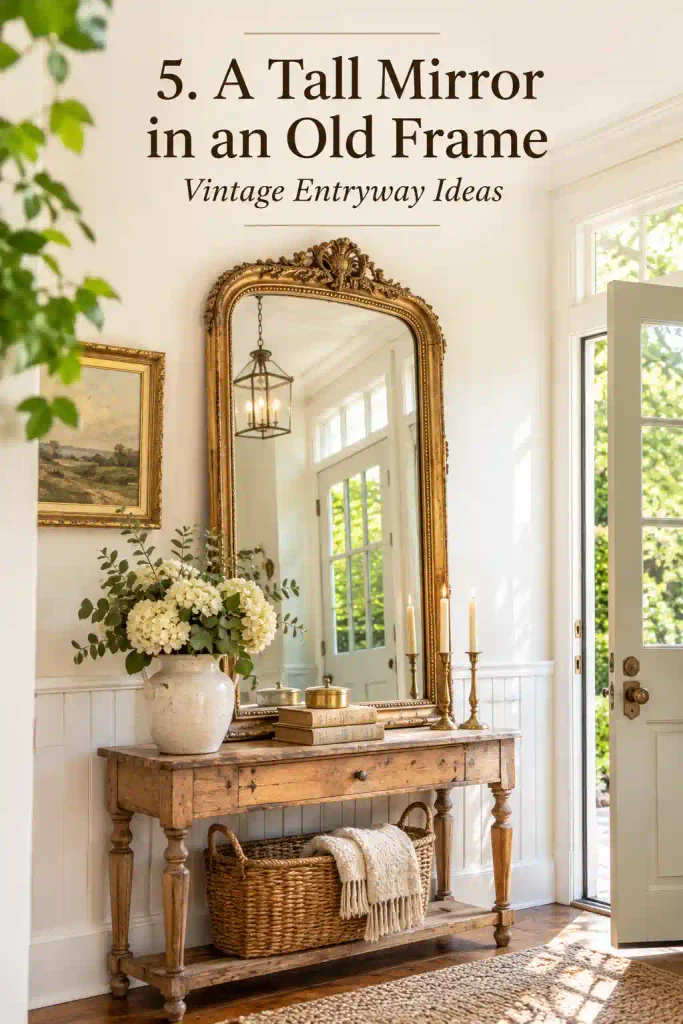
A mirror is the first thing guests see. Choose a large one in a carved wood or aged gold frame, and hang it above the console or lean it against the wall. It bounces light and makes a tight hall feel bigger.
Thrift stores often sell frames for $30 to $90. A speckled or foxed mirror has more character than a perfect one.
A Vintage Wall Shelf or Plate Rack
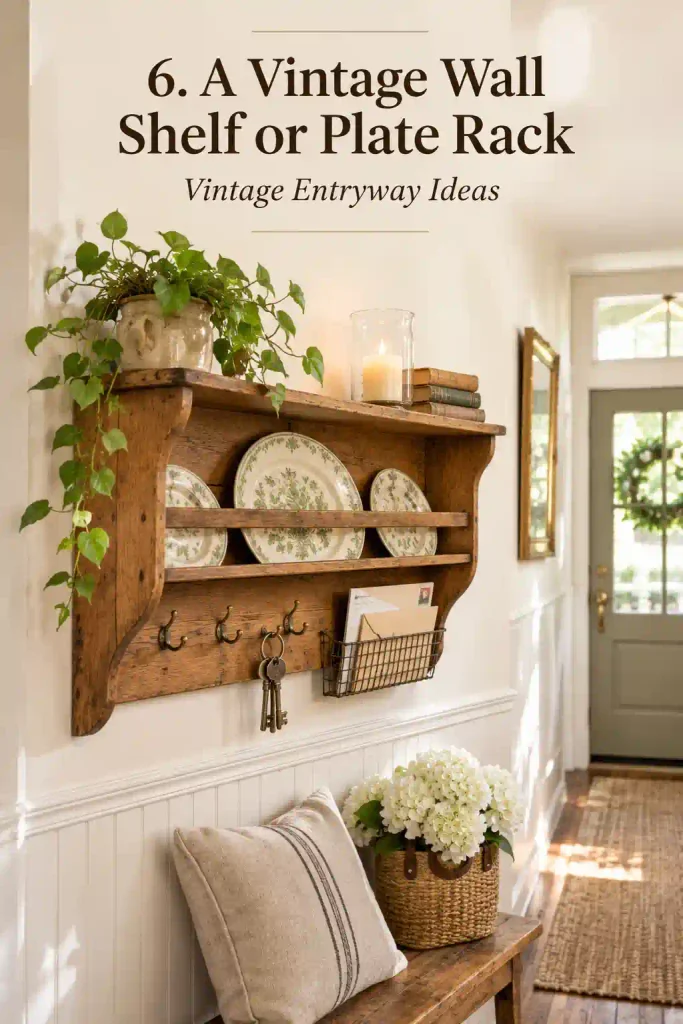
Narrow wooden shelves with a small lip keep keys, mail, and a candle off the floor. Hang one at eye level above a bench.
Prices are $20 to $60. Anchor into studs if you plan to display anything heavy.
A Row of Brass or Cast-Iron Hooks
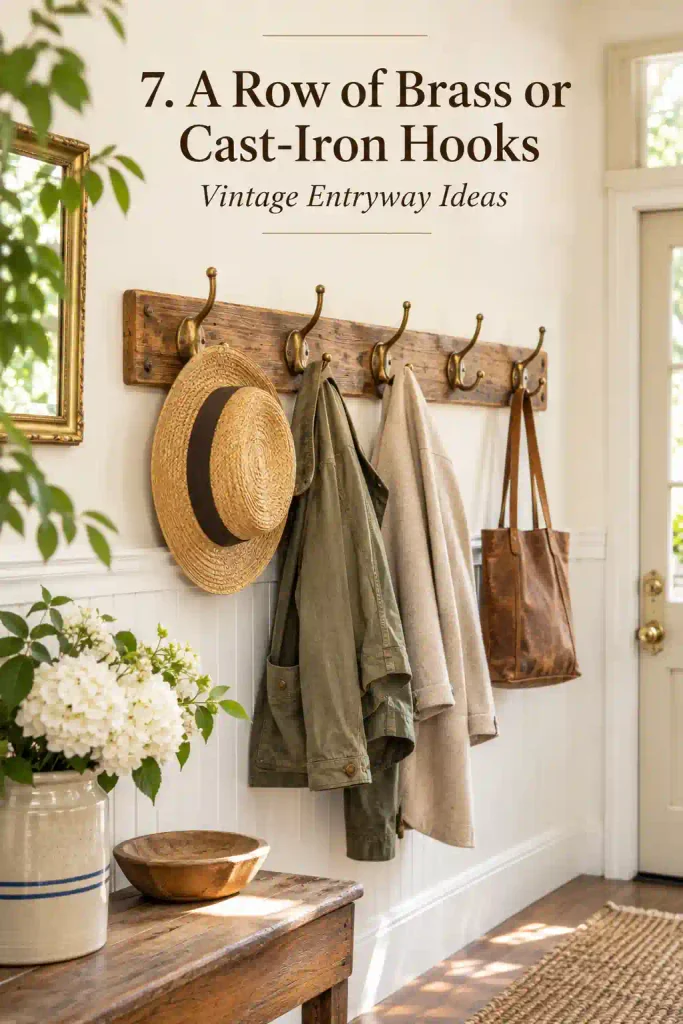
Old brass or iron hooks mounted on a wooden board give a hallway instant history. Look for hooks with a bit of patina, and space them about six inches apart.
A set costs $15 to $40, and a plain pine board is $8. Paint the board a deep color for contrast.
A Painted Cabinet or Sideboard
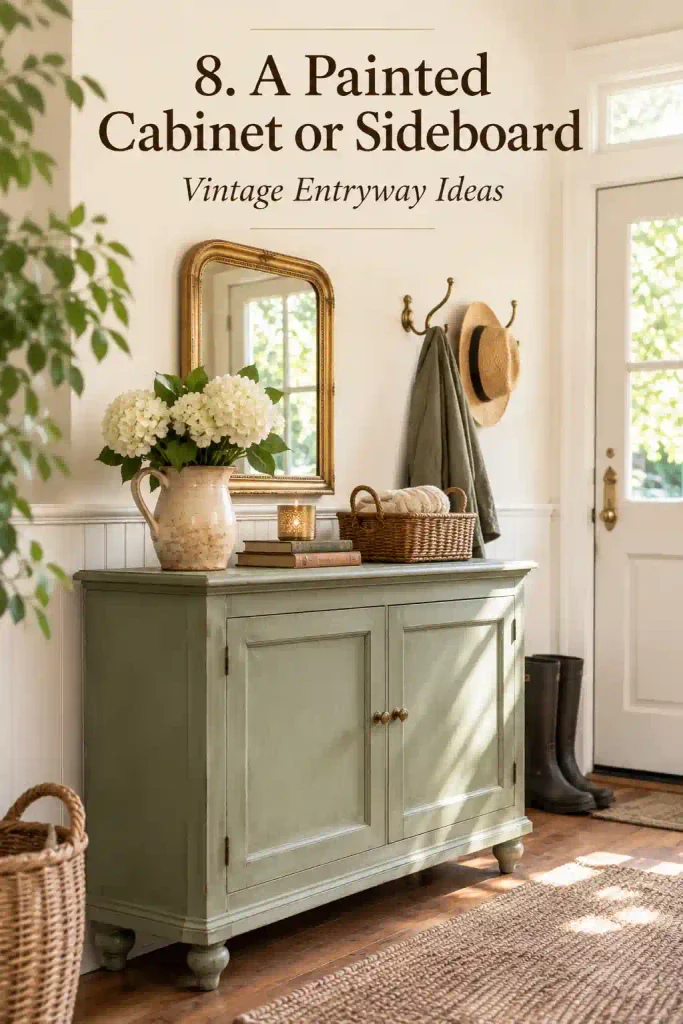
A small cabinet with doors hides shoes, gloves, and the things you don’t want on display. A coat of chalk paint in sage, cream, or navy turns a dull piece into a focal point.
Secondhand cabinets run $80 to $200, and a can of paint is about $20.
Underfoot and Overhead
A Faded Runner Rug
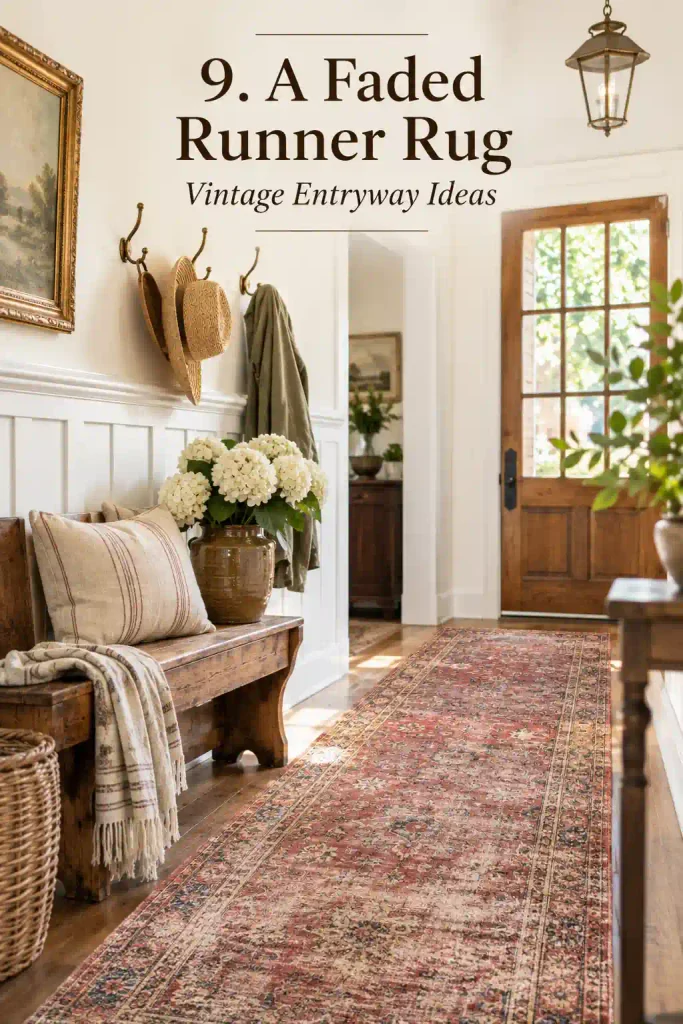
A vintage runner in worn reds and blues adds color, texture, and a bit of warmth underfoot. It also hides dirt, which is helpful in a mudroom.
Check thrift stores and online sales for $40 to $150. Use a non-slip pad underneath so no one slips on the way in.
A Warm, Old-Fashioned Lamp
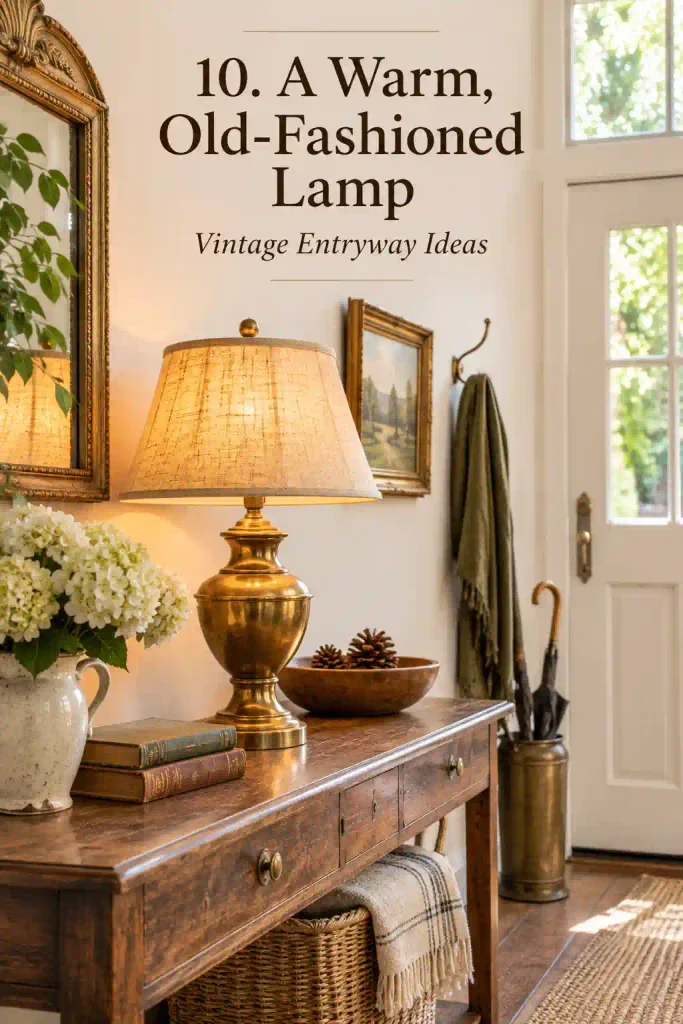
A ceramic or brass table lamp with a linen shade gives a hall the glow of a living room. Use a warm bulb around 2700K, and put the lamp on a timer so the hall is lit when you come home.
Vintage lamps cost $20 to $60. A timer is about $8.
A Pendant or Lantern Fixture
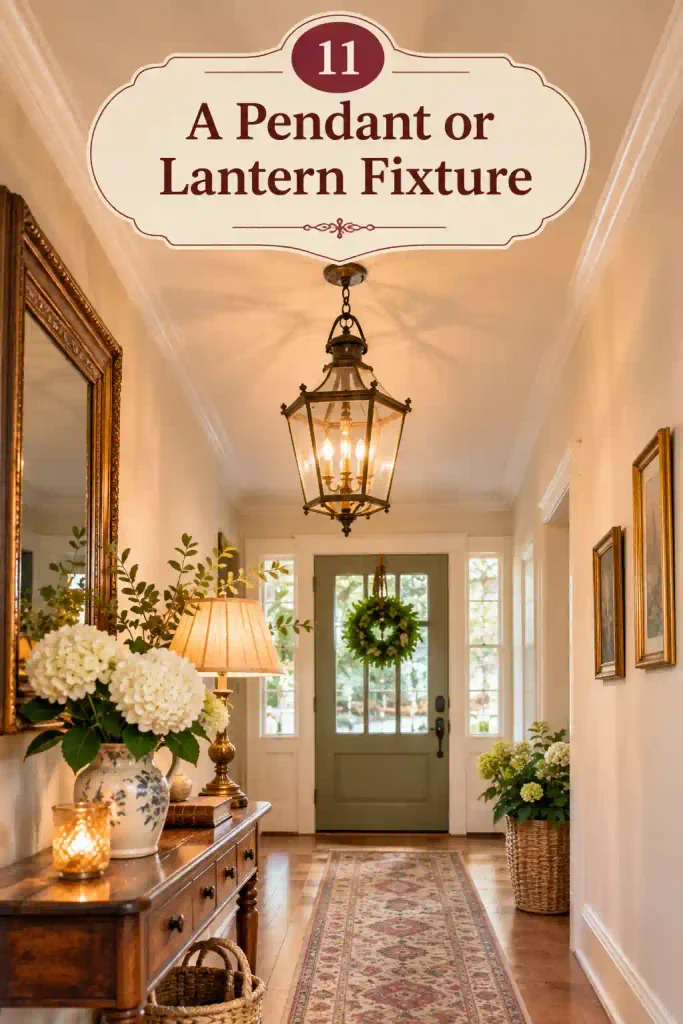
If you can, swap a bare overhead bulb for an old-style lantern or a small glass pendant. Even a battery-powered lantern on the console does a lot of work.
Fixtures run $40 to $120. Have an electrician handle anything wired.
The Little Things
A Brass Key Bowl or Tray
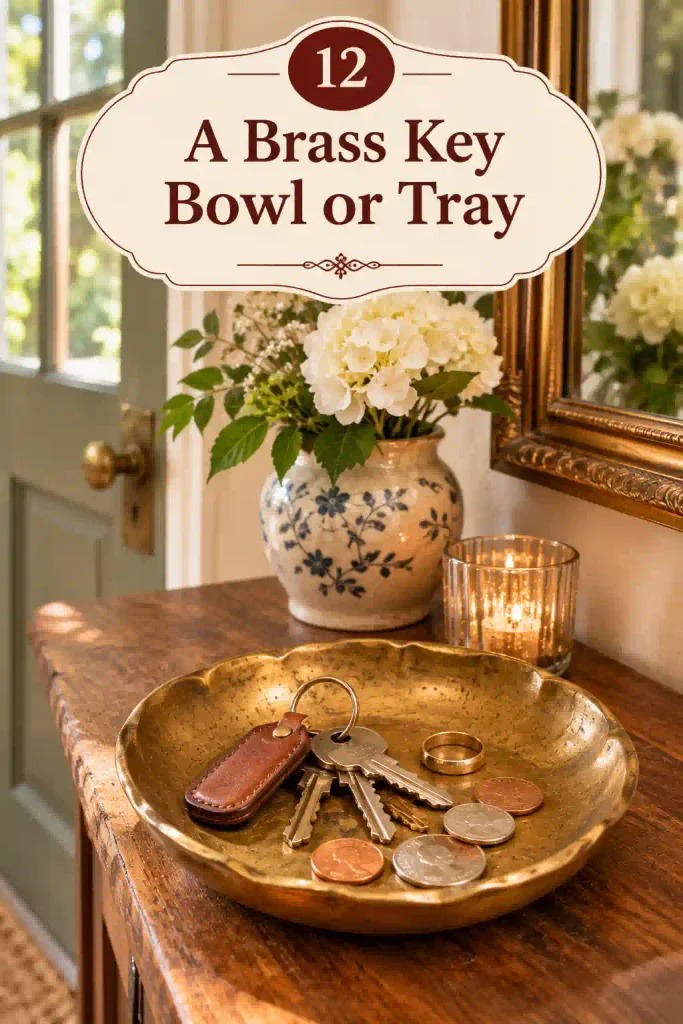
A small bowl by the door catches keys, loose change, and wedding rings. A dented vintage one has more soul than anything new.
Thrift stores sell them for $5 to $15. It’s the cheapest way to look finished.
An Umbrella Stand With History
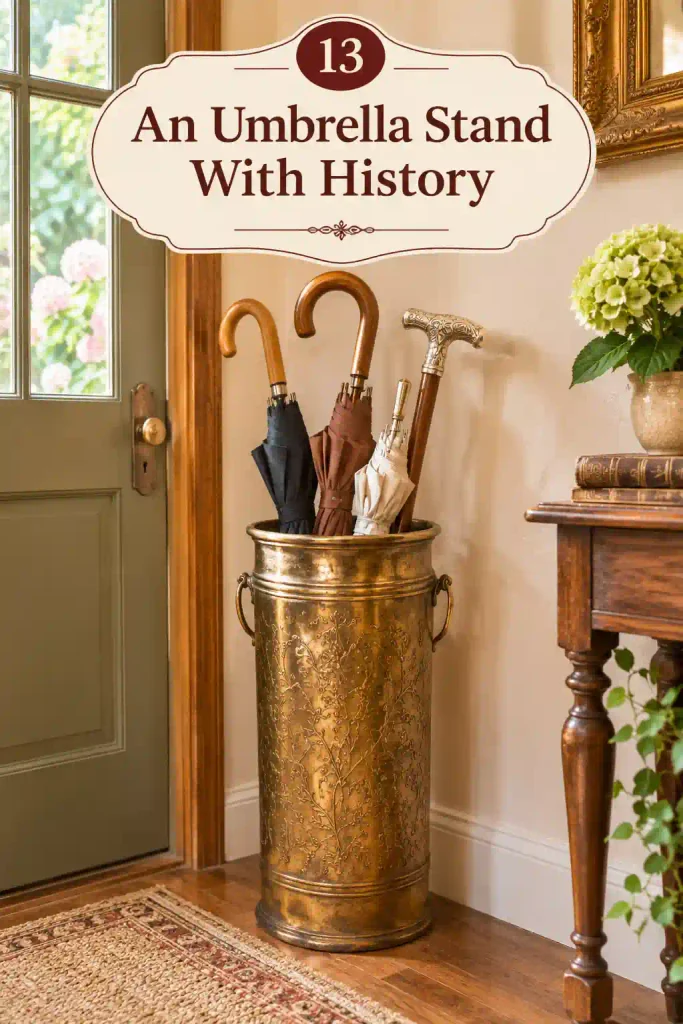
A tall brass, enamel, or woven stand tucked into a corner keeps the floor clear. Look for a stand with a bit of rust or dents.
Prices range from $15 to $50, and it doubles as a spot for a cane or a walking stick.
A Basket for Shoes and Scarves
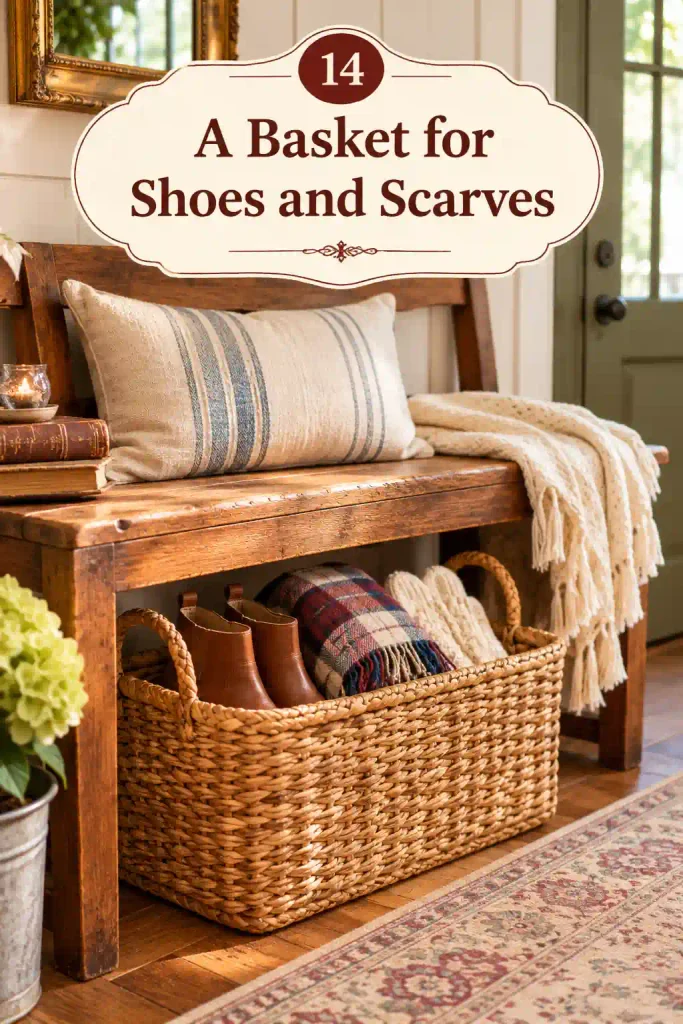
Under the bench, set a woven basket for shoes or mittens. It keeps clutter off the floor and adds texture.
Baskets cost $10 to $25. Seagrass or rattan suits an old-fashioned hall.
One Thing With a Story
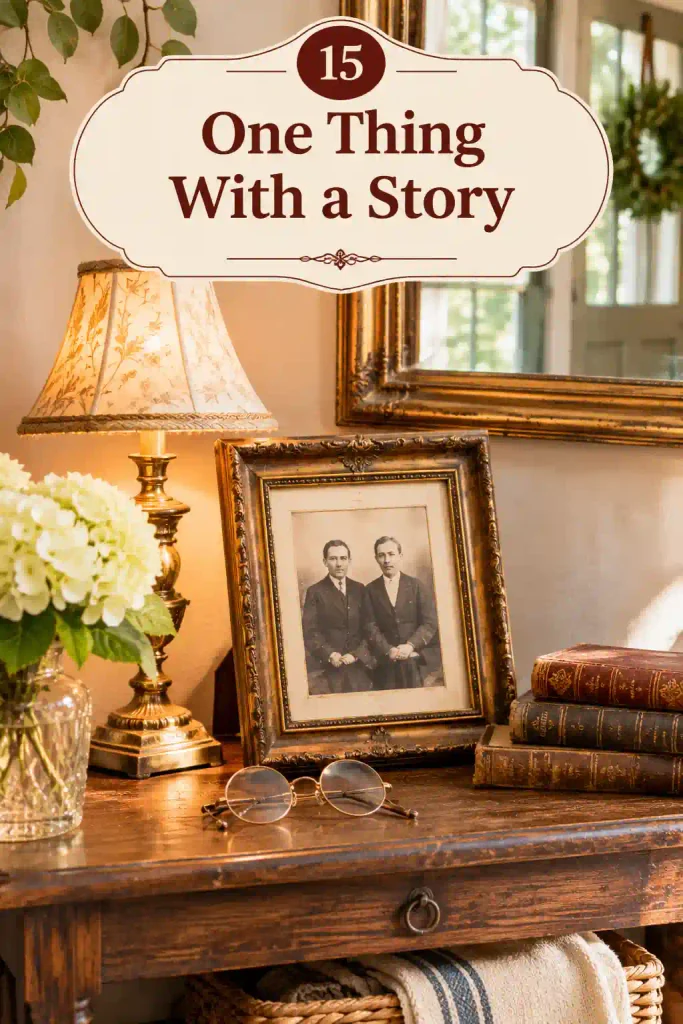
Display something that belonged to someone: a framed photo, a grandfather’s cane, or a letter in a frame. A vintage entryway without a story feels like a stage set.
It costs almost nothing. It’s the first thing guests will ask about.
A Few Hunting Rules
- Check the bones. Wobbly joints and water stains are warning signs. Surface scratches are fine.
- Go early. At estate sales, the best pieces leave in the first hour.
- Measure first. Keep the width and depth of your hall on your phone.
- Stay in three tones. Warm wood, cream, and one deeper accent keep it calm.
Quick Questions
How much does a vintage entryway cost?
Most people spend $150 to $400 by choosing four or five pieces, mostly secondhand.
What if my entryway is tiny?
Choose a slim bench, a mirror, and a row of hooks. Small halls look best with less.
Can renters do this?
Yes. Furniture, lamps, rugs, and mirrors move with you. Use a leaning mirror and a freestanding hall tree to skip the drilling.
How do I protect vintage wood?
Wipe with a soft cloth, use a bit of furniture oil, and keep it out of direct sun.
Back in the Hall
Last winter, my sister came over on a gray afternoon. She stepped in, took off her boots, and sat down on the old oak bench. She ran her hand along the worn seat and looked at the mirror, the brass bowl, and the tiny lamp glowing on the console.
“This feels like Grandma’s,” she said quietly.
I didn’t trust my voice, so I just nodded. I’d hunted through a dozen flea markets and an auction barn without ever telling myself why. I’d wanted a hall where people stop.
That’s what a first impression is, I think. It isn’t about impressing anyone. It’s a small promise made in the first ten seconds that someone inside is glad you came.
So this weekend, pick one piece. Find a bench, or a mirror, or a little brass bowl. Set it by your door, and watch what happens when someone walks in.
They’ll slow down. They always do.