
Marked in pencil on a doorframe, from the floor up. Stand tall. We’re measuring.
In the doorway between my parents’ kitchen and living room, there’s a column of pencil lines. My dad made them every birthday. Each one has a name and a date: “Jen, age 6.” “Mike, age 9.” The lines climb the wood like a ladder, and the paint around them has yellowed. When my parents sold the house, the buyers asked if they should paint over it. My mother said, “Please don’t.”
I thought about that doorframe last month, standing in my own living room, staring at four bare walls. I’d been “waiting for the right pieces” for three years. The walls had no marks at all, and nothing said anyone lived here.
So I decided to decorate from the floor up, one height at a time, like a growth chart. Here are the ten marks.
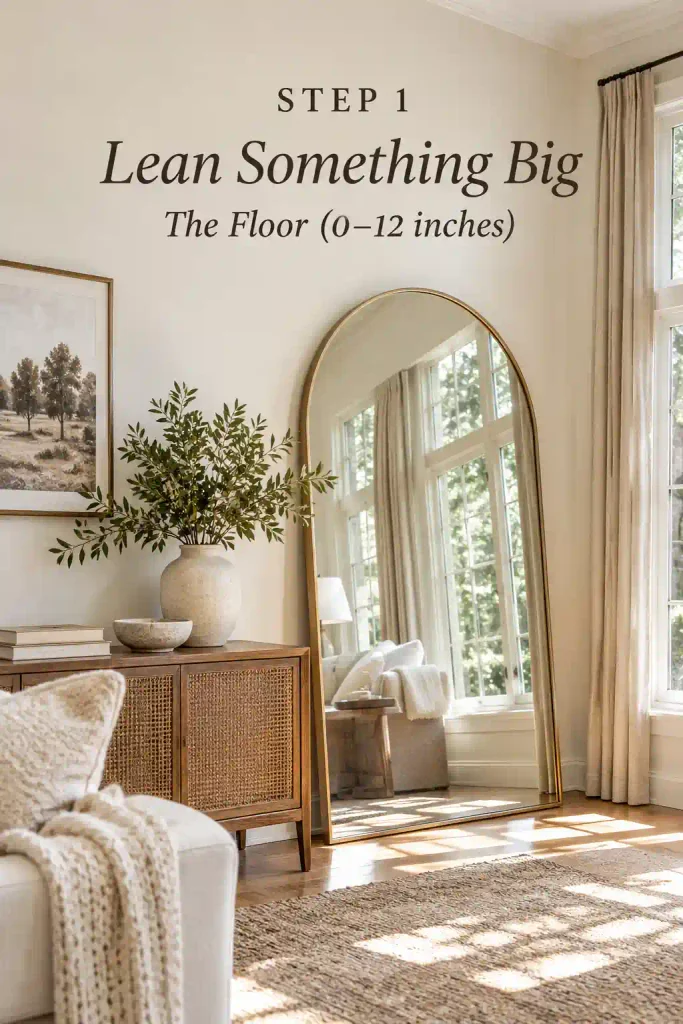
Mark 1: The Floor (0 to 12 inches)
Lean Something Big
Cost: $30 to $90
Start at the bottom, where nothing needs a nail. Lean a large arched mirror or a big framed print against the wall, either on the floor or on a low console. It looks relaxed and a little artsy, and it bounces light around the room.
Check thrift stores and online marketplaces for frames. If kids or pets are around, tuck a small removable strap behind the top so it can’t tip.
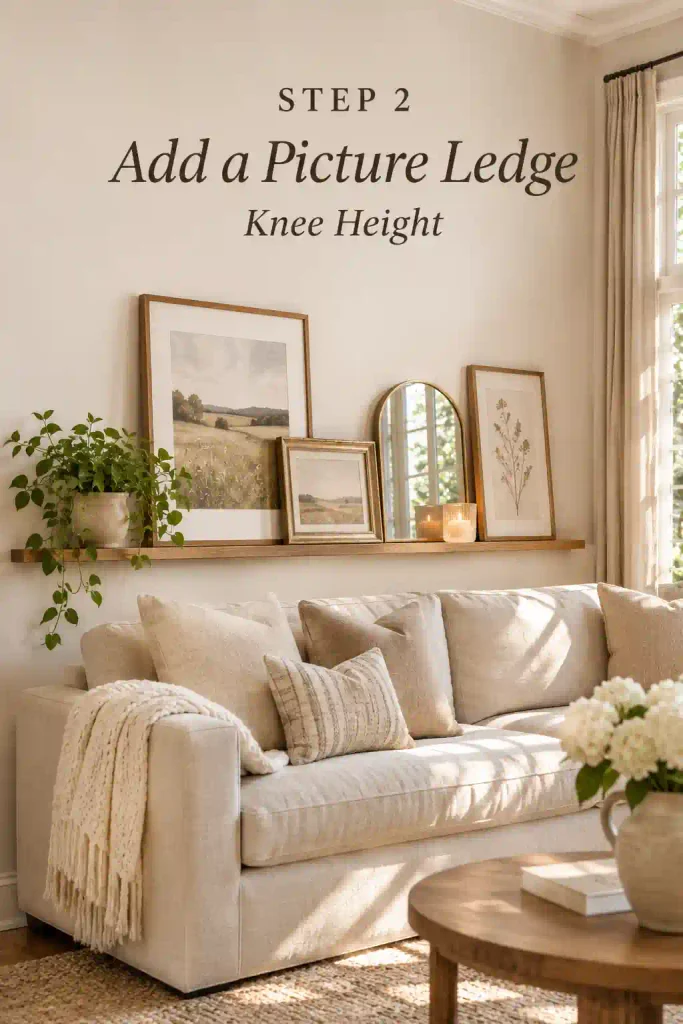
Mark 2: Knee Height (about 18 inches)
Add a Picture Ledge Behind the Sofa
Cost: $20 to $50
A slim wooden ledge lets you lean frames, small mirrors, and a candle without making a hole for each one. You can swap pieces anytime, and it feels like redecorating for free.
Overlap the frames a little so the look stays soft. Anchor the ledge into studs, and keep the heaviest frame on the bottom.
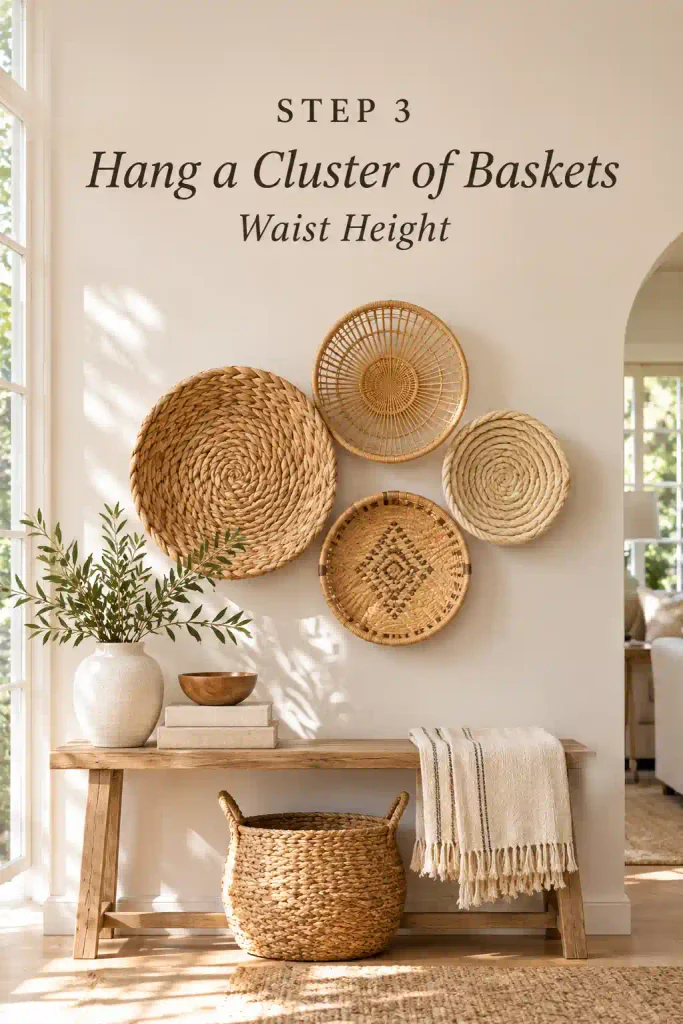
Mark 3: Waist Height (about 36 inches)
Hang a Cluster of Baskets
Cost: $20 to $45
Woven baskets in a loose group look like art. Use three or five in different sizes, in seagrass, rattan, or rope, and hang them with removable hooks. They add warmth and texture without any color.
Space them about two inches apart. A tight palette keeps it calm, so stick with natural tones.
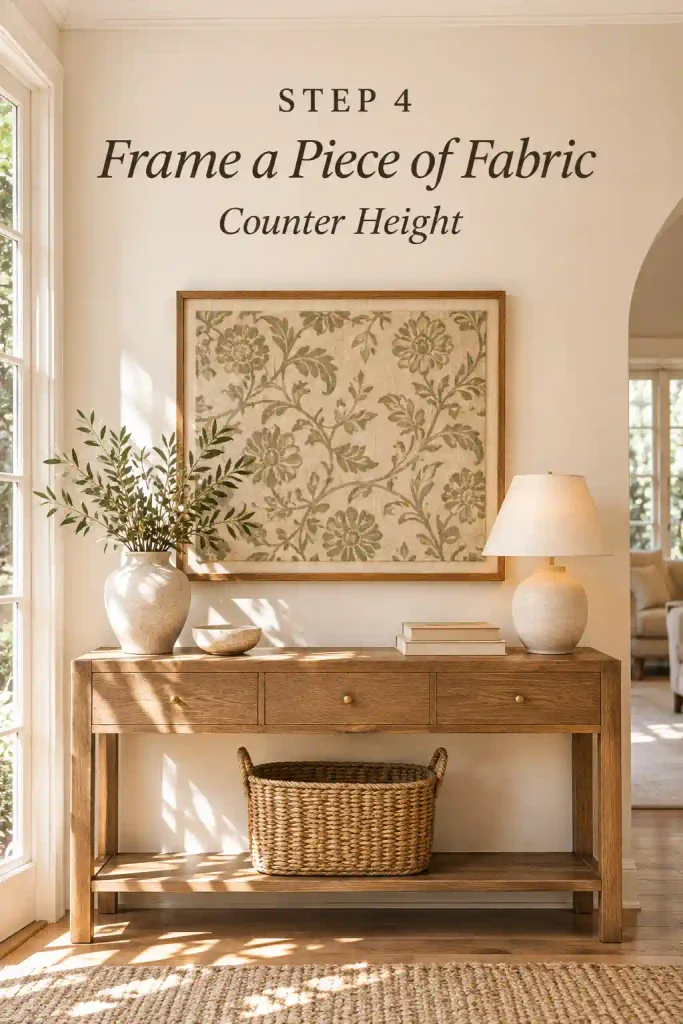
Mark 4: Counter Height (about 45 inches)
Frame a Piece of Fabric
Cost: $10 to $30
Find a linen scarf, a vintage tablecloth, or a remnant from a craft store, then stretch it over a simple wood frame or tuck it behind glass. A soft pattern in clay, oatmeal, or sage looks beautiful over a console.
Nobody will guess it started as a dish towel. It’s the easiest “custom art” trick I know.
Mark 5: Eye Level (57 inches)
Hang One Large Piece of Art
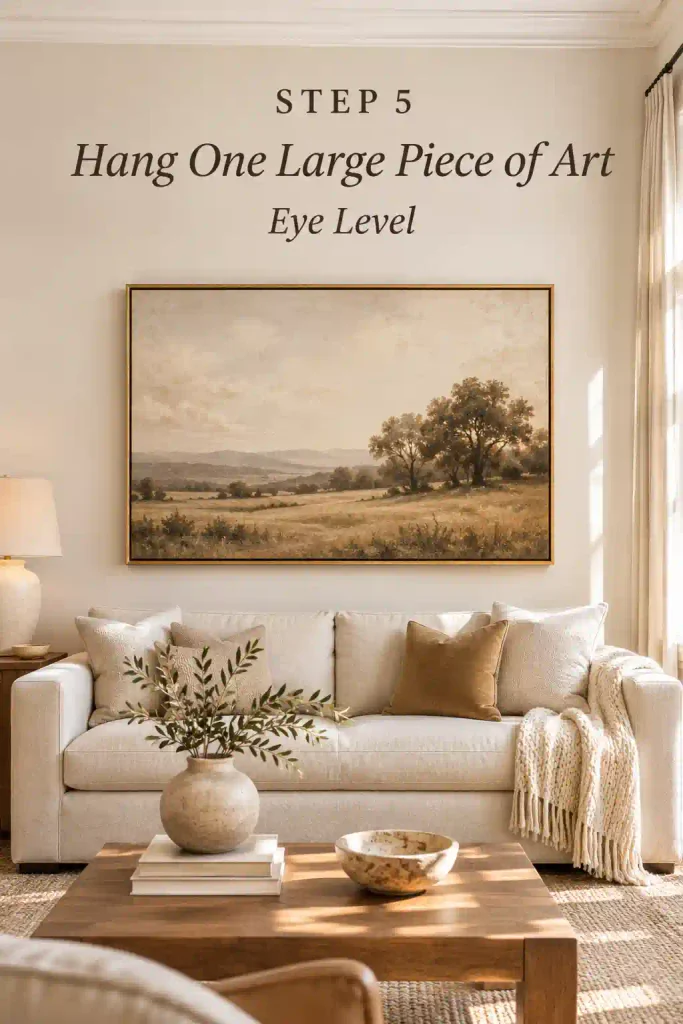
Cost: $30 to $120
This is the mark designers use. Hang a big print so its center sits about 57 inches from the floor, with the bottom about 6 to 8 inches above your sofa. A single large piece looks confident, and a cluster of small ones looks nervous.
Choose something quiet, like a landscape in muted tones, an abstract in warm earth colors, or a simple line drawing. A good print and frame cost about $60.
Mark 6: Eye Level, Again (about 60 inches)
Build a Gallery Wall of Real Life
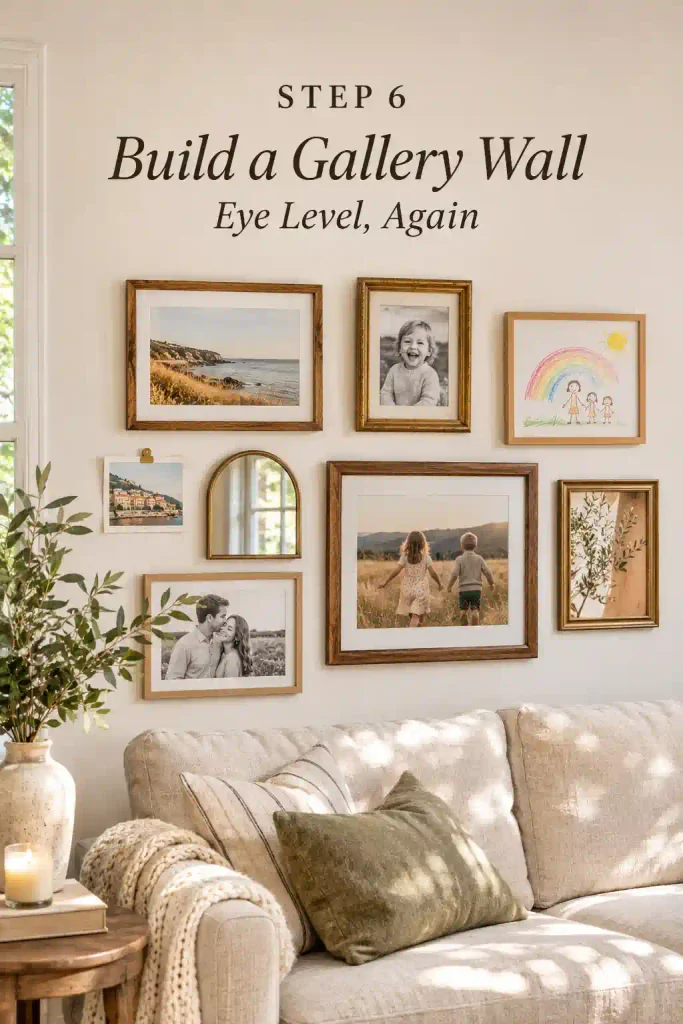
Cost: $20 to $60
Mix family photos, a postcard, a child’s drawing, and a small mirror. Use frames in two or three finishes, and leave about two inches between each one.
Lay everything on the floor first, then trace each frame on paper and tape the paper to the wall. Move the paper around until it feels right. It saves your walls and your patience, and thrift store frames cost $3 to $10.
Mark 7: Just Above Eye Level (about 66 inches)
Add Plug-In Sconces
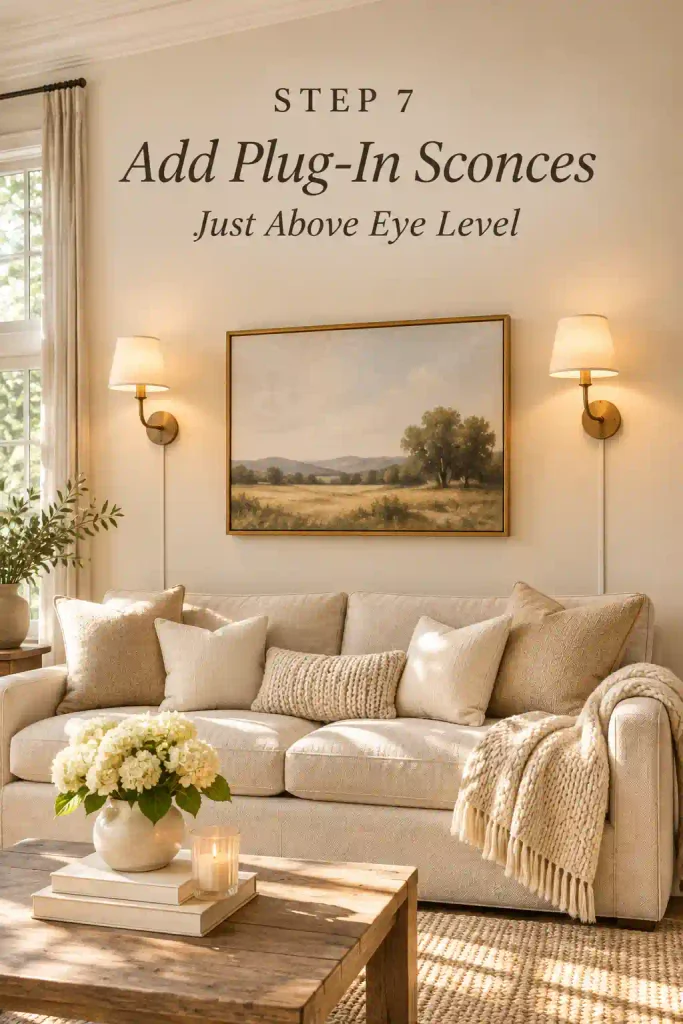
Cost: $30 to $70 each
Light is wall decor, too. Plug-in sconces on either side of the sofa or a big piece of art mean no electrician. Run the cord down with a paintable cord cover, and use warm bulbs around 2700K.
Side light makes walls glow and flatters everybody in the room. Turn off the harsh ceiling light at night, and you’ll feel the difference.
Mark 8: Tall Territory (about 72 inches)
Hang a Tall, Narrow Piece
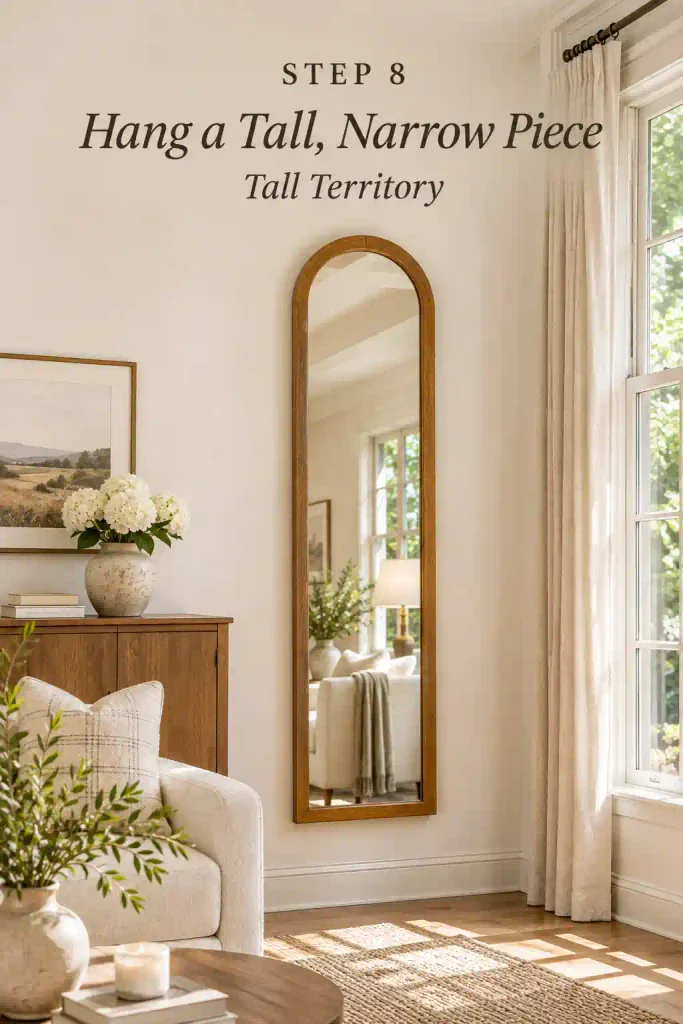
Cost: $25 to $80
Tall and skinny pieces, like a long mirror, a vertical print, or a woven hanging, draw your eyes up and make ceilings feel higher. They work well beside a window or in a narrow stretch of wall.
Try a wood-framed mirror or a macramé piece in cream. Anchor it into studs, since longer pieces tend to be heavier.
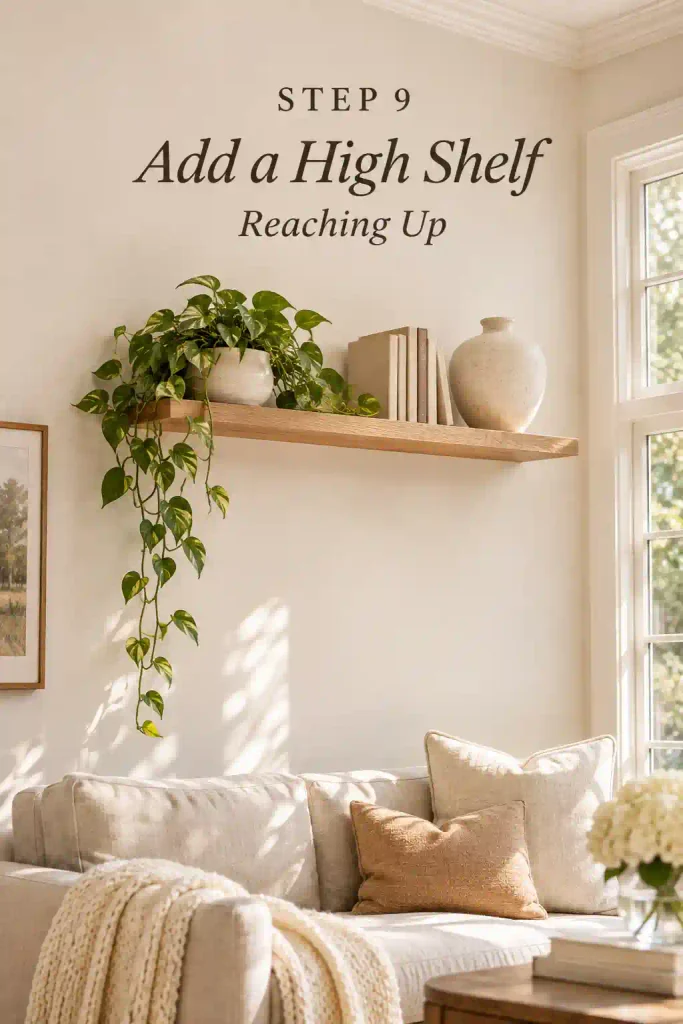
Mark 9: Reaching Up (about 84 inches)
Add a High Shelf With Something Trailing
Cost: $25 to $50
A floating shelf set high holds a trailing pothos or ivy, a few books, or a ceramic vase. It fills empty space above a sofa or a window without crowding the room.
Pothos forgives forgotten waterings, and a good faux vine works too. Keep it to two or three items so the wall breathes.
Mark 10: The Ceiling Line
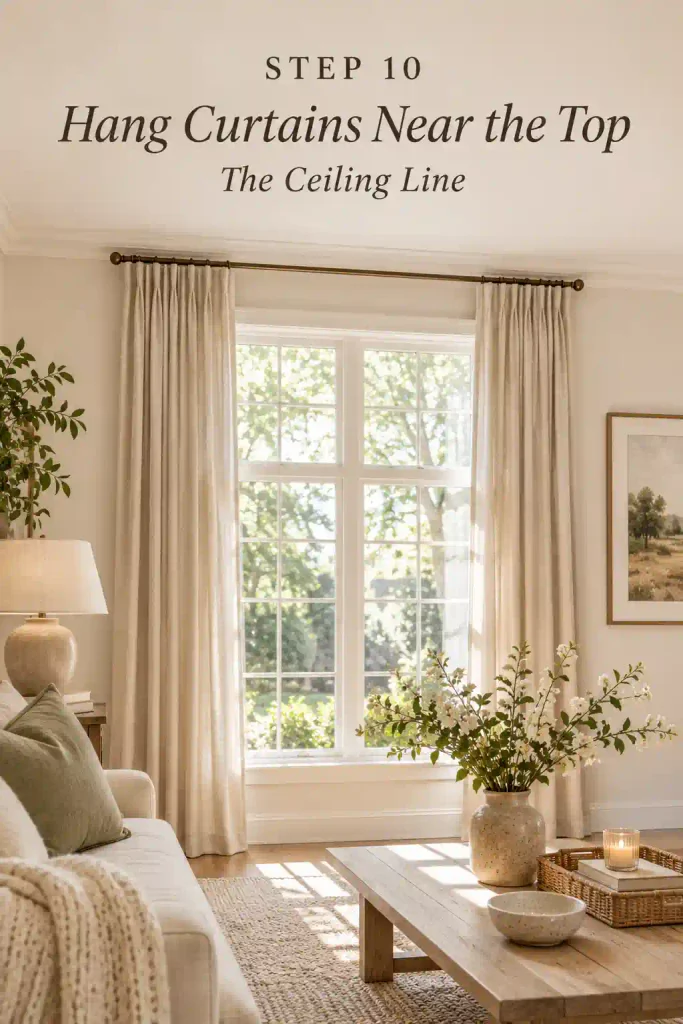
Hang Curtains Near the Top
Cost: $50 to $90
Curtains count as wall decor, and they’re the cheapest way to look finished. Mount a rod a few inches below the ceiling and let linen or cotton panels fall to the floor. The windows look taller, and the sun glows through the fabric.
Choose cream, oatmeal, or soft sage. A little fabric on the wall makes a room feel wrapped up, like a hug.
Notes From the Doorframe
Stay in three colors. Warm wood, cream, and one deeper accent look calm and chosen.
Match your finishes. Repeat black, brass, or warm wood on frames, shelves, and lamps.
Leave blank wall. Empty space is what makes each piece look special.
Measure twice. Tape paper templates to the wall, and live with them for a day before you hammer.
Quick Questions
How high should I hang art above a sofa?
Place the bottom of the frame 6 to 8 inches above the sofa, with the center near 57 inches.
How much does this cost?
Most people spend $100 to $300 by choosing four or five marks. Art, sconces, and curtains give the biggest change.
Can renters do this?
Yes. Leaning pieces, picture ledges with removable mounts, plug-in sconces, and tension rods leave no marks.
What if I’m nervous about choosing art?
Start with fabric or photos you already love, since there’s nothing to get wrong.
One More Pencil Line
A few weeks after I finished, my daughter stood in the middle of the living room with a pencil in her hand. She’s twelve now, and she’s growing fast. “Can I mark my height somewhere?” she asked.
I looked at the walls, the baskets, the photos, the lamp glowing on the sconce, and I laughed. I hadn’t thought of it, but she was right. The walls finally felt like they could hold a family.
We picked the inside of a closet door, where nobody would mind. I stood her against the wood and drew a line above her head, then wrote her name and the date in small, careful letters.
My eyes stung a little. Three years of waiting for the right pieces, and all it took was one pencil mark and the decision to begin.
That’s what I’d tell you. Walls aren’t for impressing anyone. They’re for holding the story of whoever lives inside them.
So pick one height tonight. Lean a mirror, hang a photo, or switch on a lamp. Then step back and look.
Somewhere on that wall, a line is waiting for your name.