
An auction catalog for one very good tree. Bidding opens at the first strand of lights. No paddle required.
Last November, I went to an estate auction on a gray Saturday, mostly out of curiosity. The house belonged to a woman named Marian, who had lived there fifty-one years. In the dining room, someone had left her Christmas tree up, dressed in ribbon, plain glass balls, and warm lights. Even among the auction paddles and folding chairs, people kept slowing down to look at it.
I asked the auctioneer if it was part of the sale. “Just the ornaments,” he said. “Box lots.” I bought one for $15.
That tree taught me what “designer” really means. It isn’t money. It’s restraint, repetition, and a few choices made on purpose. Here is the catalog, lot by lot.
Lot 1. The Lights
Estimate: $8 to $15 per strand
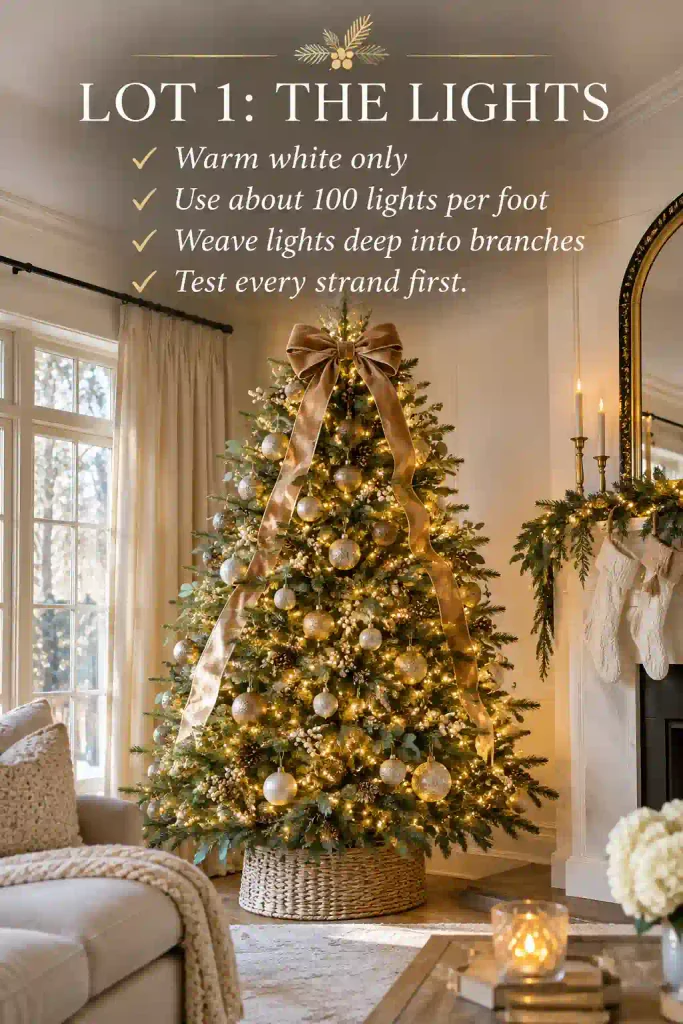
Everything starts here. Choose warm white, never cool white, and plan on about 100 lights per foot of tree. Weave them deep into the branches, not just around the outside, so the tree glows from within. Test every strand first.
Lot 2. The Fluff
Estimate: free
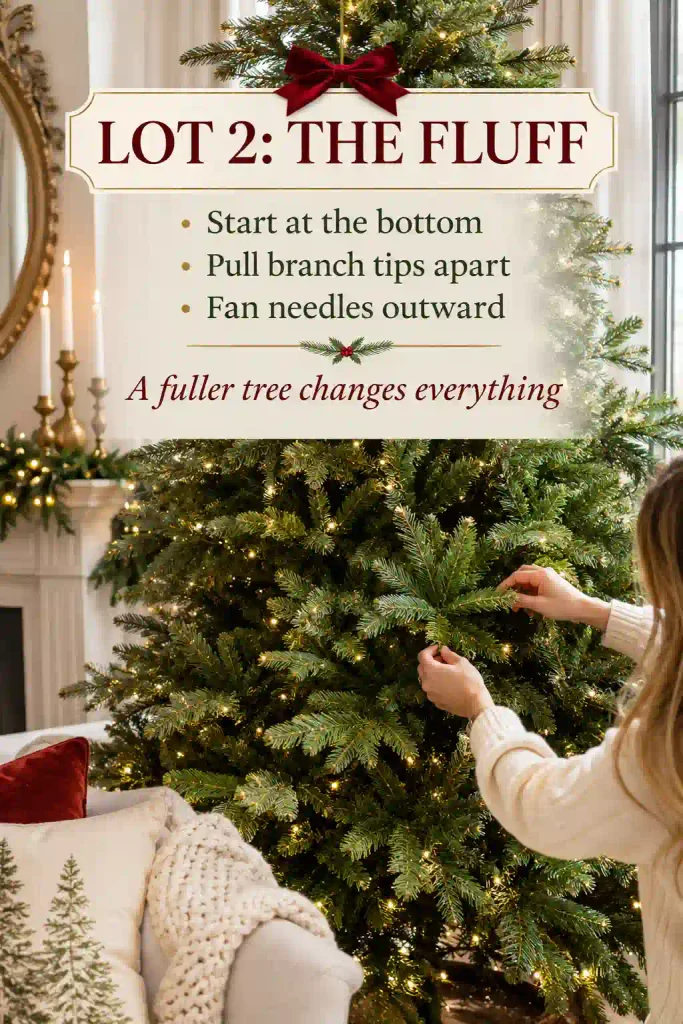
Designers spend more time fluffing than decorating. Starting at the bottom, pull each branch tip apart and fan the needles outward. Bend side branches up and out. Twenty minutes makes an artificial tree look nearly twice as full.
Lot 3. The Palette
Estimate: free
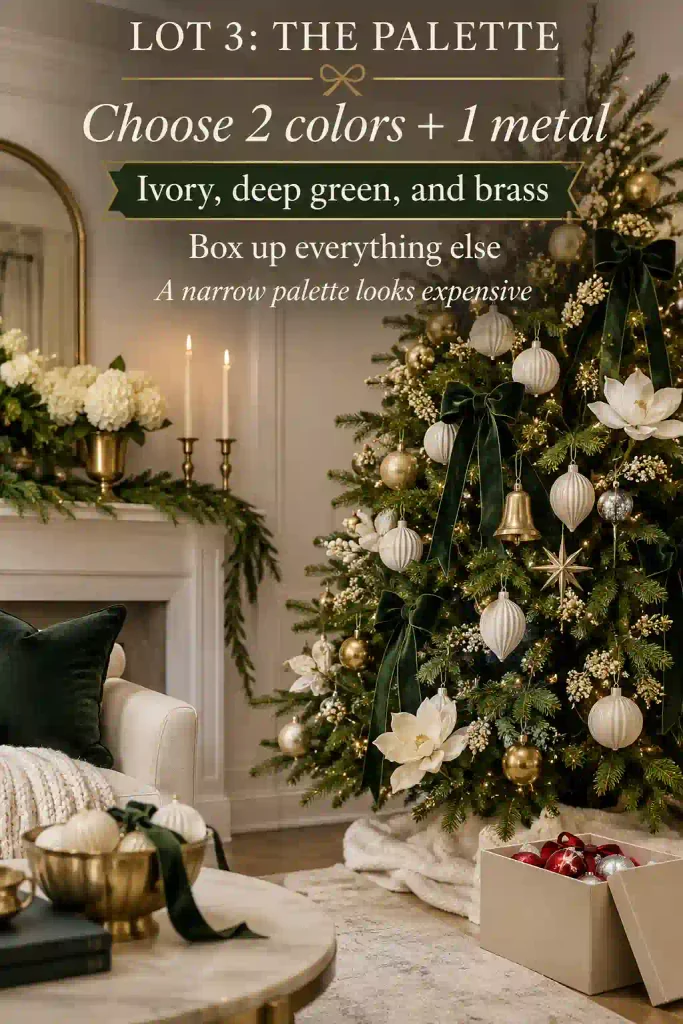
Choose two colors and one metal. Cream and gold, forest green and copper, or soft white and silver all work. Marian’s tree used ivory, deep green, and brass. Box up everything else. A narrow palette is the fastest way to look expensive.
Lot 4. The Ribbon
Estimate: $5 to $12 per roll
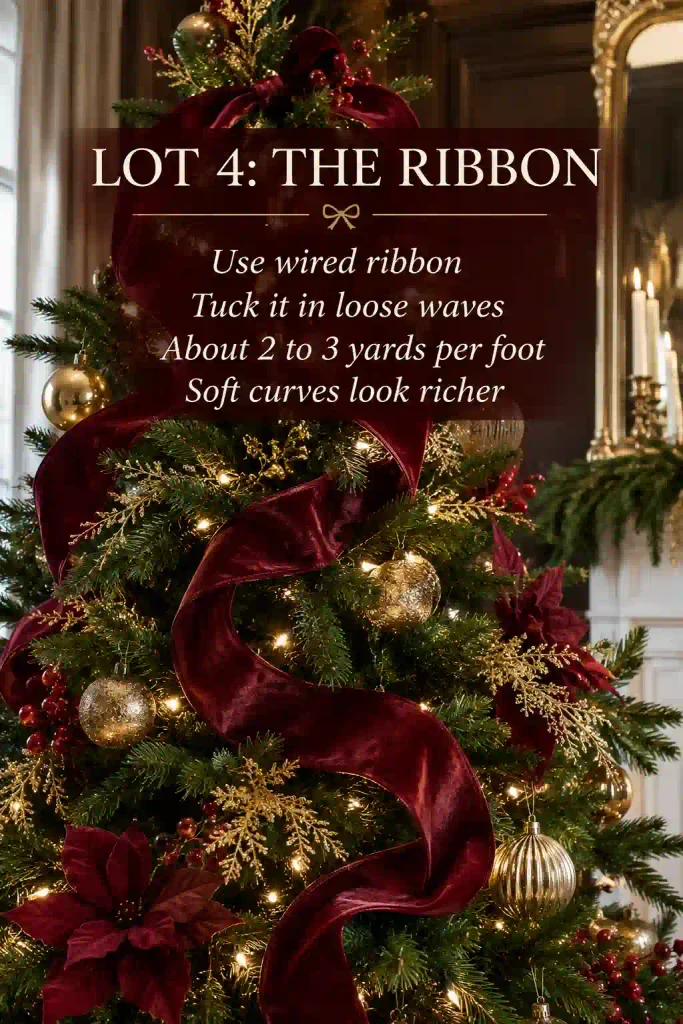
Wired ribbon is the secret ingredient. Tuck it into the branches in long, loose waves, starting at the top. Use about 2 to 3 yards per foot of tree height. Velvet in deep green or burgundy feels especially rich. Let it droop and curve, because stiff lines look cheap.
Lot 5. The Oversized Orbs
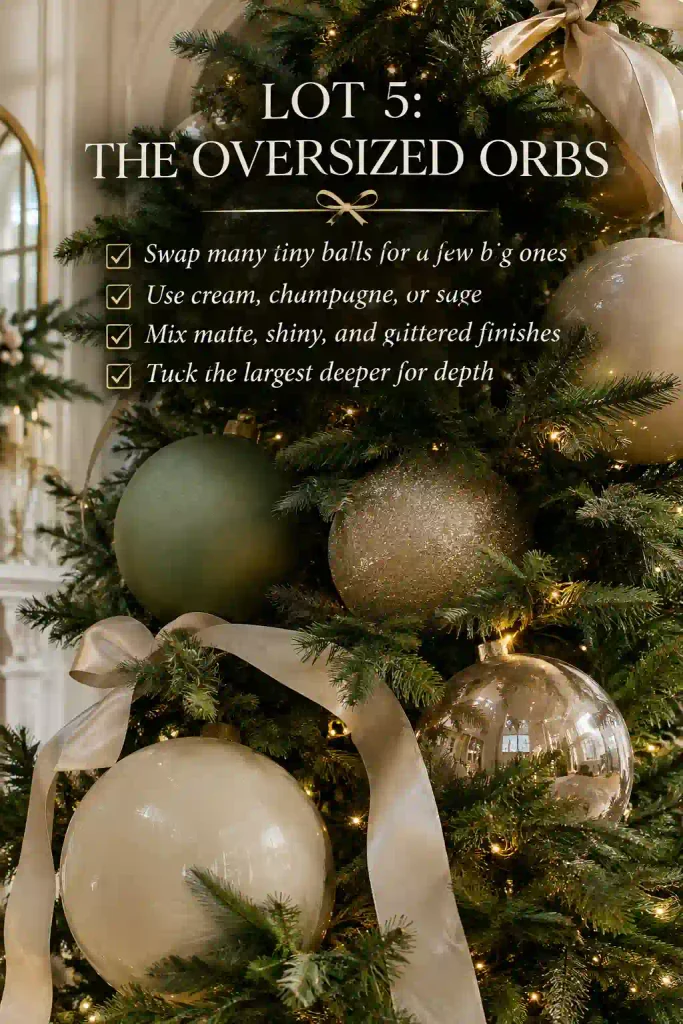
Estimate: $12 to $30 per box
Swap a hundred tiny balls for a few big ones, four to six inches wide, in matte cream, champagne, or sage. Tuck the largest deep into the branches for depth. Mix matte, shiny, and glittered finishes within one color family so the tree looks layered, not flat.
Lot 6. The Natural Stems
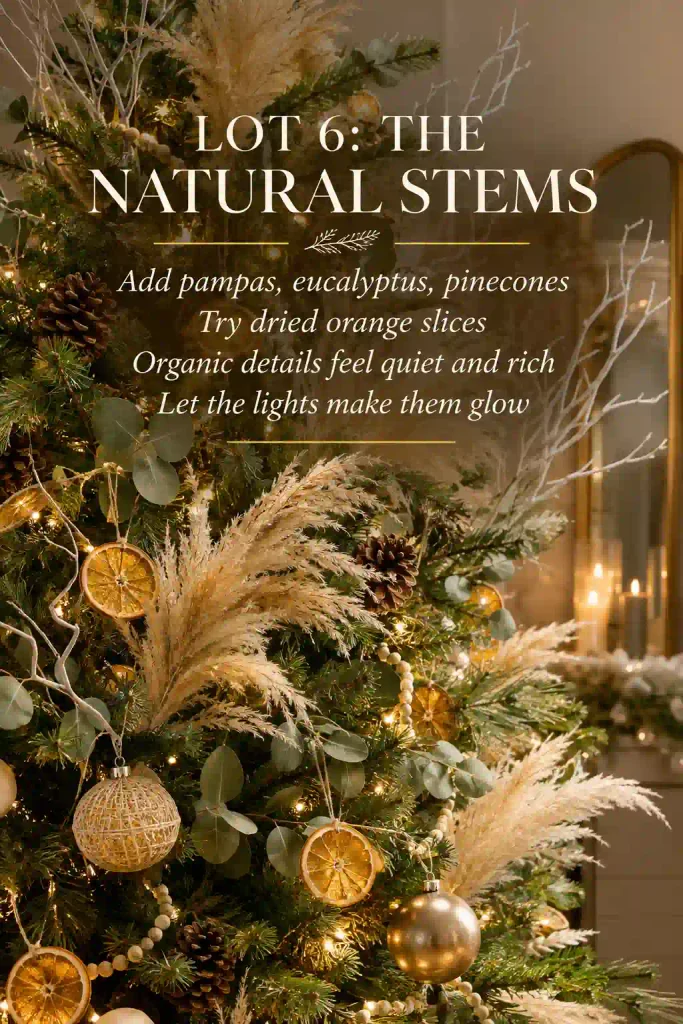
Estimate: $0 to $15
Tuck in dried pampas, bare white branches, eucalyptus, or pinecones for a quiet, organic look. Dried orange slices cost about $4: bake them thin at 200°F for about three hours, flipping once. They turn amber and glow when the lights hit them.
Lot 7. The Vertical Lines
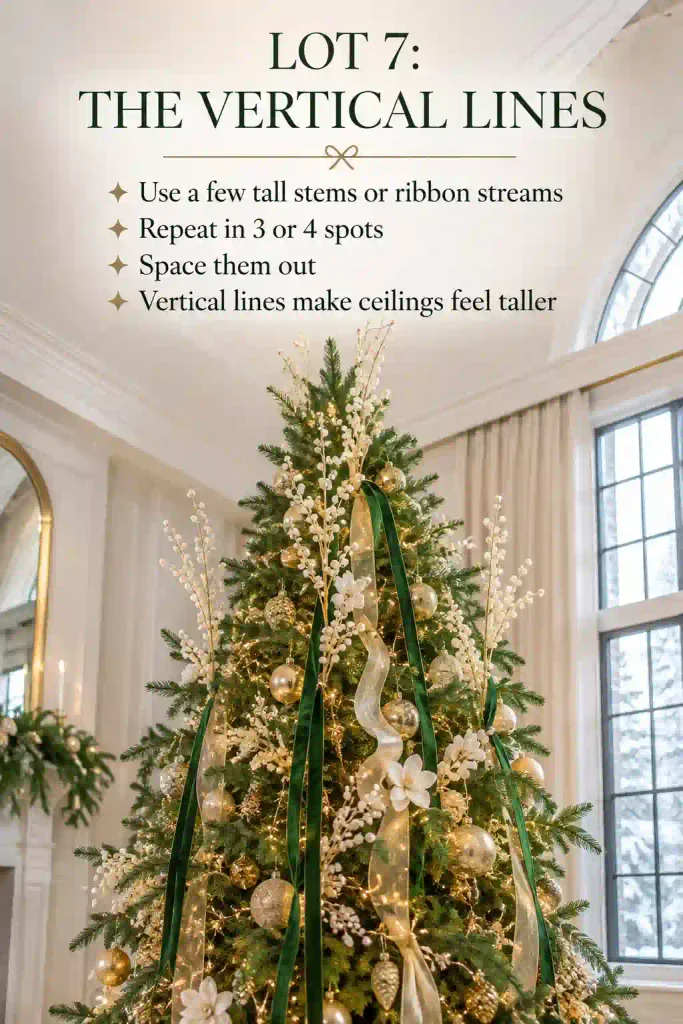
Estimate: $0 to $10
Designers tuck a few tall stems or ribbon streams straight up and down, which draws the eye higher and makes the ceiling feel taller. Use floral wire to hold them steady. Repeat in three or four spots around the tree, with space in between.
Lot 8. The Topper With Presence
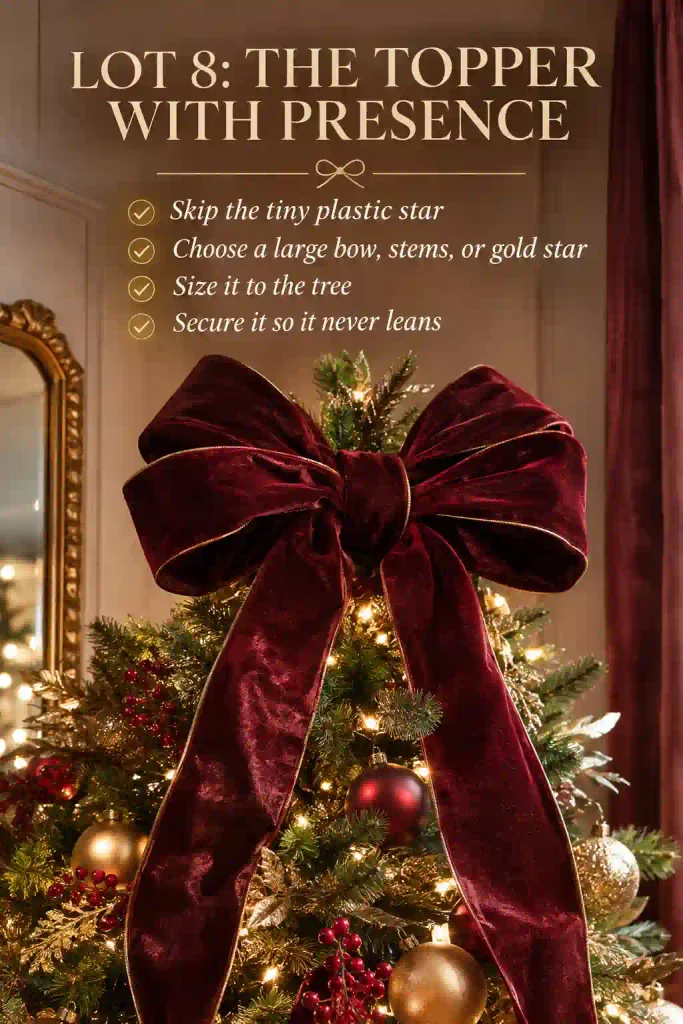
Estimate: $10 to $30
Skip the tiny plastic star. Choose a large velvet bow, a bundle of dried stems and ribbon, or a plain gold star sized to the tree. Too small looks lost, and too big looks heavy. Attach it with floral wire so it never leans.
Lot 9. The Pedestal
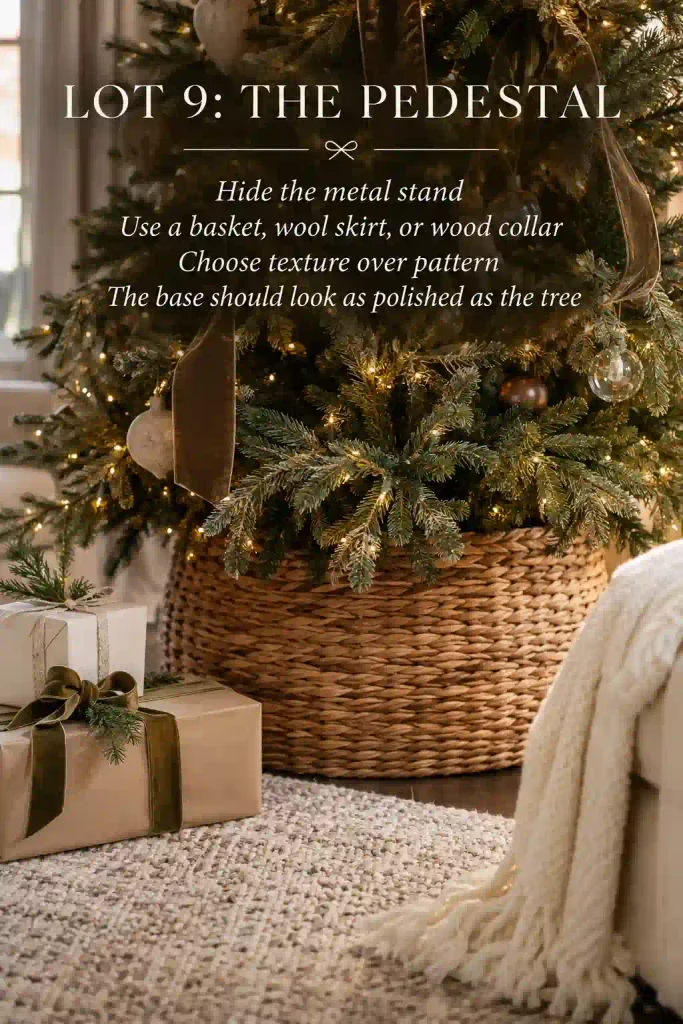
Estimate $15 to $40
A bare metal stand ruins the whole look. Hide it under a woven basket, a cream wool skirt, or a plain wood collar. Choose texture over pattern. A rattan basket also holds extra wrapping paper, which is handy in December.
Lot 10. The Gifts as Decor
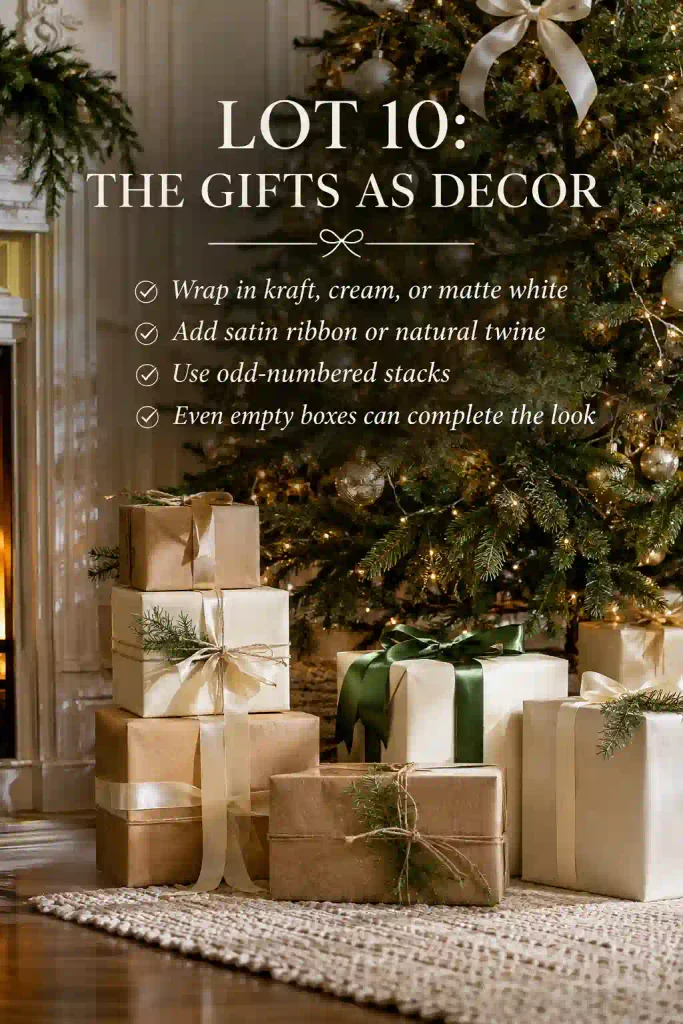
Estimate: $10 to $20
Wrap presents in kraft paper, cream paper, or matte white, tied with satin ribbon or natural twine and a sprig of greenery. Stack in odd numbers at different heights. Short on gifts? Wrap a few empty boxes in the same paper. Nobody will check.
Lot 11. The Dim Room
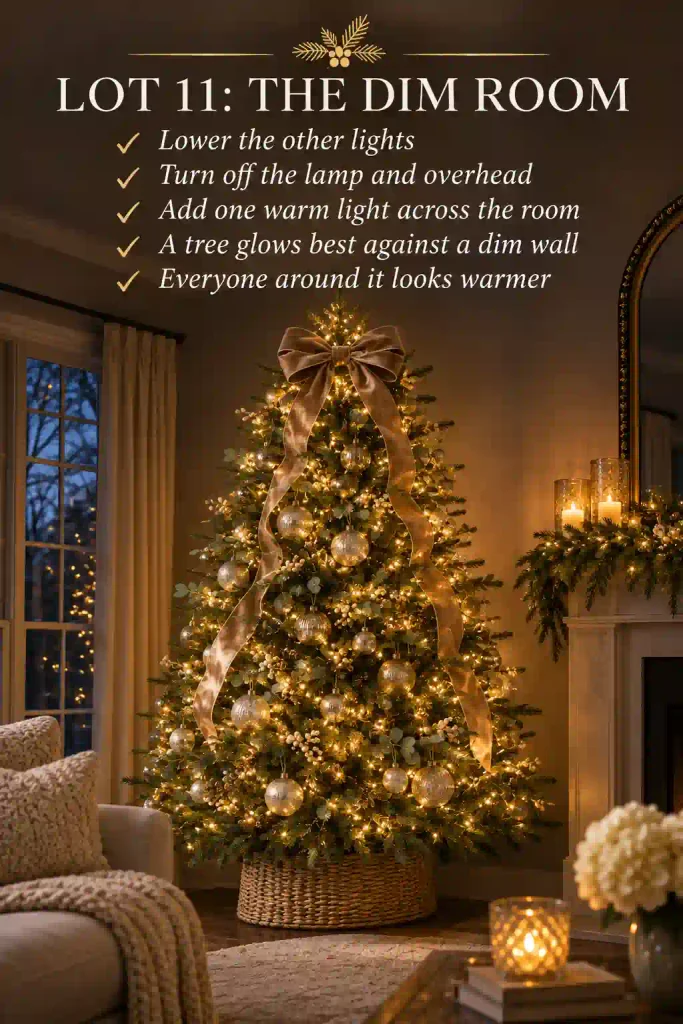
Estimate: free
A designer always lowers the other lights. Turn off the lamp and the overhead, then add one warm light across the room. A tree looks best against a dim wall, and everyone around it looks warmer.
Lot 12. The Box Lot
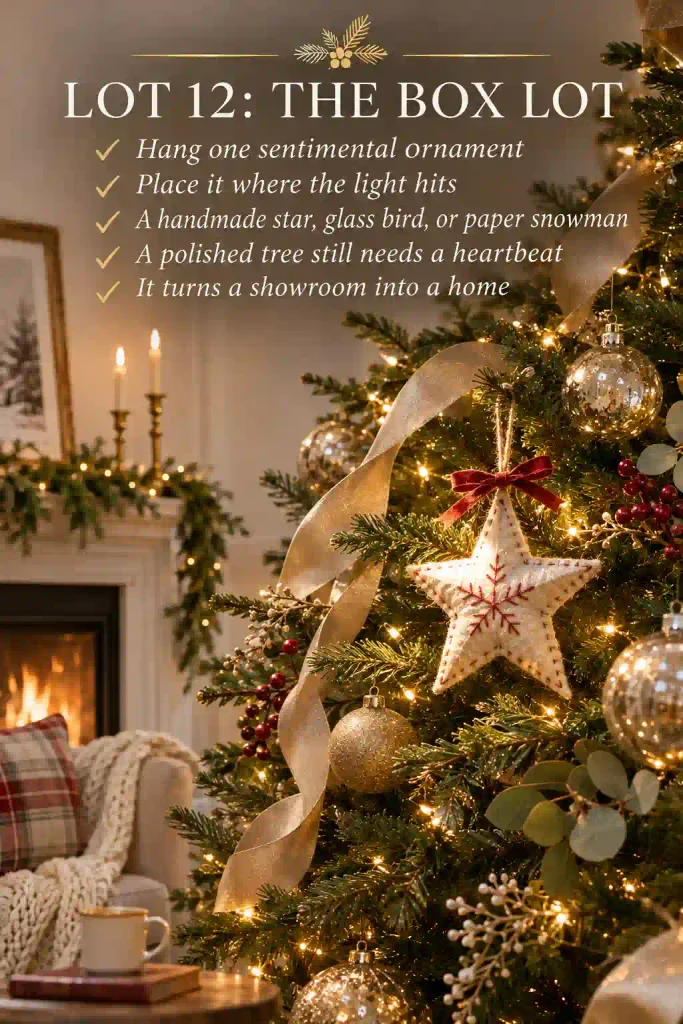
Estimate: priceless
This is the lot I took home. Hang one sentimental ornament where the light hits it. A handmade star, a chipped glass bird, or a paper snowman gives a polished tree a heartbeat. It’s what separates a showroom from a home.
Auctioneer’s Notes
- Step back often. Squint from across the room to find gaps and heavy spots.
- Use odd numbers. Three of anything looks more natural than two or four.
- Match your metal. Choose brass, silver, or copper and repeat it.
- Start with what you own. Edit first, then buy.
Quick Questions
How much does a designer-look tree cost?
Most people spend $75 to $200 by reusing what they own and adding lights, ribbon, and a few oversized ornaments.
How many ornaments do I need?
For a 7-foot tree, about 50 to 70, plus ribbon and natural stems.
What colors are popular this year?
Soft neutrals, deep greens, and warm metals remain favorites, but any tight two-color palette looks elegant.
Is it safe with pets and toddlers?
Use shatterproof ornaments, keep breakables high, and anchor the tree so it can’t tip.
Sold
That night, I set the box lot on my living room floor and opened it slowly. Inside, wrapped in yellowed newspaper, were twenty plain glass balls, a coil of faded velvet ribbon, and one small card in careful cursive: “For Marian’s tree, from Walter, 1974.”
I sat there a long time. A tree like hers wasn’t designed in a showroom. It had been built over fifty years, one quiet December at a time, by someone who knew what to leave out.
When I finished my own tree, I turned off every lamp except the one by the window. Ribbon fell soft through the branches. A single ivory ball from Walter’s box hung near the front.
My husband came in with two mugs of cocoa and stopped. “Who decorated this?” he asked.
“Marian, mostly,” I said, and then I had to look away, because my eyes had stung.
So pick a few lots this year. Fluff the branches, warm the light, and hang the one ornament that matters. Then sit down in the glow.
Going once. Going twice.
You’ve already won.