
There’s a specific kind of tired that comes from living in a space that feels too small. It’s not just the lack of square footage. It’s the way a cramped room can make your whole day feel a little more cluttered, a little more closed in, even when nothing is actually wrong.
Here’s the good news: you don’t need to knock down a wall to fix that feeling. With a few smart design choices, even the coziest living room can feel open, calm, and surprisingly spacious. Here’s exactly how to do it.
Let the Floor Breathe
One of the fastest ways to make a room feel smaller is to fill every inch of floor space with furniture. Your eyes need somewhere to land that isn’t “stuff,” or the whole room starts to feel like a maze.
Try floating your sofa a few inches from the wall instead of pushing it flush against it, and leave a clear path from your doorway to your seating area. That small bit of visible, empty floor does more for the feeling of a room than another accent chair ever could.
Choose Furniture With Visible Legs
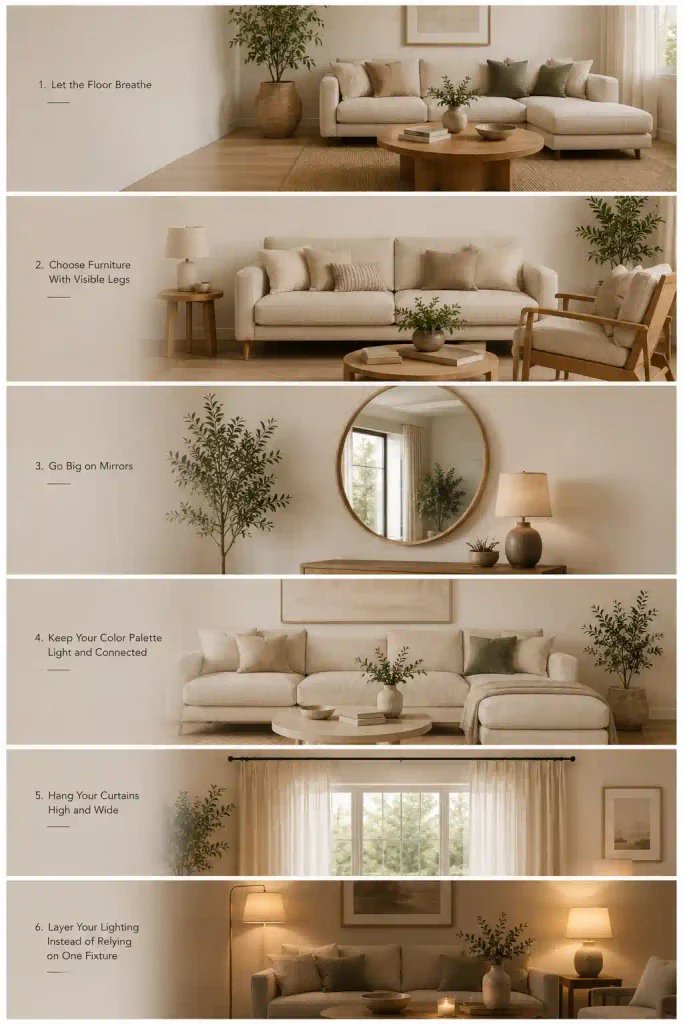
Furniture that sits flush on the floor blocks your sightline and creates heavy shadows underneath it. Sofas and chairs raised on slim wood or metal legs let your eye travel under the piece, which makes the whole room feel lighter and more open, almost like the furniture is floating.
It’s a small detail, but it’s one of those changes that makes people say “wait, did you move to a bigger place?”
Go Big on Mirrors
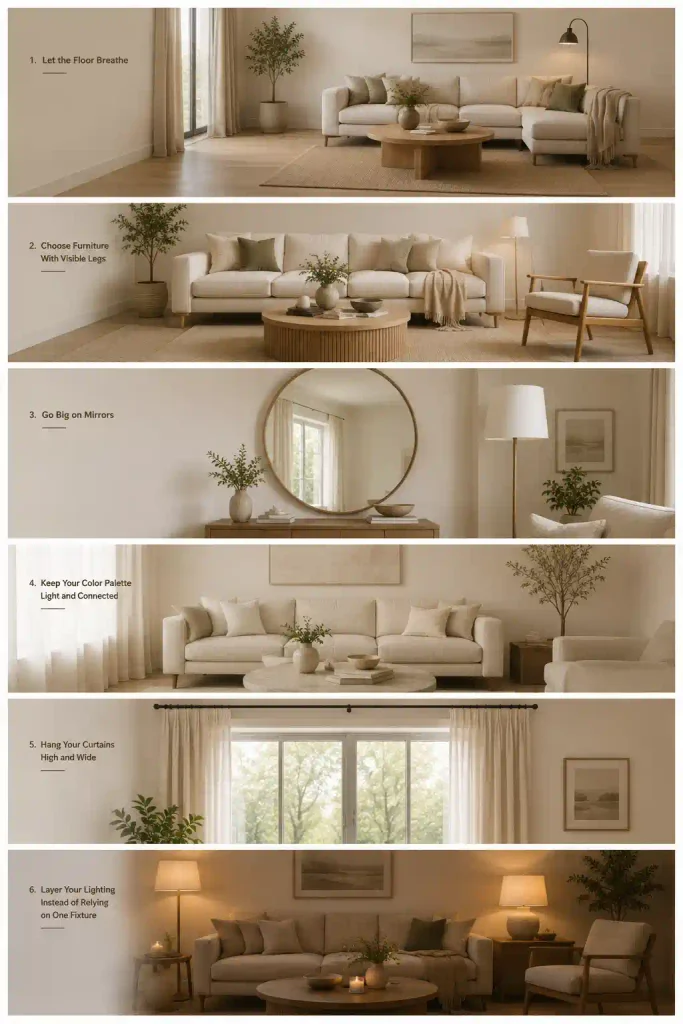
Mirrors are one of the most emotionally satisfying design tricks out there because the effect is almost instant. A large mirror placed across from a window catches natural light and throws it deeper into the room, and your brain reads that extra light as extra space.
Lean an oversized round or arched mirror against an empty wall, or hang one directly across from your main light source. It’s a simple change that can make a room feel like it took a deep breath.
Keep Your Color Palette Light and Connected
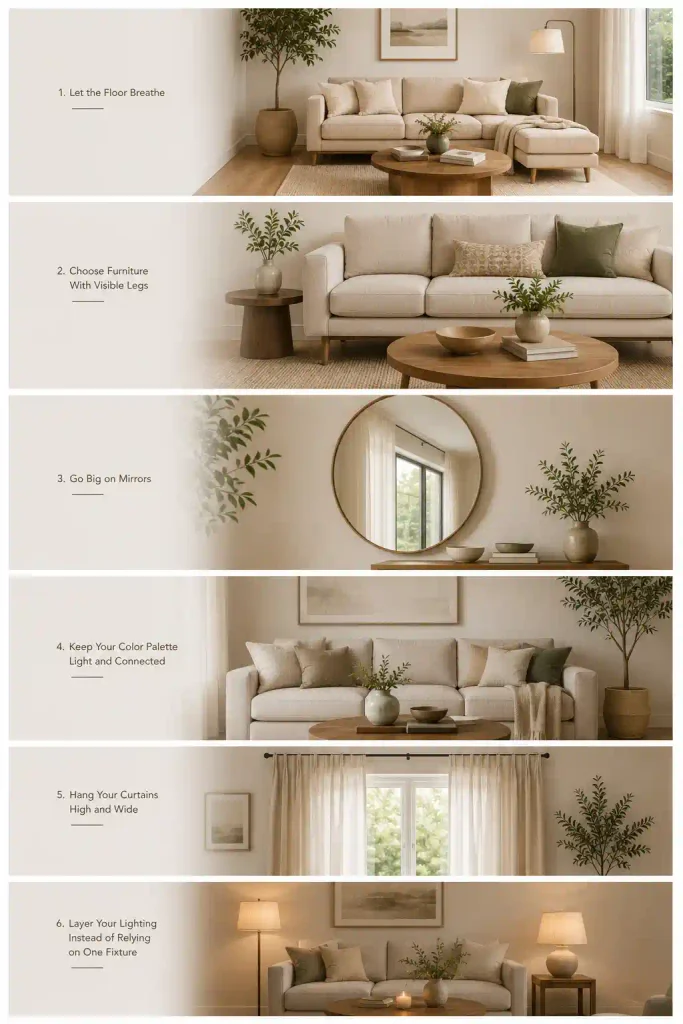
Dark, busy colors can make a small room feel like it’s closing in around you, almost like wearing a coat that’s a size too small. A light, cohesive color palette does the opposite. It softens the edges of the room and lets the walls feel farther apart than they really are.
- Stick to warm whites, creams, or soft greige on the walls.
- Choose furniture in similar warm neutral tones.
- Add color through pillows, art, or a single accent piece.
When the palette flows instead of competing, the whole room feels calmer to be in.
Hang Your Curtains High and Wide
This is one of the easiest, most affordable changes on this list, and it makes a genuinely emotional difference in how a room feels. Mount your curtain rod a few inches above the window frame and extend it several inches past each side.
Suddenly your windows look bigger. Your ceilings look taller. And the whole room feels like it’s reaching upward instead of pressing down on you.
Layer Your Lighting Instead of Relying on One Fixture
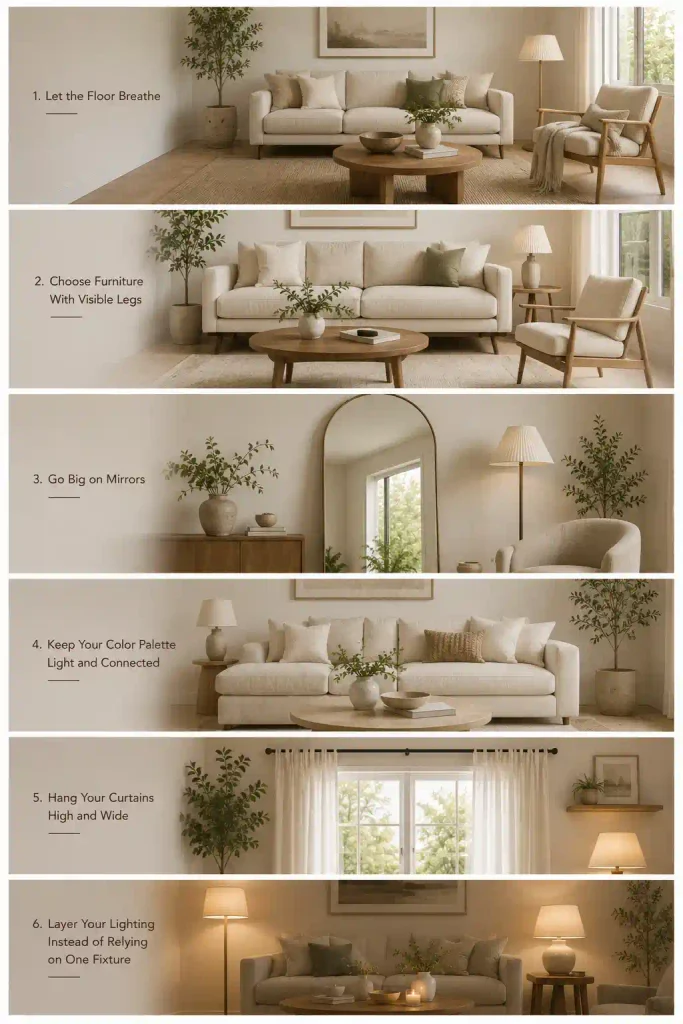
A single overhead light does a lot of the emotional damage in a small room. It flattens everything and creates harsh shadows that make the space feel tighter than it is. Layered lighting fixes this by softening the room from multiple angles.
- A floor lamp in a reading corner.
- A table lamp on a console or side table.
- Warm white bulbs instead of cool white.
Good lighting is one of those things you don’t consciously notice when it’s right, but you absolutely feel it. A well-lit room just feels like somewhere you want to stay.
Use One Large Rug Instead of a Small One
A rug that’s too small floats awkwardly in the middle of the room and actually makes the space feel more disjointed and cramped. The rule of thumb: your rug should be big enough that at least the front legs of your sofa and chairs rest on top of it.
A properly sized rug visually ties your furniture together into one intentional layout, instead of a bunch of pieces scattered around an empty floor.
Clear the Surfaces You See First
Clutter has a way of making even a spacious room feel small, and it’s often the first thing your brain registers when you walk in. Take a look at your coffee table, console, and any open shelving, and clear out anything that doesn’t need to be there.
- Store remotes and chargers in a lidded basket or drawer.
- Keep coffee tables styled with just a few intentional pieces.
- Fold blankets neatly instead of leaving them bunched up.
A clear surface is a small, quiet kind of relief every time you walk into the room.
Pick One or Two Statement Pieces Instead of Many Small Ones
It’s tempting to fill a small room with lots of little decorative touches, but that often backfires. Too many small objects create visual noise, which makes a room feel busier and smaller than it actually is.
Instead, choose one or two pieces that really matter to you, like a bold piece of art or a sculptural lamp, and let them shine without competing for attention.
Give Yourself Permission to Edit
The last step is simple, but it’s often the hardest emotionally. Look around your living room and ask yourself honestly what you’d miss if it were gone. If the answer is nothing, it’s probably time to let it go.
A room that’s been thoughtfully edited down to what actually matters will always feel bigger, calmer, and more like home than a room that’s simply full.
Final Thoughts
A small living room doesn’t have to feel small, and it definitely doesn’t have to feel like a compromise. With a little intention, floating your furniture, layering your light, choosing the right rug, your space can feel open, calm, and like somewhere you genuinely want to spend your evenings.
Which of these tips are you trying first? Save this post to Pinterest so you have it ready the next time your living room needs a little more breathing room.