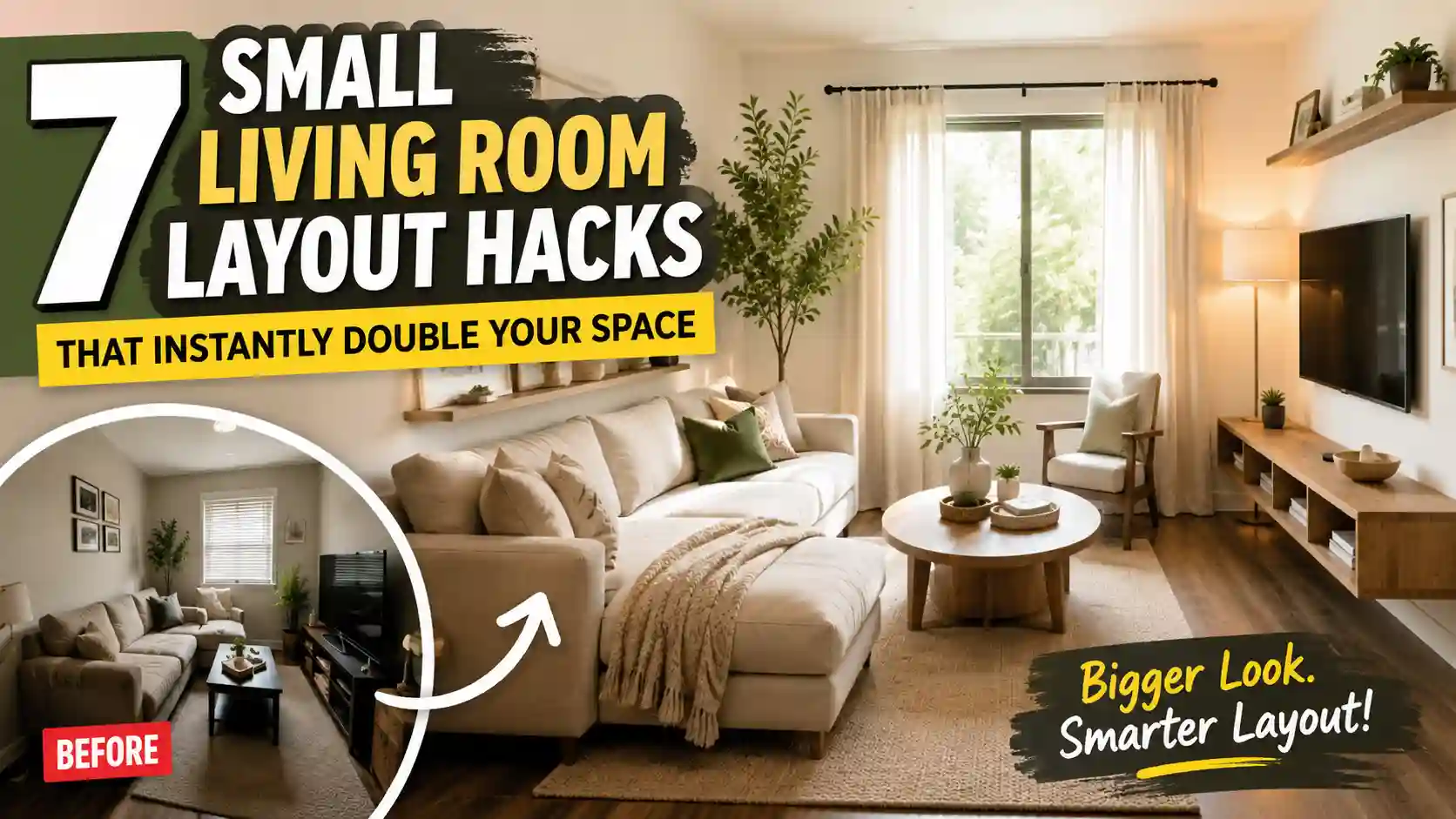
You know that feeling when you walk into your living room and just sigh? Not because anything is wrong, exactly, but because the couch is too close to the TV, the coffee table is in everyone’s way, and there’s nowhere to actually sit without bumping into something. A small living room can wear you down in small, quiet ways like that.
Here’s the good news: most of that feeling has nothing to do with the size of your room. It’s the layout. Move a few things around the right way, and your living room can feel twice as big without adding a single square foot. Here are 7 layout hacks that actually work.
Stop Pushing Everything Against the Walls
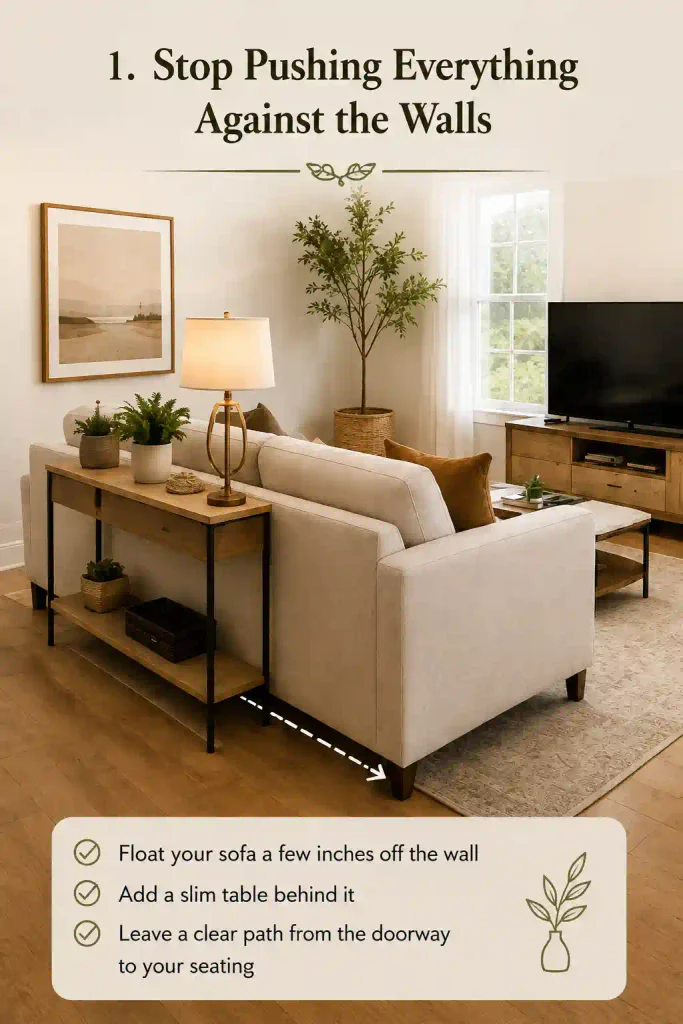
It feels natural to shove your sofa and chairs flat against every wall, since that seems like the way to “save space.” But it usually backfires. It leaves one big empty hole in the middle of the room and makes the whole layout feel stiff and awkward.
Instead, pull your sofa a few inches away from the wall and let the room breathe around it. Leave a little gap behind it if you can. This one change makes a room feel planned instead of just filled.
- Float your sofa a few inches off the wall.
- Add a slim table behind it to use the extra gap.
- Leave a clear path from the doorway to your seating.
Pick One Main Walking Path and Protect It
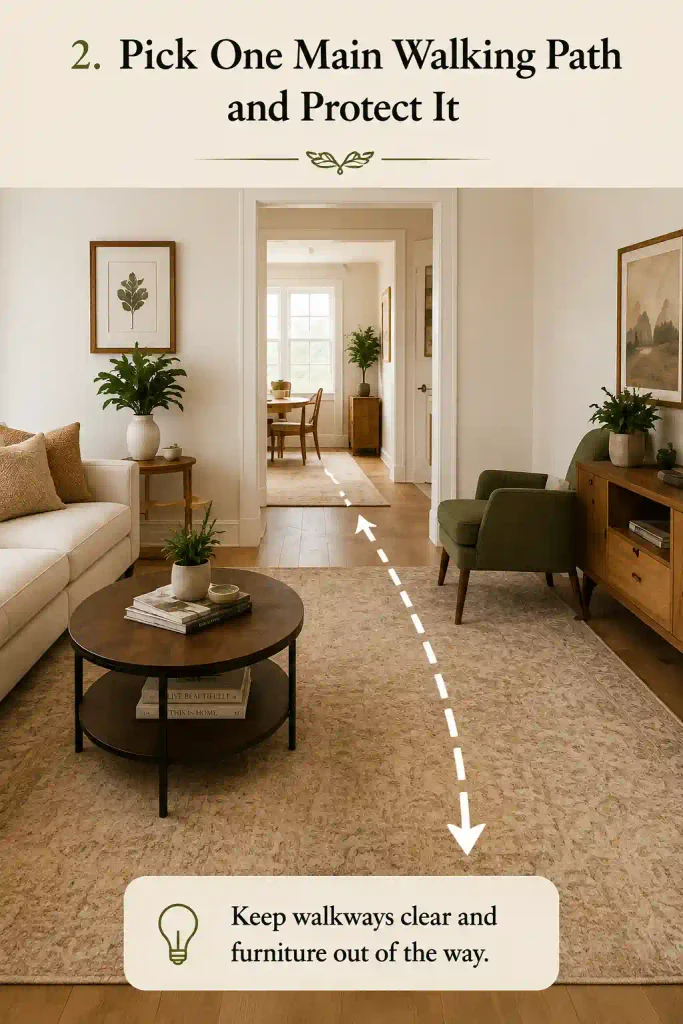
Every living room needs a clear path from the door to the main seating area, and from the seating area to anywhere else you walk through often, like the kitchen or hallway. If furniture blocks that path, your brain reads the whole room as cramped, even if there’s plenty of open space elsewhere.
Walk through your room the way you actually move through it during the day. Wherever you find yourself squeezing past a chair or stepping around a table leg, that’s your sign something needs to shift.
Angle Your Furniture Instead of Keeping Everything Square
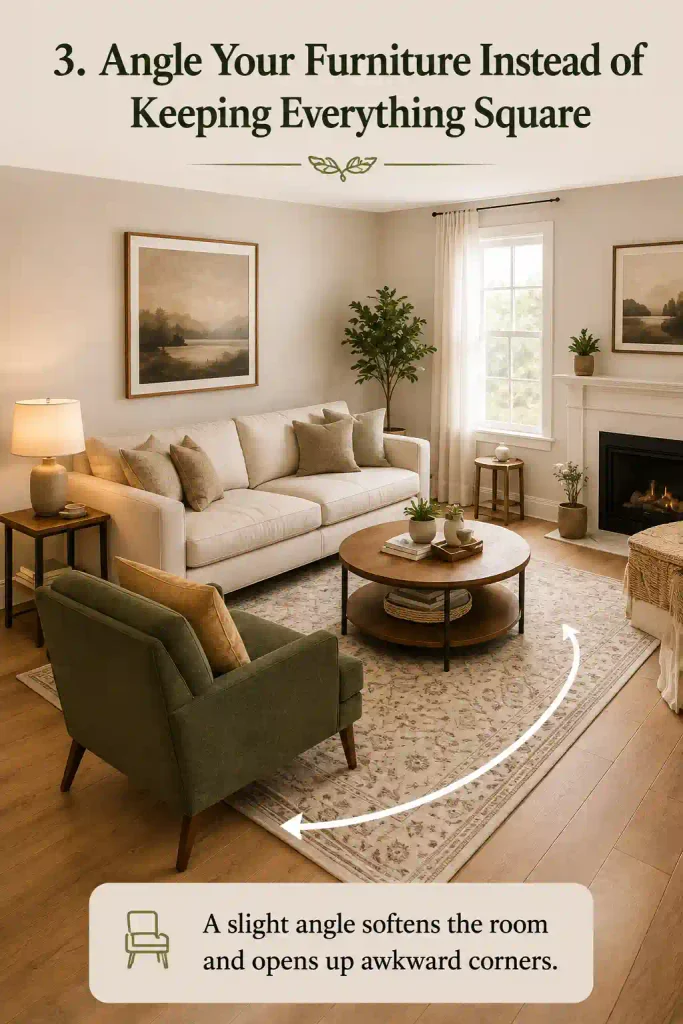
A living room where every piece sits at a perfect right angle can look a little boxy and tense. Angling your sofa or a chair, even slightly, softens the whole layout and can open up an awkward corner that never seems to work no matter what you put there.
This trick works especially well in oddly shaped rooms or rooms with a corner that always feels wasted. A single chair turned at an angle can turn dead space into a cozy little reading spot.
Even a small shift, like turning a chair fifteen degrees instead of lining it up perfectly with the wall, can make a room feel more relaxed. It’s a small thing, but small things add up fast in a tight space.
Use a Rug That Actually Fits the Room
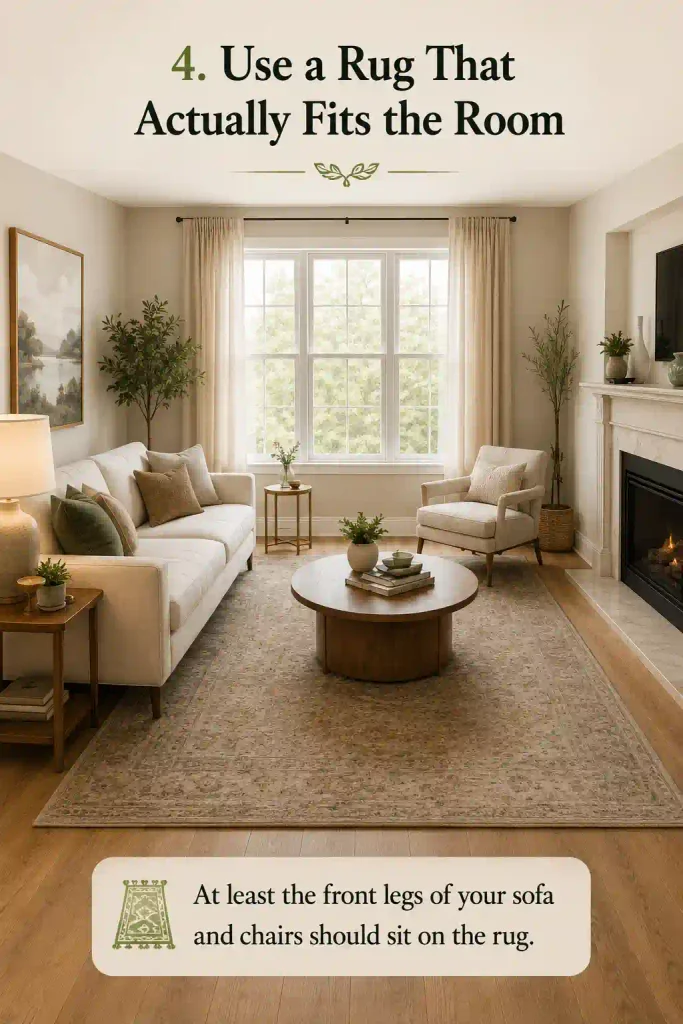
A rug that’s too small is one of the sneakiest ways a living room ends up feeling smaller than it is. When your furniture sits half on and half off a tiny rug, the whole layout looks disconnected, like the pieces don’t belong together.
The rule of thumb: your rug should be big enough for at least the front legs of your sofa and chairs to sit on top of it. A properly sized rug pulls the whole room together and makes it read as one clear, intentional space.
Let One Piece of Furniture Do Double Duty
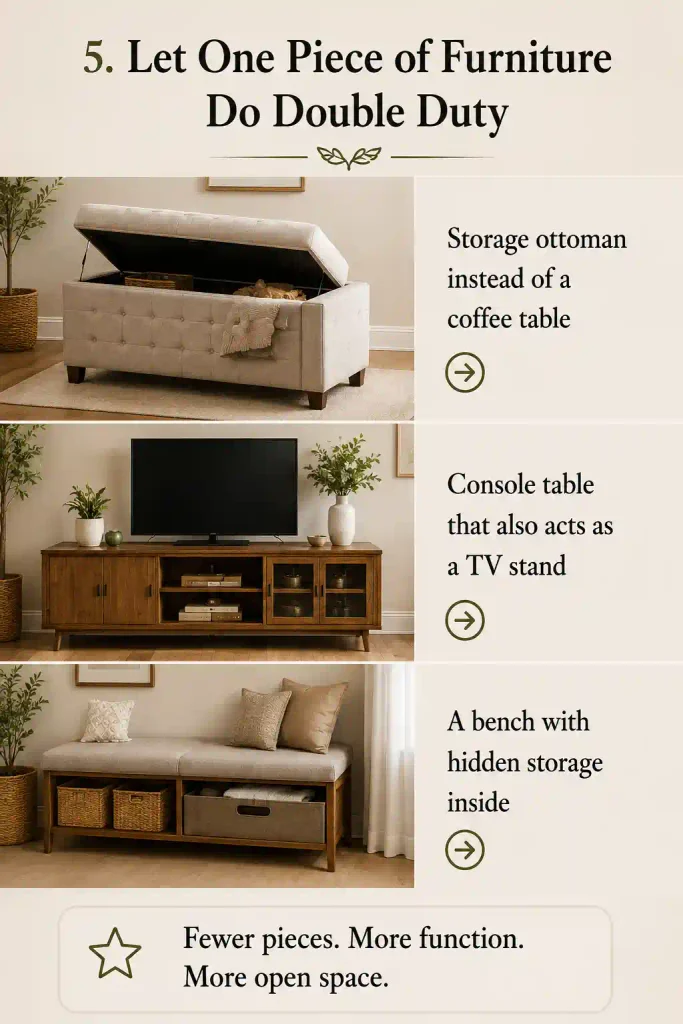
In a small living room, every piece you own should be working hard. A storage ottoman instead of a coffee table. A console table that also holds your TV. A bench that gives you extra seating and a spot to store blankets.
When furniture does two jobs instead of one, you need fewer pieces overall, and fewer pieces almost always means a more open, calmer room.
- Storage ottoman instead of a coffee table.
- Console table that also acts as a TV stand.
- A bench with hidden storage inside.
Rethink Your Focal Point
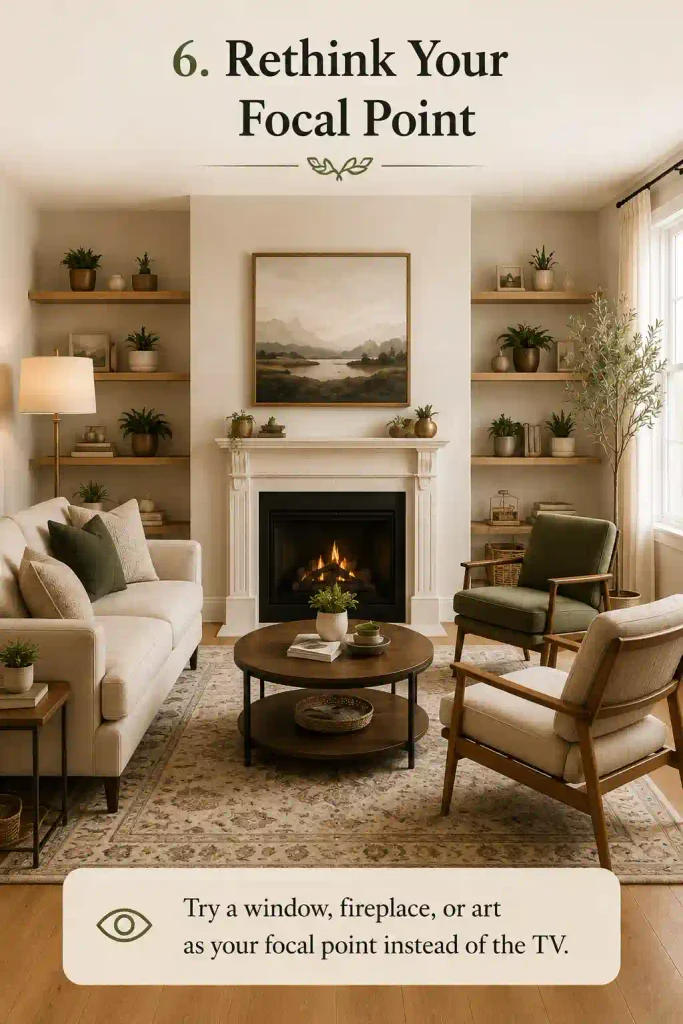
Most small living rooms default to the TV as the center of the layout, with every chair and couch pointed straight at it. That’s fine, but it’s not the only option, and sometimes it’s not even the layout that works best for your space.
Try building your layout around a window, a fireplace, or even a great piece of art instead. Sometimes just shifting what the room is “facing” can completely change how open and thoughtful the whole space feels.
This works especially well if your TV currently sits in an awkward spot just because it’s the only wall it fits on. Once you let go of the idea that everything has to face the screen, you might find a layout that flows a lot better.
Leave a Little Empty Space on Purpose
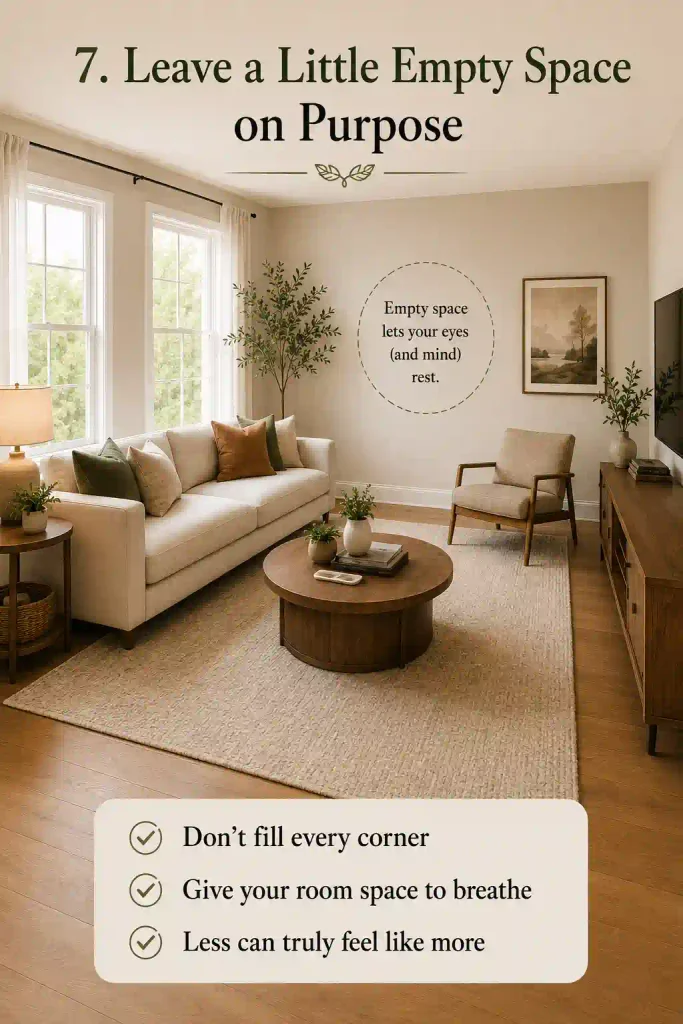
This one goes against instinct, but it works. A small living room packed edge to edge with furniture will always feel tighter than one with a little breathing room built in. Empty space isn’t wasted space. It’s what lets your eyes, and your mind, actually rest.
Before adding one more chair or side table, ask yourself if the room really needs it, or if you’re just filling space out of habit. Sometimes the best layout choice is simply leaving a corner alone.
A Quick Gut Check Before You Rearrange
Before you start moving furniture around, take a few minutes to really look at your current layout. Stand in the doorway and notice where your eye goes first. Is it a cluttered coffee table? A couch jammed into a corner? That first thing you notice is usually the first thing worth fixing.
You don’t need to redo the whole room in one afternoon. Even shifting one piece of furniture can change how the whole space feels the moment you walk back in.
Small Extra Touches That Support a Good Layout
Once your layout is working, a few small habits can help it stay that way. These aren’t big design moves, just simple things that keep the room feeling as open as you just made it.
- Keep cords and chargers tucked out of sight so they don’t clutter your floor path.
- Fold blankets and set them in a basket instead of leaving them piled on the couch.
- Do a quick reset each evening so clutter doesn’t creep back into your walking space.
None of these take more than a couple minutes, but they make a real difference in how the room feels day to day, not just right after you rearrange it.
Final Thoughts
A small living room doesn’t need more square footage to feel bigger. It needs a layout that actually works with the space you have. By floating your furniture off the walls, protecting your walking path, and choosing pieces that pull double duty, you can turn a cramped room into a space that finally feels open, easy, and like somewhere you want to spend your evenings.