
There’s a certain kind of quiet you feel walking into a well-designed Japandi space. Nothing shouts for your attention. Nothing feels rushed. It’s the design version of taking a slow, deep breath, and your bathroom might be the easiest room in your whole house to bring that feeling into.
Japandi blends the warmth of Japanese design with the simplicity of Scandinavian style, and the result is a bathroom that feels calm without feeling cold or empty. If your mornings could use a little more peace and your evenings could use a little more slow-down, here are 8 Japandi bathroom ideas worth trying.
Choose Warm, Natural Wood Over Cold Materials
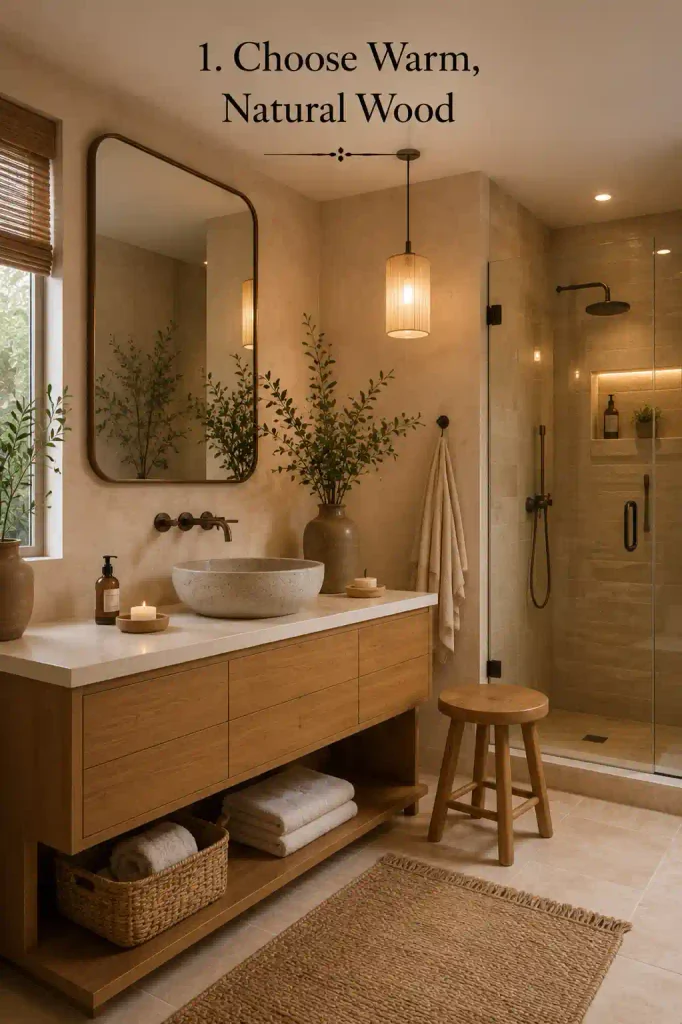
Wood is at the heart of Japandi design, and for good reason. It softens a bathroom in a way tile and glass alone never can. A wood vanity, a small wood stool, or even a simple wood shelf brings warmth into a room that so often defaults to cold, hard surfaces.
There’s something about bare feet on warm wood instead of cold tile that just feels better, both physically and mentally. It’s a small thing, but it changes how the whole room feels to step into.
- A floating wood vanity.
- A small wooden stool or side table.
- A simple wood shelf for towels or plants.
Keep Your Color Palette Soft and Quiet
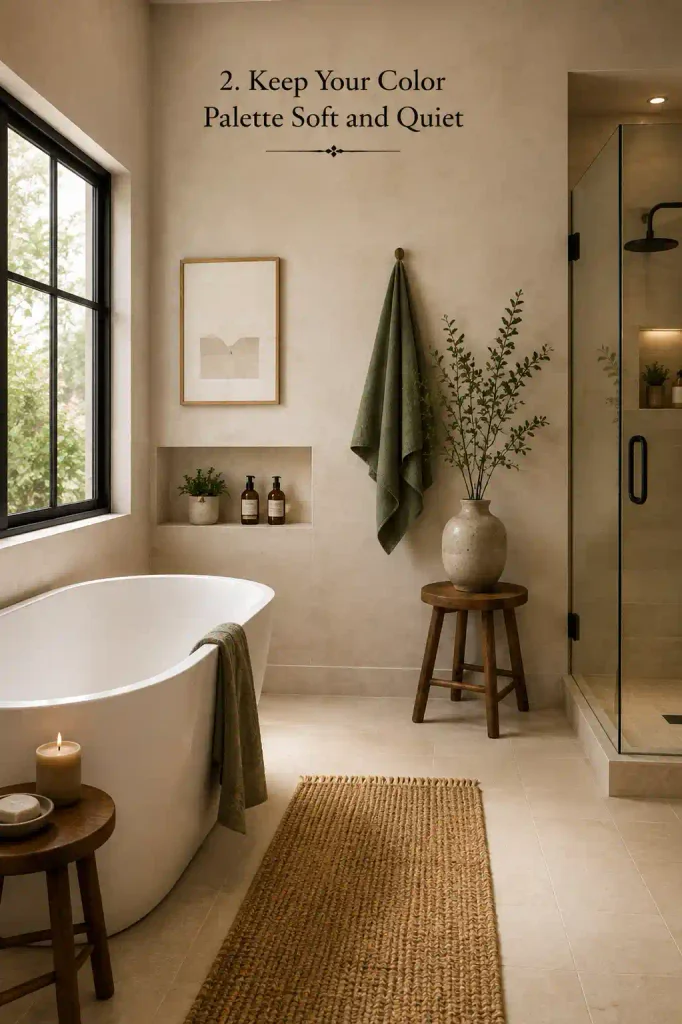
Japandi bathrooms lean on muted, earthy tones rather than anything bold or busy. Think warm white, soft beige, pale gray, and gentle sage green. Nothing competes for attention, and that’s exactly the point.
A loud color palette can make a small bathroom feel a little chaotic first thing in the morning. A soft, quiet one lets your mind settle instead, which is really what you want from the room where your day starts and ends.
Choose a Deep Soaking Tub If You Can
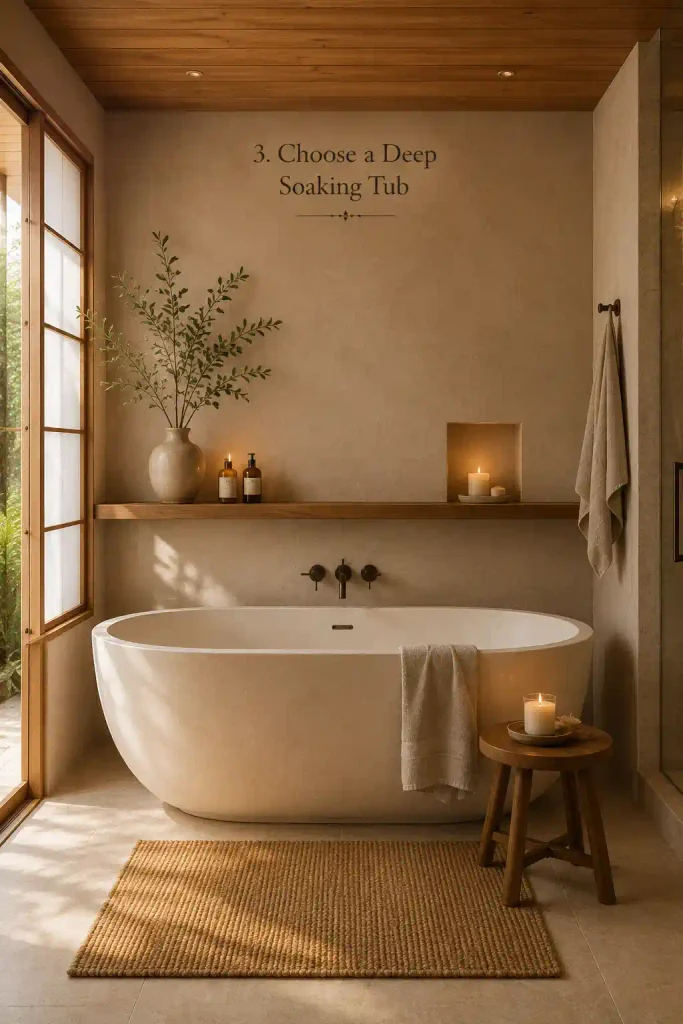
If your bathroom has room for it, a simple, deep soaking tub is one of the most calming additions you can make. Japandi design pulls a lot from the Japanese ofuro bath tradition, where soaking is slow and intentional, not rushed.
Even a small tub can carry that feeling if it’s styled simply, with clean lines and no clutter around it. The goal isn’t a big, flashy tub. It’s one that invites you to actually sit and be still for a few minutes.
Use Stone and Ceramic for a Grounded Feel
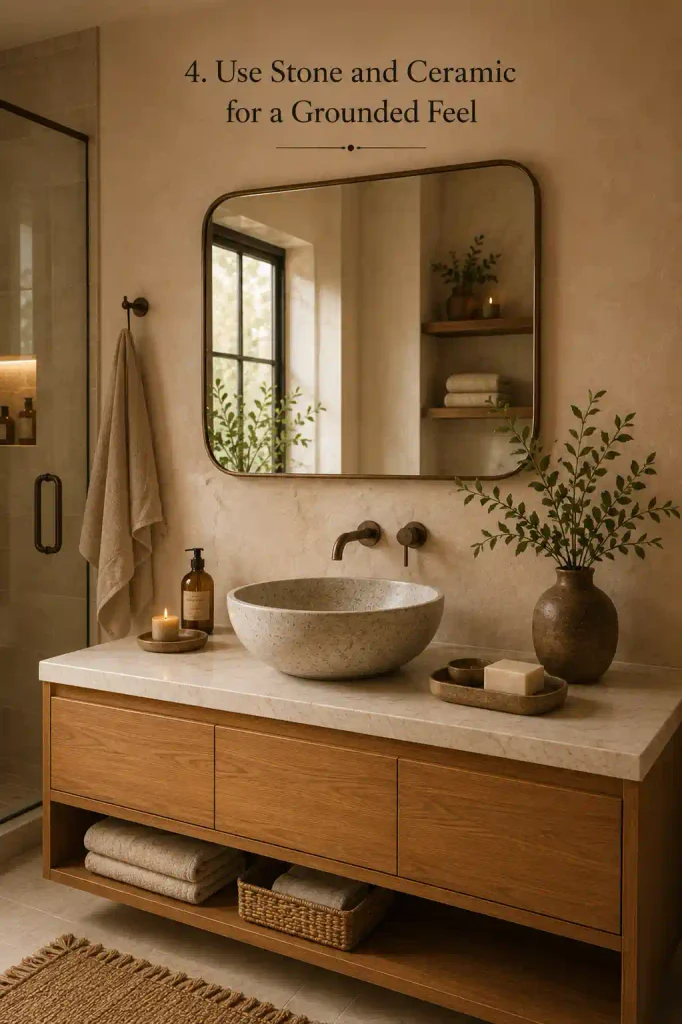
Stone and ceramic pieces, a vessel sink, a soap dish, a simple tray, bring a grounded, handmade quality into the room that plastic or shiny metal just can’t match. These materials feel a little imperfect in the best way, like something made with care rather than mass produced.
Even one or two stone or ceramic pieces can shift the whole feeling of your counter or shelf, without needing a full renovation to get there.
Add a Few Plants That Actually Thrive in Humidity
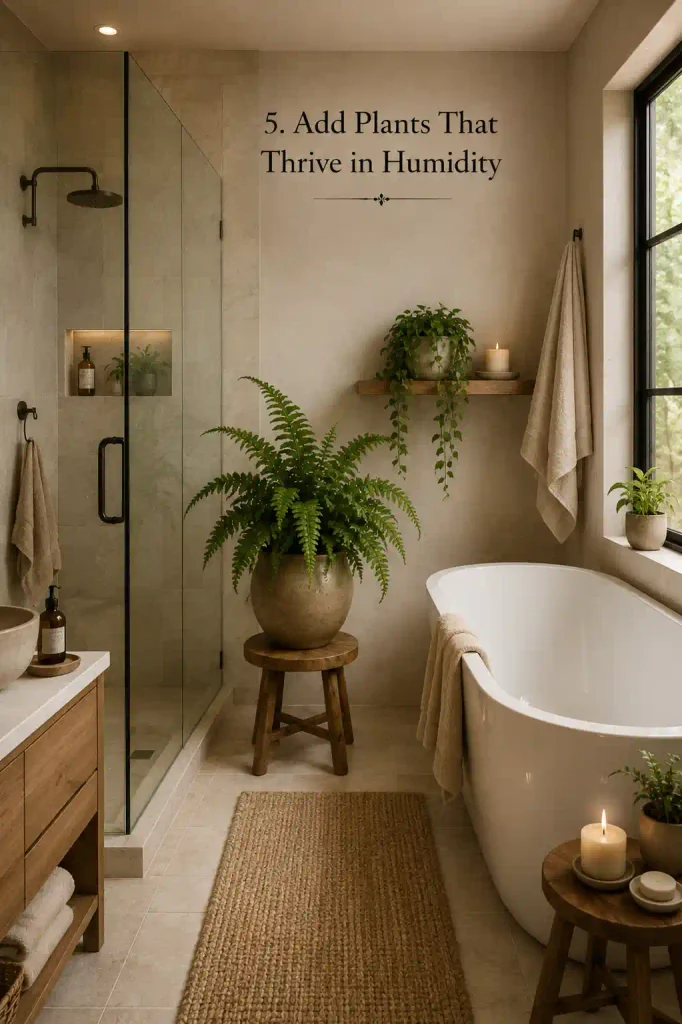
A bathroom with a little greenery feels alive in a way an empty one never does. Japandi style tends to favor a few simple plants rather than a jungle of them, so pick one or two that will actually do well in your bathroom’s humidity, like a fern, a peace lily, or a small pothos.
Set one near your tub or sink where you’ll actually see it every day. A single healthy plant does more for the room than several forgotten ones scattered around, and it’s a lot easier to keep alive too, since you’re not spreading your attention across a dozen pots.
Light the Room Softly, Not Harshly
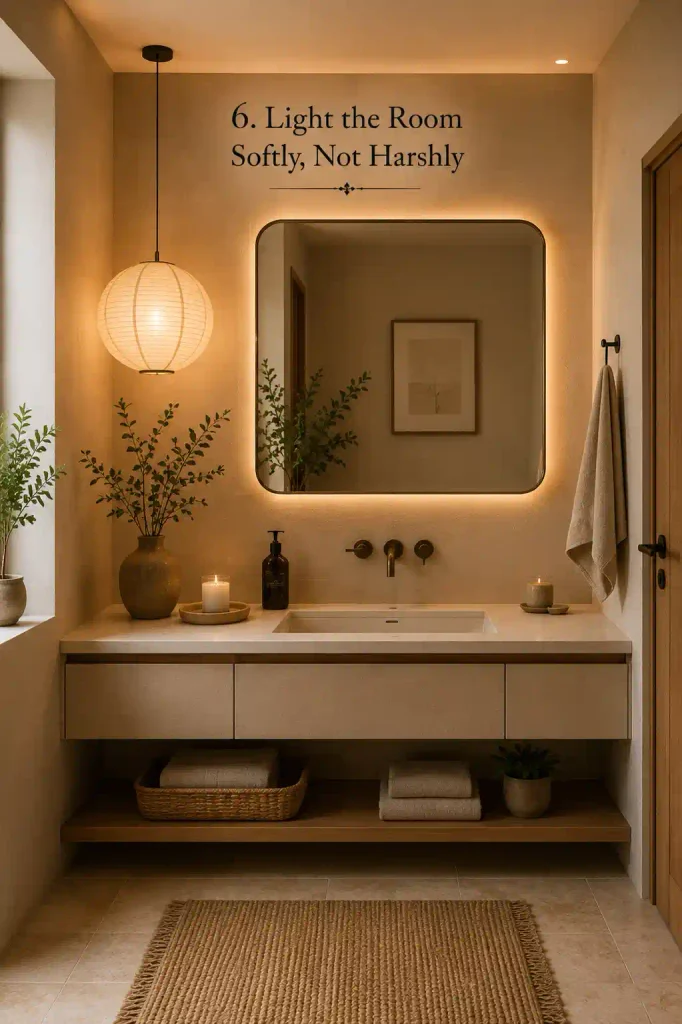
A bright, cold overhead light can undo a calm bathroom in seconds. Japandi spaces favor soft, warm lighting instead, the kind that makes you want to linger a little longer instead of rushing to flip the switch off.
- A simple pendant light with a paper or linen shade.
- Warm white bulbs, generally in the 2700K to 3000K range.
- A small candle for evening baths, if you enjoy that ritual.
Good lighting is one of those things you might not notice right away, but you’ll feel the difference the first time you brush your teeth under a softer glow instead of a harsh one.
Keep the Counter Nearly Empty
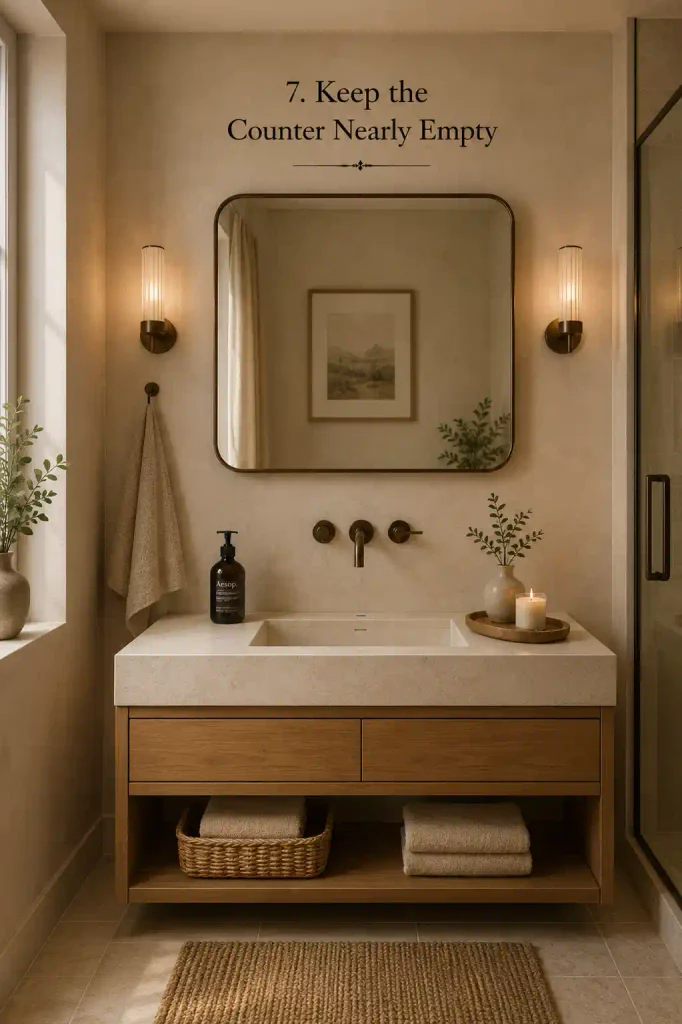
Clutter is the fastest way to lose that calm Japandi feeling, even in an otherwise beautifully designed bathroom. Keep only what you actually use every day out on the counter, and give everything else a home in a drawer or cabinet.
- One soap dispenser
- One small tray for jewelry or a candle
- Everything else, tucked away out of sight
A nearly empty counter isn’t about owning less. It’s about only keeping out what earns its spot, which is really the whole spirit of Japandi design.
Add Linen or Woven Textiles for Texture
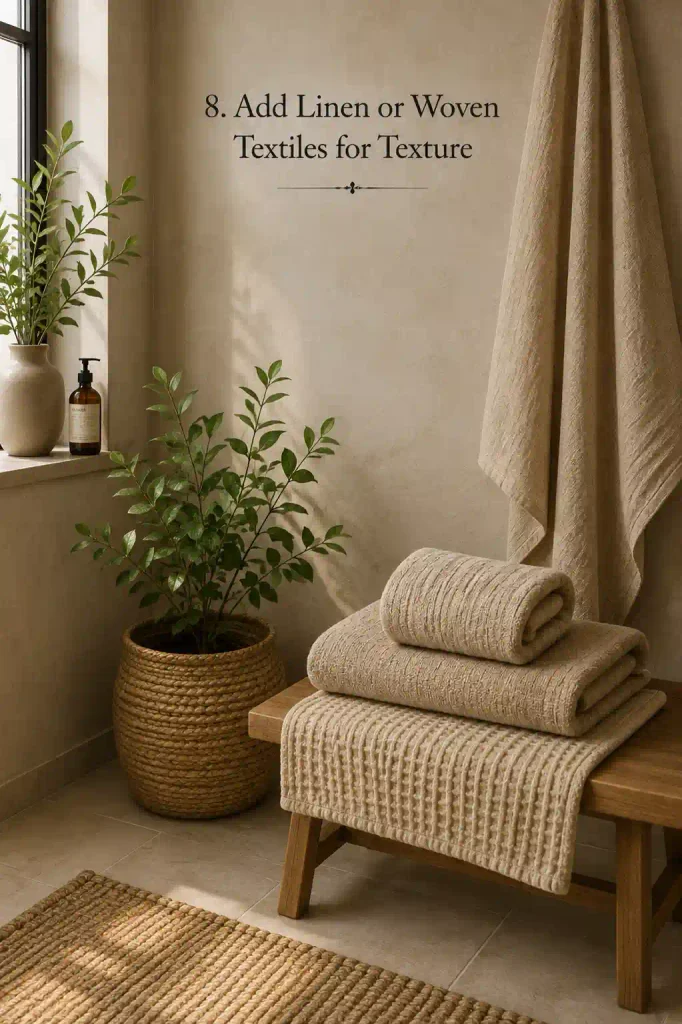
Texture does a lot of quiet work in a Japandi bathroom. A linen shower curtain, a woven bath mat, or simple waffle-weave towels in warm neutral tones add depth to the room without adding visual noise or busy patterns.
Skip anything shiny or overly patterned here. The goal is texture you can feel more than texture you notice at first glance, the kind that makes a towel feel a little more special every time you reach for it.
A Few Small Habits That Help It Stick
Once your bathroom looks the part, a couple small daily habits help it actually feel that way too. Wipe down the counter after you use it. Hang towels neatly instead of leaving them bunched on the floor. Close the cabinet doors before you walk out.
None of this takes more than a minute, but it’s often the difference between a bathroom that looks calm in photos and one that actually feels calm every single day you use it.
Why This Style Sticks With People
A lot of design trends fade after a season or two, but Japandi tends to stay because it isn’t chasing anything flashy in the first place. It’s built around materials and habits that feel good long after the newness wears off, warm wood under your feet, soft light in the evening, a counter that’s easy to keep clear.
That’s probably why so many people who try it end up sticking with it well past whatever trend brought them there in the first place. It just quietly works, day after day.
Final Thoughts
A Japandi bathroom isn’t about owning fewer things for the sake of it. It’s about choosing warm, honest materials and letting the room breathe a little, so it can actually feel like the slow, quiet moment your day needs. With warm wood, soft light, and a little restraint, your bathroom can become the calm start and finish to your day that it was always meant to be.