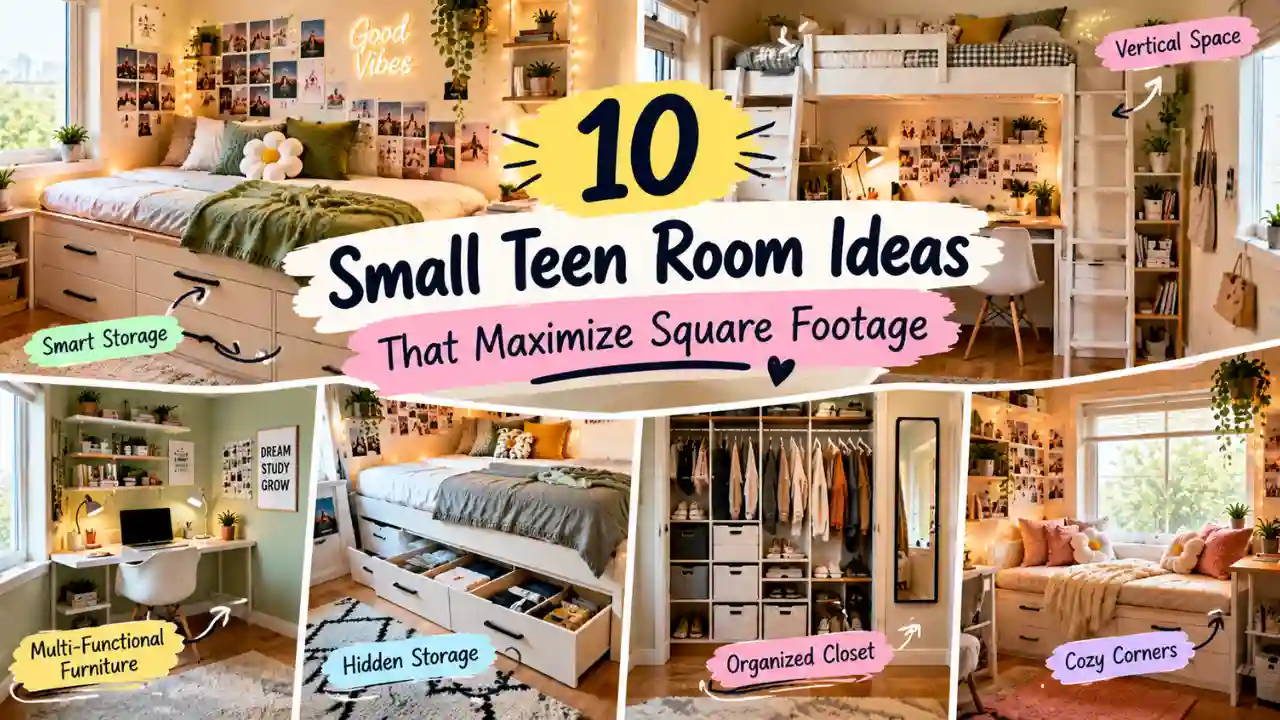
Small Teen Room Ideas: There’s a very specific kind of tension that builds in a small teen bedroom over time. It starts as a kid’s room, gets a bed and a dresser, and somehow now also needs to fit a desk, a place for friends to hang out, storage for an ever-growing wardrobe, and somewhere for all the little personal touches that make it actually feel like theirs. It’s a lot to ask of four walls that were never designed to hold a whole evolving life.
If your teen’s room feels like it’s constantly one step behind what they actually need, you’re not imagining it. Teen bedrooms tend to be some of the most demanding rooms in the house relative to their size, especially as school, friendships, hobbies, and screen time all compete for the same few square feet. The good news is that a small room doesn’t have to mean a limited life inside it. A few smart layout choices can make even the tightest bedroom feel like it works twice as hard as its actual square footage suggests.
Here are ten ways to make that happen.
Choose a Loft or Elevated Bed
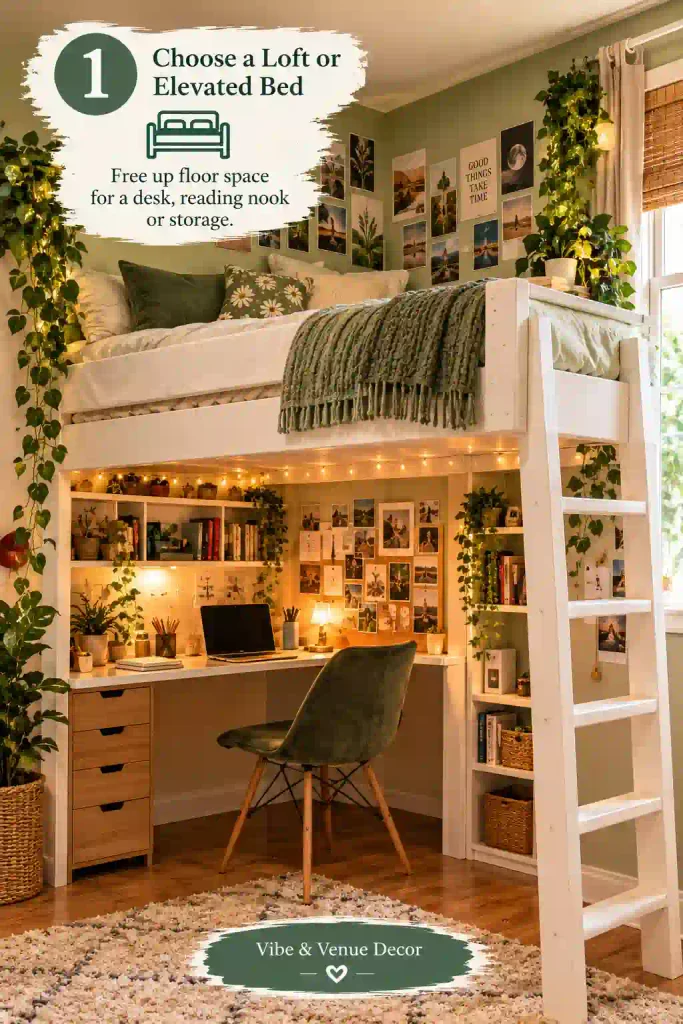
If the ceiling height allows for it, a loft-style bed frees up an enormous amount of floor space by moving the sleeping area up and creating a functional zone underneath — a desk, a small reading nook, or extra storage. This is one of the single biggest space-saving moves available for a small teen room, especially in homes where a separate desk area simply isn’t possible otherwise.
Many modern loft bed frames come with built-in desks or shelving already, which simplifies the whole setup into one cohesive piece of furniture instead of several competing for the same corner.
Use Under-Bed Storage
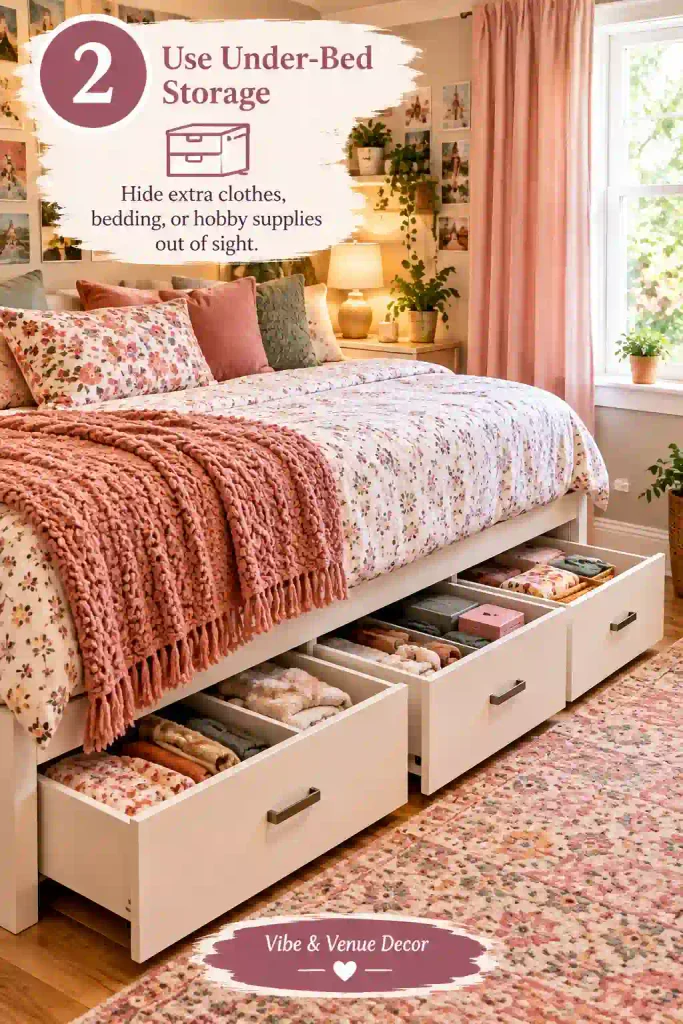
Whether or not a loft bed is in the picture, the space underneath any bed is some of the most underused real estate in a small room. Storage bins, rolling drawers, or a bed frame with built-in drawers can hold off-season clothing, extra bedding, or hobby supplies that would otherwise clutter a closet or dresser top.
This is a particularly good option for teens who are picky about visible clutter, since everything stays completely out of sight while still being easy to access.
Mount a Wall-Folding Desk
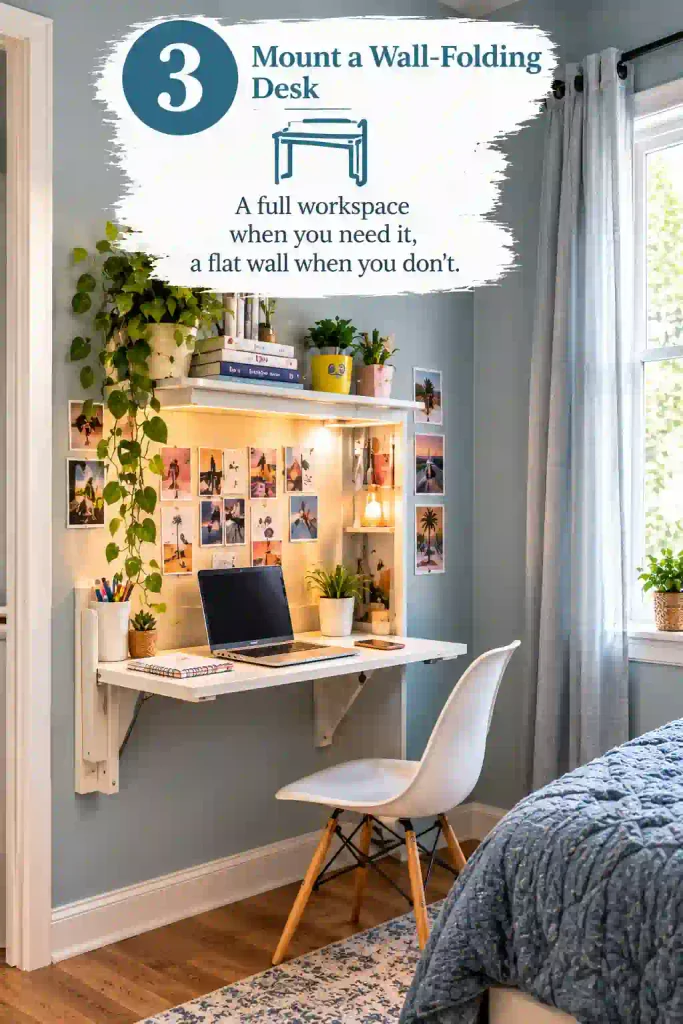
A traditional desk takes up a fixed footprint whether it’s being used or not, which can feel wasteful in a small room. A wall-mounted, fold-down desk solves this by giving your teen a full workspace when they need it and a flat wall when they don’t. This is especially useful in rooms that double as a hangout space for friends, since the desk can disappear when it’s not homework time.
Go Vertical With Shelving
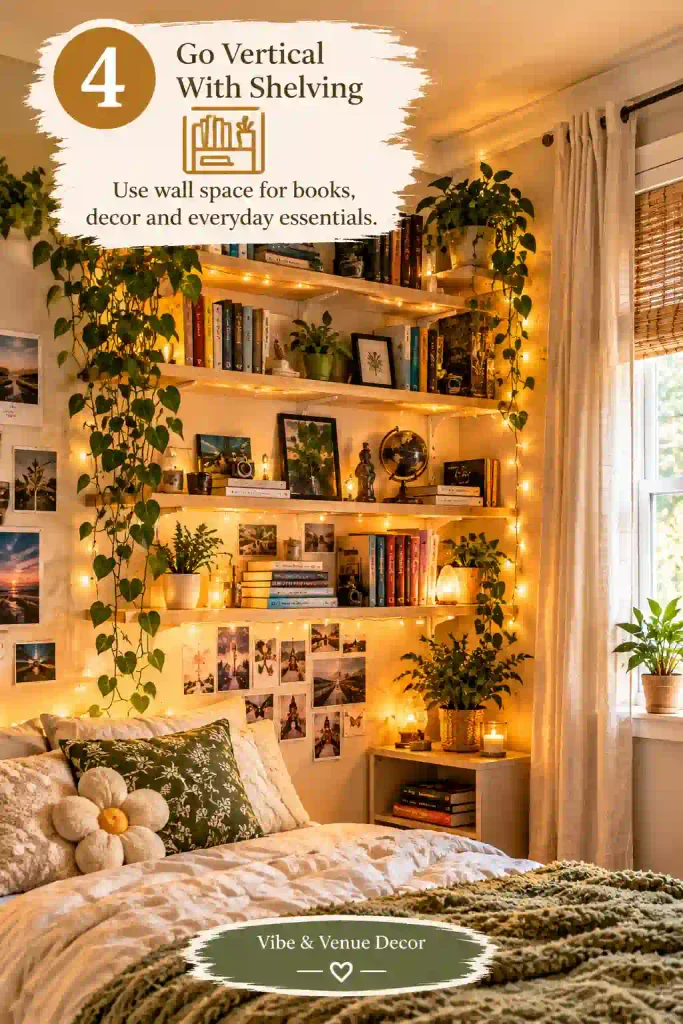
When floor space is limited, the walls become the most valuable real estate in the room. Tall, narrow bookshelves and floating shelves near the ceiling let a teen display favorite items, store books, and keep everyday essentials within reach without eating into the floor plan. This is also a great spot for the personal touches that make a room feel like home — photos, small plants, favorite collectibles — without covering every flat surface in the room.
Choose Furniture With Built-In Storage
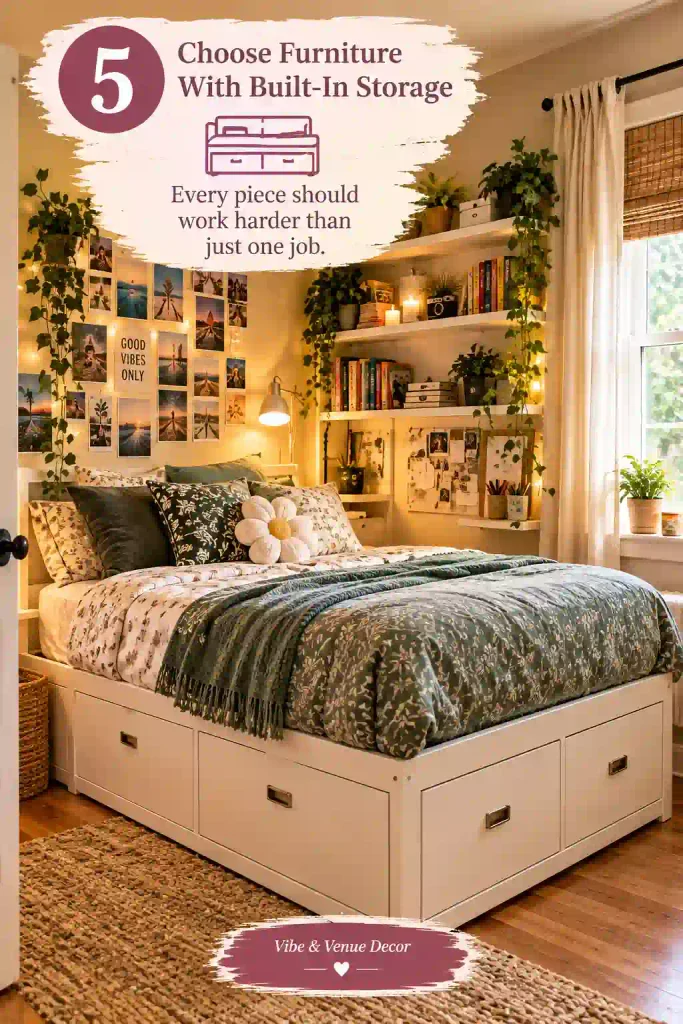
A bed frame with drawers underneath, a bench at the foot of the bed that opens for storage, or an ottoman that doubles as extra seating and hidden storage all help a small room punch above its weight. Every piece of furniture in a tight space should ideally serve more than one purpose, and built-in storage is one of the easiest ways to make that happen without sacrificing style.
Use a Daybed for Flexible Seating and Sleeping
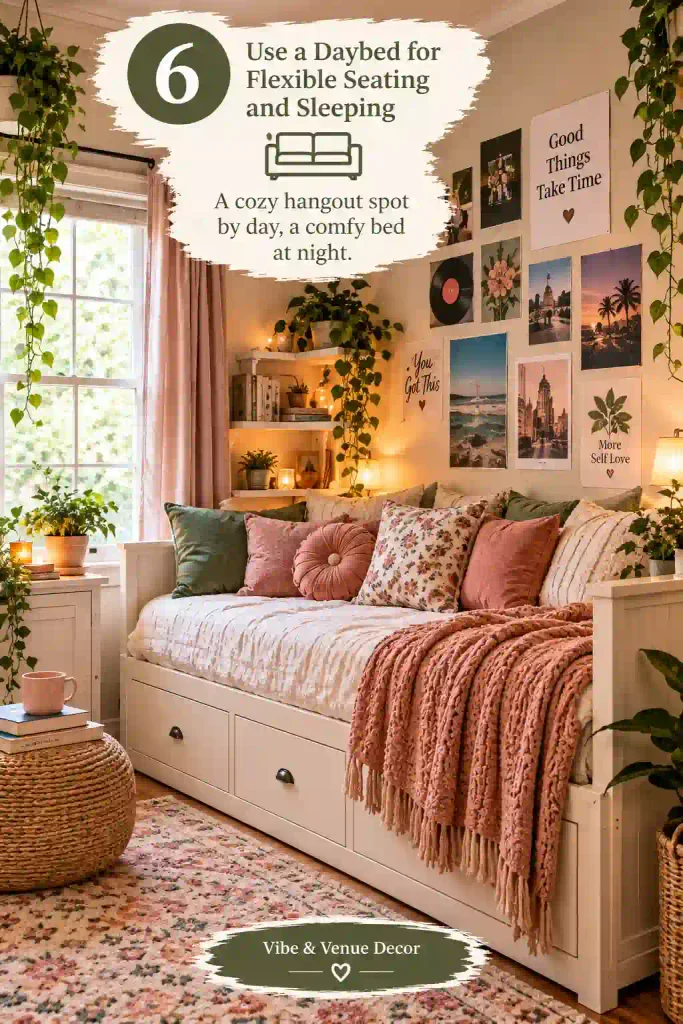
A daybed styled with pillows during the day can function as a couch for hanging out with friends, then convert easily back into a bed at night. This dual-purpose approach works especially well in rooms that need to serve both as a private bedroom and a casual gathering spot, giving teens a place to invite friends over without needing a separate living area.
Add a Corner Desk Instead of a Straight One
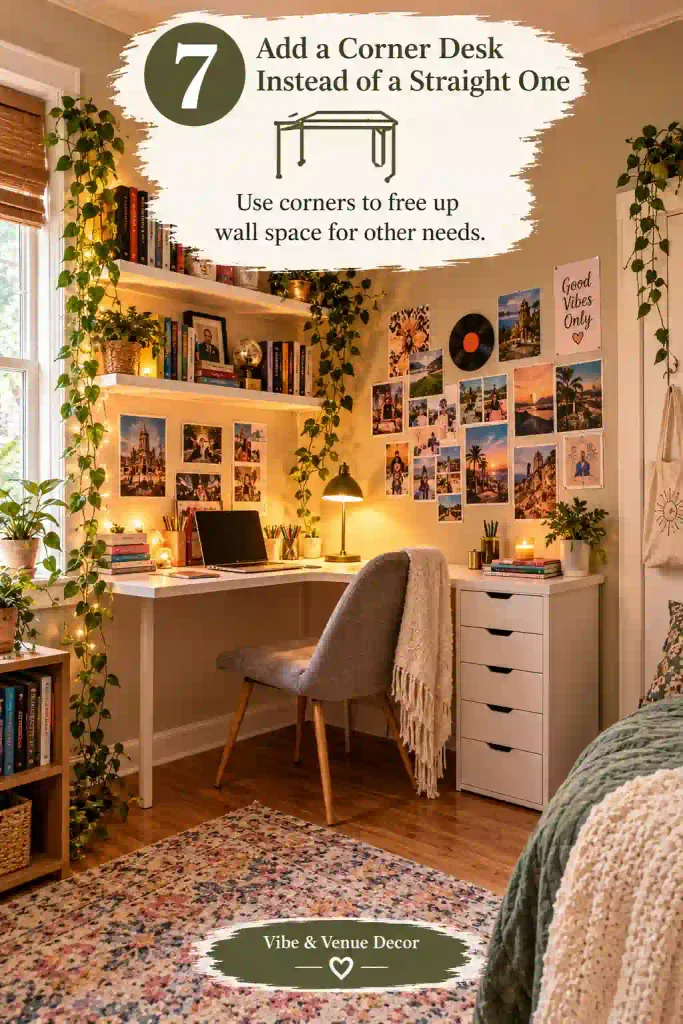
Corners are some of the most overlooked spaces in any small room, and a desk designed specifically to fit into one can free up an entire wall for other uses, like a full-length mirror or additional shelving. An L-shaped or corner desk often provides just as much workspace as a traditional desk while using significantly less overall floor space.
Use a Slim Rolling Cart for Extra Storage
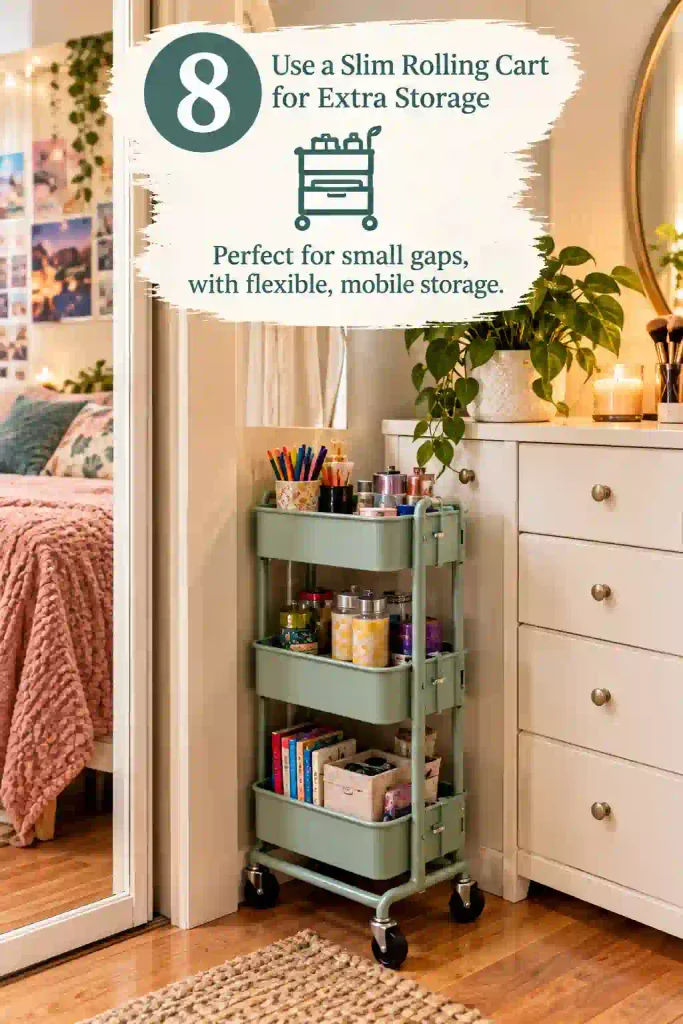
An awkward gap beside a dresser or desk is often too small to be useful for much of anything, but a slim rolling cart fits perfectly into these leftover spaces. It’s an easy way to add drawer storage for makeup, school supplies, or craft materials, and because it has wheels, it can be moved wherever it’s needed most on any given day.
Keep the Color Palette Light and Cohesive
A small room filled with too many colors and patterns can quickly start to feel even smaller and more chaotic. Sticking to a simple, light, cohesive color palette across the walls, bedding, and furniture creates a sense of visual calm that makes the whole room feel more open. This doesn’t mean the room has to be boring — a soft, consistent palette actually gives bolder personal touches, like a favorite poster or a colorful throw pillow, more room to stand out.
Use a Large Mirror to Add Visual Depth
A full-length or oversized mirror does double duty in a small teen room. It’s a practical daily-use item, and it also bounces light around the room while creating the illusion of more space than what’s actually there. Placing a mirror across from a window, if the room has one, maximizes this effect even further by reflecting natural light deeper into the space.
Small Room, Big Life
There’s something worth acknowledging here beyond the practical tips: a teenager’s bedroom often has to hold more of their actual life than any other room in the house. It’s where they sleep, study, decompress, get ready, hang out with friends, and figure out who they’re becoming, all within a space that might be smaller than a walk-in closet in some homes. That’s a genuinely tall order for four walls.
The goal of maximizing square footage isn’t just about fitting more stuff into a small room — it’s about making sure that limited space can actually support everything a teenager needs it to do, without feeling like a constant compromise. A loft bed that frees up a study nook, an under-bed storage bin that clears the floor, a corner desk that opens up an entire wall — these small shifts add up to a room that finally feels like it’s keeping pace with everything happening in a teen’s life, instead of holding it back.
You don’t need a bigger room to give your teen more space to grow into. Sometimes it just takes a smarter layout and a little creativity to help the room they already have work as hard as they do.