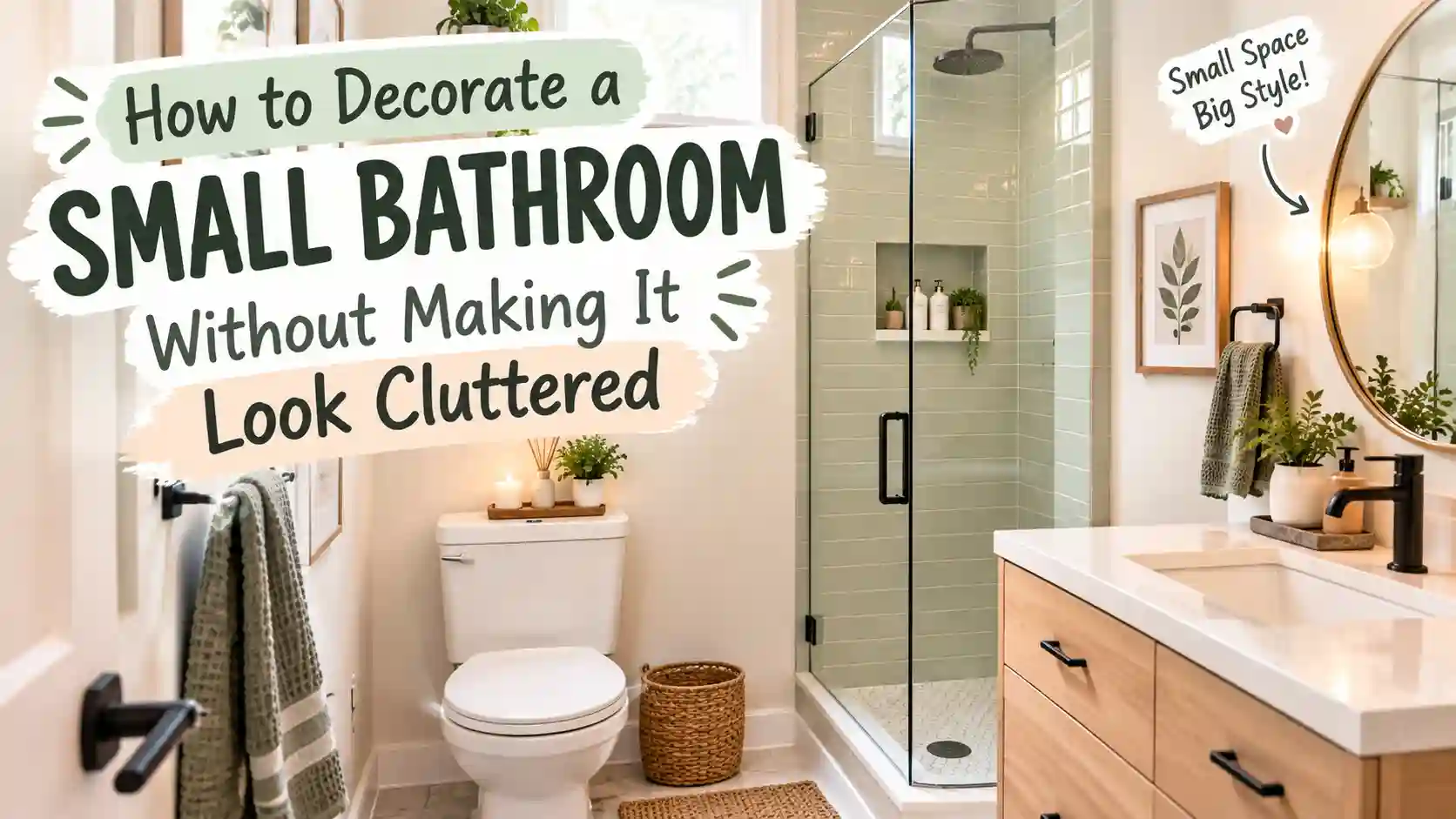
There’s a strange kind of guilt that creeps in when you decorate a small bathroom and it somehow ends up looking worse than before you started. You bought the cute soap dispenser, the little tray, the woven basket, and instead of feeling styled, the room feels tighter, busier, and honestly a little overwhelming every time you walk in. If that’s happened to you, please know it’s not a decorating failure on your part. It’s one of the most common traps in small-space design, and it happens because most people decorate a small bathroom the same way they’d decorate a big one, just with fewer square feet to work with.
Small bathrooms play by different rules. Every single item you add either earns its place or quietly works against you, because there’s so little visual room to absorb extra stuff. The good news is that once you understand this shift, decorating a small bathroom actually becomes easier, not harder. You just need fewer, better choices instead of more of everything. Here’s how to get a beautifully decorated small bathroom that still feels calm, open, and genuinely relaxing to be in.
Start With Ruthless Editing, Not Adding
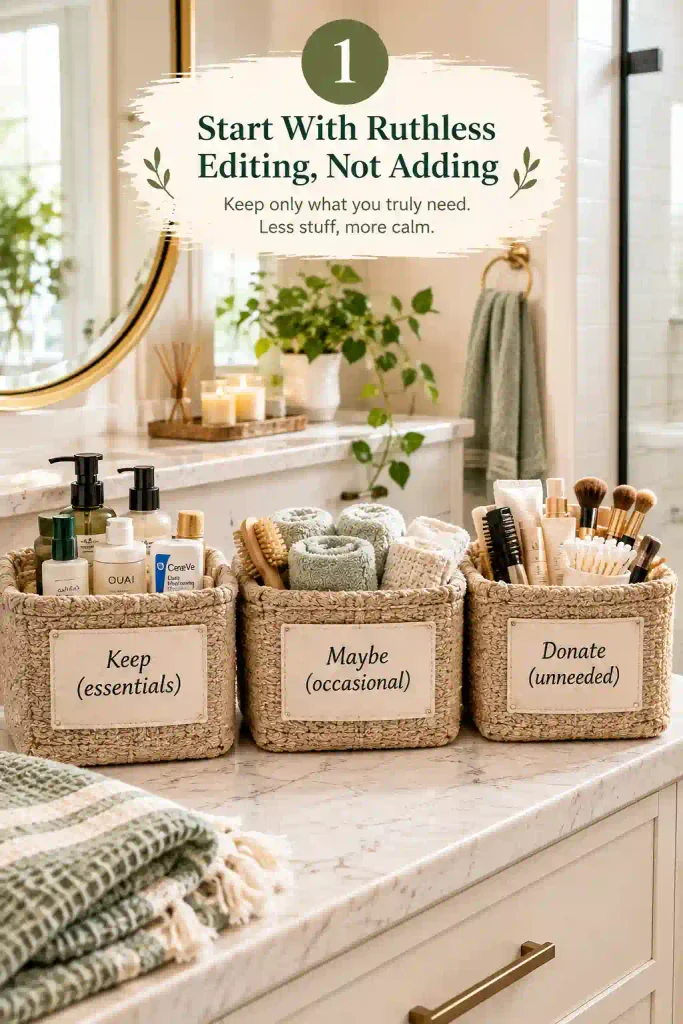
Before buying a single new item, take everything currently sitting on your counters, shelves, and shower ledge and sort it into three piles: daily essentials, occasional-use items, and things you genuinely don’t need anymore. Most cluttered small bathrooms aren’t lacking storage — they’re just holding onto more stuff than the space can visually support.
This step feels tedious, but it’s the single most important one on this entire list. You cannot style your way out of too much stuff. You have to remove some of it first.
Choose One Focal Point, Not Five
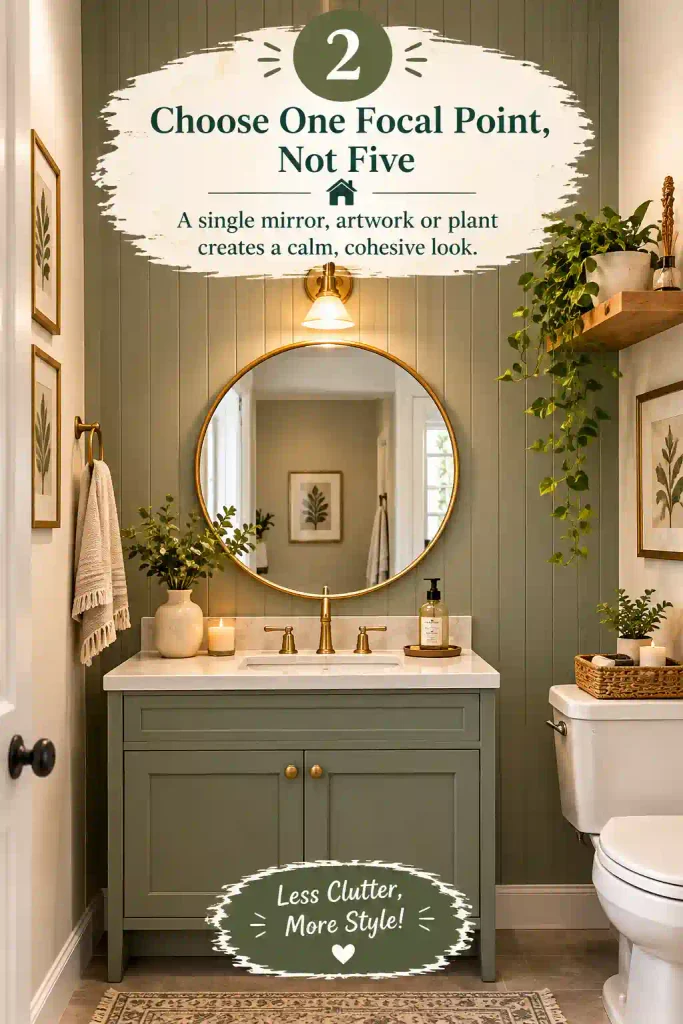
A common small-bathroom mistake is trying to make every element feel special — a bold mirror, a patterned rug, a busy shower curtain, colorful towels, and decorative accessories, all competing at once. In a small space, this reads as chaotic rather than curated. Instead, pick one focal point to be your visual anchor, whether that’s a statement mirror, a bold wallpaper, or a unique light fixture, and let everything else stay quieter in support of it.
Stick to a Simple, Cohesive Color Palette
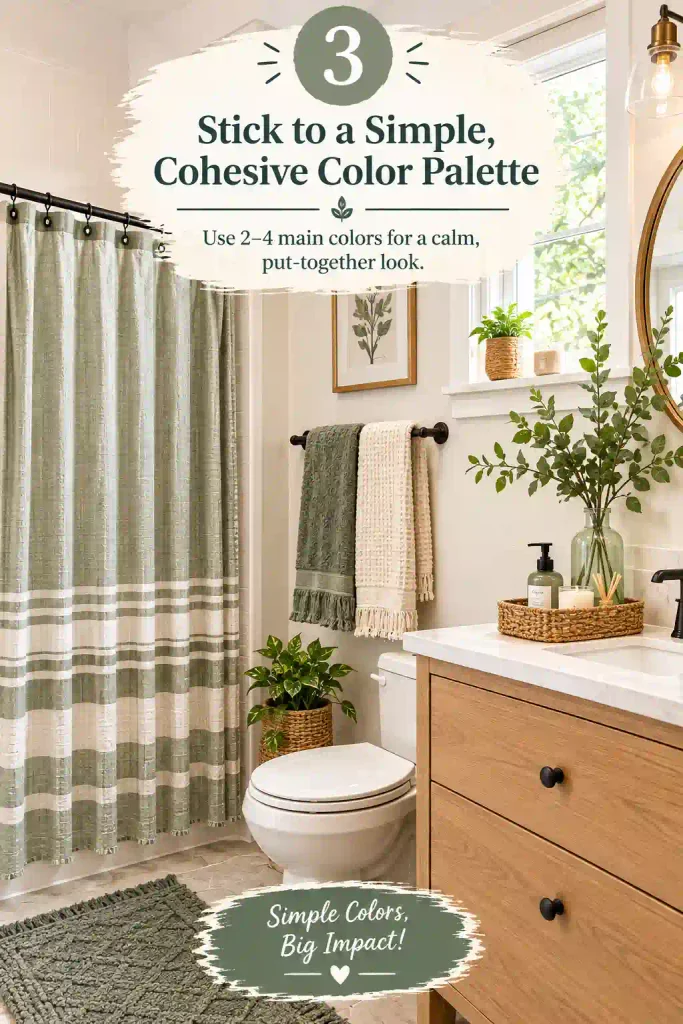
Color is one of the fastest ways a small bathroom can start to feel busy, even if nothing is technically “cluttered” in the traditional sense. Limiting your palette to two or three colors, repeated consistently across towels, bath mats, and accessories, creates a calm visual flow instead of a room that feels like it’s competing with itself.
This doesn’t mean the room has to be boring or entirely neutral. A soft sage green paired with white and warm wood tones can feel just as calming as an all-white room, as long as the palette stays consistent rather than scattered.
Use Closed Storage for Everyday Clutter
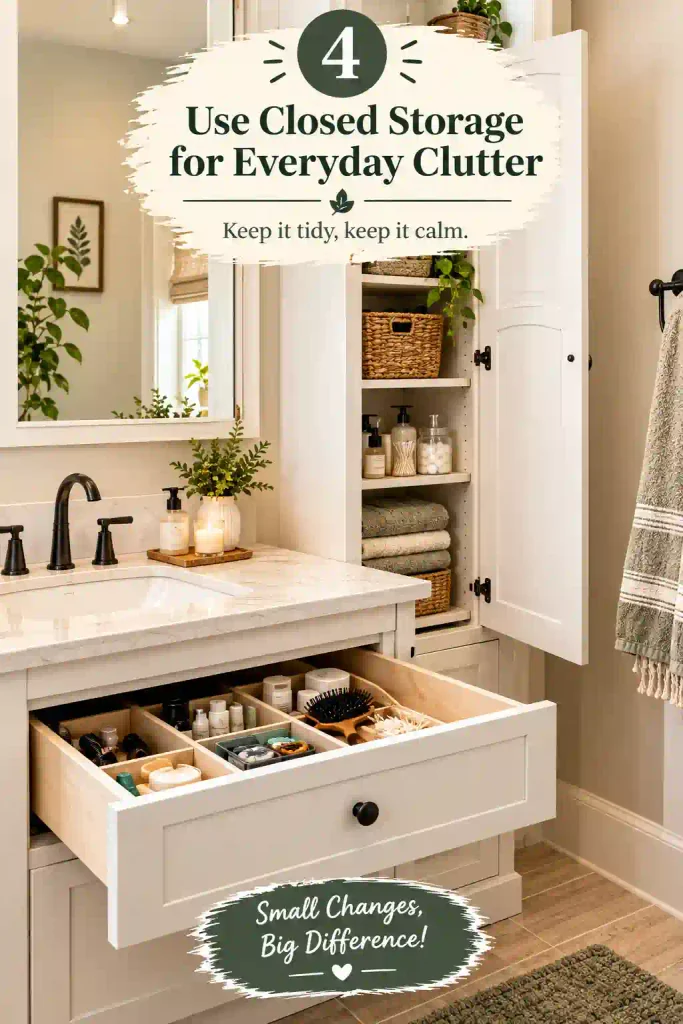
Open shelving looks beautiful in photos, but it requires genuine discipline to keep it from becoming a dumping ground for whatever you used that morning. In a small bathroom, closed storage — a simple vanity with drawers, a small cabinet, or a covered basket — hides the daily mess of skincare products, hair tools, and extra toiletries, keeping visible surfaces calm and clear.
Save your open shelving for the items you’re genuinely happy to display, and let everything else live behind a closed door.
Let Negative Space Do Some of the Work
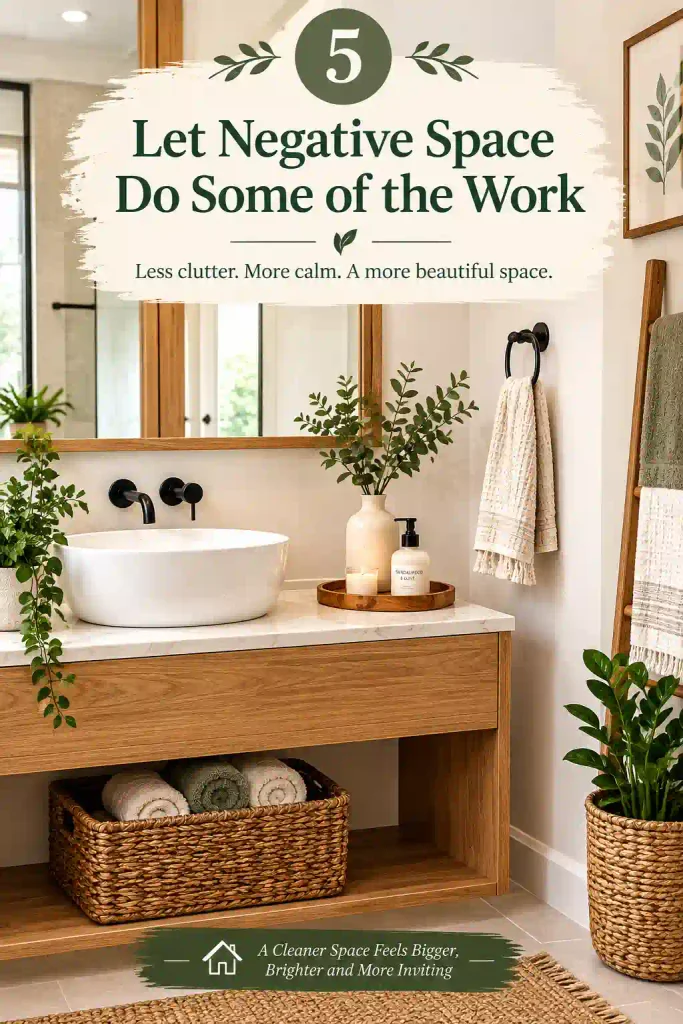
It’s tempting to fill every empty surface in a small bathroom, especially when it feels like there’s already so little space to showcase anything. But negative space, the visually empty areas between objects, is actually one of the most important design tools available in a tiny room. A countertop with one beautiful soap dispenser and some open space around it will always look calmer and more intentional than a countertop packed edge to edge with items.
As a general rule, aim to keep at least a third of any visible surface completely clear.
Choose a Few Multi-Purpose Decor Pieces
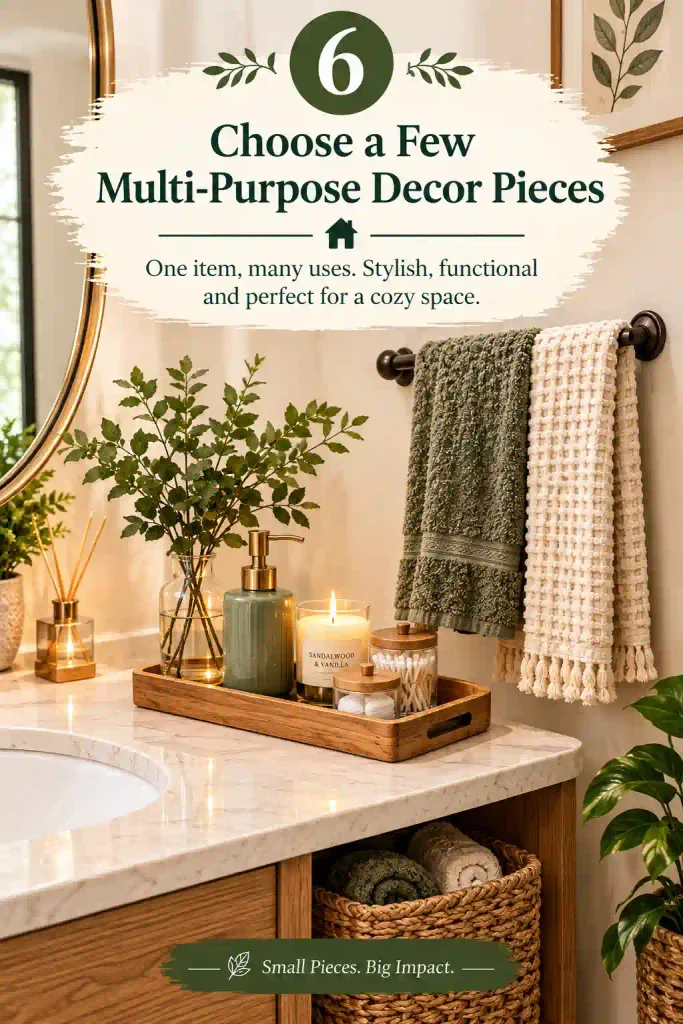
Rather than adding several small decorative objects, look for pieces that serve double duty. A beautiful tray can hold both function and style, corralling daily essentials while also looking like an intentional design choice. A textured hand towel adds both softness and visual interest without needing an additional decorative object beside it. Each of these choices reduces the total number of items in the room while still adding personality.
Go Vertical Instead of Horizontal
When floor and counter space are limited, the walls become your best resource, but even here, restraint matters. Rather than covering every inch of wall with shelves and hooks, choose one or two vertical storage solutions, like a tall narrow shelving unit or a single row of adhesive hooks, and let the rest of the wall stay open. This keeps the room feeling organized rather than simply relocating clutter from the counter to the wall.
Keep Textiles Simple and Matching
Mismatched towels, bath mats, and shower curtains in different colors and patterns are one of the fastest ways to make a small bathroom feel visually noisy. Choosing towels and a bath mat in coordinating tones, even if they’re not an exact match, creates a sense of cohesion that immediately calms the whole room down, even without changing a single piece of furniture.
Reassess Every Few Months
Small bathrooms have a way of slowly reaccumulating clutter over time, even after a successful declutter and redecorate. Building in a quick check-in every few months, where you remove anything that’s crept back onto the counters or shelves, keeps the space feeling as calm as it did the day you finished decorating it.
The Real Goal Behind a Calm Small Bathroom
There’s something deeply satisfying about stepping into a small bathroom that feels put together rather than crowded. It’s not about having less personality or fewer nice things. It’s about giving each item enough visual room to actually be appreciated, rather than getting lost in a pile of competing decor. A calm bathroom, even a tiny one, can genuinely change how your morning and evening routines feel, turning a rushed, chaotic five minutes into something a little more peaceful.
You don’t need a bigger bathroom to get there. You need fewer, more intentional choices, and the willingness to let some empty space exist without immediately filling it. Start with the edit, choose your one focal point, and let the rest of the room build slowly and thoughtfully from there. A small bathroom done well will always feel bigger than its actual square footage suggests.