
My friend Dana called me crying-laughing one night. “I just stubbed my toe on my own dresser. In my own bedroom. For the third time this week.”
Her room was 9 by 10 feet. She’d read every rule about small spaces, and she’d also picked up a few myths along the way. When we finally sat down to fix it, most of what held her room back wasn’t the size. It was the advice she believed.
So here are ten of those myths, and what actually worked instead.
Myth 1: “Small rooms need bright white walls.”
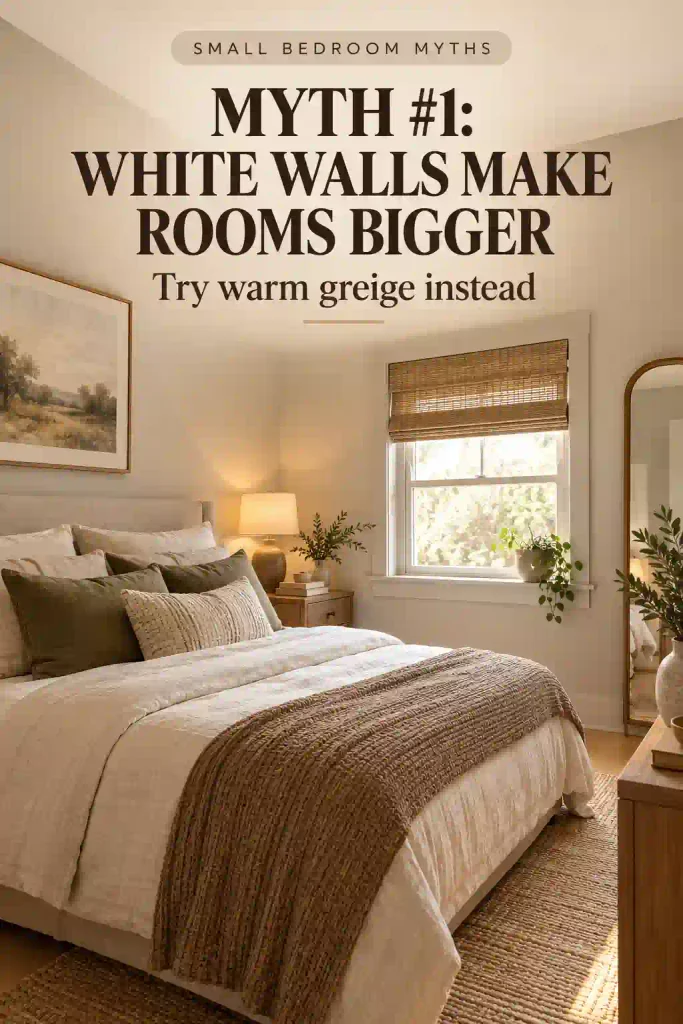
Bright white can feel flat and a little cold, especially in a room with one small window. Dana’s walls were stark white, and the room felt like a waiting area.
The fix: Warm neutrals like soft greige, sand, or creamy off-white wrap the room in a gentle glow. Buy a sample jar for $5 to $8, paint a big square, and watch it for two days. Morning and evening light will show you two different colors.
Myth 2: “Only a tall headboard looks finished.”
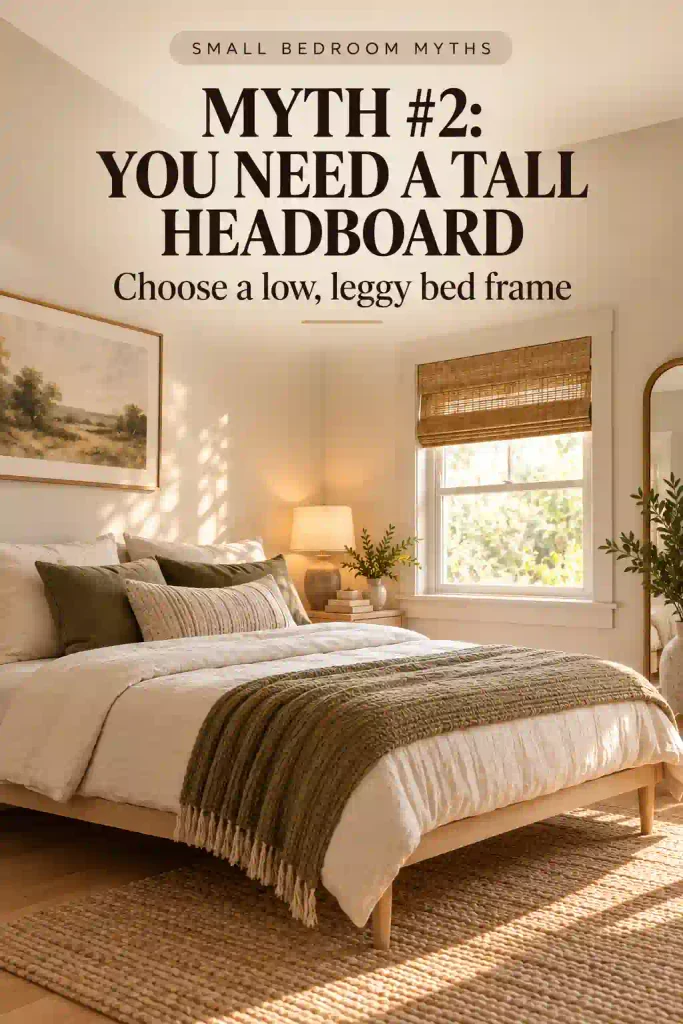
Big headboards eat up visual space. Dana’s dark, chunky one made the bed look like it was shoving everything else out of the way.
The fix: Choose a low platform frame with slim legs, in light oak or soft white. When you can see floor underneath, the room feels roomier. Frames like this run about $150 to $400. A simple linen headboard cover or a wood slat panel works too.
Myth 3: “Matching bedroom sets save you effort.”
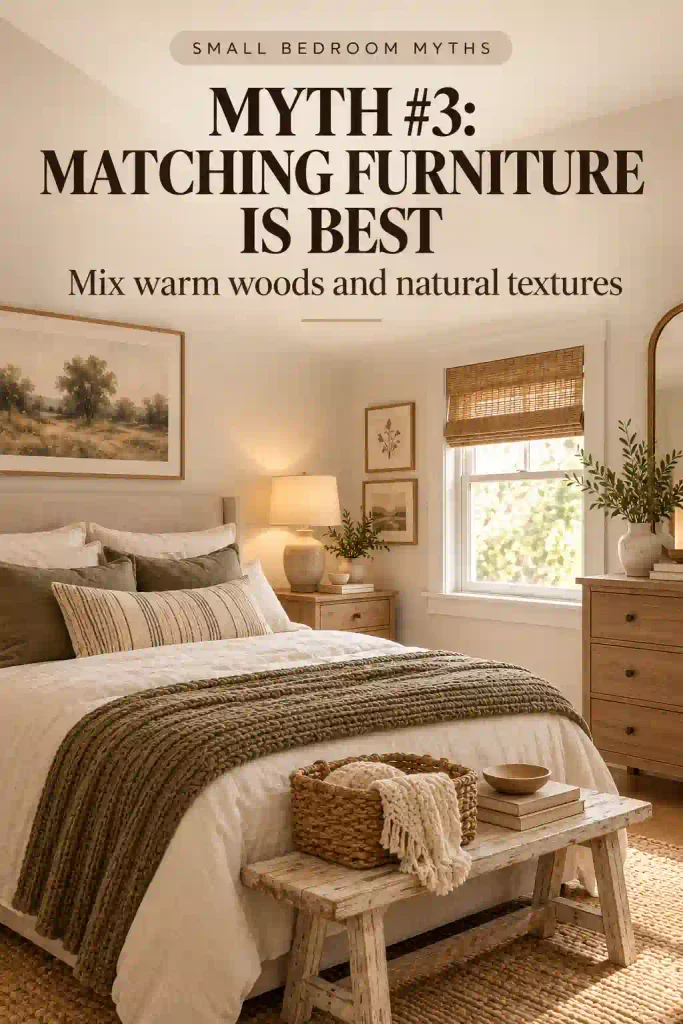
A matching set sounds easy, but a bed, two nightstands, and a dresser in one finish can feel heavy and boxed in.
The fix: Mix a few tones in the same warm family, like pale oak, whitewashed wood, and a woven basket. Keep colors calm and let textures do the work. A room built piece by piece also feels more personal, which is the whole point of a bedroom.
Myth 4: “You need two nightstands.”
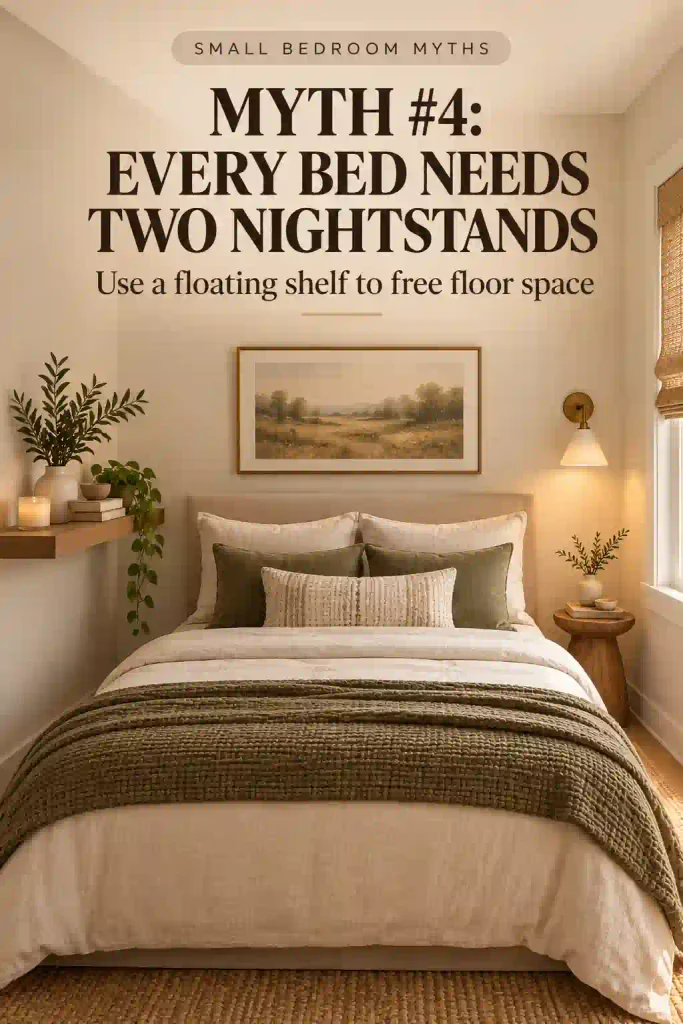
This one made me laugh, because Dana’s nightstands barely held a lamp. They just took up floor.
The fix: Use a floating shelf on one side and a slim stool or small table on the other. A wall-mounted shelf costs $20 to $40, and the open floor underneath makes a huge difference. Swap bulky lamps for plug-in wall sconces, and you’ve freed up even more room.
Myth 5: “The space under the bed is just wasted.”
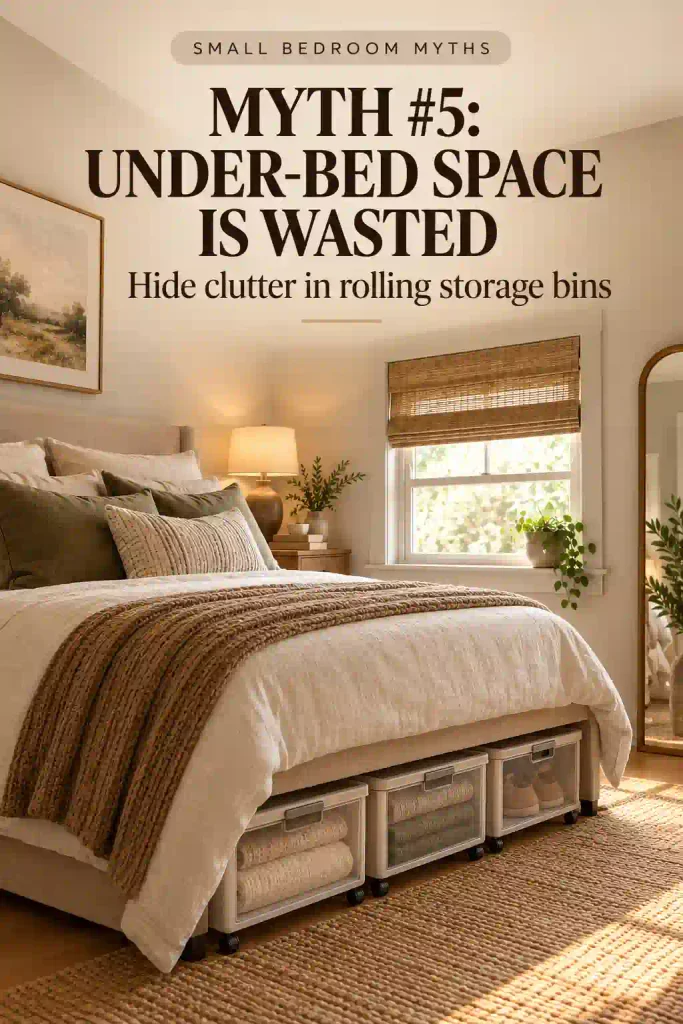
It’s the opposite. It might be the best storage you have.
The fix: Slide in lidded bins or rolling drawers for sweaters, extra blankets, and shoes. A set costs $20 to $40, and everything stays out of sight. Clutter makes a small room feel smaller than it is, so hiding it is half the battle.
Myth 6: “Neutral means boring.”
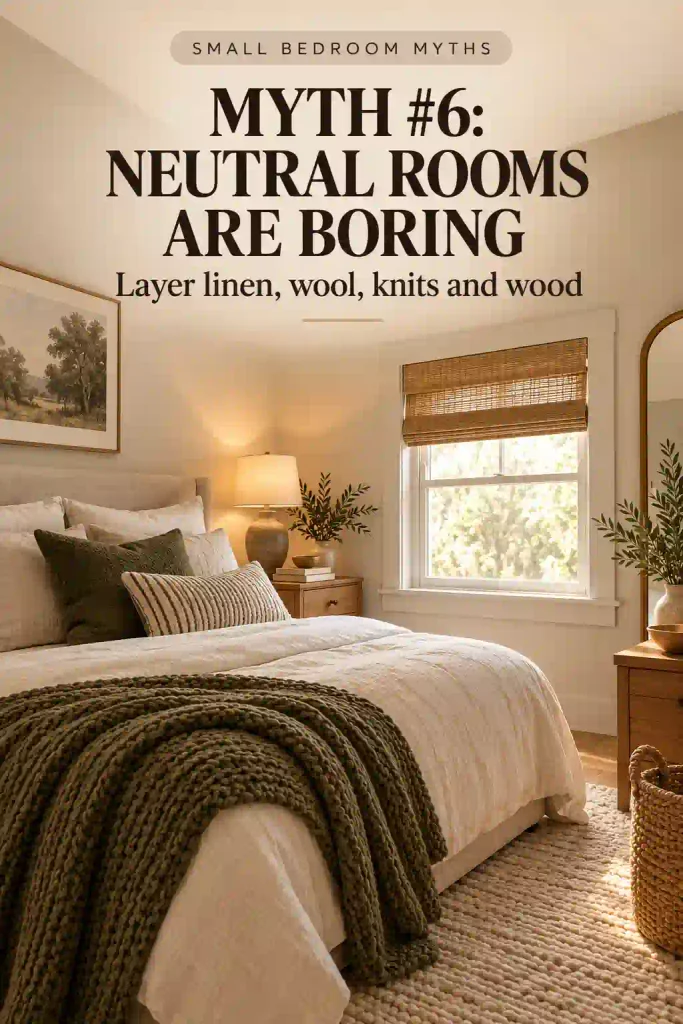
Honestly, I believed this one for years. My first neutral bedroom looked like a hotel lobby, and I didn’t love being in it.
The fix: Layer textures. Try a linen duvet, a chunky knit throw, a wool rug, and a woven basket, all in cream, oatmeal, and warm brown. When colors stay quiet, texture adds the interest. Add one deeper accent, like a dark wood frame or a charcoal pillow, so your eyes have a place to land.
Myth 7: “Mirrors only make you look bigger. They don’t do much for the room.”
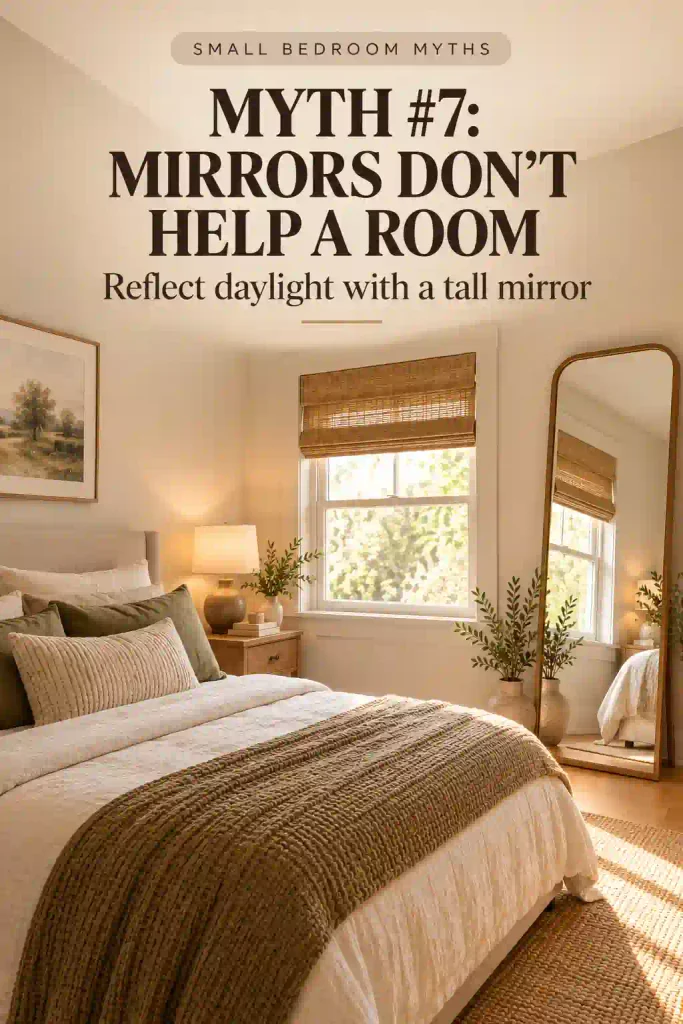
They actually do plenty. A big mirror bounces light across a room and can double the sense of depth.
The fix: Lean a tall mirror against a wall across from the window. No holes, no tools, and it works great if you rent. Secondhand shops often sell nice frames for under $60. Skip the tiny decorative ones, because bigger is better here.
Myth 8: “Short curtains are fine.”
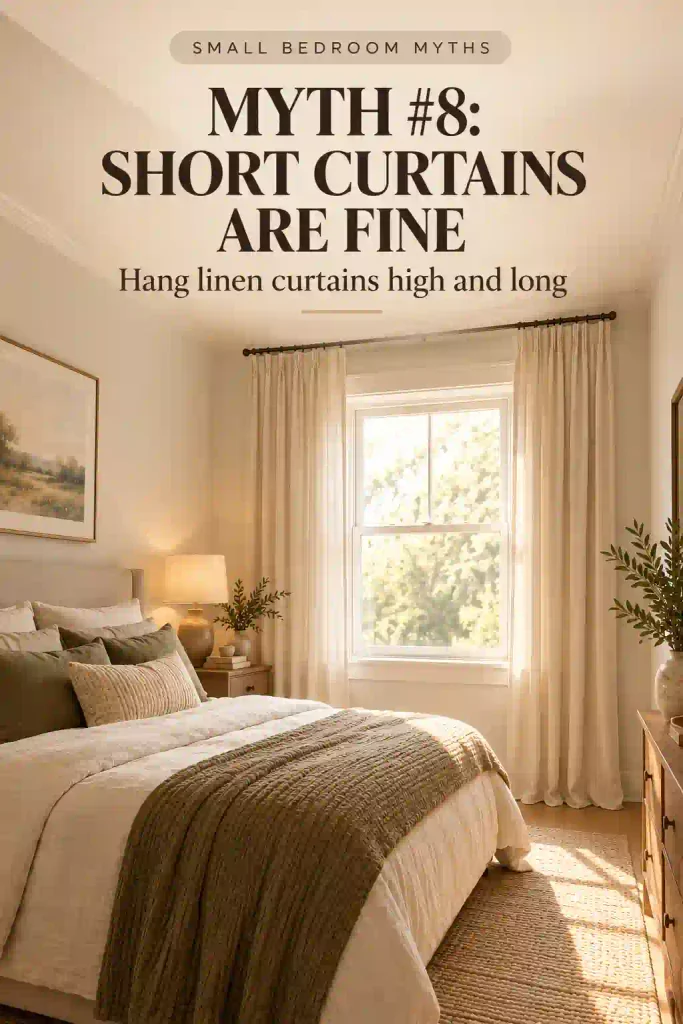
Curtains that stop right at the window frame chop the wall in half and make the ceiling look lower.
The fix: Mount the rod close to the ceiling, extend it a few inches past each side of the window, and let light linen panels fall to the floor. The window looks bigger, and the wall looks taller. Two panels and a rod cost about $50 to $80. This is one of the cheapest tricks I know, and it never fails.
Myth 9: “Bright overhead light makes a small room feel bigger.”
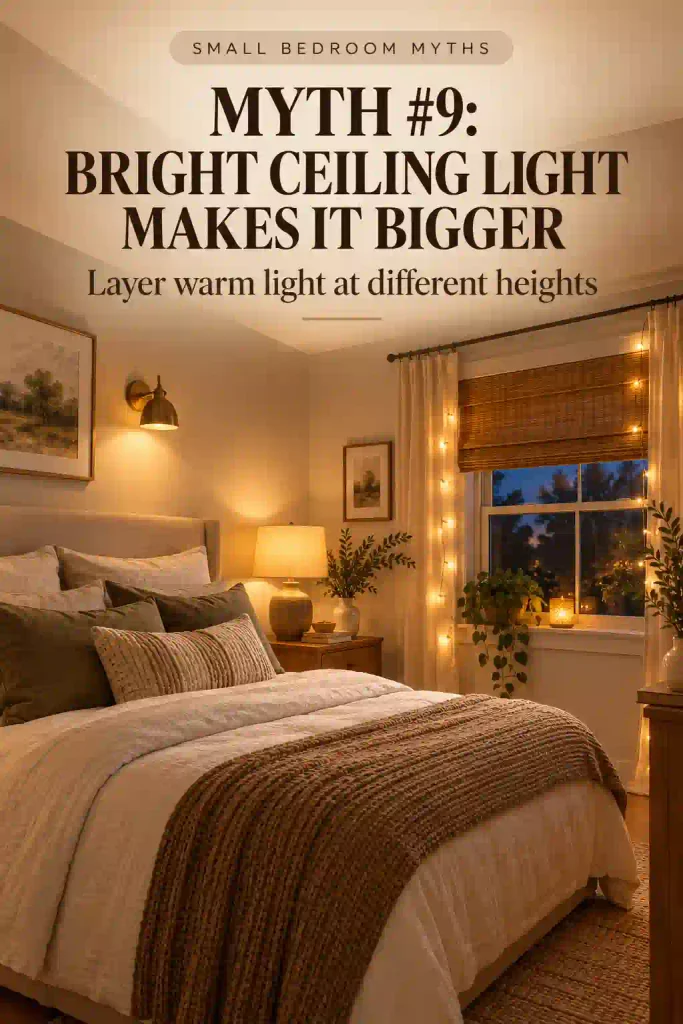
It makes it feel like a break room, and it throws harsh shadows in every corner.
The fix: Use warm bulbs, around 2700K, and spread the light around. A wall sconce by the bed, a small lamp on a shelf, and a string of soft lights near the window all help. When light comes from different heights, the room feels deeper and calmer. It also tells your body it’s time to slow down.
Myth 10: “Small rooms can’t have personality.”
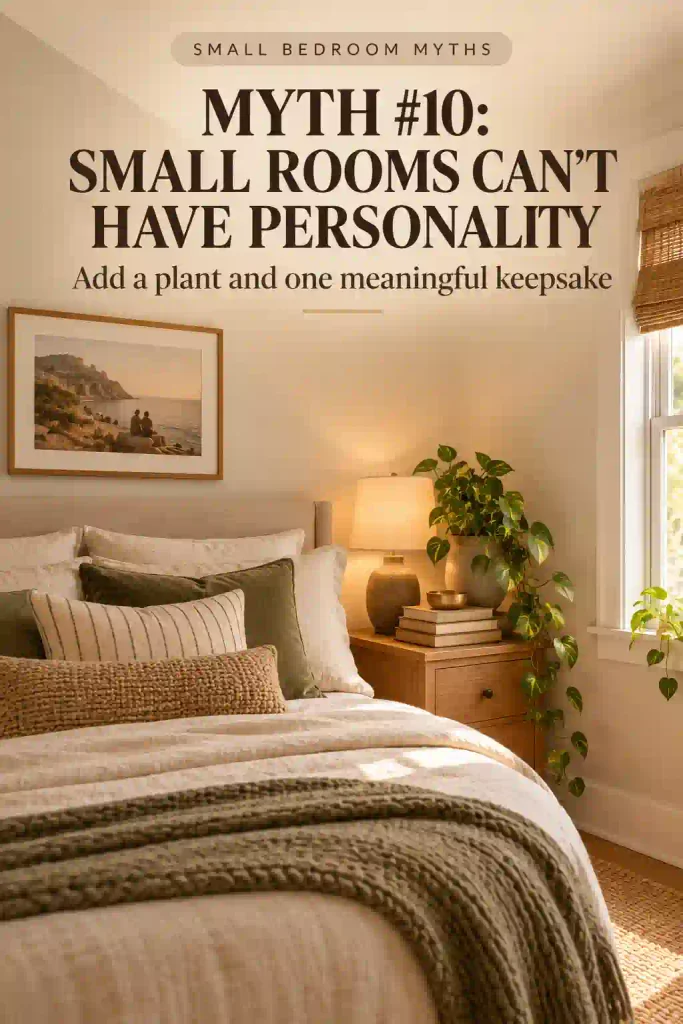
Dana asked me this with a sigh, standing in her blank, beige corner. I told her a small room is the easiest place to show who you are, because every little thing gets noticed.
The fix: Pick one living thing and one personal thing. A pothos on a shelf, a framed photo of your grandmother, or a stack of books you actually love will do it. Plants run $10 to $20, and the photo is free. This is what keeps a neutral room from feeling like a showroom.
Quick Rules to Keep Handy
Keep three tones at most. Two neutrals and one deeper accent is plenty.
Leave some bare wall and floor. Empty space isn’t wasted. It’s what lets the room breathe.
Go vertical. Floating shelves and tall, narrow bookcases keep floor space open. Anchor anything tall to the wall for safety.
Start with the cheap stuff. Warm bulbs, curtains hung high, and a leaning mirror cost very little and change the feel fast.
Questions People Ask Me
What’s the best neutral color for a tiny bedroom?
A warm white or soft greige in a satin finish is a safe, pretty choice. Always test the sample first.
Can I do this if I rent?
Yes. Most of these ideas use leaning mirrors, plug-in lights, removable hooks, and furniture, so nothing has to stay behind when you leave.
How much will it cost?
You can make a real difference for $100 to $300 by choosing three or four ideas. Start with lighting, curtains, and storage.
What Dana Said Last Week
A few weeks after our little project, Dana sent me a photo of her bedroom at night. The lamp was low, the bed was made, and the curtains hung soft and tall against the window. Underneath she wrote, “I haven’t stubbed my toe once. And I think I’m actually sleeping better?”
Then she added, “It’s still 9 by 10. It just doesn’t feel like it.”
That’s what I hope you take from this list. A small room isn’t a problem to solve. It’s a space that’s waiting for a few thoughtful choices. You don’t need more square footage to feel at peace. You need a place where your shoulders can drop the second you walk in.
So pick one myth from this list and prove it wrong tonight. Swap the bulb, lean the mirror, or slide a bin under the bed. Then lie down and notice how it feels.
You might be surprised how much room there already is.