
Mid-Century Modern Decor Hacks: A few years ago, I priced a real mid-century sideboard at a vintage shop. The tag said $1,850. I stood there, did the math on my savings, and quietly put my hand back in my pocket.
But I really wanted that look: warm wood, slim legs, a room that feels calm and a little bit cool. So I made a deal with myself. One Saturday, one route around town, and a $250 limit.
Come along. Here’s the route, stop by stop, and what each one taught me.
Stop 1: The Thrift Store
Hack 1: Look for “good bones,” not perfect pieces

Walk straight to the furniture section and ignore the stickers. You’re looking for solid wood, clean lines, and tapered legs. Pull out a drawer and check that it slides. Sniff it, too, because a musty smell is hard to fix.
Scratches and water rings are fine. I found a dresser for $65 that looked rough, but under the grime it was real walnut veneer. Check the back and underside for sturdy construction, and skip anything made of flimsy particleboard.
Hack 2: Swap the hardware
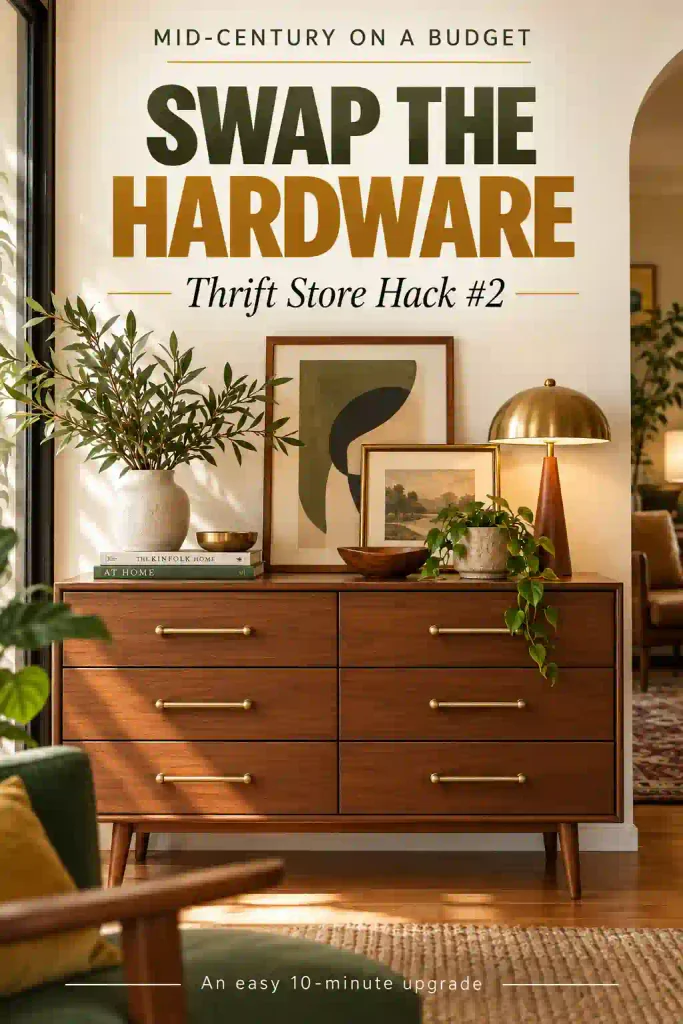
Dated handles can make a good dresser look cheap. Replace them with simple brass bar pulls or round wood knobs. A set costs $15 to $30. It takes ten minutes with a screwdriver, and it’s the cheapest “designer” trick I know.
Stop 2: The Hardware Store
Hack 3: Add tapered legs to a plain piece

If a cabinet or bench has a flat, boxy base, it will look heavy and dated. Screw-in wooden legs lift it off the floor so you can see underneath, and that gap is what makes mid-century furniture feel light.
A set of four runs about $20 to $40 and comes with a mounting plate. Match the wood tone to your piece, or stain them to blend in.
Hack 4: Revive old wood with oil
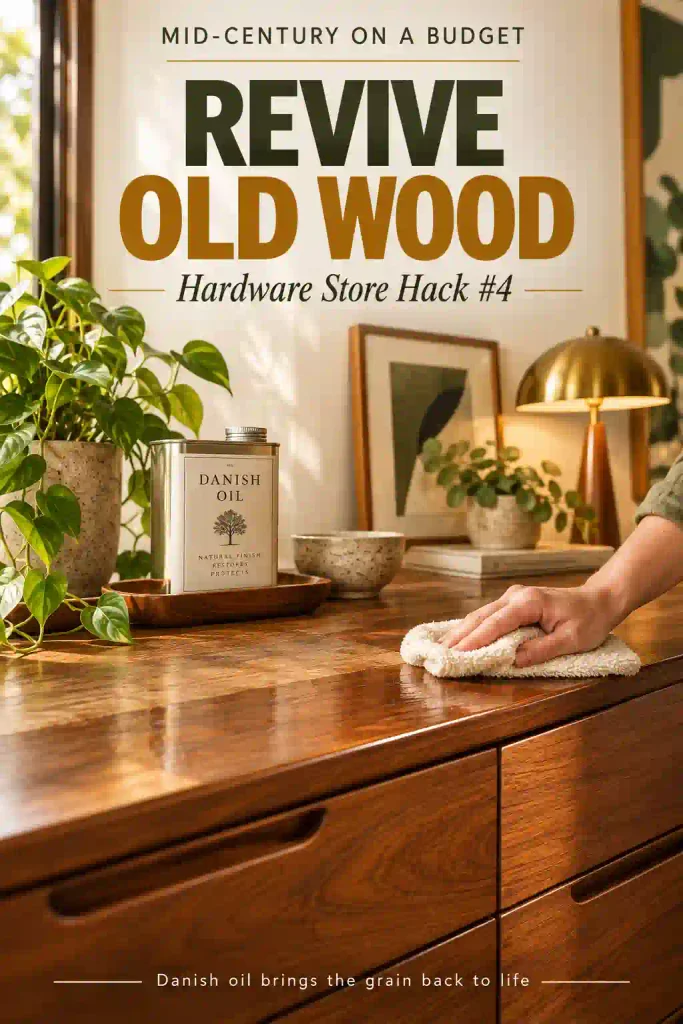
While you’re there, grab a small can of Danish oil or furniture restorer for about $12. Wipe a coat onto that tired thrift find and watch the grain wake up. Warm teak and walnut tones look expensive, even on a $65 dresser.
Wear gloves, work in a ventilated spot, and don’t leave oily rags in a pile. They can heat up, so lay them flat to dry.
Stop 3: The Lighting Aisle (or Your Garage)
Hack 5: Make one lamp the star

Overhead light is flat. A single sculptural lamp changes the mood of the whole room. Look for a globe pendant, an arc floor lamp, or a tripod lamp with a linen shade.
On a budget? Spray paint a dated lamp base in matte black or brushed brass for about $8, then add a new drum shade. Use a warm bulb around 2700K. Nothing makes a room look more expensive than a soft, golden glow.
Stop 4: The Fabric Store
Hack 6: Sew (or just fold) your own pillow covers

Mid-century color is bold but limited: mustard, olive, burnt orange, teal, and warm brown. Buying pillows in those shades adds up quickly, but fabric by the yard is cheap.
Two fat quarters of fabric make a pillow cover, and you don’t even need to sew. Fabric glue or an envelope-style fold works fine. I spent $14 on three covers that looked like they came from a boutique. Keep the rest of the sofa neutral, and let one or two pops of color do the talking.
Stop 5: The Printer in Your Hallway
Hack 7: Print free art and dress it up
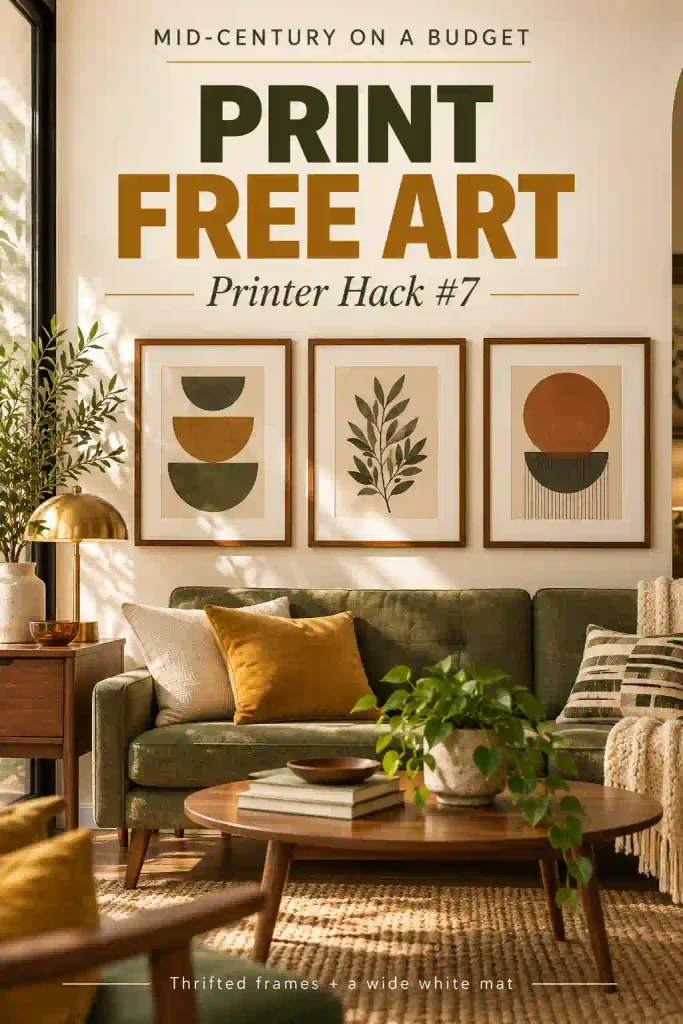
Many museums offer free downloads of public domain art, including geometric prints, botanicals, and abstract shapes. Search for those, print them on thick matte paper, and slip them into thrifted frames.
Add a wide white mat, even a cheap one, and it looks custom. Frames at thrift shops run $3 to $10. Hang a large piece over the sofa or a trio of small ones in a row.
Stop 6: The Plant Aisle
Hack 8: Raise your plants up

Plants on the floor look random. Plants on a slim wooden stand look styled. A snake plant, rubber plant, or monstera in a plain ceramic pot fits the style perfectly.
A basic plant stand costs $25 to $50, or you can find one secondhand for less. Pick a simple pot in white, terracotta, or matte black. Don’t want to keep a plant alive? A good faux one works from across the room, and nobody will ever check.
Stop 7: Back Home, With Your Coffee
Hack 9: Edit, then stop
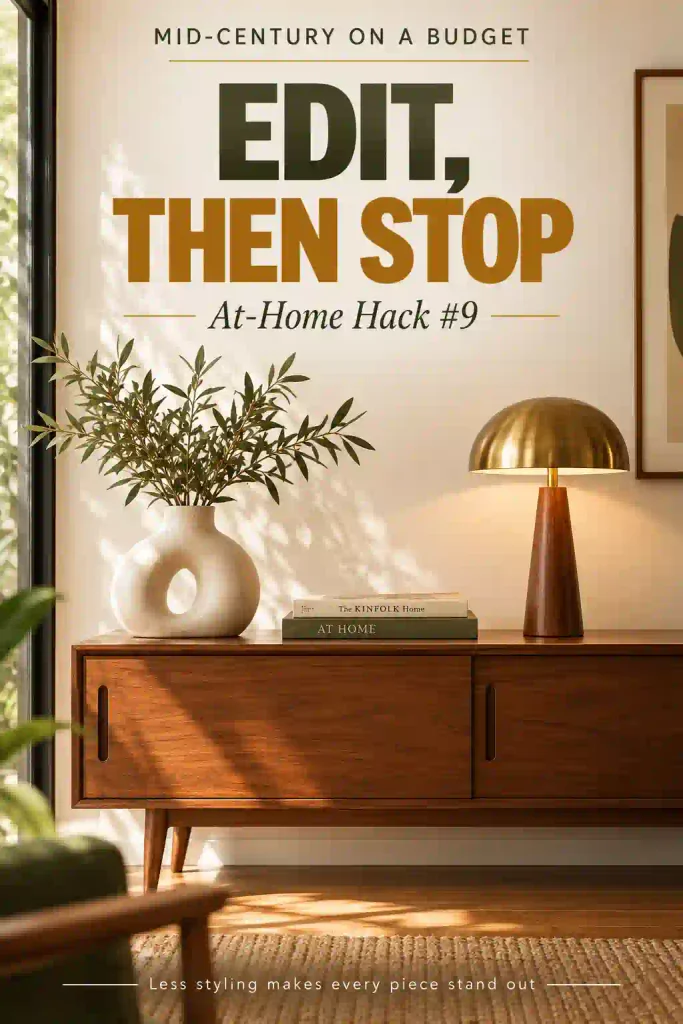
This one is free. After you’ve set everything up, take half of it away. Mid-century rooms feel high-end because there’s room to breathe.
On a sideboard, three items is plenty: one sculptural vase, one lamp, one small stack of books. Leave empty space around them. It feels strange at first, but the room instantly looks calmer, and every piece you kept gets noticed.
What the Saturday Cost Me
| Item | Cost |
| Thrifted walnut dresser | $65 |
| Brass pulls | $22 |
| Tapered legs | $30 |
| Danish oil | $12 |
| Spray paint and lamp shade | $24 |
| Pillow fabric | $14 |
| Frames and prints | $18 |
| Plant stand and pot | $38 |
| Total | $223 |
That left me $27 under my limit, which I spent on a very good burrito.
A Few Things I’d Tell My Past Self
Go early. The best thrift finds disappear by noon on Saturdays.
Bring a tape measure. I once carried a beautiful credenza home that didn’t fit through my own door. Learn from me.
Mix, don’t match. A room built from one catalog feels flat. A few different wood tones feel collected and real.
Be patient. If you don’t find the right piece today, check again next week. The good ones show up.
The Part I Didn’t Expect
When I finally set the dresser in my living room, with the lamp on and the late sun hitting the grain of the wood, I sat on the floor and just looked at it for a while. It wasn’t the $1,850 sideboard. It was better, because I’d found it, fixed it, and picked every piece around it myself.
My friend came by that evening and asked where I’d bought it. When I told her the whole story, she laughed and said, “Okay, take me with you next Saturday.”
That’s my wish for you. Not a perfect copy of a magazine, but a home that has a little of your own effort and luck in it. Pick one stop from this route, whether it’s the thrift store, the hardware aisle, or the old lamp in your garage, and start there this weekend. You might be surprised by what you find.