
Japandi Wabi-Sabi Living Room Ideas: I once owned a ceramic bowl with a crack running through one side. I dropped it the day I bought it, and I nearly threw it out. Instead, I set it on my coffee table, mostly out of laziness.
Months later, it was the first thing every guest picked up. “I love this one,” they’d say, turning it over in their hands.
That bowl taught me what wabi-sabi means: beauty that’s a little worn, a little uneven, and completely real. Pair that with Japandi, the Japanese and Scandinavian mix of simple shapes and cozy warmth, and you get a living room that lets you exhale.
Take your time with these. Read one, pause, then read the next.
Start With Less
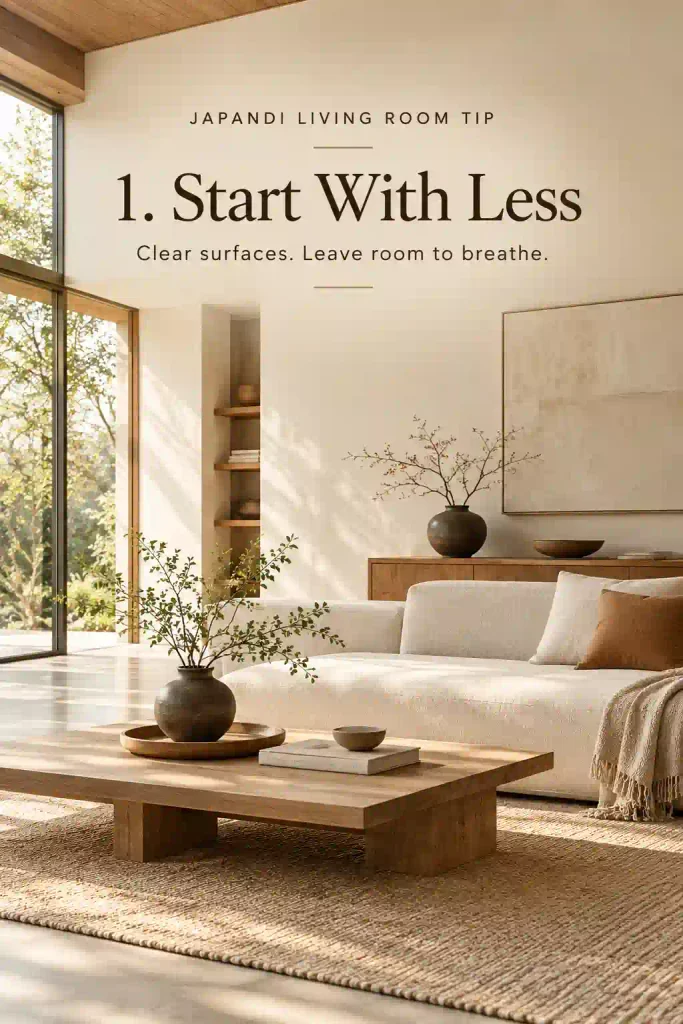
Before you buy anything, take things away. Clear the surfaces, pull out the extra pillows, and put away the decor that doesn’t mean something to you. Leave a few bare spots.
Empty space isn’t wasted here. In Japandi, it’s part of the design. It’s what gives the things you keep room to be noticed. It’s also free, and you can do it tonight.
Choose Colors From the Earth

Think oatmeal, warm white, soft clay, muted olive, and deep charcoal. Skip anything shiny or loud. These shades look calm in morning light and glow gently at dusk.
Paint a big sample square and live with it for a few days. A gallon of matte or eggshell paint costs $35 to $60. Warm, chalky colors feel kinder than stark white.
Pick a Low, Simple Sofa
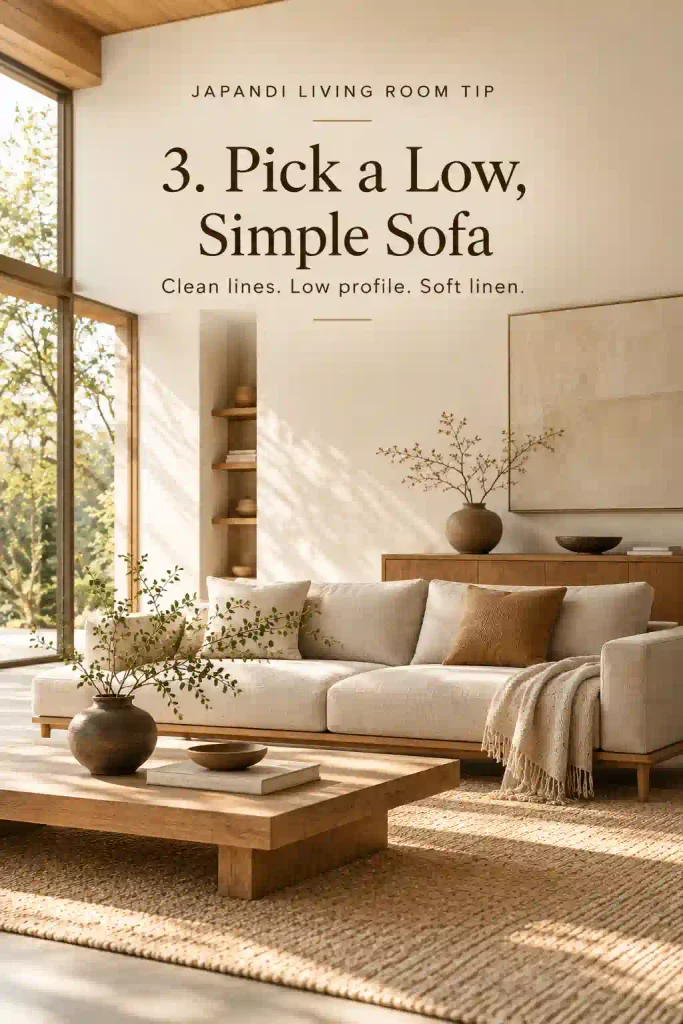
Japandi furniture sits closer to the ground. Look for a sofa with clean lines, a low back, and slim wooden legs, in linen or cotton the color of sand or stone.
You don’t need a showpiece. A secondhand sofa with a good linen slipcover can look just right, and slipcovers run about $100 to $250. Wrinkles are fine. They’re part of the charm.
Let Natural Wood Lead
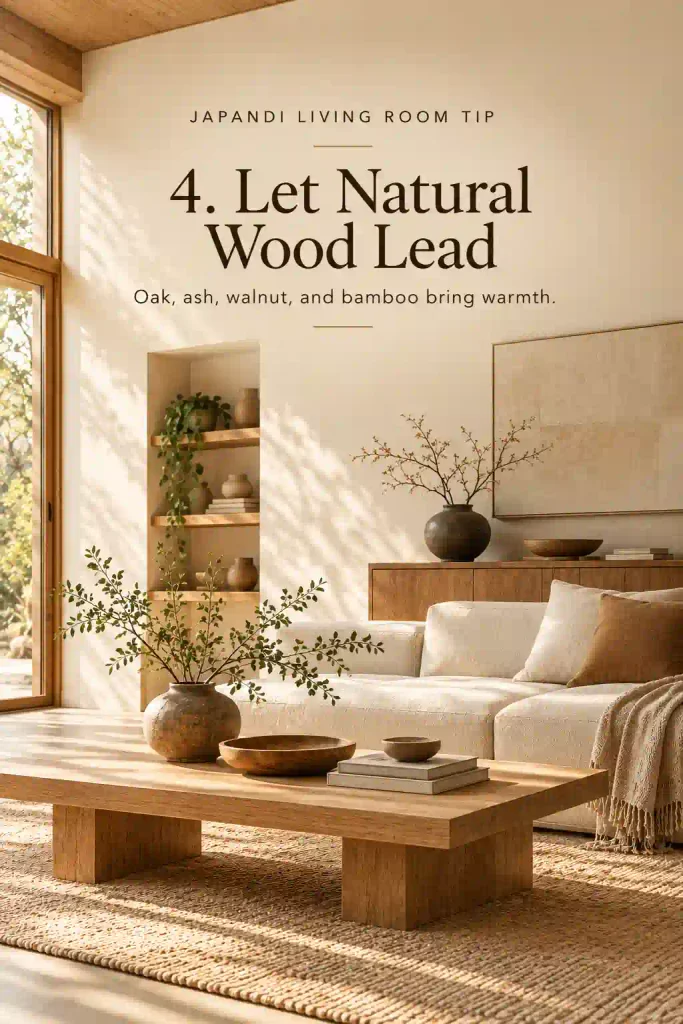
Pale oak, ash, walnut, and bamboo bring the warmth. A simple coffee table, a slim bench, or a plain shelf does the job. Don’t worry if the pieces don’t match exactly. A little variety looks collected, not staged.
Thrift stores and online marketplaces often have solid wood tables for $40 to $120. A little furniture oil makes old wood glow. Scratches and small dents? Keep them. They show the piece has lived.
Add Handmade Ceramics
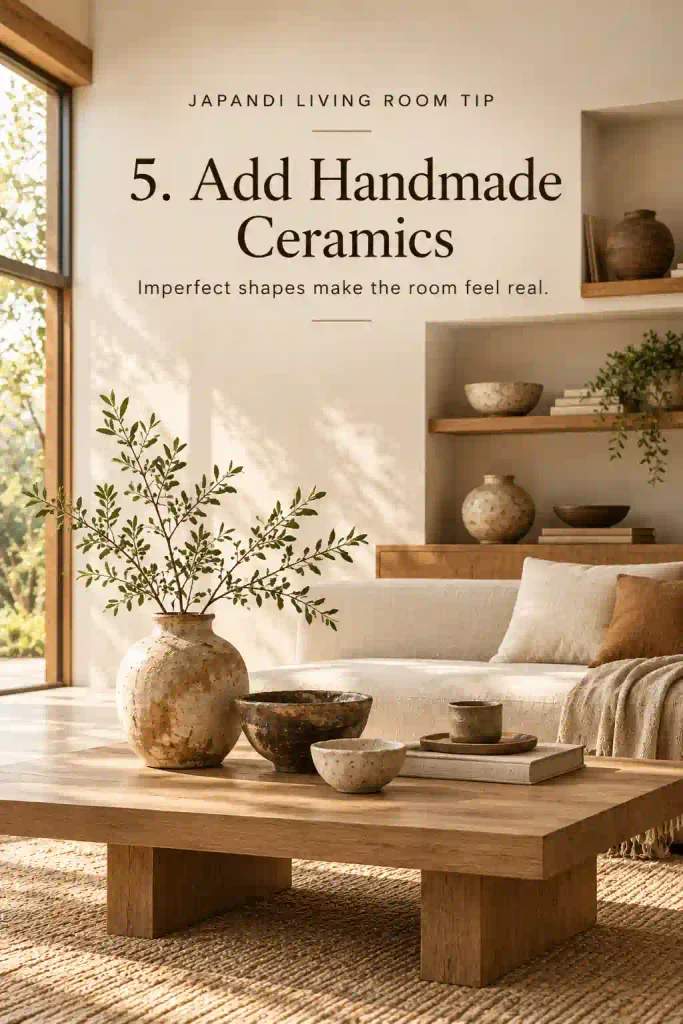
This is where wabi-sabi shows up. Choose a few bowls, vases, or cups with uneven glazes and soft, imperfect shapes. Place one on the coffee table, one on a shelf, and let the rest of the surface stay empty.
Craft fairs and local potters sell lovely pieces for $15 to $40. A single stem or branch in a rough ceramic vase looks more thoughtful than a whole bouquet.
Layer Linen, Wool, and Cotton
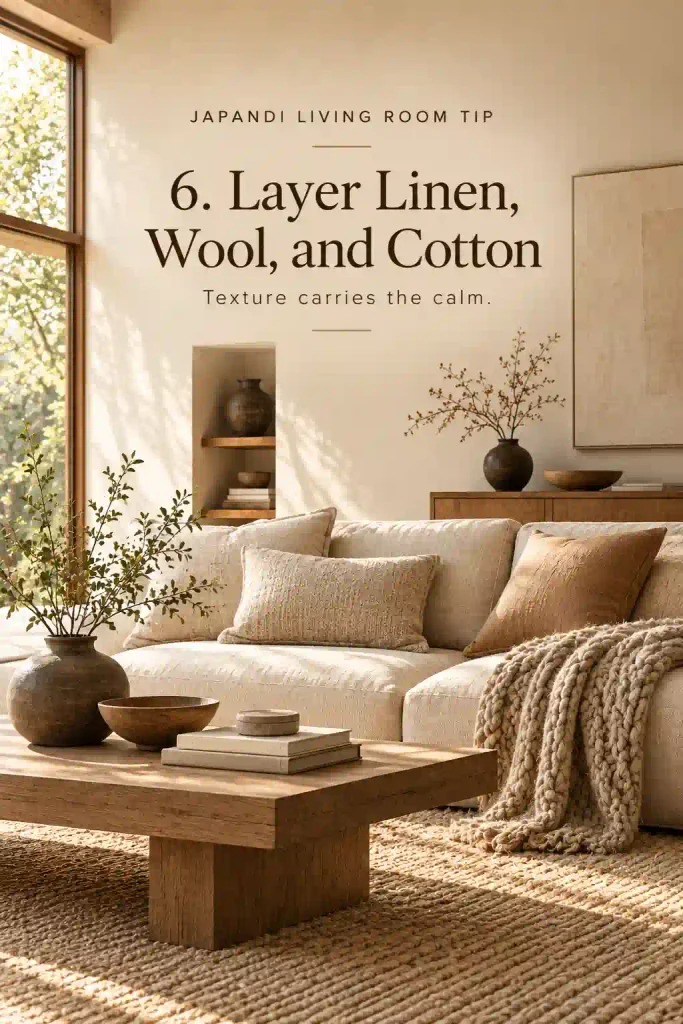
Texture does the talking in a quiet room. Drape a chunky wool throw over the sofa, add linen pillows in two close shades, and lay a woven jute or wool rug underfoot. Wrinkled linen is welcome here.
Pillow covers cost $12 to $25 each, and a good throw runs $30 to $60. Keep the colors close together, and let the fabric feel carry the mood.
Hang Soft, Simple Curtains
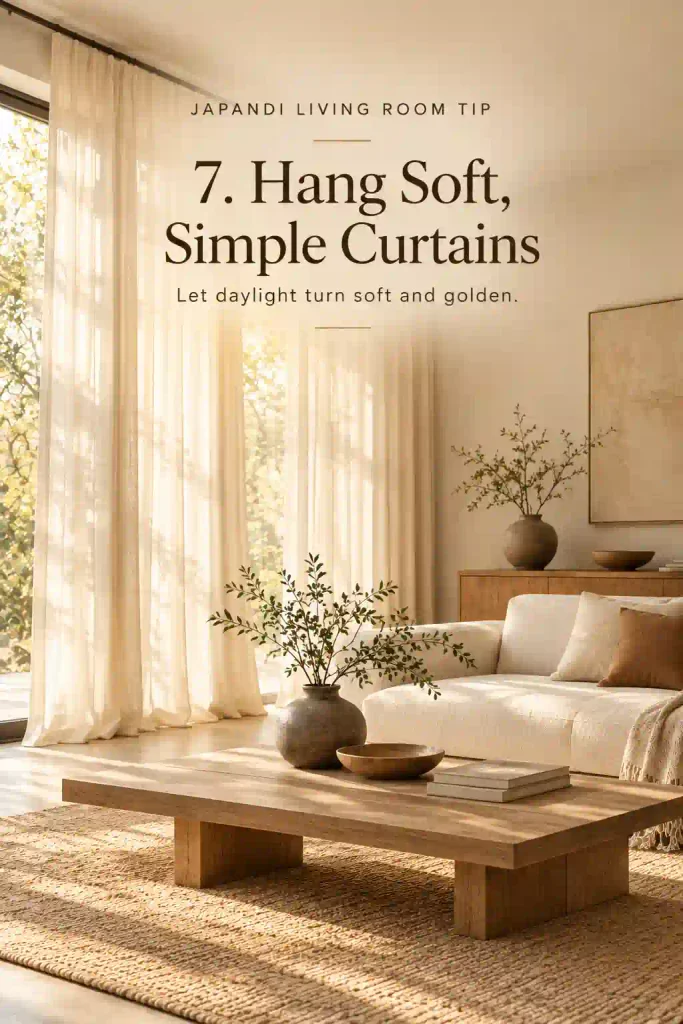
Heavy drapes and fussy valances fight the calm. Hang plain linen or cotton panels in cream or oatmeal, with the rod set high and the fabric brushing the floor. They turn harsh daylight into something soft and golden.
Two panels and a basic rod cost about $50 to $90. Let them hang a little loose. Stiff and perfect isn’t the goal.
Bring in a Branch or Two
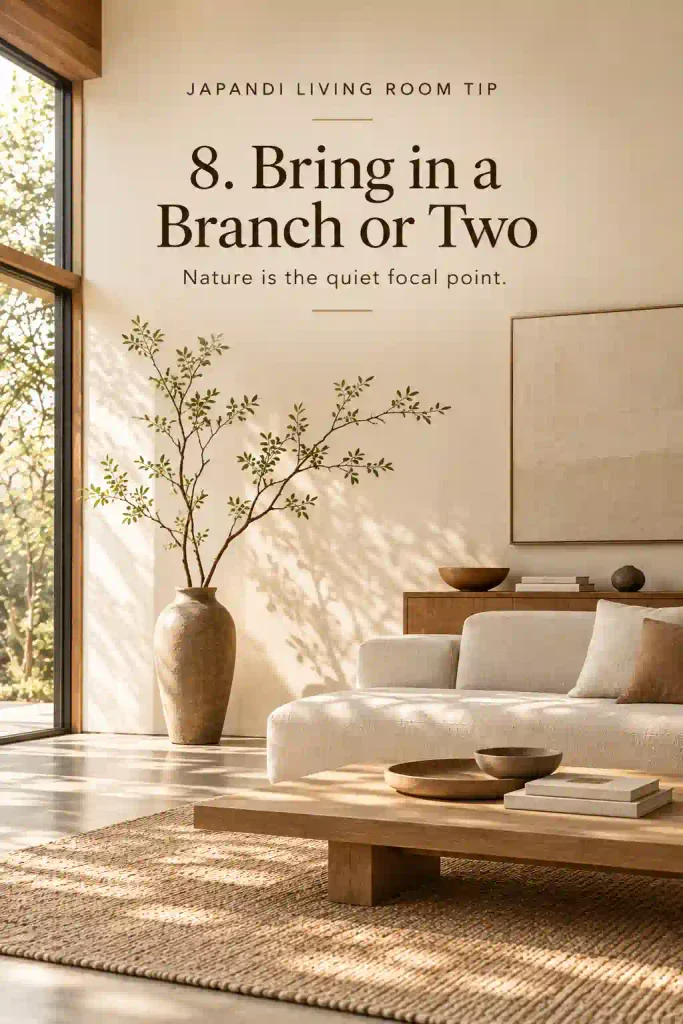
Skip the big bouquet. Cut a few branches from a tree, or buy a bunch of eucalyptus or dried grasses, and set them in a tall vase. A single bonsai or a small potted plant in a plain clay pot works, too.
Nature is the heart of this style. A branch costs almost nothing, and it changes with the seasons, which is the whole point.
Light the Room Softly
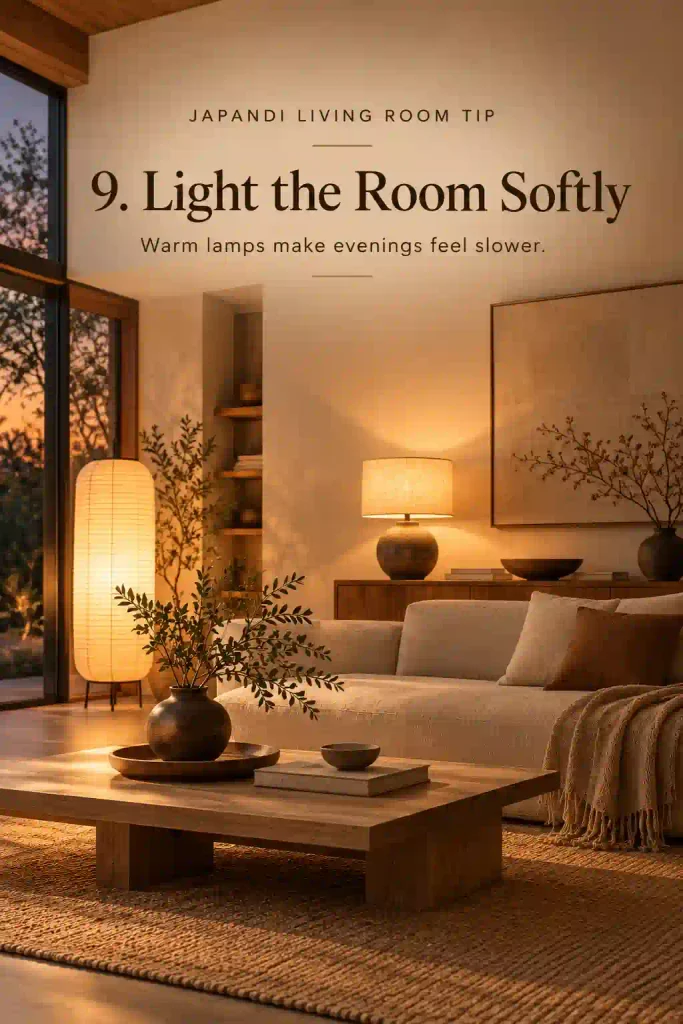
Overhead lights are too harsh for a serene room. Use a paper lantern lamp, a linen-shade table lamp, or a floor lamp with a warm bulb around 2700K. Place them at different heights and turn off the ceiling light after dinner.
Rice paper lamps cost $25 to $60, and they cast a gentle glow that makes every wall look richer. Evenings start to feel slower right away.
Hang One Piece of Quiet Art
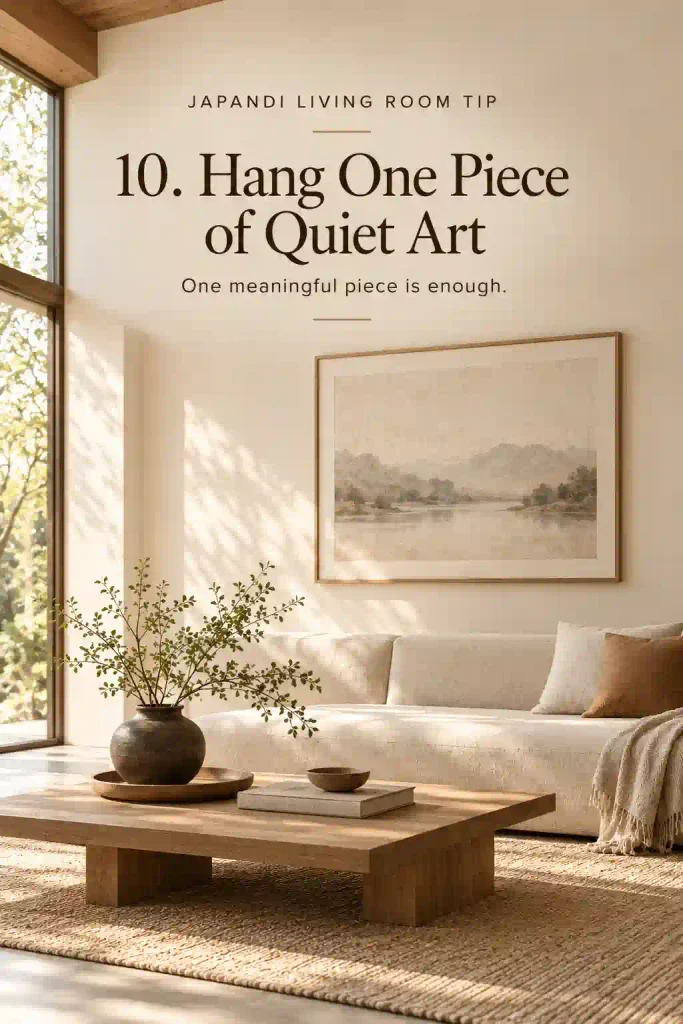
Choose one meaningful piece, not a gallery wall. A simple ink drawing, a soft landscape, or a framed piece of linen or handmade paper looks calm and intentional. Leave plenty of wall around it.
A print and a plain wood frame cost $20 to $60. Hang it a little lower than you think, around 57 inches to the center, so it feels connected to the room.
Make Room for Stillness
Last, add a place to simply be. A low floor cushion by the window, a small stool beside your favorite chair, or a spot for a cup of tea and a book. Leave it uncluttered, and use it.
This idea costs nothing, but it matters most. A serene room isn’t one you look at. It’s one you rest in.
A Few Gentle Rules
Repair before you replace. A mended chair or a chipped bowl has a story that something new can’t offer.
Keep to three colors. Two warm neutrals and one deeper tone are plenty.
Choose fewer, better things. One handmade bowl beats five mass-produced ones.
Let it change. Wood darkens, linen softens, plants grow. Don’t fight any of it.
Quick Questions
What’s the difference between Japandi and wabi-sabi?
Japandi is a design style that blends Japanese and Scandinavian looks. Wabi-sabi is a way of seeing beauty in imperfection. Together, they make a room that’s both tidy and warm.
Can I do this on a budget?
Yes. Start with decluttering, warm bulbs, and a few thrifted wood or ceramic pieces. You can see a real change for $100 to $250.
Will it work in a small room?
Very well. Low furniture, light colors, and open floor space make small rooms feel calmer.
Can renters try it?
Absolutely. Throws, lamps, rugs, ceramics, and plants all move with you.
Back to the Bowl
Last fall, on a gray Sunday afternoon, I sat on the floor by the window with a cup of tea. The cracked bowl was beside me, a branch of eucalyptus leaned in a vase, and the light came through the linen curtains like warm water.
My phone was in another room. Nothing needed fixing. The sofa had a wrinkle in it, and I didn’t care.
For years I thought a beautiful home had to look finished and flawless. I was wrong. A beautiful home looks like someone lives there, and likes it that way.
So pick one idea today. Move a lamp, bring in a branch, or just clear off the coffee table and set down one favorite bowl. Then sit for a minute and notice how the room feels.
Nothing here has to be perfect. That’s what makes it beautiful.