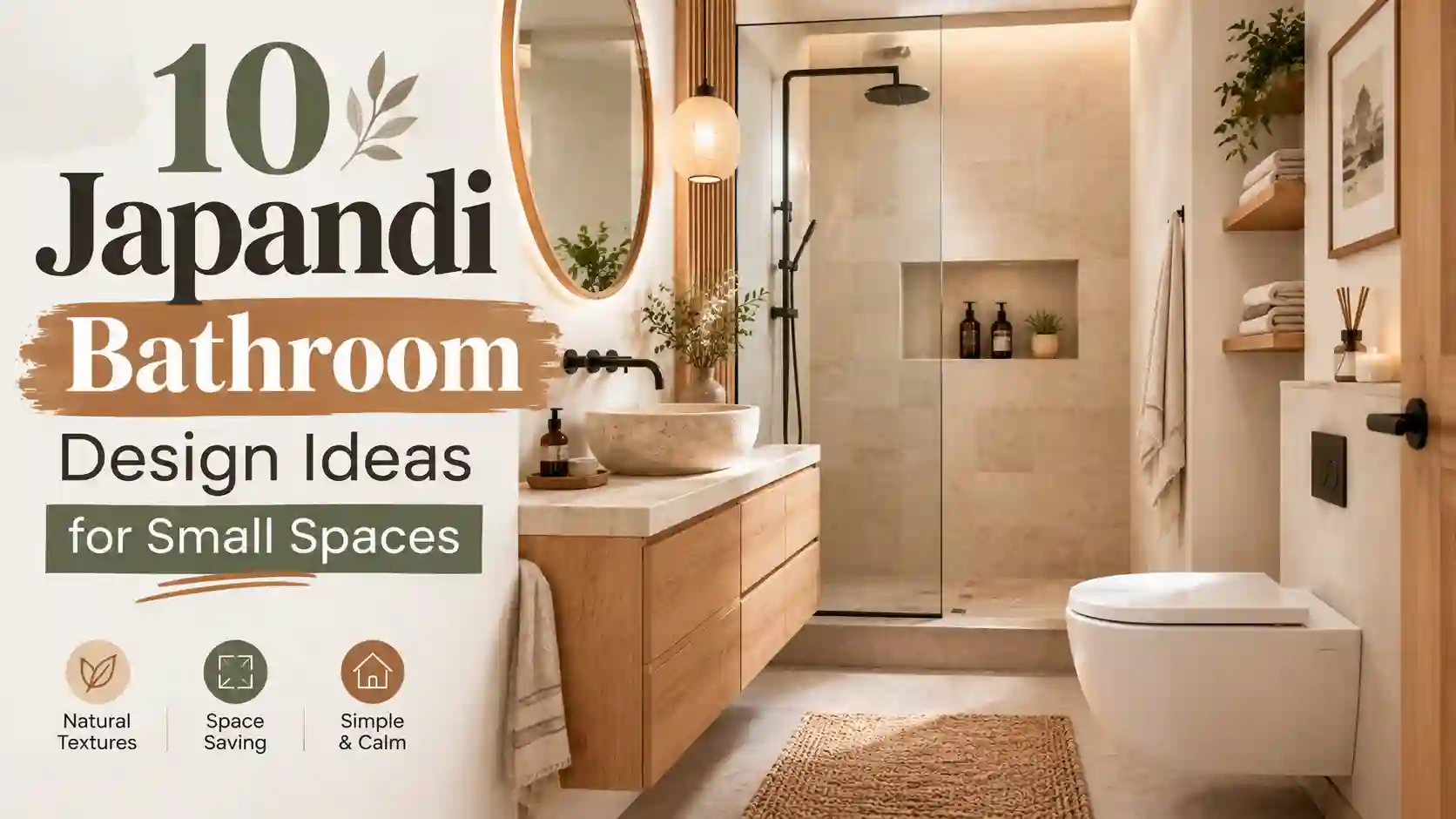
Some mornings, my 5 by 8 bathroom made me feel tired before the day even started. I’d stand there with a hair dryer in one hand and a toothbrush in the other, with nowhere to put either one. Bottles crowded the counter, towels hung crooked, and nothing matched.
Then I found Japandi, a style that mixes Japanese simplicity with Scandinavian warmth. It’s built on clean lines, natural materials, and a lot of calm. It also happens to be perfect for small rooms, because it asks you to keep less and love it more.
Here are the ten changes that made my little bathroom feel peaceful, and how you can do the same without a remodel.
Choose Soft, Earthy Colors
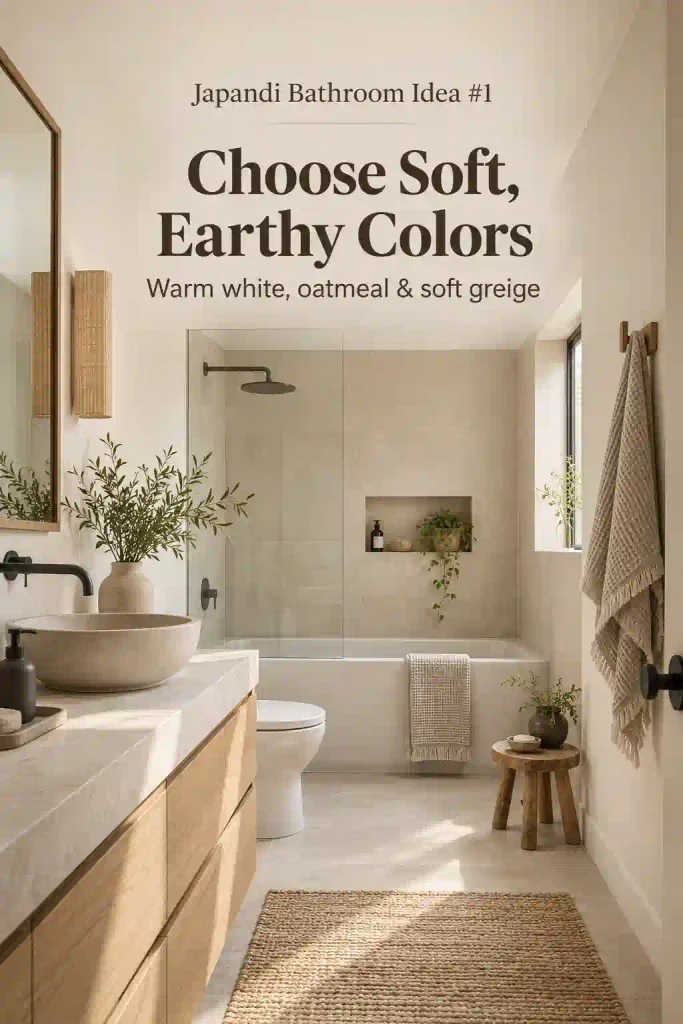
Small bathrooms feel bigger and calmer when the colors stay quiet. Try warm white, oatmeal, pale sand, or a light gray-beige on the walls. Then add one deeper tone, like charcoal or muted olive, in small doses such as a towel or a framed print.
Use a satin or semi-gloss paint made for bathrooms, which usually costs $35 to $55 a gallon. Test a sample first and look at it in the morning and at night. Warm, chalky shades feel much gentler than stark white.
Bring in Natural Wood
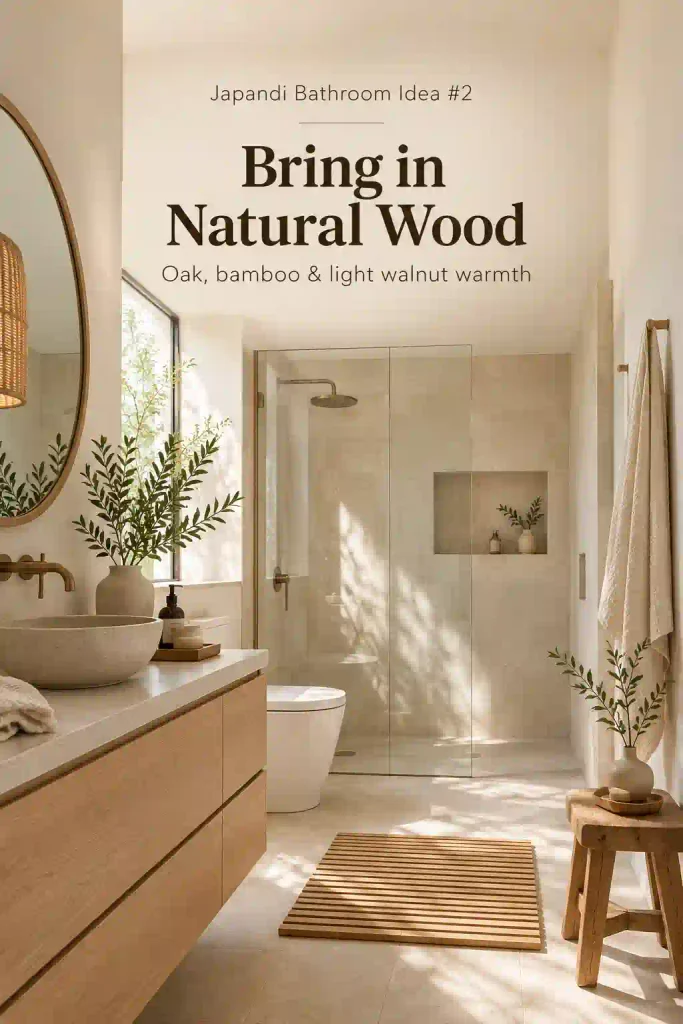
Wood is what keeps a minimalist room from feeling cold. Pale oak, ash, bamboo, or light walnut tones soften all that tile and porcelain. You don’t need much. A small wooden stool, a slatted bath mat, or a simple shelf will do the job.
Bamboo bath mats and basic wood stools usually cost $20 to $40 each. Mixing two wood tones is fine. A little variety looks collected instead of staged.
Get Things Off the Floor
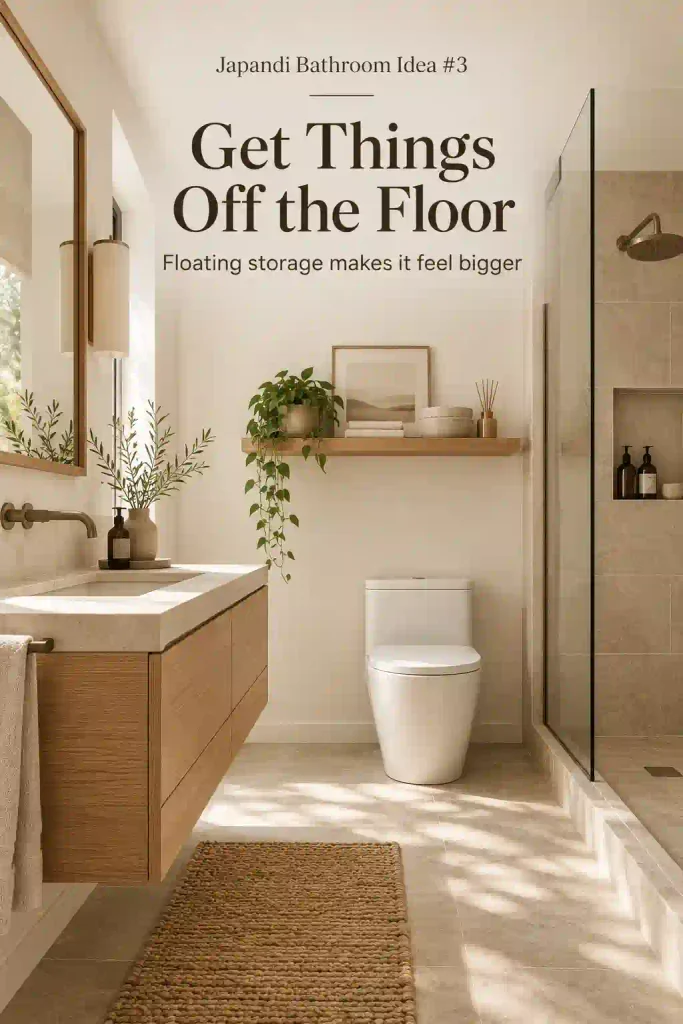
A visible floor makes any room feel larger, and Japandi design loves this trick. A wall-mounted vanity is the best version of it, though small ones can run $200 to $400. If that’s out of reach, a floating shelf above the toilet costs $20 to $40 and gives you storage without a bulky cabinet.
Even small changes help. Remove the trash can from the middle of the floor, and tuck baskets under a shelf instead of beside it.
Hide the Clutter
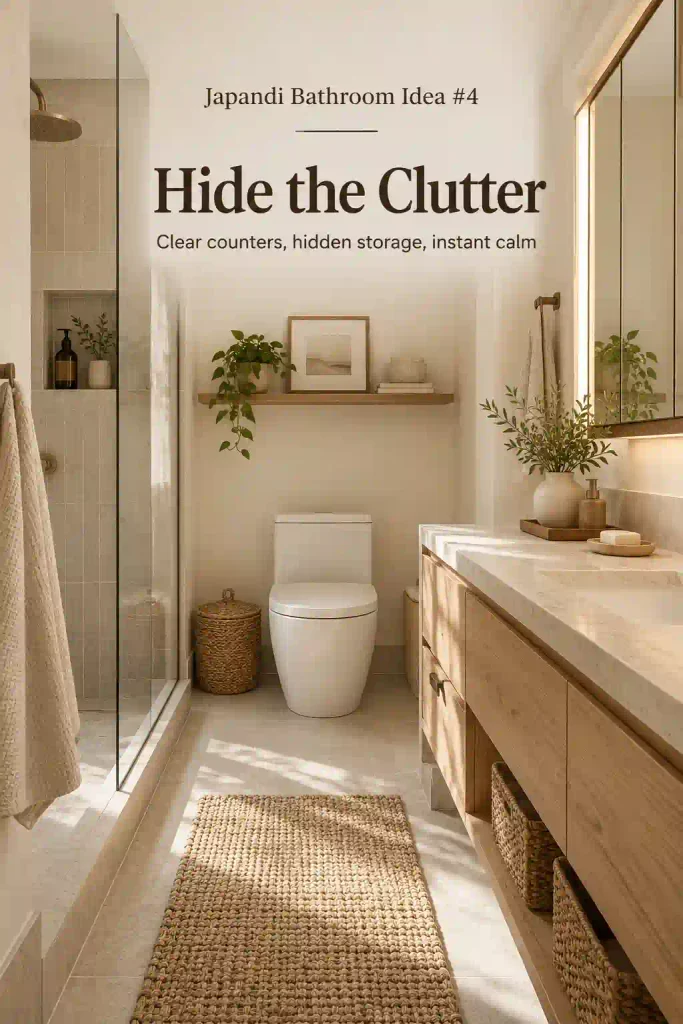
Japandi rooms feel calm because the mess is tucked away. A mirrored medicine cabinet hides your products behind a clean, bright surface, and it usually costs $60 to $150. A lidded basket or a couple of small drawers can hold extra toilet paper, hair tools, and cleaning supplies.
Keep only a few things on the counter, like a bar of soap and a small tray. When the surfaces are clear, your eyes get a rest, and that’s a big part of why the style works.
Keep Towels Simple and Soft
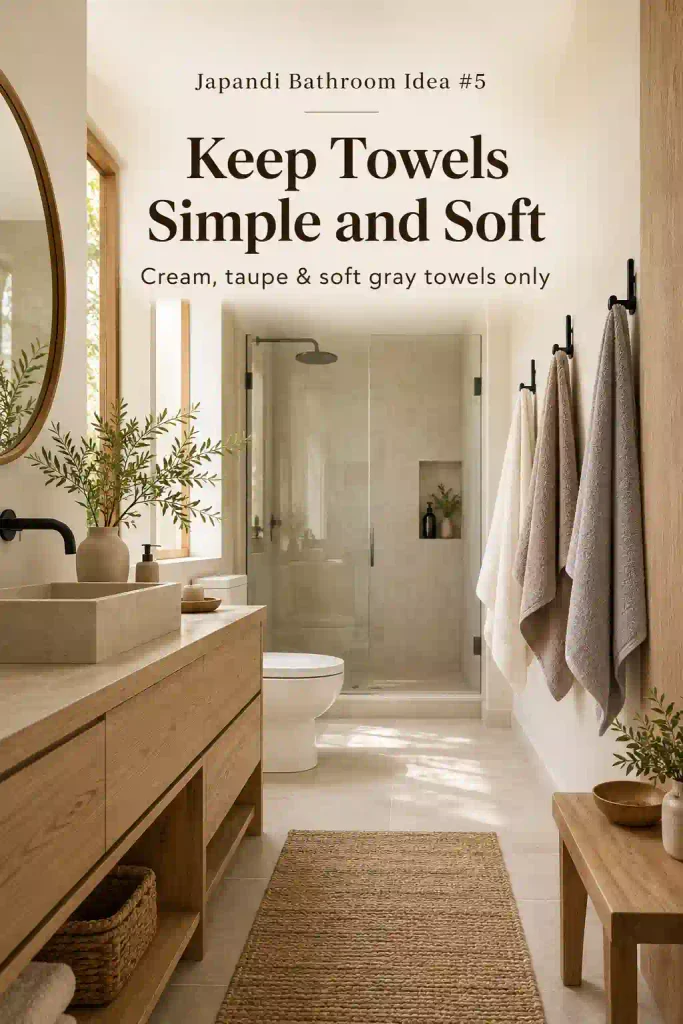
Pick cotton or linen towels in cream, soft gray, or warm taupe, and skip the patterns. Roll one in a basket and hang one on a hook. In a small room, two or three plain wood or matte black hooks work better than a single bar, and they cost about $10 to $25 total.
Hooks make the wall look relaxed, and towels dry faster. It’s a small switch, but you’ll notice it every morning.
Hang a Large, Soft-Edged Mirror
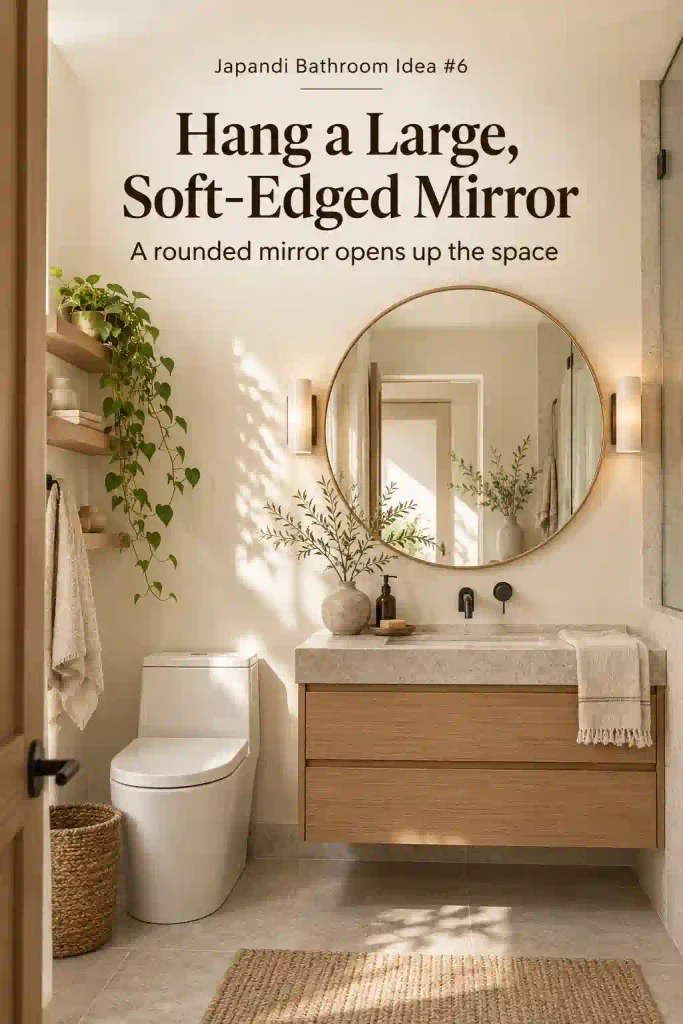
A big round or gently rounded mirror with a thin frame makes a tiny bathroom feel open. It bounces light around and breaks up the straight lines of tile and cabinets. Wood or matte black frames suit the Japandi look best.
Thrift stores and online marketplaces often have good frames for under $60. In a small space, bigger almost always beats smaller.
Switch to Warm, Low Lighting
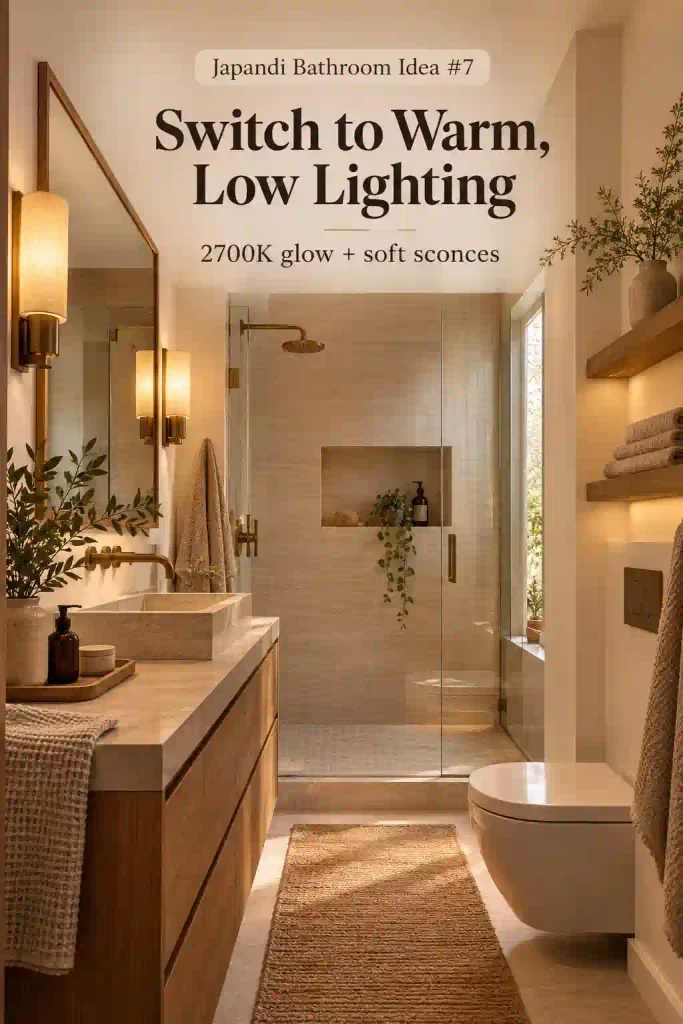
Harsh white bulbs can make a small bathroom feel like a break room. Swap them for warm bulbs around 2700K, and if you can, add a wall sconce with a linen or frosted shade beside the mirror. Light coming from the side is kinder to your face, and it makes small walls glow.
Sconces run about $30 to $70. People rarely notice good lighting right away, but they always feel it.
Add One or Two Natural Touches
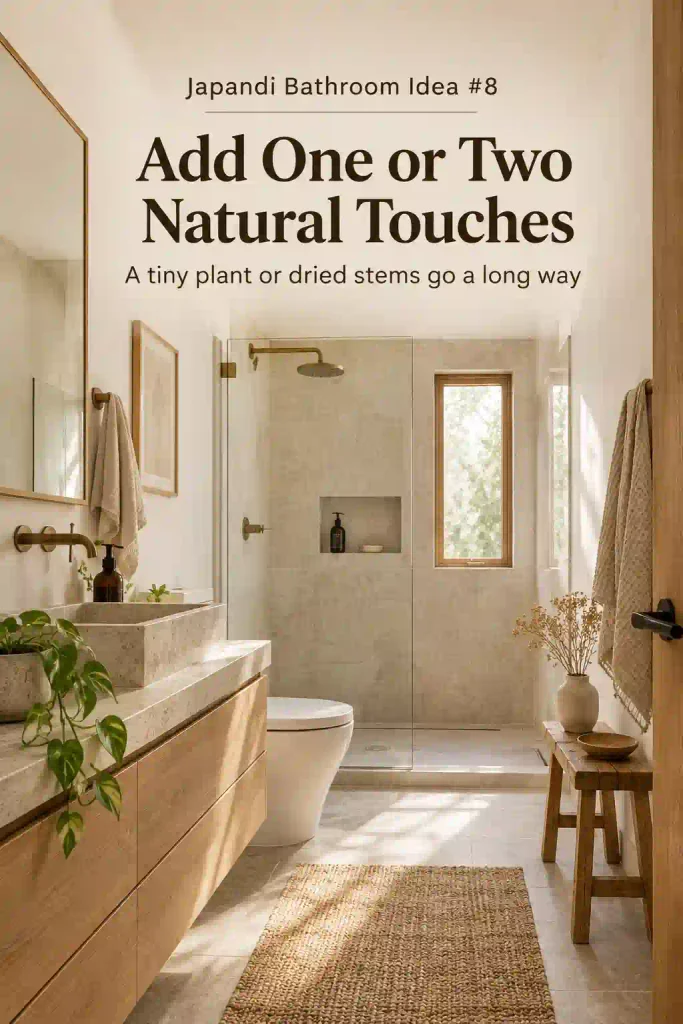
Nature is a big part of Japandi, and you don’t need much room for it. A little pothos on the windowsill, a single stem in a tiny vase, or a bundle of dried grasses on a shelf is plenty. Bathrooms are humid, so plants usually do well there.
If your bathroom has no light, a faux branch or a smooth stone from a walk outside works fine. Plants cost $10 to $20. Keep it to one or two pieces so the room stays peaceful.
Keep the Shower Clean and Quiet
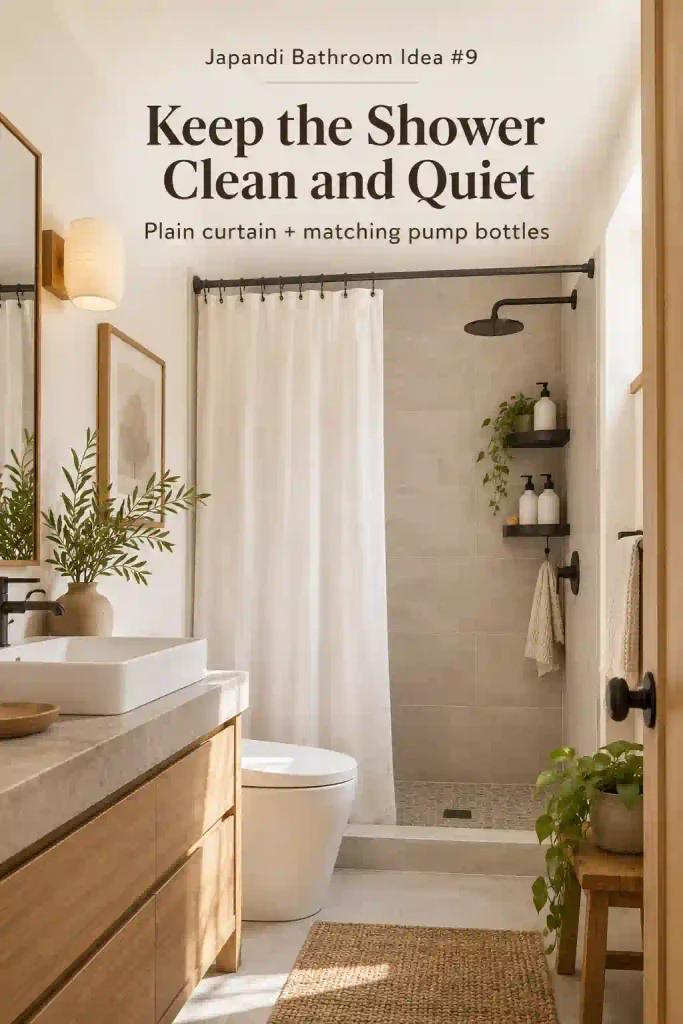
Hang a plain white or linen-look curtain close to the ceiling, so the room looks taller. A glass panel is lovely if you can afford it, but a simple curtain works well on a budget and costs about $25 to $50.
Pour your shampoo and body wash into matching pump bottles in white or frosted glass, and set them in a corner caddy in bamboo or matte black. Bottles run around $15. When the shower looks calm, the whole room feels calmer.
Finish With One Handmade Piece
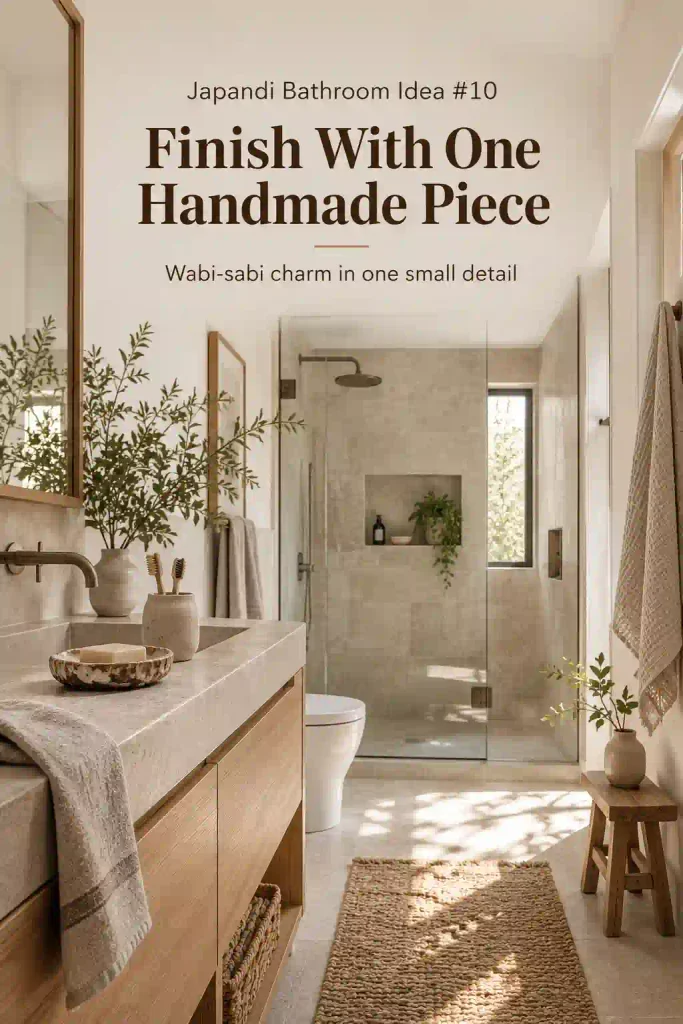
This is the wabi-sabi side of Japandi, the idea that a little imperfection is beautiful. Choose a ceramic soap dish with an uneven glaze, a clay cup for your toothbrush, or a small wood tray with visible grain.
Craft fairs and local potters sell pieces like these for $12 to $30. These small, human touches stop a clean bathroom from feeling like a showroom. They tell people a real person lives here.
A Few Simple Rules to Remember
Keep your palette to three colors at most: two light neutrals and one deeper accent. Own less, but choose better. One good set of towels beats five mismatched ones. Leave some empty wall and counter space, because that open space is part of the design. And repeat your finishes, matching hooks, frames, and faucet in black, brass, or wood so everything feels planned.
Common Questions About Japandi Bathrooms
What is Japandi style?
It blends Japanese minimalism with Scandinavian coziness, using clean lines, natural wood, soft colors, and handmade pieces.
Can I do this if I rent?
Yes. Towels, trays, plants, baskets, a leaning mirror, and plug-in lights all move with you. Use removable hooks for the rest.
How much will it cost?
Most people can make a real difference for $100 to $300 by choosing four or five ideas. Lighting, towels, and decluttering are the best places to start.
Small Doesn’t Have to Mean Stressful
A few weeks after I finished, I walked into my bathroom at 6:30 a.m., half asleep, and stopped. The counter was clear except for a small wooden tray. The sconce threw a soft, golden light, and a single eucalyptus stem leaned in a clay cup by the sink.
The room was still 5 by 8. It hadn’t grown an inch. But I felt like I finally had space to breathe, and I felt a little proud, too.
That’s what I hope you get from these ideas. A tiny room can be a quiet one if you give it the chance. You don’t need a bigger house or a big budget, just a few thoughtful choices.
So tonight, look around and find the one thing that makes you feel tense. Move it, hide it, or let it go. Then see how the room feels tomorrow morning.