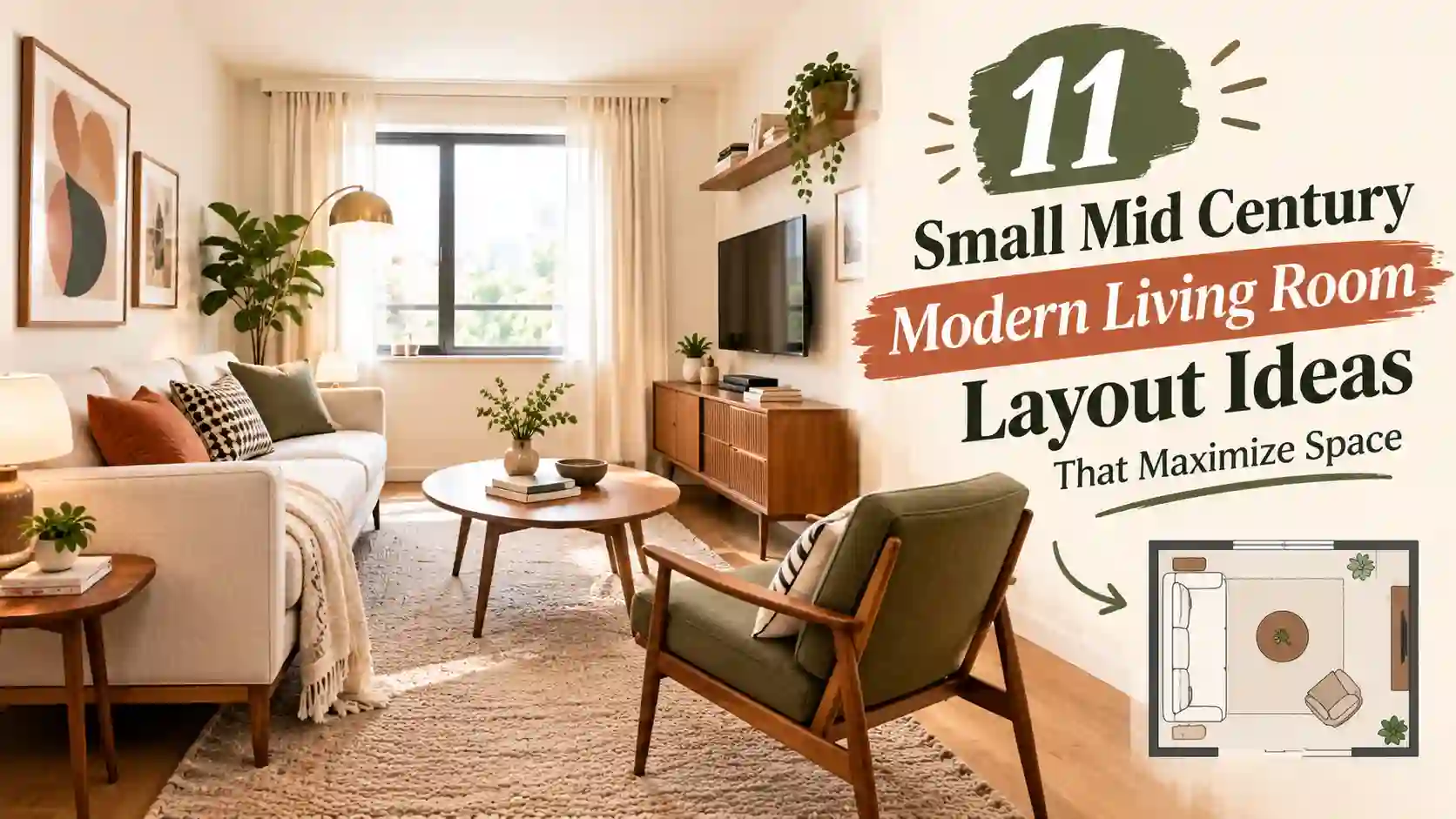
My grandfather’s 1957 ranch house had a living room that measured 11 by 13 feet. It held a sofa, two chairs, a credenza, a record player, and six grandchildren on Sunday afternoons. It never felt crowded.
Years later, I bought my own mid-century sofa and shoved it against a wall. Suddenly the room felt like a hallway with a TV in it. That’s when I understood that my grandfather hadn’t owned a magic room. He’d owned a smart layout.
So let’s walk through it together, from the front door to the far window. Each stop is a layout idea I borrowed from his house and tested in mine.
At the Front Door
Keep the Entry Path Clear
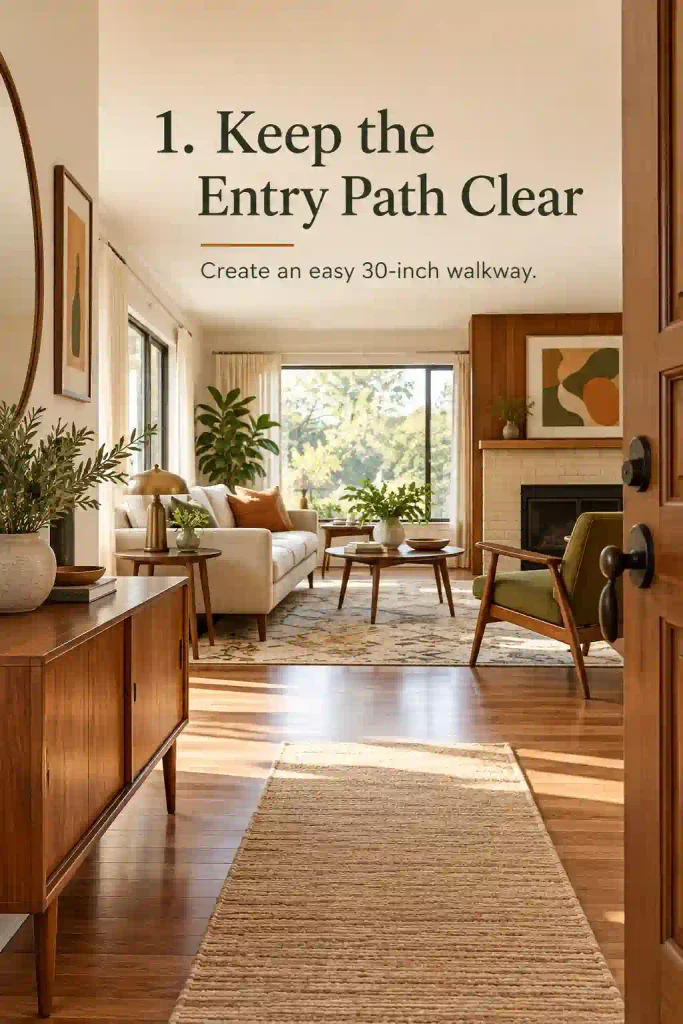
Before anything else, make sure you can walk from the door to the main seating area in a straight, easy line. Aim for about 30 inches of open floor. If you have to turn sideways at any point, something needs to move.
Mid-century rooms feel generous because the path stays open. Walk it with a laundry basket in your arms. If the basket fits, you’re fine.
Tape It Out First

Here’s the tip that saved my back. Use painter’s tape to mark where the sofa, rug, and credenza will sit. Live with the tape for a day, then decide.
Painter’s tape costs about $5. Moving a sofa twice costs a Saturday and a lot of grumbling.
In the Middle of the Room
Pull the Sofa Off the Wall
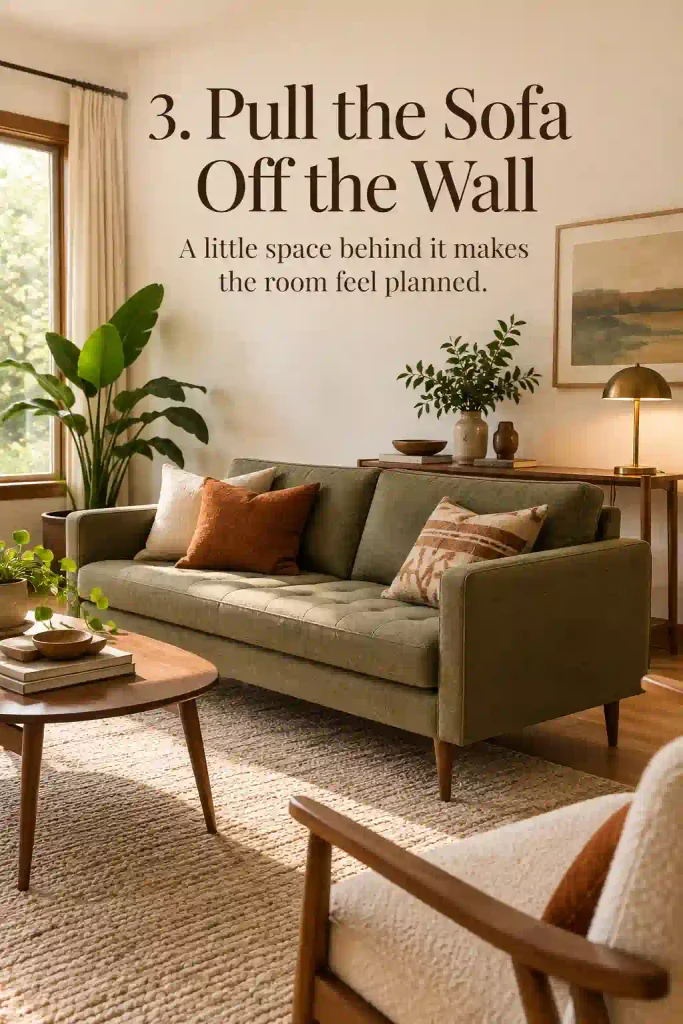
This feels backward, but it works. Slide the sofa out six to twelve inches, or float it completely if the room allows. A little space behind it makes the room look planned, and it gives you a spot for a narrow console or a lamp.
A low sofa with tapered wooden legs, around 72 to 80 inches wide, suits a small room best. You can see floor underneath, and that makes everything feel lighter. New ones start around $600, and secondhand ones go for much less.
Choose Slim, Leggy Furniture
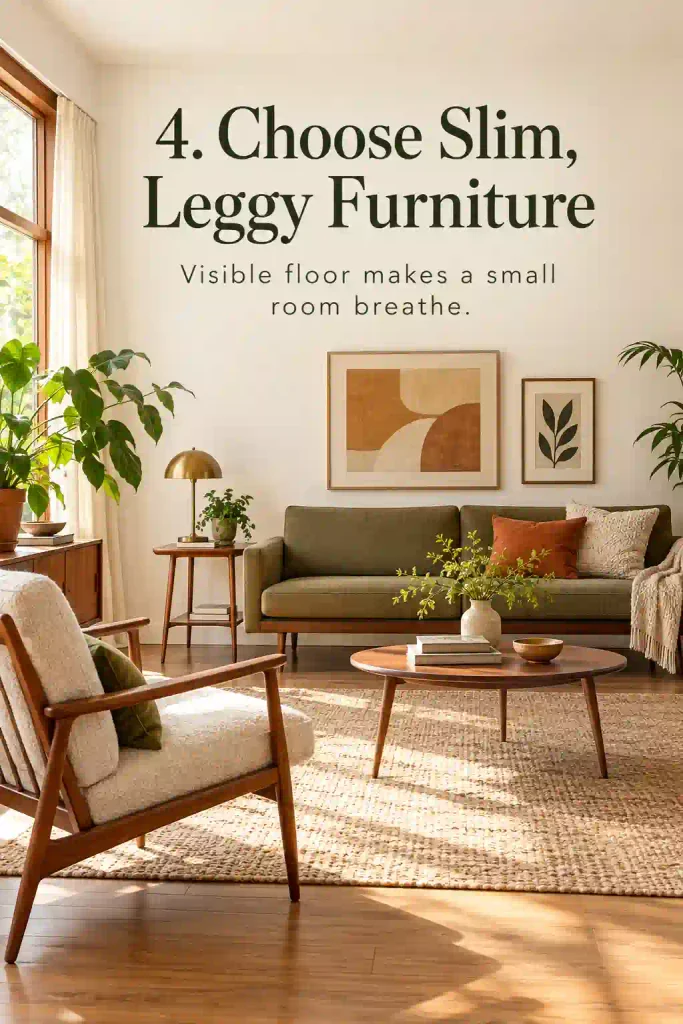
Look under your furniture. If you can see the floor, the room breathes. Mid-century pieces sit on slim legs, which is the whole secret of the style in a tight space.
Swap any chunky skirted chair for one with open wooden arms and a slim frame. Online marketplaces often have vintage chairs for $60 to $200.
Use a Round or Oval Coffee Table
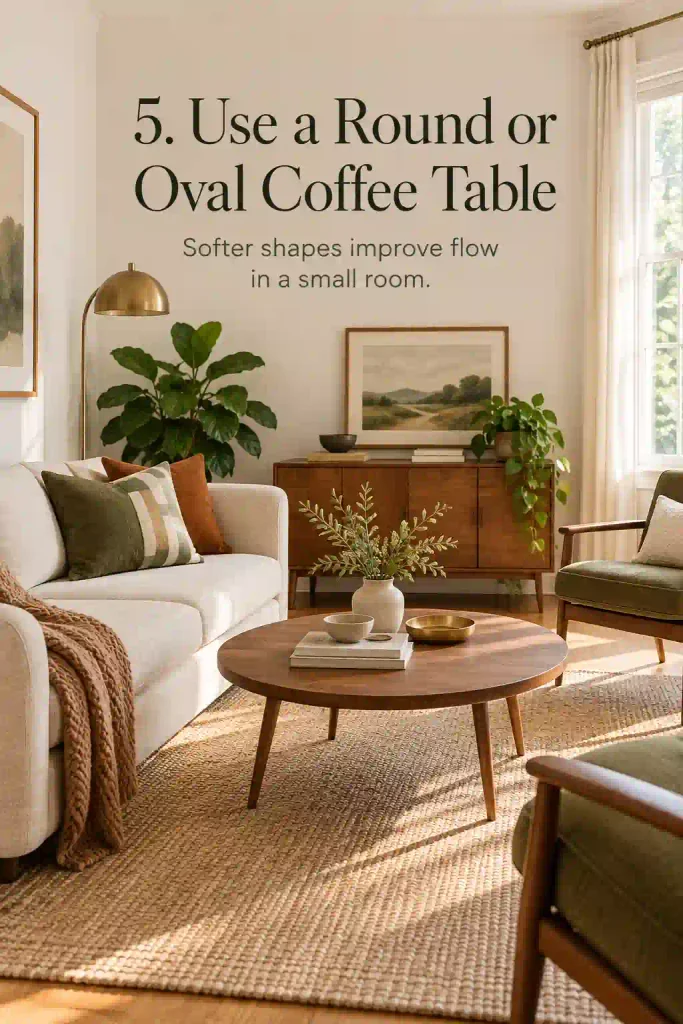
Sharp corners are rough on shins and traffic paths. A round walnut or teak table lets people slide past, and it echoes that soft, curved mid-century look. Leave 14 to 18 inches between the table and the sofa.
If you can, choose a nesting pair. Pull them apart when friends come over, and tuck them together when you need floor space for a game or a yoga mat.
Angle One Chair
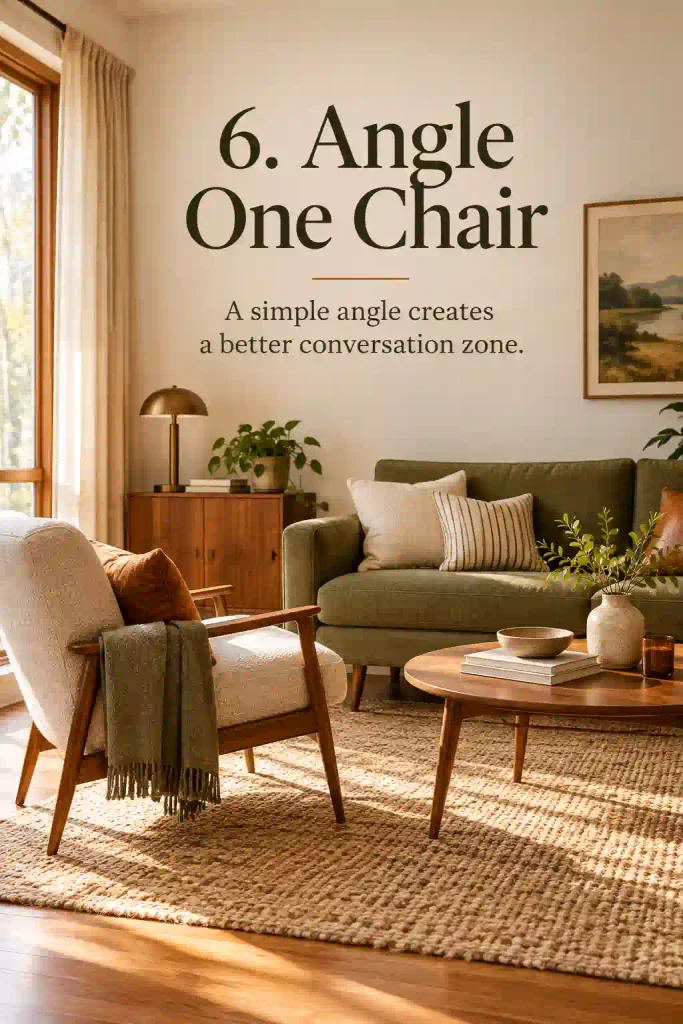
Square rooms get boring fast. Turn one armchair about 30 degrees toward the sofa, and the room feels like a conversation instead of a waiting area. The angle also opens a path to the window.
It costs nothing, and it takes about ten seconds. Guests always seem to pick that chair first.
Along the Walls
Let the Credenza Do Double Duty
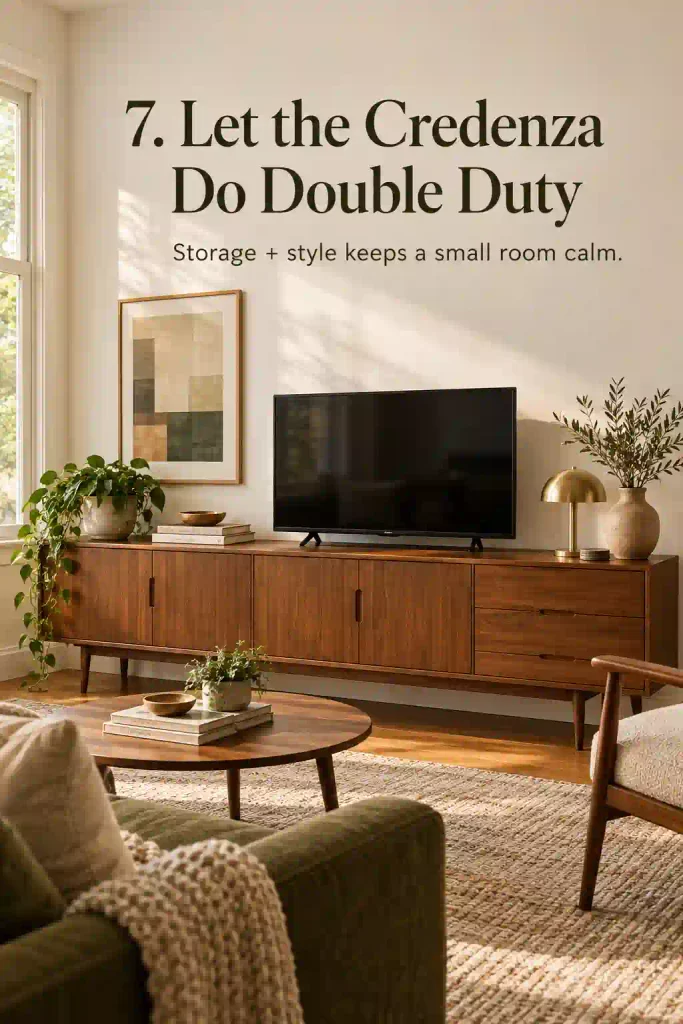
A low, long credenza is the quiet hero of the style. It holds the TV, the records, and the blankets, and it keeps its profile under three feet tall so the wall behind it stays open. Doors or drawers hide clutter, and clutter is what shrinks a small room.
Check estate sales and thrift stores. Solid wood credenzas often sell for $100 to $300, and a little furniture oil brings the finish back.
Go Vertical With Slim Shelves
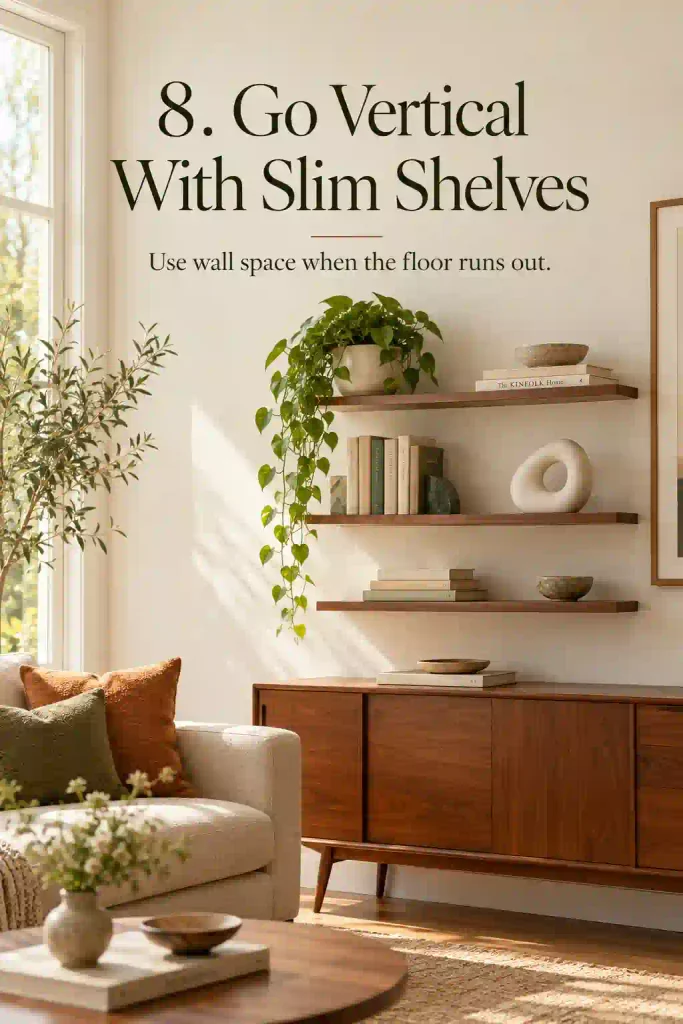
When the floor runs out, use the wall. Install a floating shelf or a narrow wall-mounted unit above the credenza. Keep it styled lightly, with books, one plant, and one sculptural piece.
Anchor everything into studs. Shelves run $25 to $80, and they draw the eye upward, which makes the ceiling feel taller.
Hang Curtains High and Light
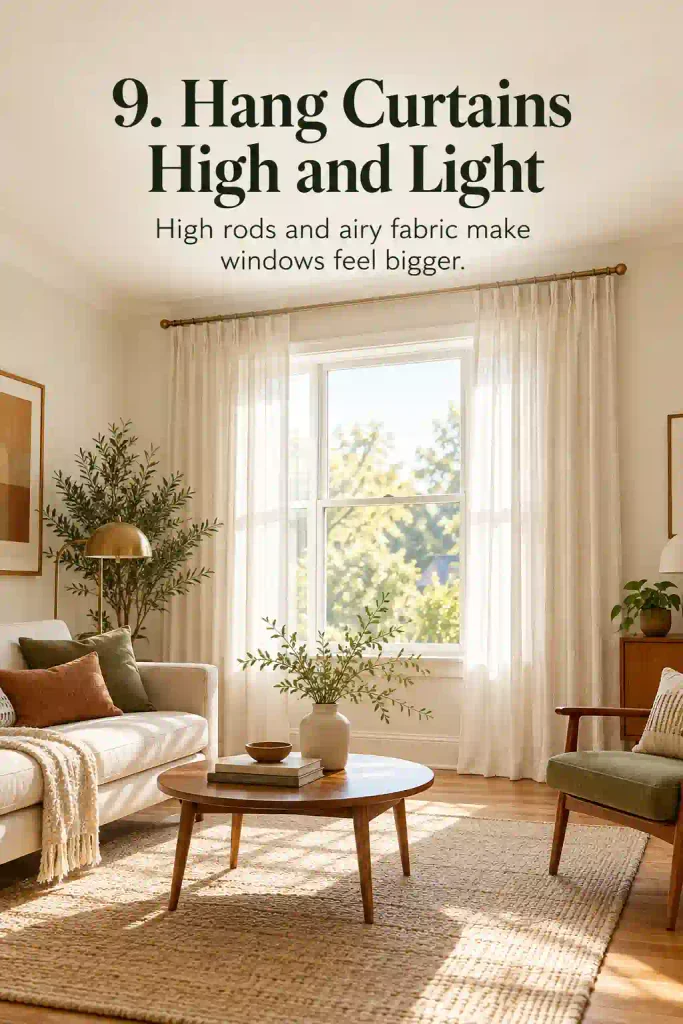
Mount the rod a few inches below the ceiling and let simple linen panels fall to the floor. Mid-century homes were built around big windows, so show yours off. Light fabric lets the sun glow through instead of blocking it.
Two panels and a rod cost about $50 to $90. It’s one of the cheapest ways to make a small room feel open.
By the Window
Add a Corner Lamp and a Plant
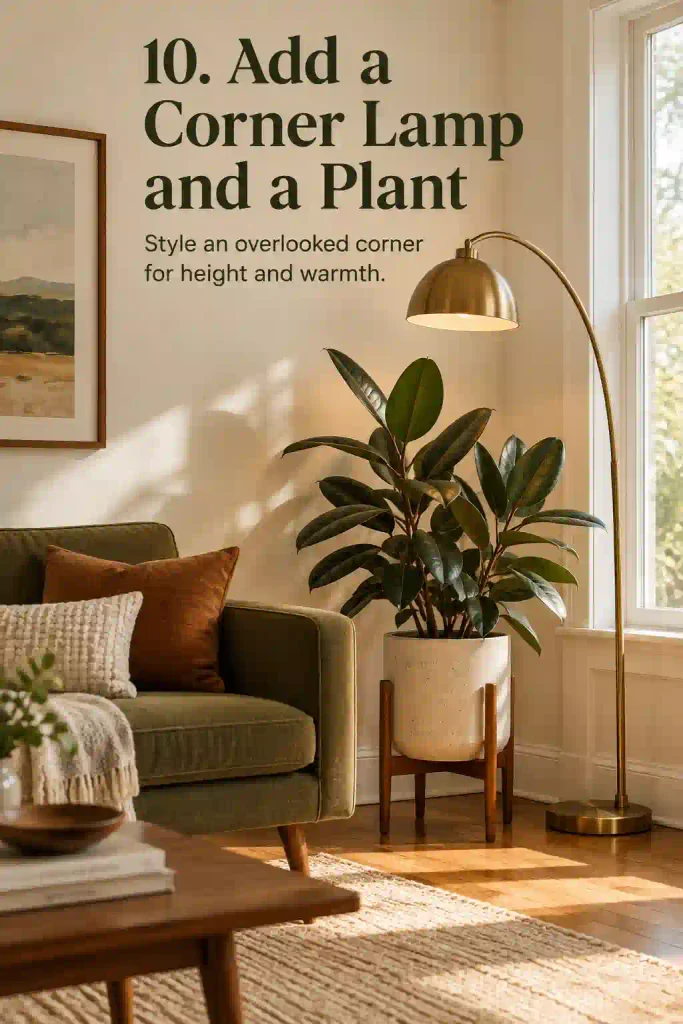
Corners are the most forgotten spot in a small room, and they’re perfect for an arc lamp or a tall plant. An arc floor lamp over the sofa frees up the end table and lights the room from above, which feels right for this era.
Arc lamps start around $40 for reproductions. Pair one with a rubber plant or snake plant in a ceramic pot on a slim wooden stand.
Lay a Rug That Pulls It All Together
Finally, anchor the room with a rug. In a small living room, an 5×8 usually works, with at least the front legs of the sofa and chairs resting on it. A rug that’s too small makes furniture look like it’s floating.
Choose a muted geometric pattern or a solid in oatmeal, mustard, or olive. A good rug costs $90 to $250, and it ties every piece in the room into one calm picture.
Quick Tips Before You Move a Thing
Measure twice, and then measure the doorway, too. Keep a clear 30 inches for walkways. Stay within three colors, like warm cream, walnut, and one bold accent. And don’t buy it all at once. A mid-century room looks best when it’s built piece by piece.
Quick Questions
Can I fit a sectional in a small mid-century room?
Sometimes. A small, low-profile L-shaped one can work if it has slim legs and you leave a clear path. Tape it out first.
Where does the TV go?
On the credenza or mounted on the wall. Either keeps sightlines clean.
How much will it cost?
Most people can rework a layout for $100 to $400, mostly on a rug, a lamp, and a thrifted piece or two.
Can renters try this?
Yes. Layout costs nothing, and lamps, rugs, and furniture all move with you.
The Last Stop
When we sold my grandfather’s house, we all stood in that little living room one more time. The furniture was gone, and the room looked even smaller without it. I could still see the sofa pulled out from the wall, the credenza under the window, and the way afternoon light fell across the floor.
My aunt laughed and said, “How did we all fit in here?”
I thought about it for a long time afterward. We fit because every piece had a place, and the path between them stayed open. Nobody ever felt squeezed, because the room was arranged for people, not just furniture.
That’s what I hope you take from this tour. A small room doesn’t have to feel small. It needs a few clear choices and a little patience.
So grab some painter’s tape this weekend and mark out one change. Pull the sofa out, tilt a chair, or lift a lamp into the corner. Then stand at the front door and look in.
I think you’ll find there was more room all along.