
I had saved a folder of Japandi bathrooms on my phone for months. Pale wood, soft plaster walls, one perfect ceramic bowl on a shelf. The contractor was kind about it. “That’s about right for that look,” he said. I thanked him, hung up, and sat on the edge of my tub looking at the beige tile and the chrome faucet from 1998.
Then I did something I’m glad I did. I stopped looking at the price of those photos and started looking at what was in them. Not much, really. Quiet colors, natural materials, soft light, and a lot of empty space.
I couldn’t buy the $18,400 bathroom, but I could swap each expensive piece for a cheaper one that did the same job. Here’s my swap sheet.
Swap 1: Plaster Walls → Warm Matte Paint

- Instead of: hand-troweled plaster, $1,500 and up
- Try: matte or satin bathroom paint, $35 to $55 a gallon
The soft, cloudy walls in those photos come from color more than technique. Choose a warm white, oatmeal, or pale greige with a chalky look. If you want that cloudy feel, limewash-style paint runs $50 to $70 a gallon and brushes on in loose strokes.
Paint a big sample square first and watch it for two days. Warm shades change a lot between morning and lamplight.
Swap 2: Custom Floating Vanity → Your Old Vanity, Repainted
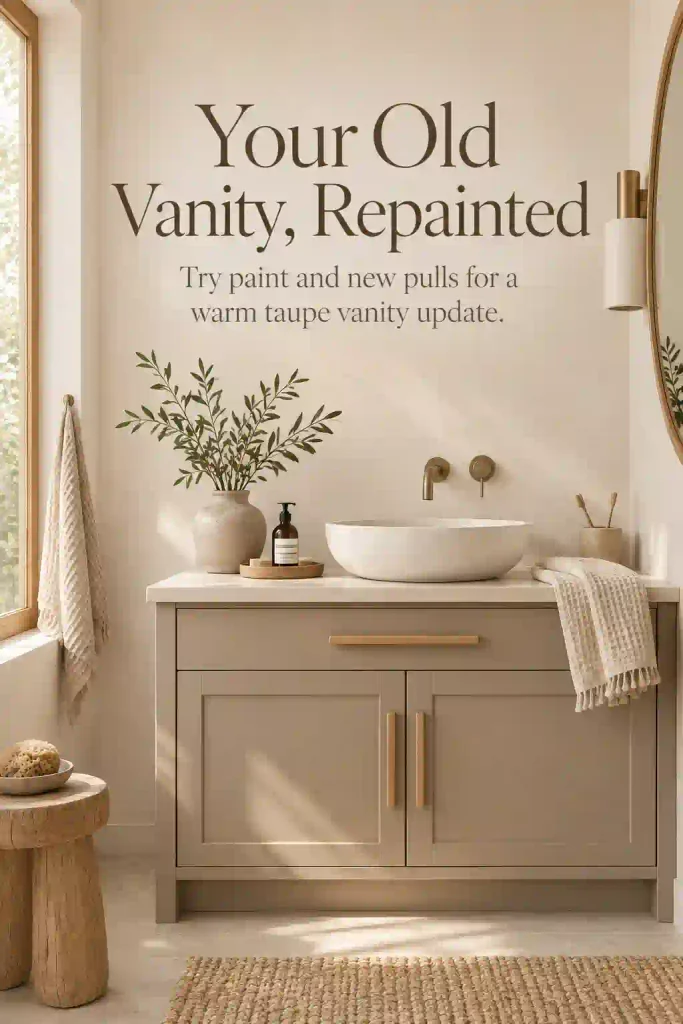
- Instead of: a wall-hung oak vanity, $900 to $2,000
- Try: paint and new pulls, about $40 to $70
My vanity was a builder-grade box. I sanded it lightly, painted it a muted warm taupe, and swapped the knobs for slim wood pulls. It doesn’t float, but it stopped looking like a rental.
Bring an old knob to the store so the screws fit. If you want more visible floor, take off any bulky toe-kick clutter and keep the area underneath clear.
Swap 3: Built-In Teak Bench → A Simple Stool

- Instead of: custom built-in seating, $600 and up
- Try: a teak-style or bamboo stool, $20 to $45
Wood is what keeps Japandi from feeling cold, and a small stool next to the tub does plenty. Use it for a folded towel, a cup of tea, or just sitting.
Mix two wood tones if you have them. A little variety looks collected instead of staged.
Swap 4: Handmade Tile → Peel-and-Stick
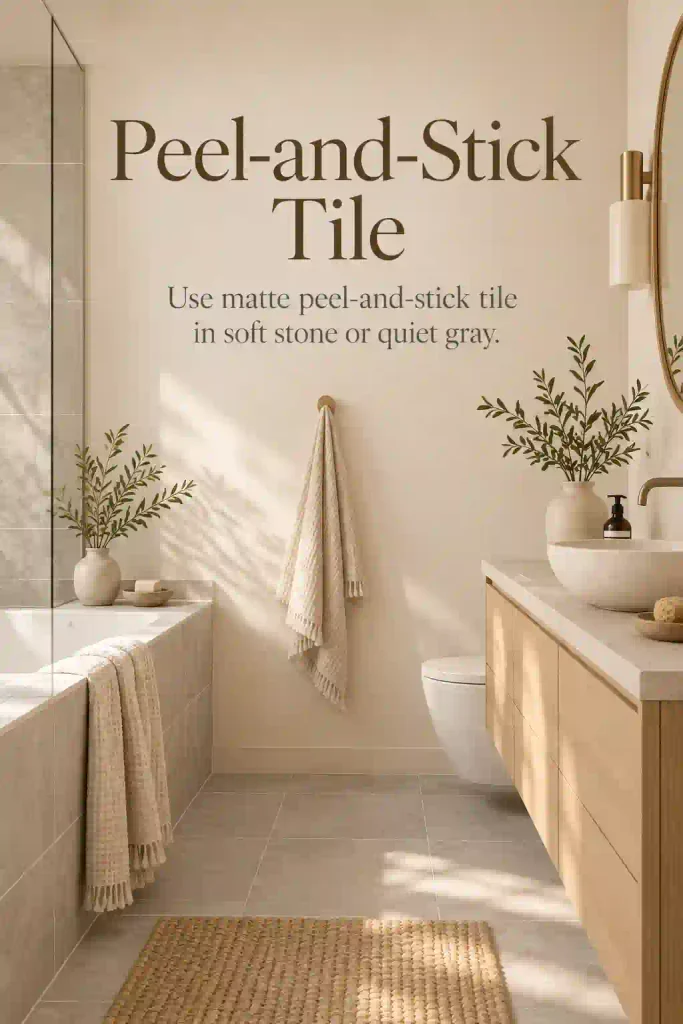
- Instead of: zellige or stone tile, $15 or more per square foot, plus labor
- Try: matte peel-and-stick tile in soft gray or stone, $50 to $120
Pick a quiet color with no loud pattern. Clean the surface well and line up the first row carefully, since everything after follows it. A small bathroom floor or backsplash fits into an afternoon.
If you rent, test one hidden corner first.
Swap 5: Designer Faucet → Plain Matte Finish
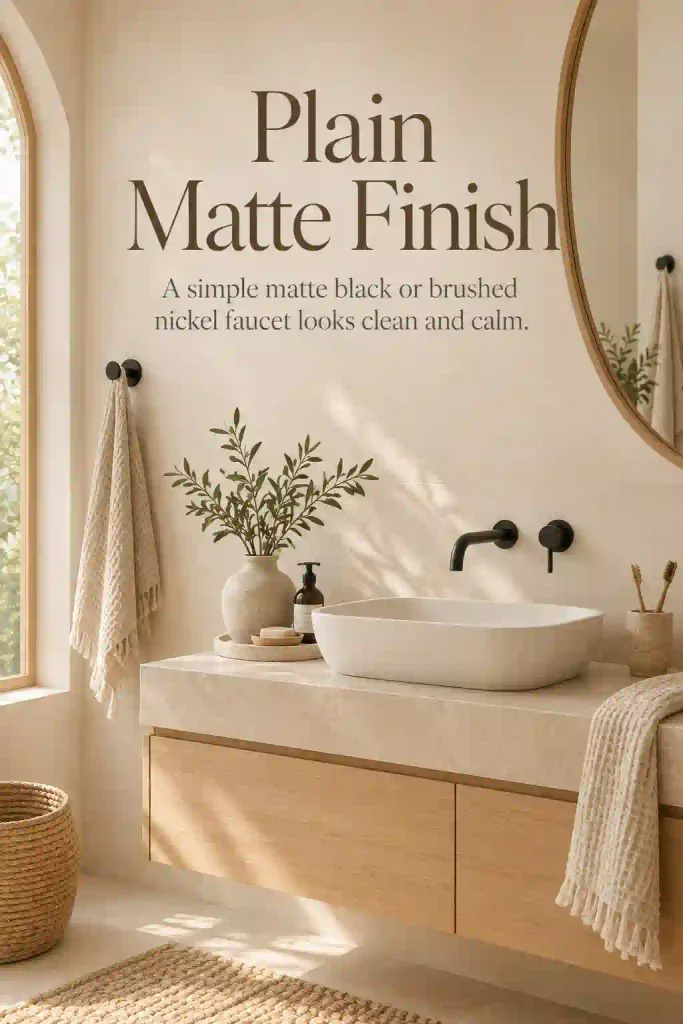
- Instead of: a $400 faucet
- Try: a simple matte black or brushed nickel faucet, $70 to $120
Japandi cares about shape and finish, not brand names. Choose clean lines and one finish, then repeat it on your towel hooks and pulls. Matching metals look planned, and planned looks expensive.
Swap 6: Custom Mirror → A Thrifted Round One
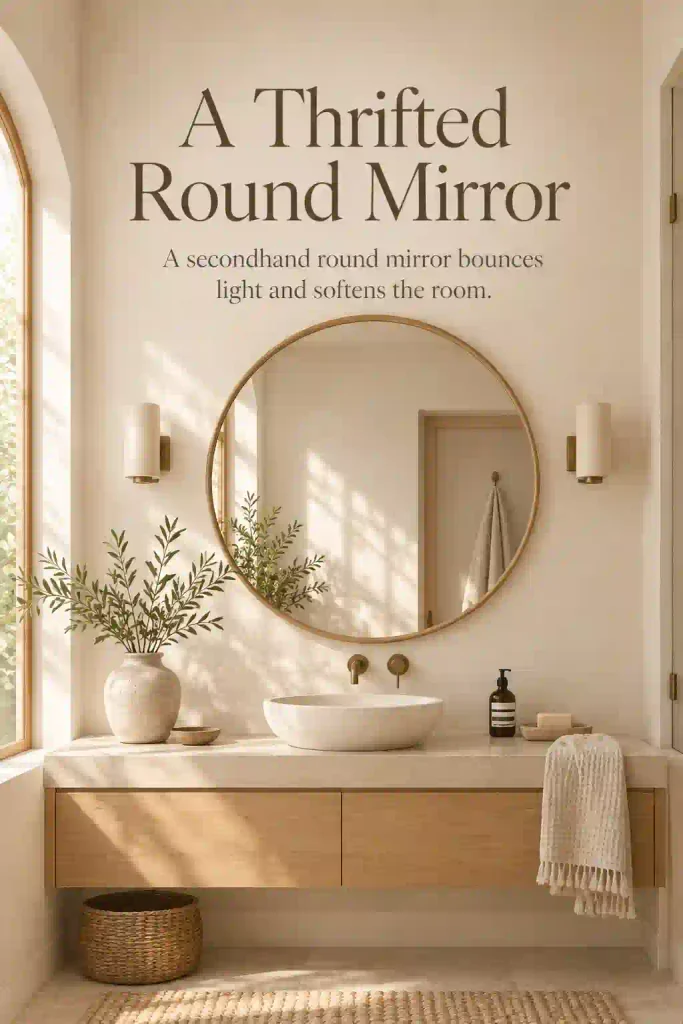
- Instead of: a custom oak-framed mirror, $300 to $600
- Try: a secondhand round or soft-cornered mirror, $30 to $80
Check thrift stores and online marketplaces. A wood or matte black frame suits the style, and a can of spray paint fixes one that doesn’t match. In a small room, go bigger than you think. A large mirror bounces light and makes the walls feel farther apart.
Swap 7: Designer Lighting → Paper and Warm Bulbs

- Instead of: art-glass sconces or a sculpted pendant, $200 and up
- Try: a paper lantern shade and warm bulbs, $15 to $40
Harsh bulbs ruin even the prettiest bathroom. Swap in bulbs around 2700K and slip a round paper shade over your existing ceiling fixture. Many go on in minutes, and the light turns soft and scattered, like evening.
If you can add one plug-in sconce beside the mirror, even better. Light from the side is kind to faces.
Swap 8: Luxury Linen → Plain Cotton in One Color
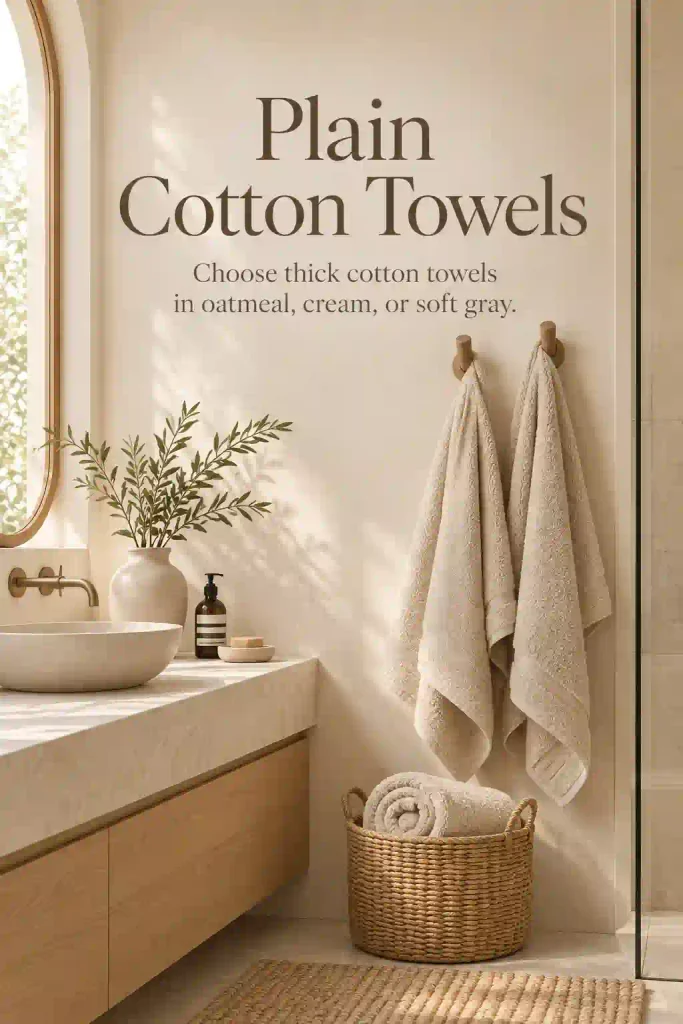
- Instead of: imported waffle-weave towels, $120 a set
- Try: thick cotton towels in oatmeal, cream, or soft gray, $40 to $70
Texture matters more than the label. Choose one calm color, roll one towel in a basket, and hang one on a plain wood or black hook. Skip patterns and logos.
Swap 9: Artisan Ceramic Set → One Good Piece
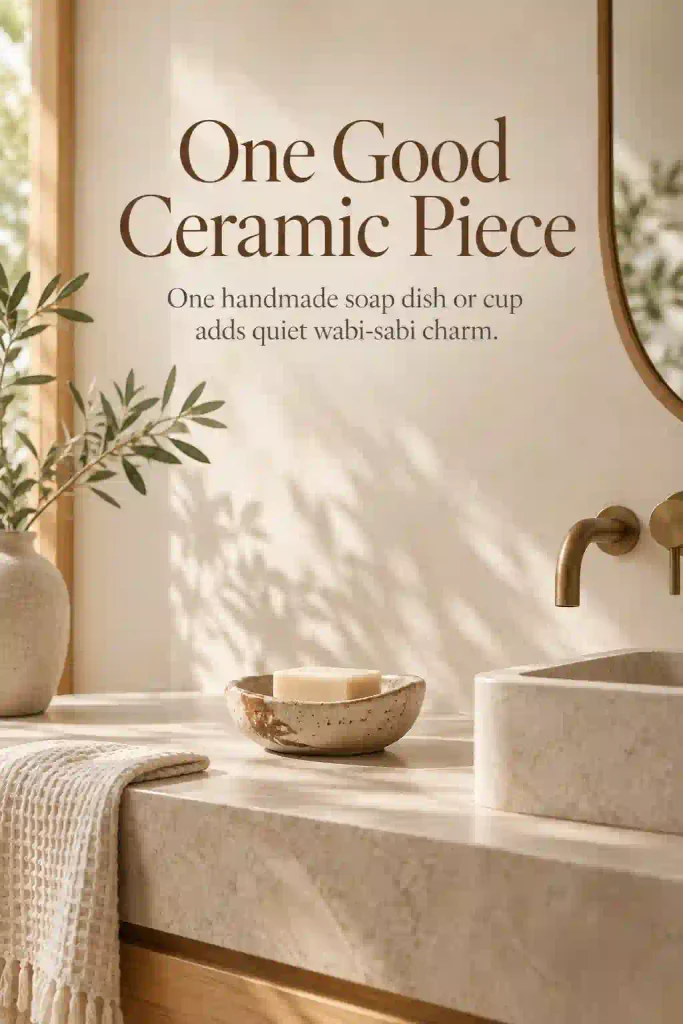
- Instead of: a matched handmade set, $150 and up
- Try: one handmade soap dish or cup from a craft fair or local potter, $12 to $30
This is the wabi-sabi part of Japandi: the idea that a little imperfection is beautiful. An uneven glaze or a slightly lopsided cup makes the room feel human. One piece is plenty. Leave space around it.
Swap 10: Bonsai → A Branch in a Vase

- Instead of: a mature bonsai tree, $100 and up
- Try: a few eucalyptus stems, a pothos, or a bare branch from outside, $0 to $20
Nature is the heart of this style, and it doesn’t have to cost much. A single stem in a small clay vase beats a crowded shelf of plants. Bathrooms are humid, so a pothos will usually do well, too.
The Math
| Version | What you get | Cost |
| Contractor quote | Full remodel | $18,400 |
| The swap sheet, all ten | Same calm, warm look | About $450 to $750 |
| The swap sheet, five picks | Paint, mirror, lighting, towels, one ceramic | About $150 to $250 |
My own total came to $312, because I skipped the tile.
Rules I Kept Taped to the Mirror
- Stay in three colors. Two warm neutrals and one deeper tone, like charcoal or olive, are plenty.
- Repeat your finish. Matching hooks, faucet, and frames make a room look planned.
- Leave empty space. Bare counter and wall are part of the design, not a gap to fill.
- Own less, choose better. One good towel set beats five mismatched ones.
Quick Questions
What is Japandi style?
It blends Japanese minimalism with Scandinavian coziness: clean lines, natural wood, soft colors, and handmade touches.
Can I do this if I rent?
Yes. Towels, stools, mirrors, plants, ceramics, plug-in lights, and paper shades all move with you.
Where should I start?
Start with lighting and towels. They cost the least and change the feel fastest.
Will it work in a tiny bathroom?
It works especially well. Light colors, a big mirror, and a clear counter do most of the work.
The Compliment I Didn’t Expect
My father-in-law is not a man who hands out praise. He once reviewed a steak by saying, “It was food.”
A few weeks after I finished, he used our bathroom during a visit. He was in there a little longer than usual. When he came out, he stood in the hallway drying his hands on the oatmeal towel and said, one word at a time, “That room is quiet.”
I didn’t tell him about the swap sheet or the $312. I just smiled, because he was right, and because it was the nicest thing he’d ever said about anything in my house.
That’s what the photos in my folder were really selling. It was never the plaster or the teak. It was the feeling that a room could slow you down. You don’t need $18,400 for that. You need a warm bulb, a few quiet choices, and the patience to take things away.
So pick one swap this weekend, maybe the paper shade or the thrifted mirror. Then turn off the overhead light and stand there for a minute.
See if your bathroom gets a little quieter, too.