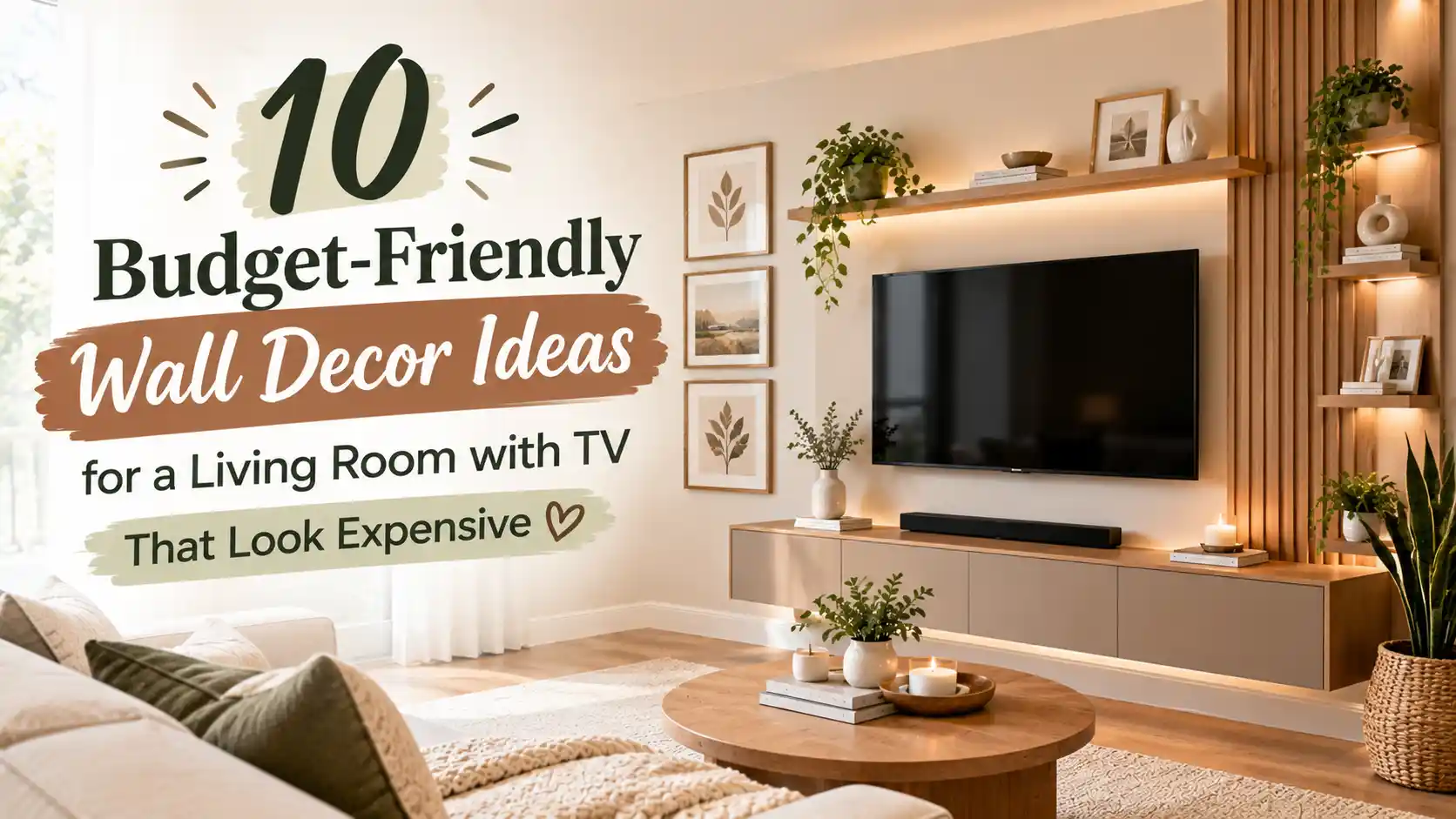
Game day, play by play. Grab a snack. The wall is about to get a makeover.
Pregame
Every Sunday last fall, my husband Dan and I sat on the couch and stared at the same thing. It wasn’t the game. It was the wall around the game.
A giant black rectangle floated in the middle of a beige wall, with three cords hanging underneath like spaghetti. Dan called it “the hole.” I called it “the reason I don’t invite my sister over.” We’d spent real money on that TV, and the wall made it look like an afterthought.
We had about $250 and four free Saturdays. Here’s how the game went.
First Quarter: Fix the Wall Itself
Paint the TV Wall a Deep Color
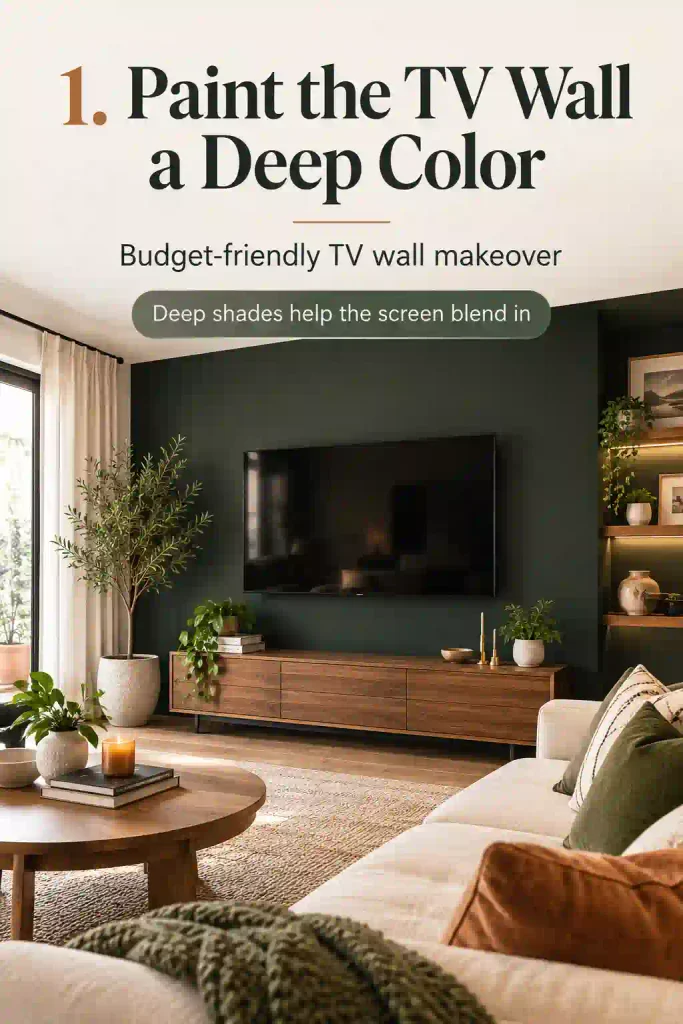
Cost: $35 to $55 | Time: an afternoon
This was the play that changed everything. A black screen against a light wall sticks out like a sore thumb. A deep, moody color, like charcoal, forest green, or navy, lets the TV blend in so it looks built in.
Use a matte or eggshell finish, which hides flaws and reduces glare. Test a sample first and look at it in the evening, since dark colors change a lot under lamplight. Our charcoal wall made Dan say, “Oh. It disappeared.”
Add a Simple Wood Slat Panel
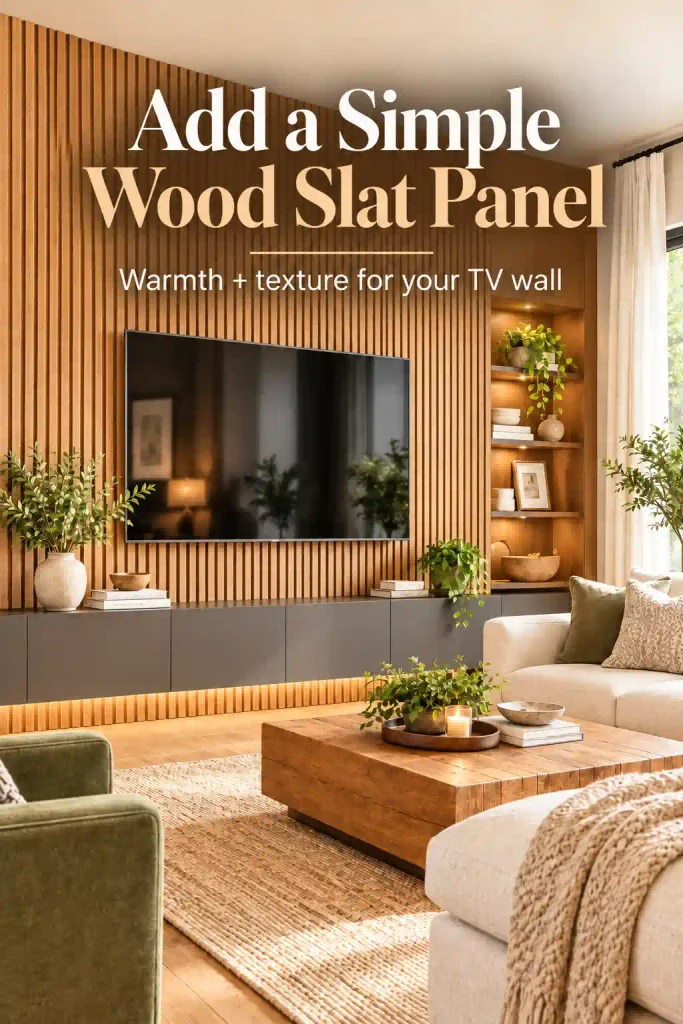
Cost: $60 to $120 | Time: a weekend
Thin wood slats behind or around the TV are the “wow” move in most expensive-looking living rooms. Buy thin strips of pine or lattice from a home store, sand them lightly, stain or paint them, and glue and nail them to the wall.
Space them about half an inch apart, and use a level so they stay straight. The store will cut the pieces to size for you, which saves your back. It adds warmth and depth for less than a nice dinner out.
Build Picture-Frame Molding Boxes
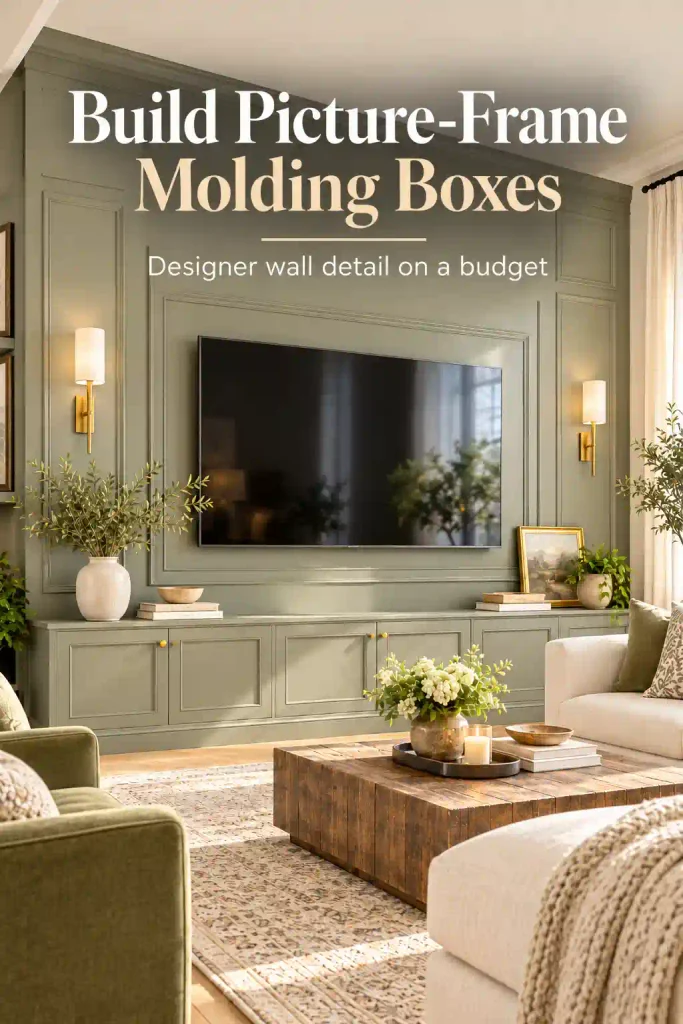
Cost: $40 to $80 | Time: a weekend
Another trick designers love: thin trim pieces glued to the wall in neat rectangles, caulked, and painted the same color as the wall. It looks like old-fashioned paneling and costs next to nothing.
Mark each box with painter’s tape first and step back to check it. Measure twice. The caulk is the part that makes it look professional, so take your time.
Second Quarter: Frame the TV
Add Floating Shelves on Both Sides
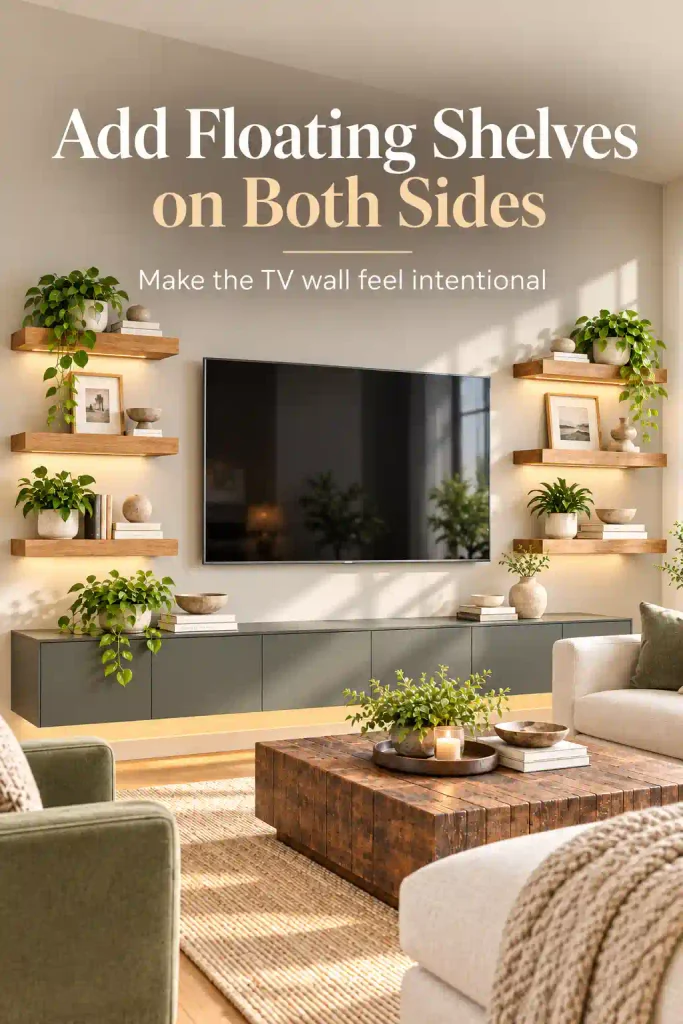
Cost: $40 to $80 for a pair | Time: an hour
Two shelves, one on each side, make the TV feel like the center of a planned wall instead of a lonely screen. Mount them at slightly different heights if you want a relaxed look, or evenly for something cleaner.
Anchor them into studs, since books are heavy. Style each with three items: a plant, a stack of books, and one small piece of art. Leave empty space, because that’s what makes it look like a magazine.
Hang Art Around the TV, Not Over It
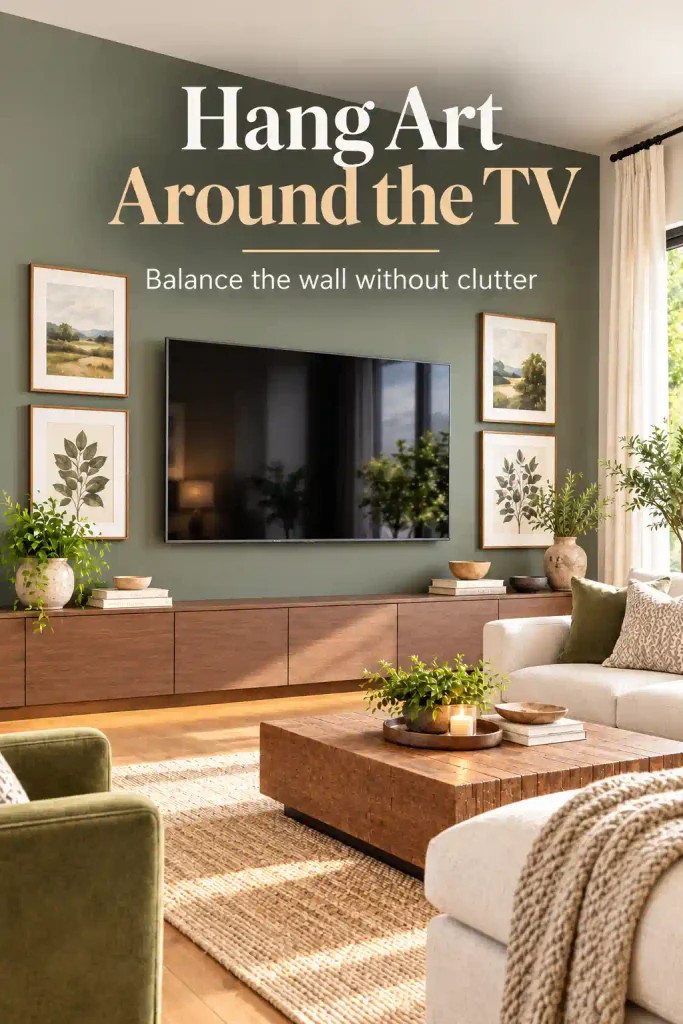
Cost: $30 to $100 | Time: an hour
Hanging art above a TV pulls your eyes up and away from the screen, and it can look cluttered. Hang one or two pieces beside it instead. A tall, narrow print on one side and a medium piece on the other balance the wall nicely.
Cut paper templates and tape them up first. Live with them for a day before you hammer anything. Use frames in one finish, like black or warm wood, so the wall feels tied together.
Halftime: Deal With the Cords
Hide the Wires
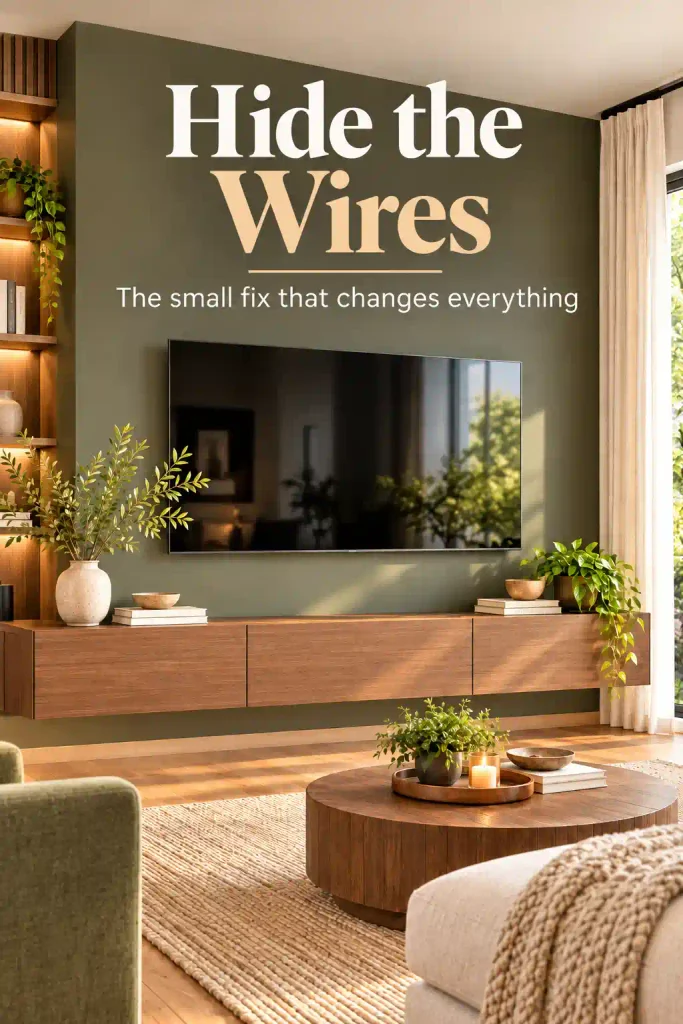
Cost: $15 to $40 | Time: 30 minutes
This is the least glamorous step and the most important. Nothing makes a wall look cheaper than dangling cords. An in-wall cord kit costs about $25 to $40, and a paintable cord cover costs about $15 and sticks right on.
Paint the cover the same color as your wall, and it vanishes. Dan couldn’t believe how much better the wall looked after this one small change. If you rent, use the paintable cover and skip cutting into drywall.
Third Quarter: Layer the Light
Add Bias Lighting Behind the TV
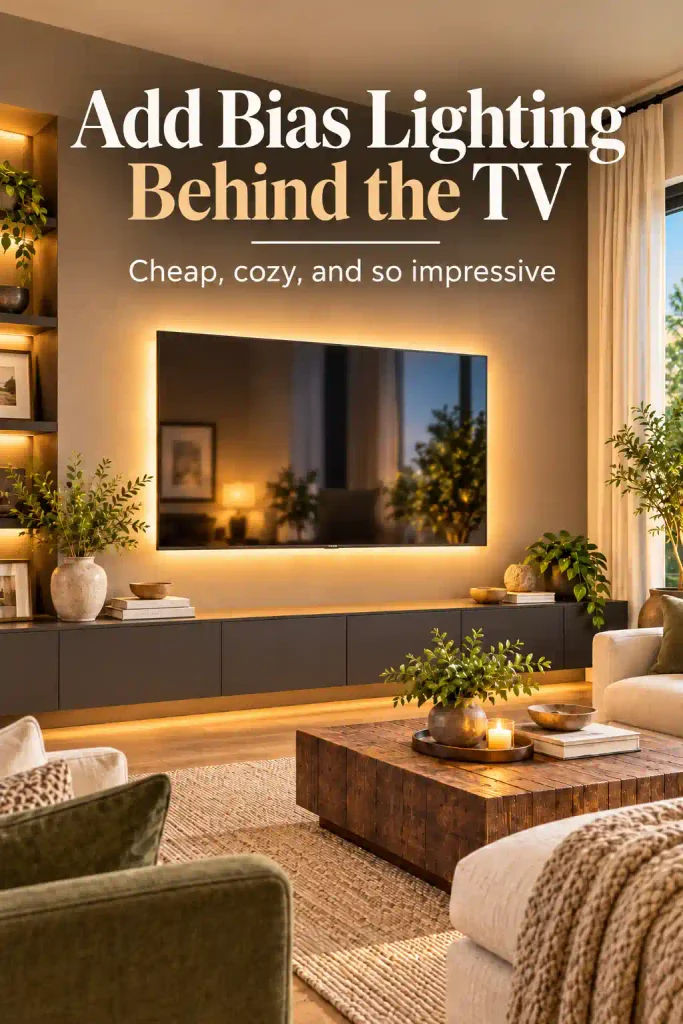
Cost: $15 to $25 | Time: 15 minutes
An LED strip stuck to the back of the TV casts a soft glow on the wall behind it. It looks fancy, and it also eases eye strain during long movie nights. Choose a warm white or a soft amber, not bright colors.
Plug it into the TV’s USB port, and it turns on and off with the screen. This is the cheapest “wow” in the whole article.
Put Plug-In Sconces on Either Side
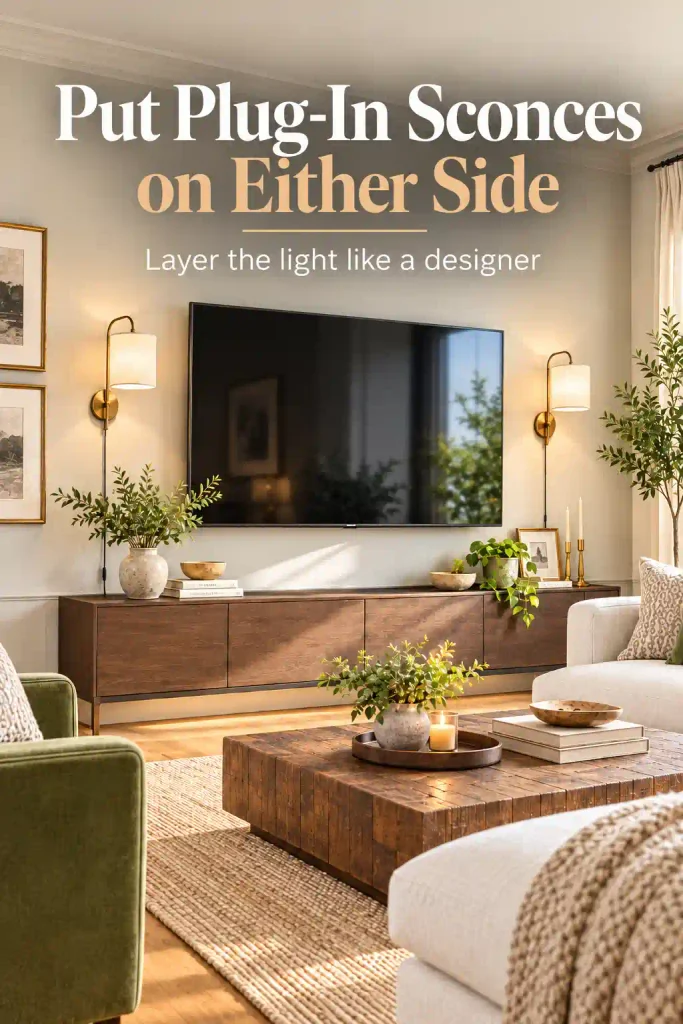
Cost: $30 to $60 each | Time: 30 minutes
Plug-in wall sconces mean no electrician. Mount one on each side of the TV, run the cord down with a paintable cover, and use warm bulbs around 2700K. They add a layered glow that makes the wall feel like a gallery.
Turn off the harsh overhead light at night and watch the room change. Side light is kind to everyone’s faces, including the dog’s.
Fourth Quarter: The Finishing Touches
Style the Console Underneath
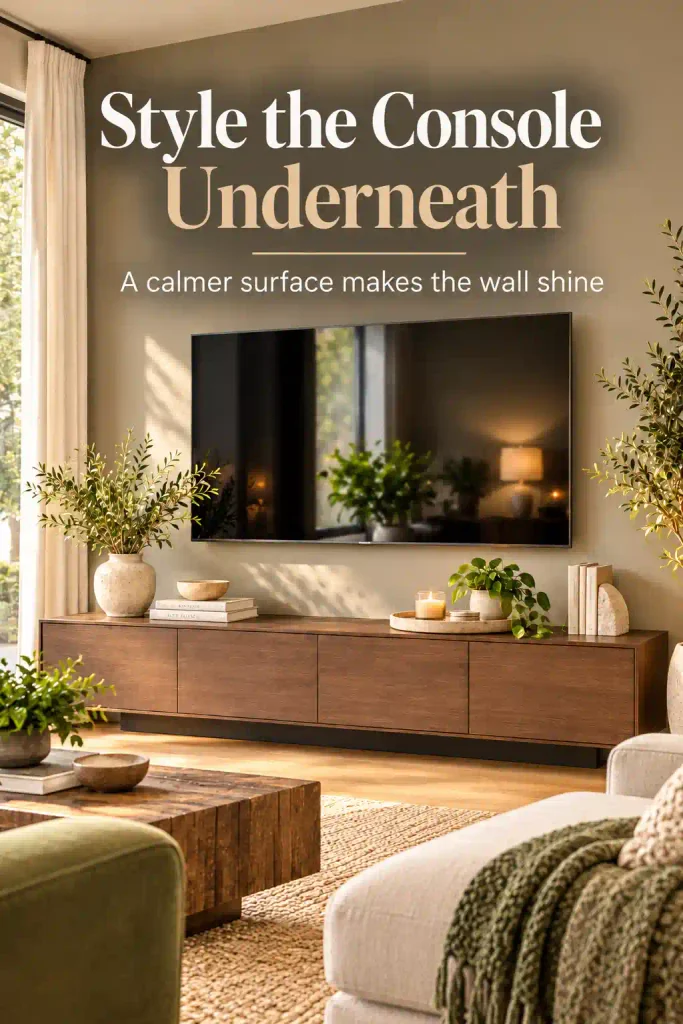
Cost: $20 to $60 | Time: 20 minutes
The console or media stand below the TV completes the picture. Keep it simple. A wood tray, a candle, a small plant, and a pair of books look styled. Hide remotes and game controllers in a basket or a drawer.
A wood or woven tray costs $15 to $25. Keep the top about two-thirds clear. When the surface stays calm, the whole wall looks planned.
Overtime: The Part That Matters Most
Hang One Personal Thing
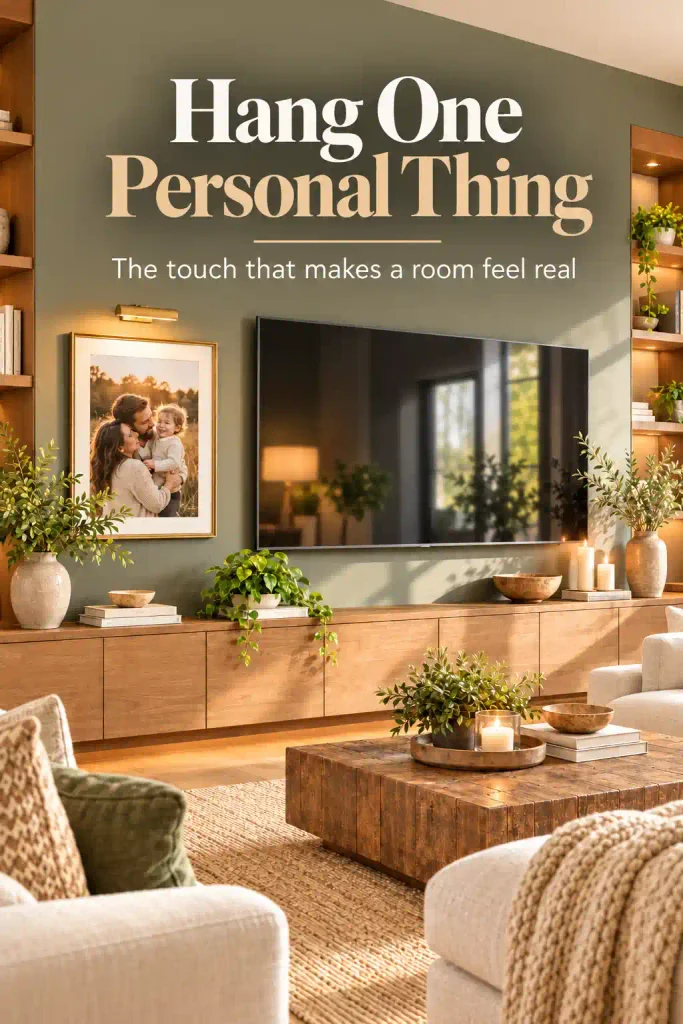
Cost: $0 to $20 | Time: 15 minutes
In overtime, we added a framed photo of Dan’s dad holding a trout in 1987, grinning like a man who owned the lake. We hung it on the left side, in a plain black frame.
It’s the first thing guests ask about. A wall can look expensive and still feel empty, and one real photo fixes that. Choose something that makes you smile, and give it a spot where the light lands.
Coach’s Tips Before You Hang a Thing
Mind the height. The center of your TV should sit near eye level when you’re seated, usually 42 to 48 inches from the floor.
Stay in three colors. Two neutrals and one deeper tone look polished.
Match your finishes. Black, brass, or warm wood, repeated on frames, shelves, and lamps, looks planned.
Take it slow. One project per weekend beats a stressful marathon.
Quick Questions
How much does this cost in total?
Most people spend $150 to $350 by choosing four or five ideas. Paint, cord covers, and lighting give the biggest change per dollar.
Can renters do this?
Yes. Skip the molding and slats, and use paint (with permission), cord covers, plug-in sconces, shelves with removable mounts, and art on leaning ledges.
Should I hang art over the TV?
It usually works better beside it or on a nearby wall. Art over a TV pulls your eyes in two directions.
Will a dark wall make my room feel small?
Not if you keep the lighting warm and the furniture light. Most dark walls make a room feel cozy.
Final Score
A few weeks after we finished, my sister came over for the big game. She walked in, glanced at the wall, and stopped halfway through taking off her coat.
“Wait,” she said. “Did you hire a designer?”
Dan grinned. “Nope. Just a lot of Saturdays.”
I looked at the wall, the deep charcoal, the soft glow behind the screen, the little photo of a man and a trout. I felt something warm go through my chest. That wall used to be the thing we apologized for. Now it was the thing we gathered around.
That’s what I’d like you to take from this. A TV wall doesn’t need a big budget. It needs a little thought, a few quiet choices, and someone willing to start on a Saturday.
So pick one play this weekend. Paint the wall, hide the cords, or frame a photo. Then sit down, turn off the overhead light, and watch what happens.
The best seat in the house might just be yours.