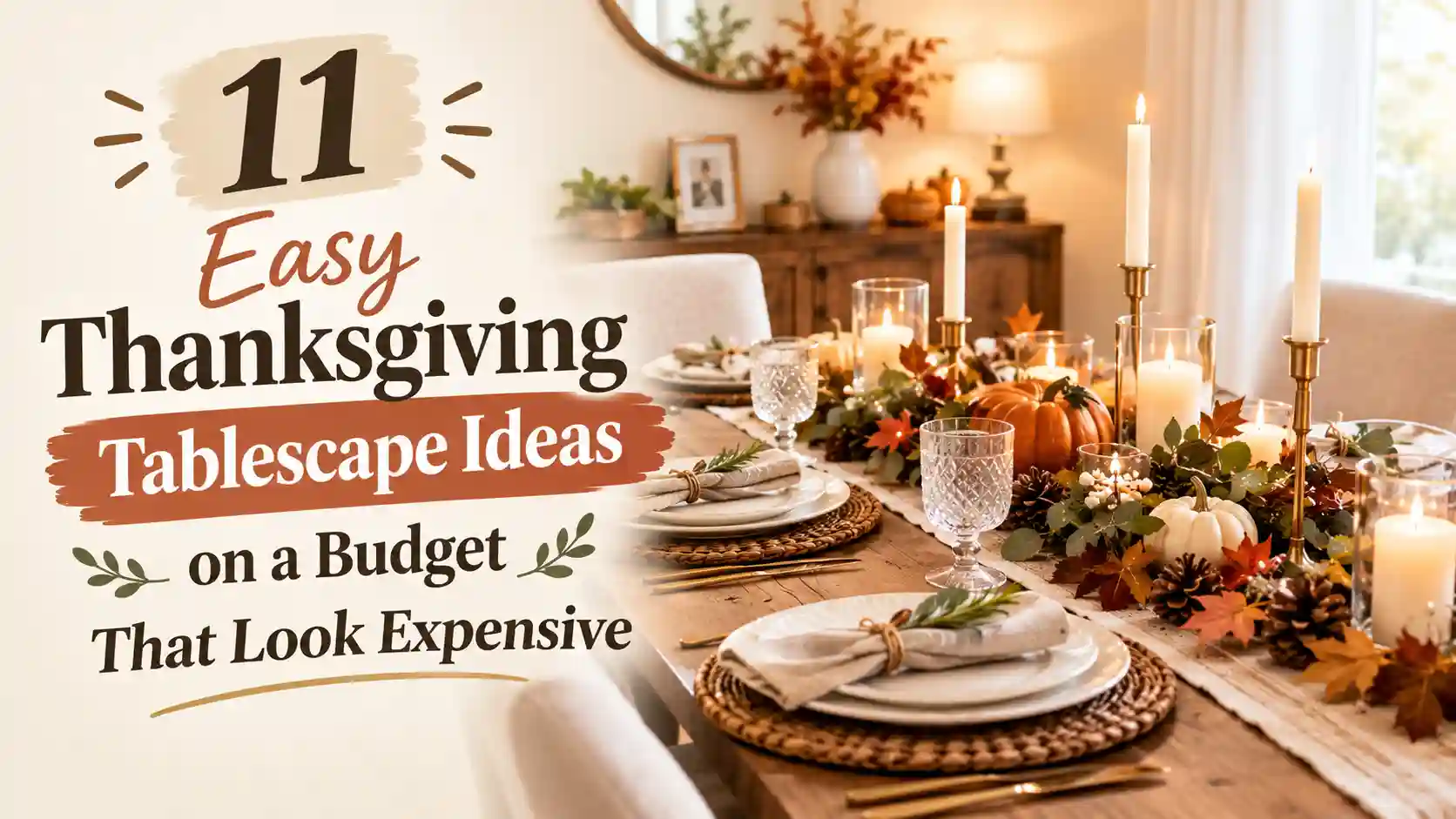
Three phone calls, one panicked Tuesday, and the table that saved Thanksgiving.
Call #1: Monday, 8:12 p.m.
“Mom, I’m hosting Thanksgiving this year,” I told her, trying to sound casual. “Twelve people.”
She went quiet for a second. “Do you have enough chairs?”
“Folding ones. And a card table.”
“Oh, honey,” she said, in the voice that meant she was already worried, and already planning to help.
I had $75 for the table. A turkey was going to eat half my budget, and the rest was going to pie. I didn’t know how to make a mismatched table look like anything but a church basement.
Call #2: Tuesday, 12:30 p.m.
I called my aunt Rosa, who has hosted for forty years and has never once looked stressed. She laughed at me kindly and said, “Get a pen. I’m going to tell you eleven things.”
Here’s what she said.
Hide the Mismatched Tables With One Long Cloth
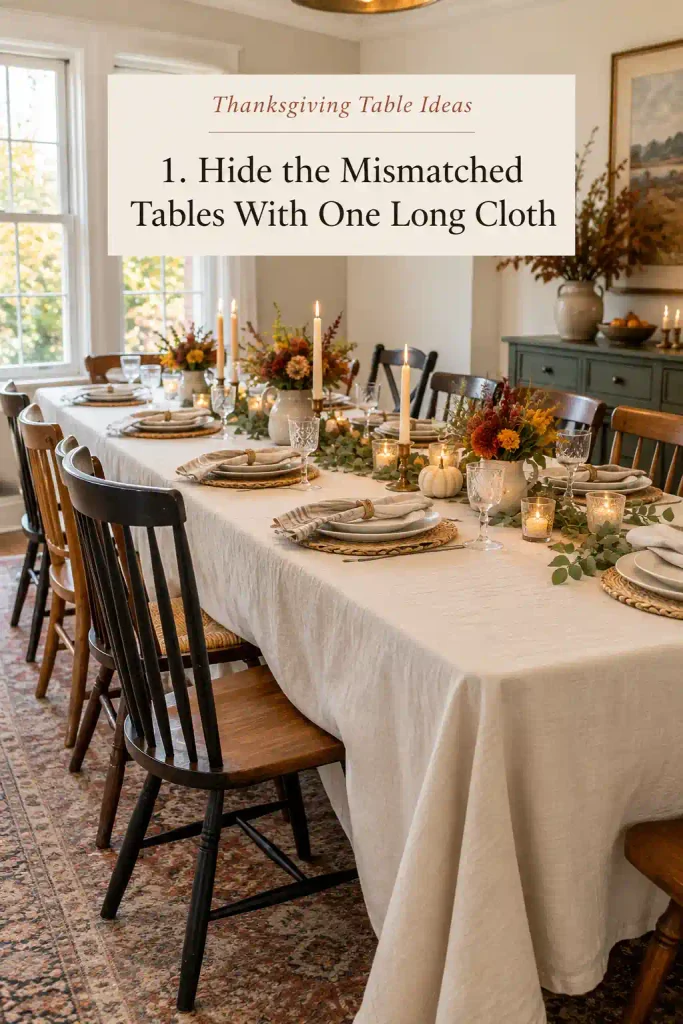
My card table and dining table sat side by side with a gap between them. “A good tablecloth covers a lot of sins,” Rosa said. Lay one long linen or cotton cloth across both, in cream, rust, or deep olive, and the seam disappears.
A tablecloth runs $25 to $60. Linen looks best a little wrinkled, so skip the iron. If you can’t find a long one, two cloths overlapped in the middle with a runner on top will do the job.
Add a Runner in a Contrasting Texture
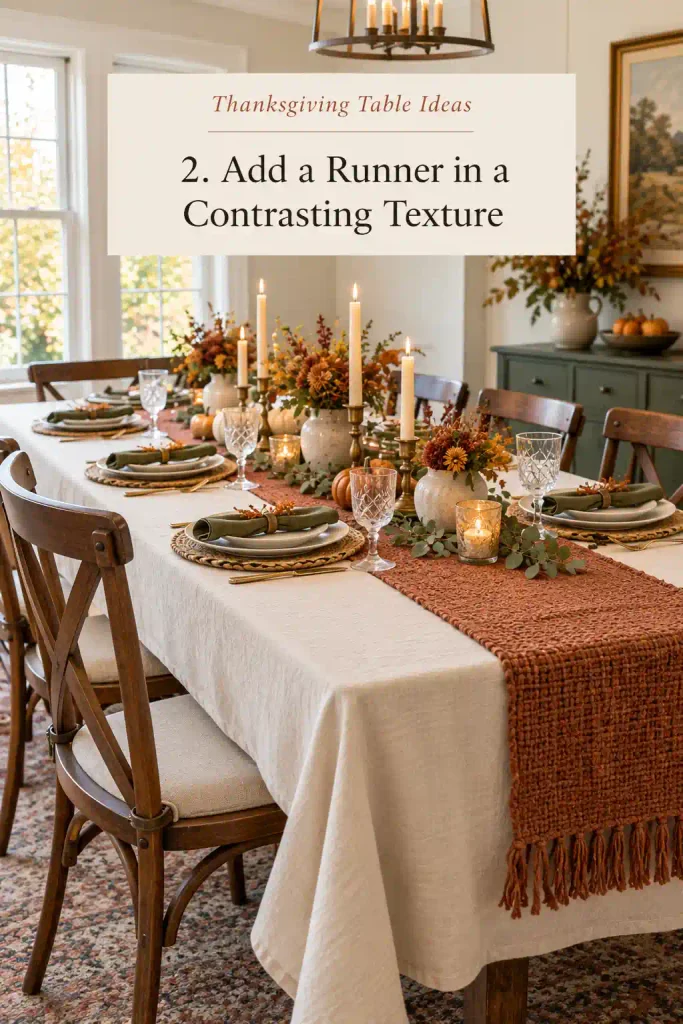
A runner down the center gives the table a spine. Try burlap, a woven cotton, or a soft velvet in a deeper shade than the cloth. Rust on cream, or olive on oatmeal, looks rich.
Runners cost $12 to $35. Lay it slightly off-center if you want a relaxed feel. Rosa swears by this one trick, and I understand why.
Mix Your Plates on Purpose
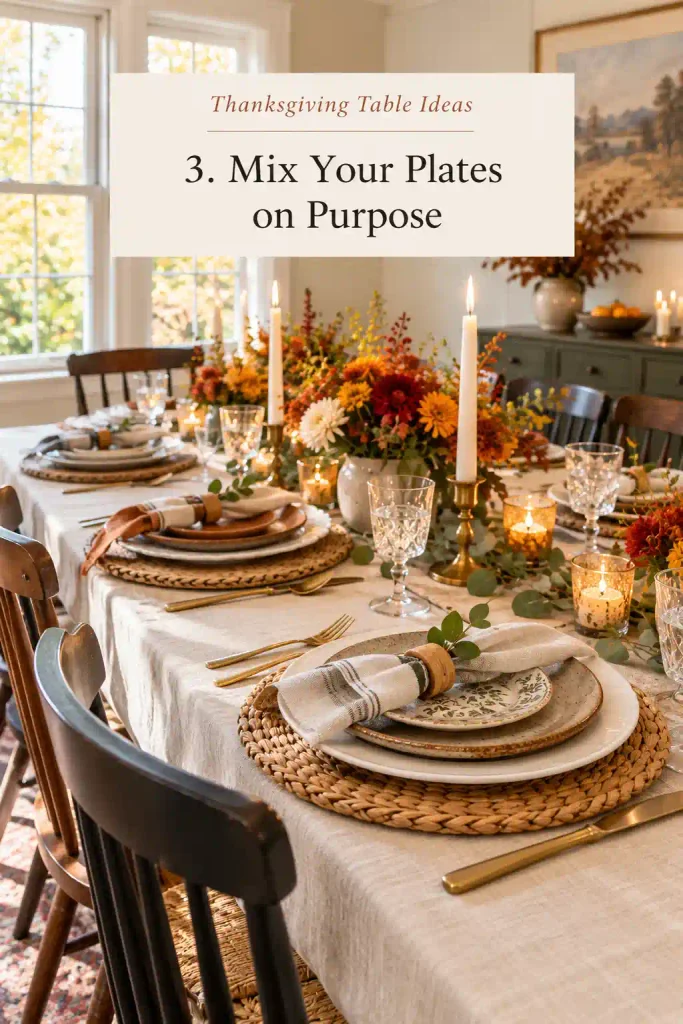
I had eight white plates and four mismatched ones. Rosa said to repeat one color across all of them, so nothing looks accidental. Layer a plain white dinner plate over a woven charger, then add a smaller plate in a soft tone.
Thrift stores sell stoneware plates for $1 to $3 each. Cream, speckled, and earthy finishes all look cozy and collected, which is exactly what a big family dinner should feel like.
Use Cloth Napkins, Even Cheap Ones
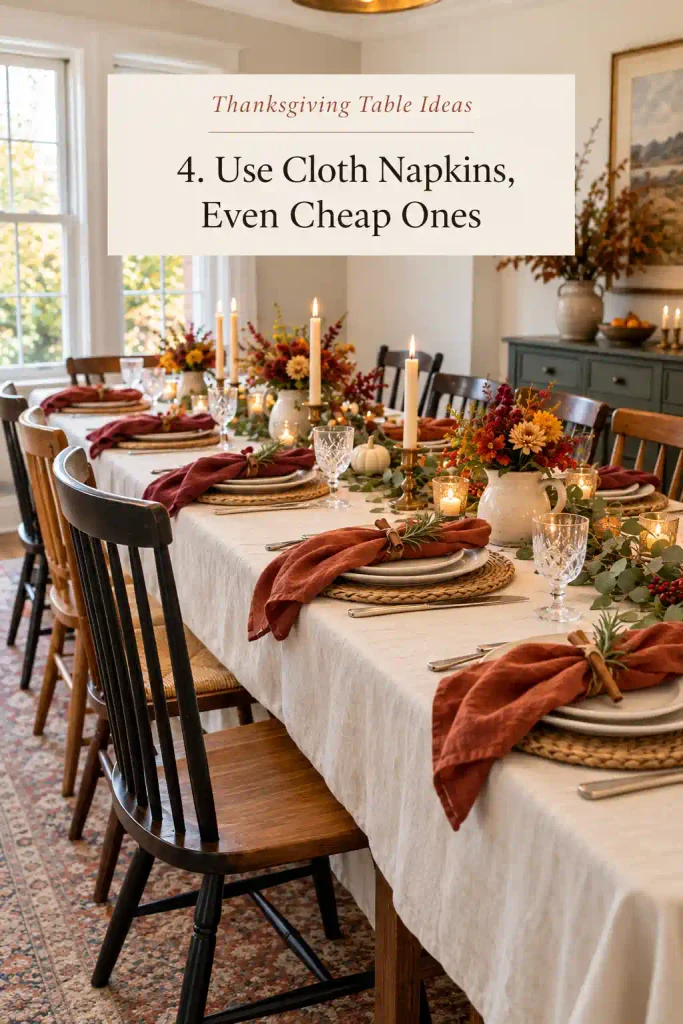
Paper napkins are fine, but cloth ones turn a meal into an occasion. A set of four cotton napkins runs $10 to $20, and you’ll reuse them for years. Choose a shade deeper than your tablecloth, like burnt orange or burgundy.
Fold each one loosely beside the fork, and tuck in a sprig of rosemary or a cinnamon stick. It takes about ten seconds per napkin, and guests always notice.
Build a Low Centerpiece From the Kitchen

“Don’t buy flowers,” Rosa told me. “Raid your pantry.” Set down a few mini pumpkins, gourds, pears, and pinecones along the center of the table, with a few candles mixed in.
Grocery stores sell mini pumpkins for about $1 each. Keep everything low, so guests can see each other across the table. Nothing kills conversation faster than a giant centerpiece blocking half the faces.
Bring in Greenery
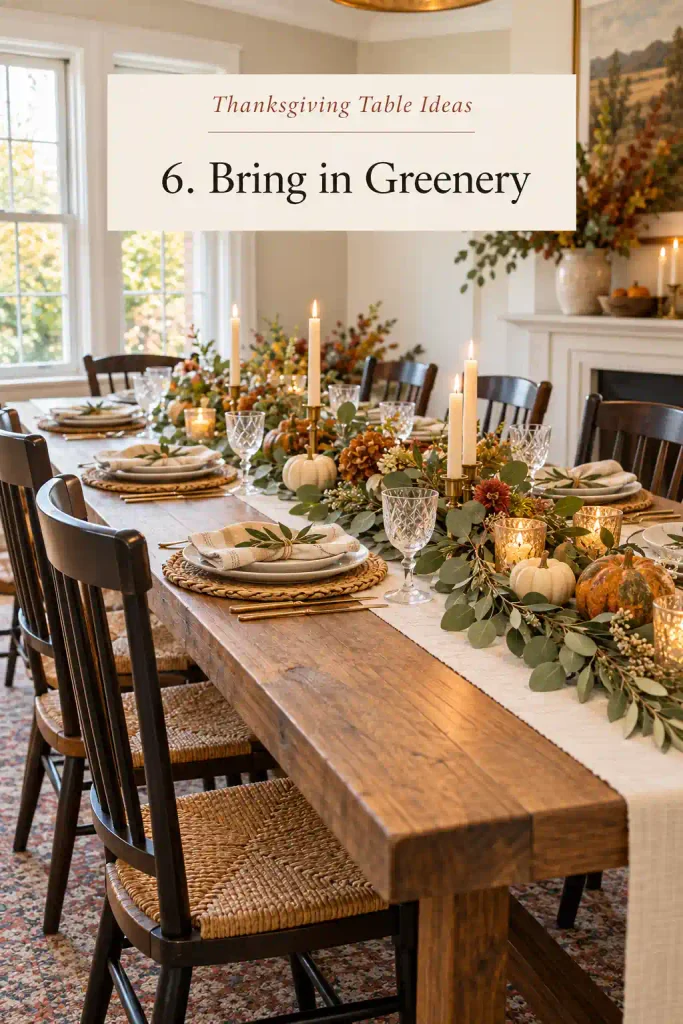
Fall isn’t all orange and brown. A garland of eucalyptus, olive branches, or magnolia leaves down the center adds a soft green that balances the warm tones. A bundle of eucalyptus costs about $8 at most grocery stores.
You can also trim a few branches from a bush in your yard. Faux garlands run $15 to $30 and last for years. Weave in a few berries or pinecones, and it looks like a florist did it.
Cluster Your Candles

Candlelight makes every table look more expensive. Group tapers and votives of different heights in the center, in brass, glass, or ceramic holders. Thrift stores often sell holders for a couple of dollars.
Choose unscented candles near food, so the turkey and pie smell good. A pack of tapers costs $8 to $15. Dim the overhead lights right before everyone sits down.
Layer in Natural Textures
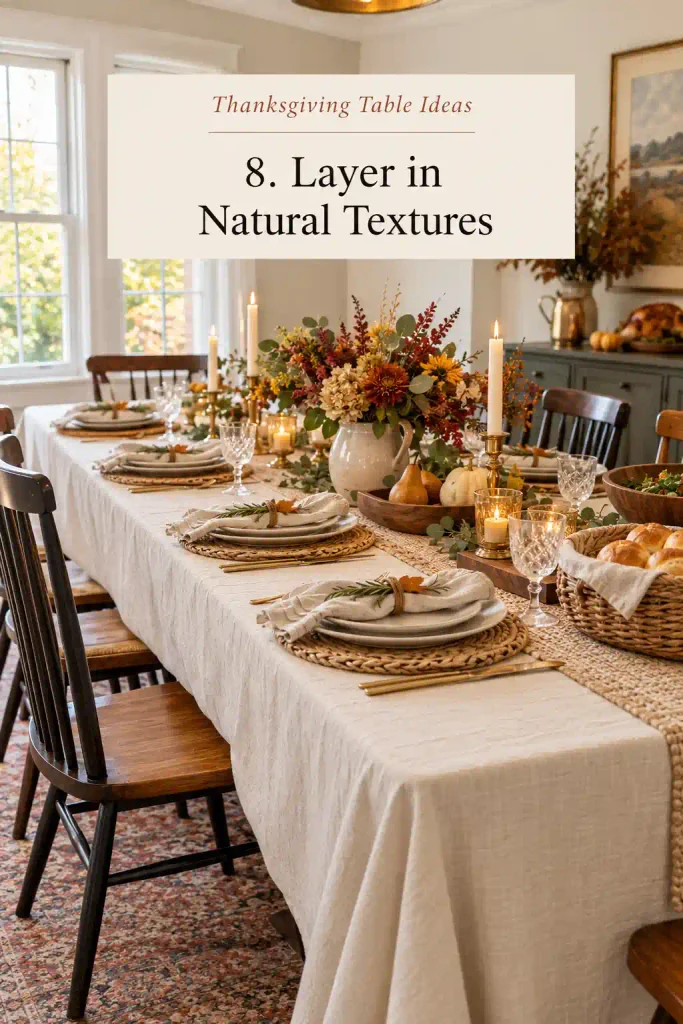
Wooden serving boards, woven placemats, and a small basket for rolls make a table feel handmade and warm. Mix in a few brass or copper accents, like a small bowl or a serving spoon.
Flea markets and secondhand shops often have these for a few dollars each. Natural materials are what keep a tablescape from looking staged.
Write Place Cards by Hand

This is the cheapest “wow” on the list. Write each guest’s name on a kraft tag or small card, and tuck it into a mini pumpkin or under a napkin. It takes about fifteen minutes.
A pack of blank tags costs about $5. Place cards also help with seating, like keeping the kids near Grandma or placing shy cousins beside a chatty one. People feel expected when they see their name.
Add a Gratitude Touch
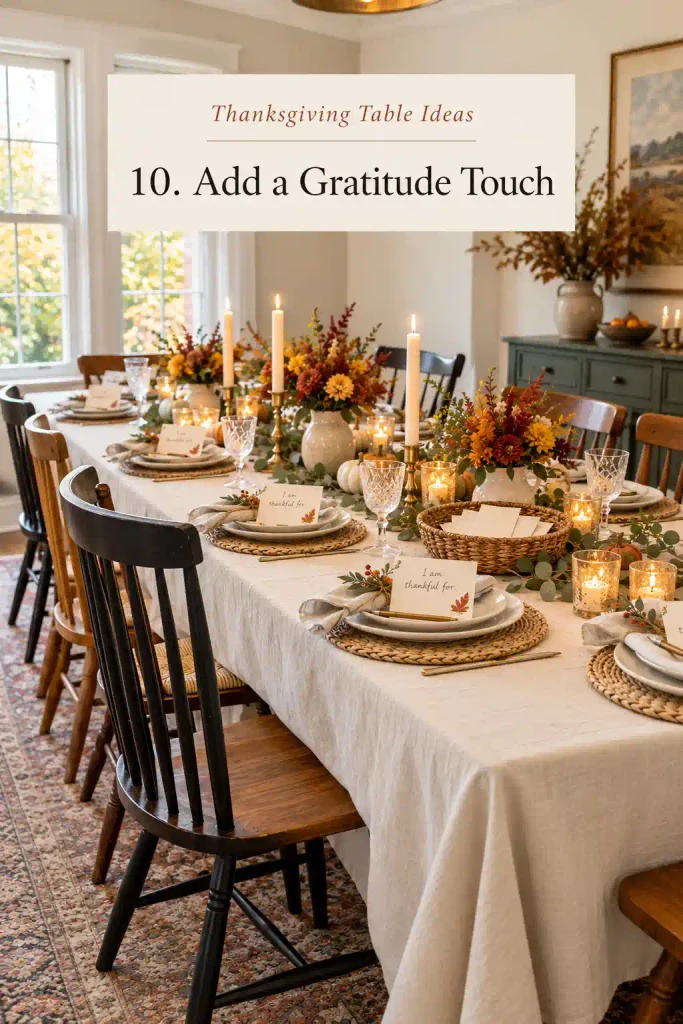
Put a small card at each seat and ask guests to write one thing they’re thankful for. Collect them in a bowl, then read a few aloud during dessert.
It costs almost nothing, and I’ve watched grown adults get teary over a note that simply says, “I’m glad we’re all here.” These are the moments people remember long after the food is gone.
Leave Space Around Everything
This was Rosa’s last rule, and her favorite. “A crowded table feels stressful,” she said. “An open one feels generous.” Leave a little room between dishes, candles, and plates, about 24 inches of elbow room per guest if you can manage it.
If you can’t fit everything on the table, set food on a side counter and pass it. Empty space is what makes the pieces you did choose look intentional.
Rosa’s Quick Rules
Stick to three colors. Cream, rust, and green are classic and always look right.
Set it the night before. It takes about 30 minutes, and you’ll thank yourself when the morning gets busy.
Repeat finishes. Matching metals, woods, and colors make a table look planned.
Don’t aim for perfect. A crooked napkin or a wobbly candle tells your guests a real person made this meal with care.
Quick Questions
How much does a budget tablescape cost?
Most people spend $50 to $120, mostly on a tablecloth, candles, and a few small decorations.
How do I set a table for a big crowd?
Use one long cloth, one low centerpiece, and simple place settings. Folding tables with matching cloths can extend the main one.
What colors work best?
Warm neutrals like cream, rust, olive, mustard, and burgundy are classic and easy to mix.
What if I don’t have matching dishes?
Repeat a color or finish across the mismatched pieces so the whole table feels connected.
Call #3: Thursday, 6:47 p.m.
The doorbell rang, and then it kept ringing. My cousins, my aunt, three kids with sticky hands, and my mother carrying a pie. By the time everyone sat down, the card table and the dining table looked like one long, warm, golden row.
I stood at the head of the table with a serving spoon in my hand, looking at the candles and the little name tags and the mismatched plates that somehow matched. Rosa caught my eye from the other end and winked.
My mother leaned over and whispered, “It looks like a magazine.”
“It cost $68,” I whispered back.
She squeezed my hand. “It doesn’t feel like it.”
I think about that now whenever I set a table. The fancy part was never the plates or the pumpkins. It was the sense that someone had thought about every single person who would sit down.
So pick two or three ideas from this list, even if you only have a card table and a few mismatched chairs. Light a candle, write a few names on tags, and set out a little greenery.
Then call everyone in, and let the evening do the rest.