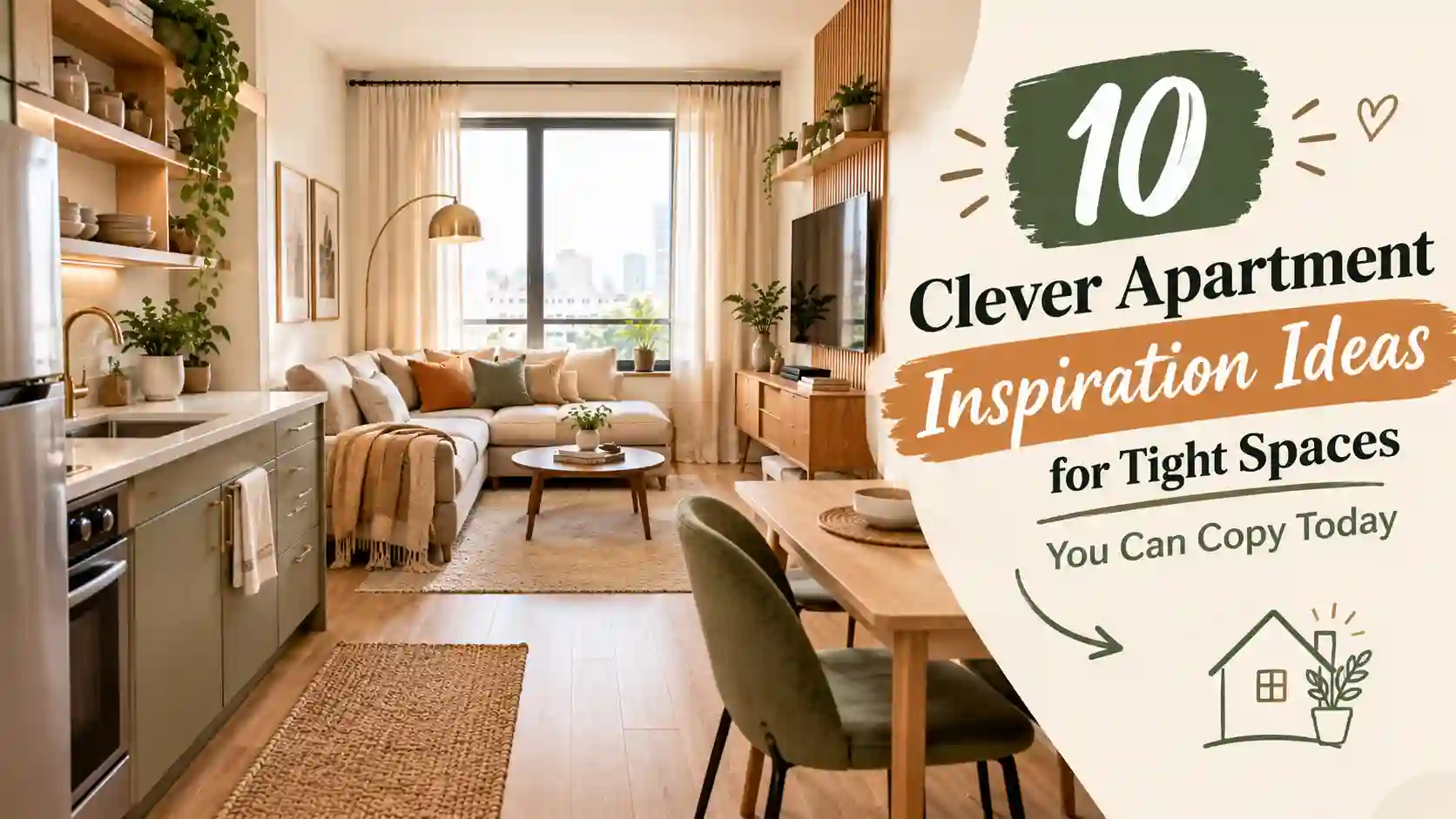
I’ve moved three times in nine years, and each apartment was smaller than I wanted it to be. I used to think that was the problem. Now I think the problem was how I treated small spaces, like something to apologize for.
Here’s the story in three chapters, with the ideas that finally worked.
Apartment #1: The 380-Square-Foot Studio (Age 23)
I signed the lease in ten minutes because the light was good. Then I moved in a full-size sofa, a desk, a dresser, and a coffee table. My bed was six feet from my stove. I ate dinner standing up for most of that first winter.
Let the Furniture Show Its Legs
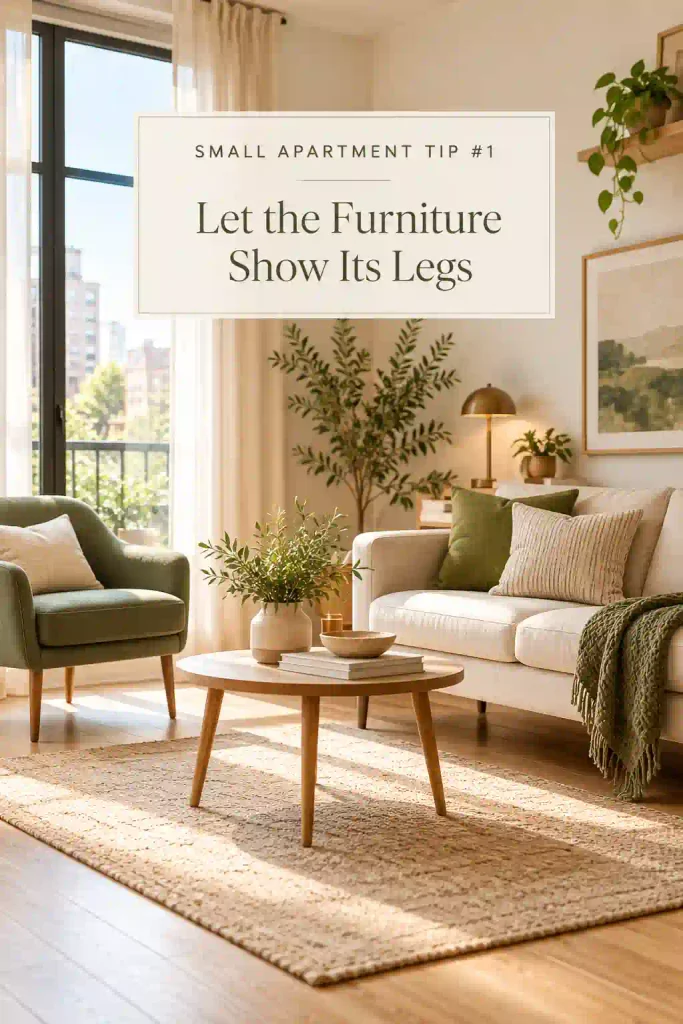
The first thing I learned was to look under things. A sofa or chair with slim legs, where you can see floor beneath it, makes a room feel lighter. Chunky pieces that sit flat on the ground eat the whole room.
I swapped my skirted sofa for a small one with wooden legs, around $450 on sale. The studio felt bigger overnight, and nothing about the actual size had changed.
Make One Piece Do Two Jobs
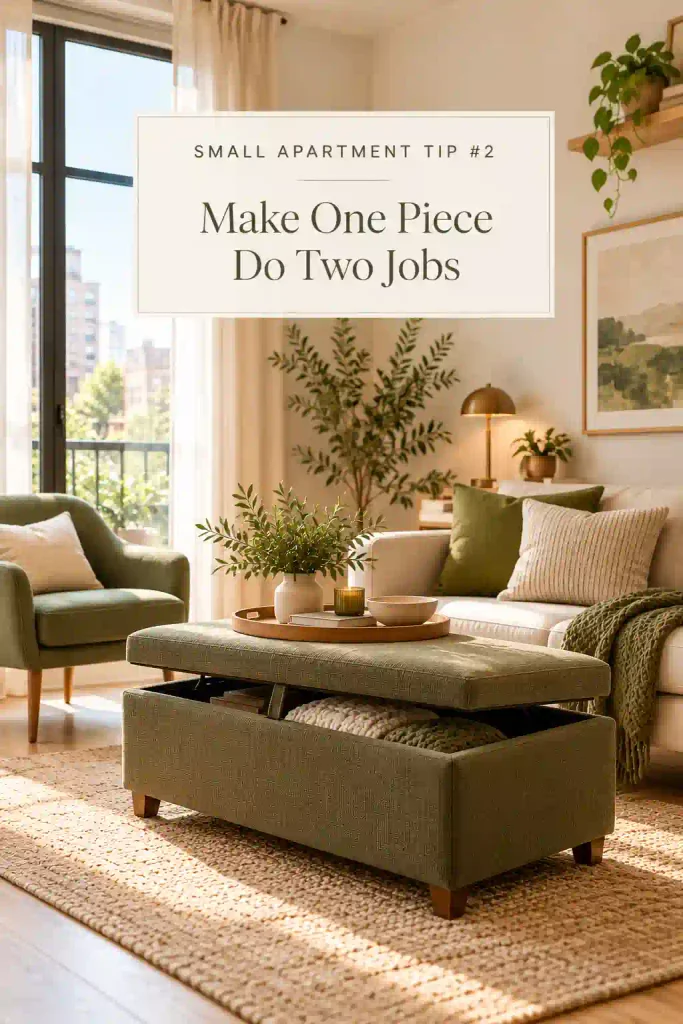
My coffee table was useless, so I traded it for a lift-top ottoman with storage inside. It held blankets, held my feet, and held a tray when friends came over. Prices run $60 to $150.
Look at every piece you own and ask what else it could do. A bench can be a seat and a shoe shelf. A small desk can be a vanity.
Divide the Room Without Walls
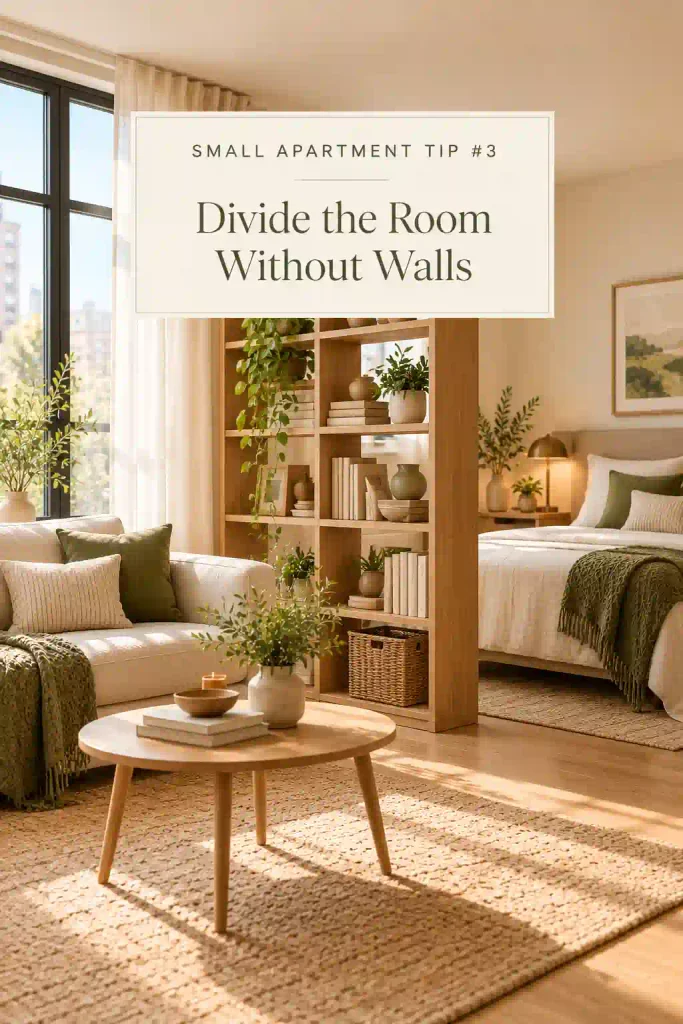
When your bed, couch, and kitchen share one room, everything blurs together. I borrowed a tall bookshelf from a friend and set it at the foot of my bed. It split the studio into zones, and I finally felt like I had a bedroom.
A rug under the sofa does the same thing. So does a change in lighting. Defining areas makes one room feel like several.
Apartment #2: The One-Bedroom With a Roommate (Age 27)
This place had a real wall, a real door, and a closet the size of a phone booth. My roommate and I shared a living room that was 10 by 12 feet. We argued about who got the shelf by the door.
Go Up, Not Out
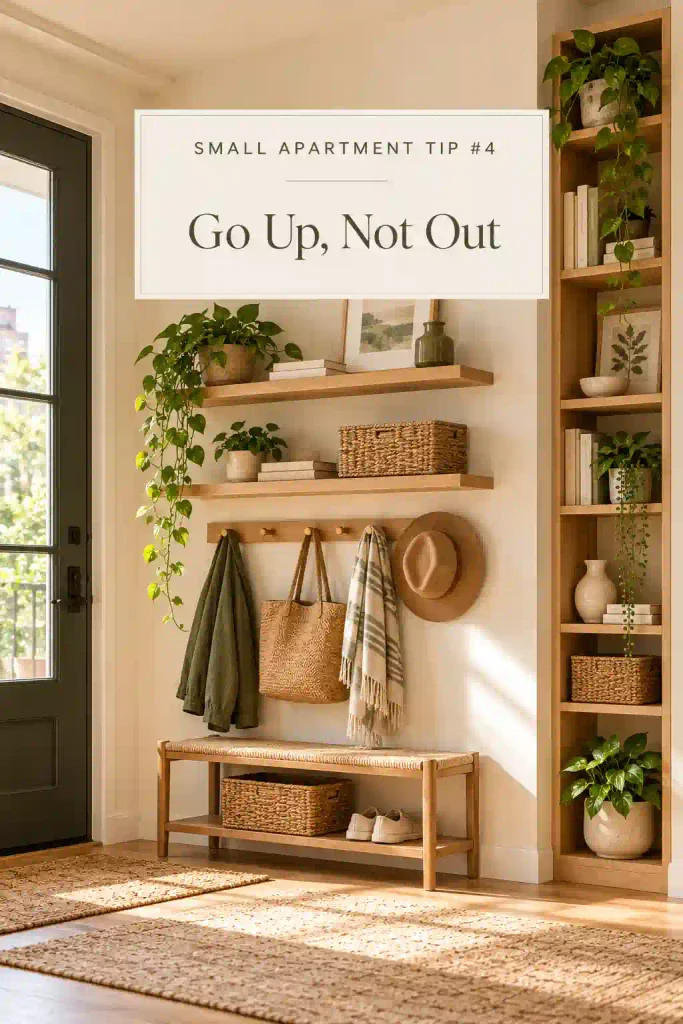
Floor space was gone, so we used the walls. We hung floating shelves above the sofa and a row of hooks by the door for bags and coats. A tall, narrow bookcase held everything else.
Shelves run $20 to $50 each. Anchor them into studs, and if you’re renting, check your lease first. A shelf that holds a plant and a few books also draws your eyes upward, which makes the ceiling feel higher.
Hang Curtains Near the Ceiling
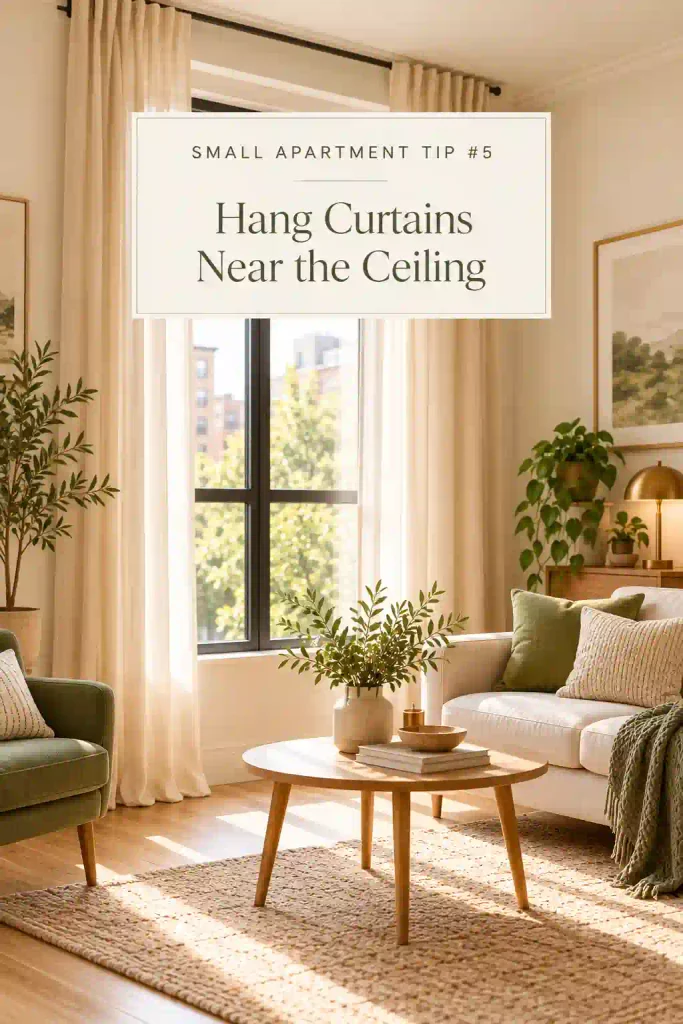
Our windows were small and ordinary. I mounted a rod a few inches below the ceiling and hung long linen panels that fell to the floor. The windows looked taller, and the whole wall looked finished.
Two panels and a rod cost about $50 to $80. It’s the cheapest way I know to fake a bigger room, and it works every time.
Use Mirrors Like Windows
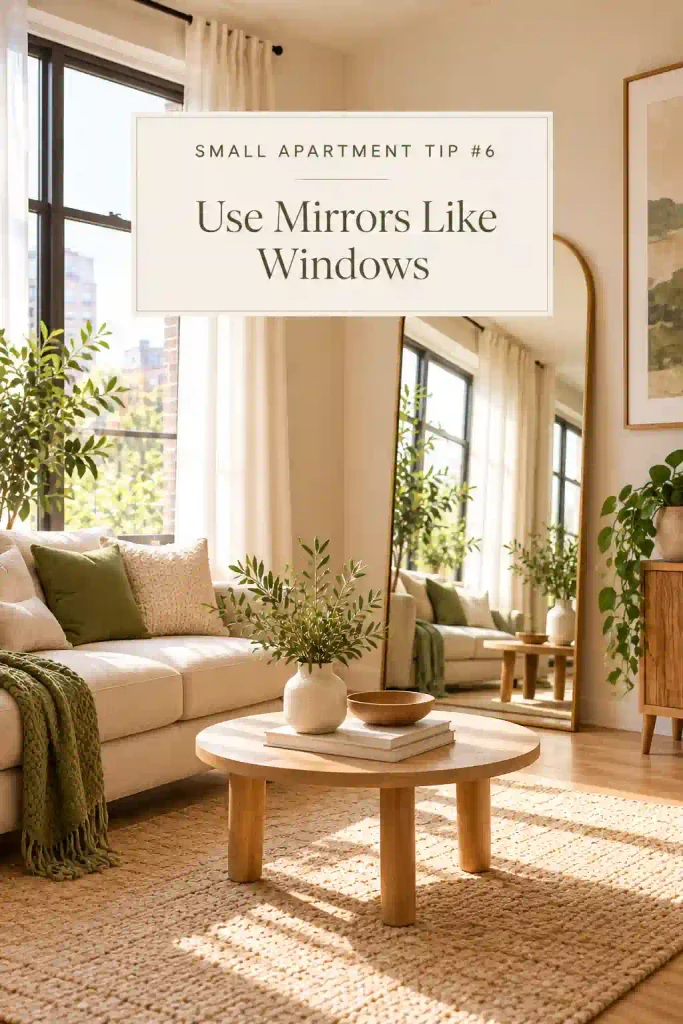
I leaned a tall mirror across from the window, and the room doubled in light. I’d read that a mirror makes a room feel twice as big, and I didn’t believe it until I tried it.
Secondhand mirrors often cost $30 to $80. Lean one against the wall if you can’t drill. A big one beats three small ones.
Apartment #3: The 520-Square-Foot Place I Actually Love (Now)
By the time I moved here, I finally knew what I was doing. I had a partner, a cat, and exactly one closet. But I also had a plan, and I wasn’t going to apologize for the size.
Choose One Calm Color Palette
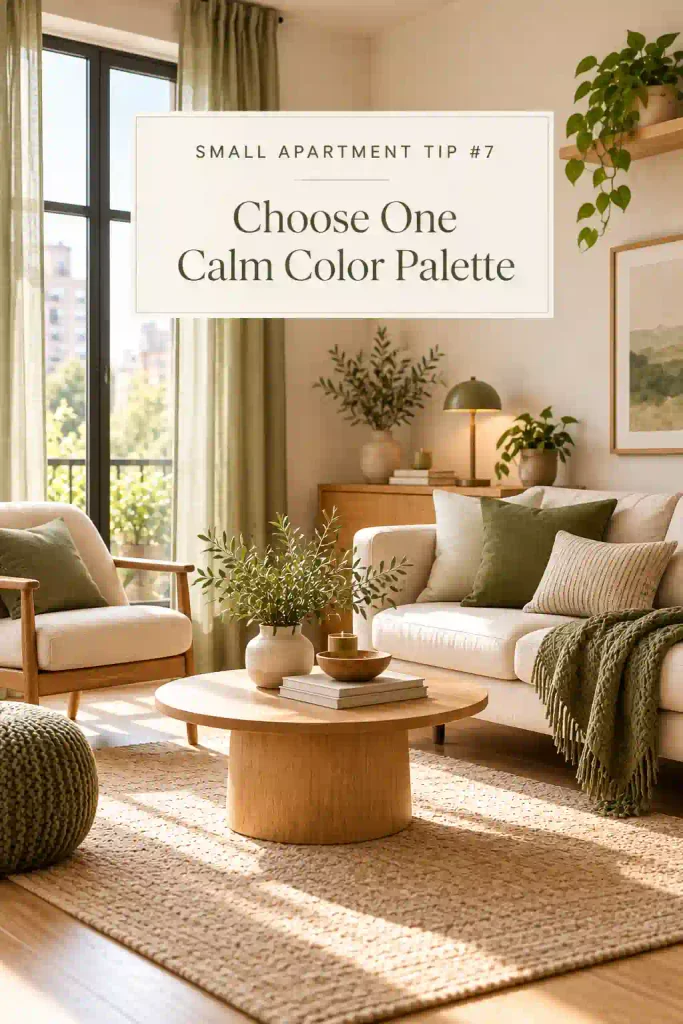
The biggest difference between my first apartment and this one is color. In the studio, I had five. Here, I stick to three: warm white, soft wood, and one muted green. A small space looks bigger when your eyes aren’t jumping around.
Pick your three and repeat them on pillows, curtains, and art. Paint costs $35 to $55 a gallon, and the walls are the quickest place to begin.
Hide the Mess in Baskets and Cabinets
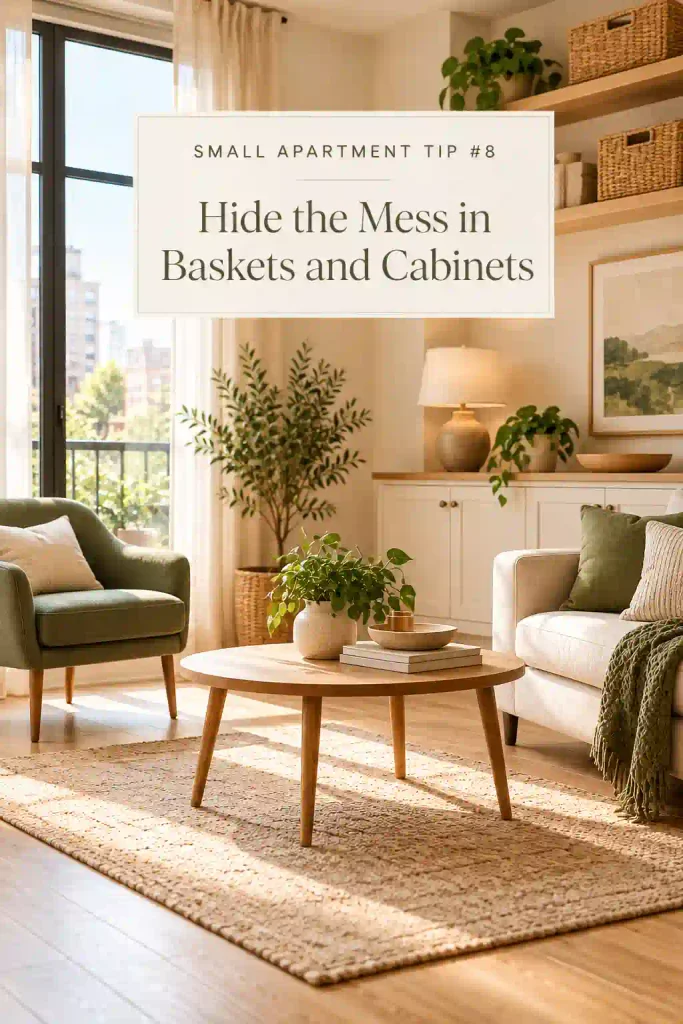
My cat’s toys, the charger cords, the mail, and the extra blankets all used to sit out in the open. Now they live in woven baskets and closed cabinets. When surfaces stay clear, a small room feels calm instead of crowded.
Baskets cost $8 to $25 each. Choose one material, like seagrass or rope, so they look planned. It’s the cheapest way to look like you have more storage than you do.
Light the Room From Low Down
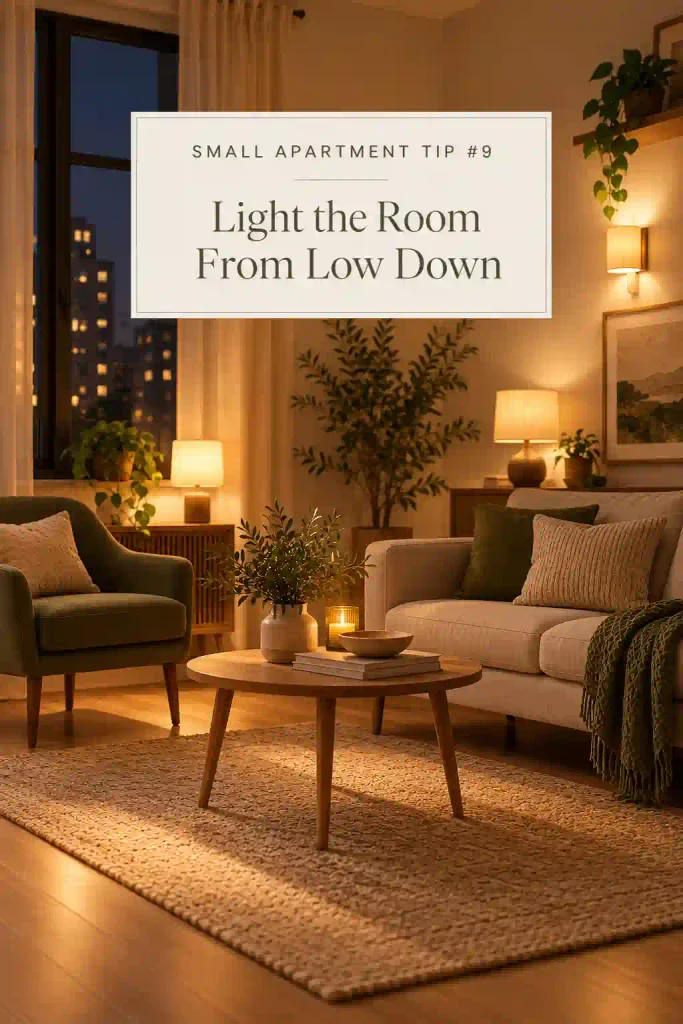
I turned off the harsh overhead light about three years ago, and I haven’t turned it back on. Two lamps at different heights and a plug-in wall light give me a golden glow at night. Use warm bulbs, around 2700K.
Lamps cost $25 to $50 at discount stores. Light from the sides makes corners feel deeper and the whole room feel softer.
Leave One Empty Spot
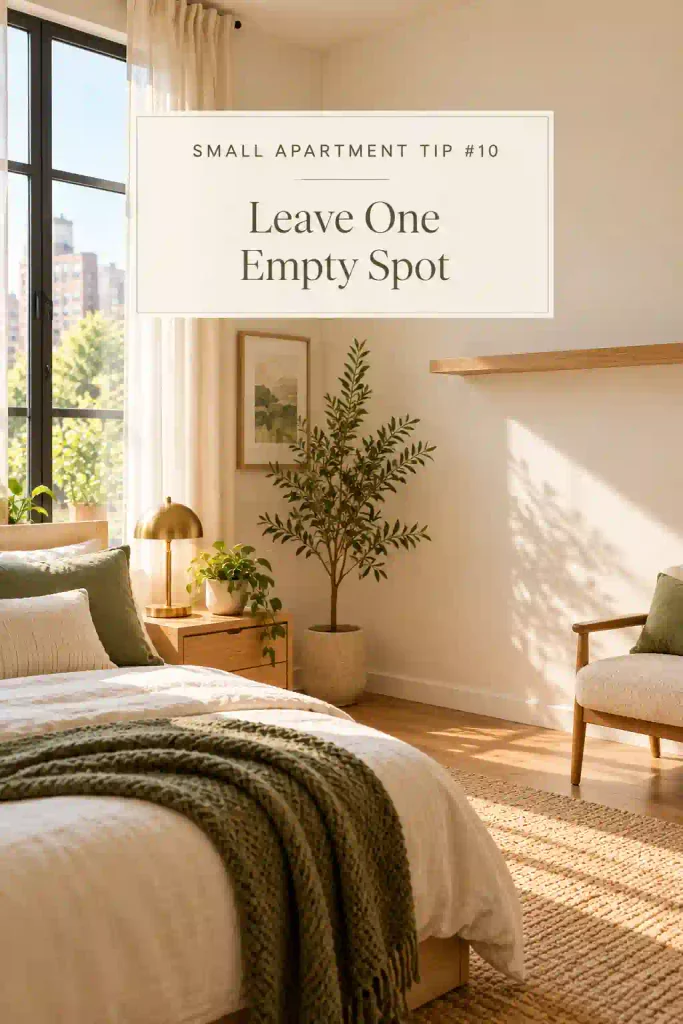
This is the last and hardest lesson. I leave one wall and one shelf bare on purpose. No frame, no plant, nothing. It’s a pause for the eyes.
Empty space makes the rest look chosen. It’s also the thing that makes a small apartment feel like a home and not a storage unit.
The Short List (If You Only Remember Four Things)
Measure everything. Sofa, rug, doorway, and the gap beside the fridge. A tape measure is the best tool you own.
Look at the floor. If you can see more of it, the room feels bigger.
Go vertical. Shelves, hooks, tall bookcases, and curtains hung high all make use of space that’s already there.
Edit often. Every few months, take one thing away. You’ll rarely miss it.
Quick Questions
How much does it cost to make a small apartment feel bigger?
Most people see a real difference for $100 to $300. Lighting, curtains, and a mirror give the most for the money.
Can renters do all of this?
Yes. Use leaning mirrors, tension rods, removable hooks, plug-in lights, and furniture that moves with you.
What’s the first thing to change?
Swap harsh overhead light for lamps with warm bulbs. It costs little and changes the mood right away.
Does a small apartment need small furniture?
Not always. It needs furniture with slim legs and a simple shape, in the right scale for the room.
What I’d Tell Twenty-Three-Year-Old Me
A few weeks ago, my niece moved into her first apartment. It’s 400 square feet, with one window and a closet that doesn’t close all the way. She called me on the first night, close to tears, and said, “I don’t think I can make this feel like a home.”
I drove over with a lamp, a basket, and a tall mirror. We spent a Saturday moving her sofa off the wall, hanging curtains up high, and tucking her shoes into a bench by the door. When the last lamp clicked on, she sat down on the sofa and went quiet.
“It looks bigger,” she said, and then, “It feels like mine.”
I remembered standing in my own first studio, eating dinner over the sink, wishing somebody had told me what I know now. A small space isn’t a smaller life. It’s a place where every choice counts, and every cozy corner is close enough to touch.
So pick one idea from this list today. Move a lamp, lean a mirror, or clear off one shelf. Then sit in the room for a minute and see how it feels.
Your tight space has more going for it than you think.