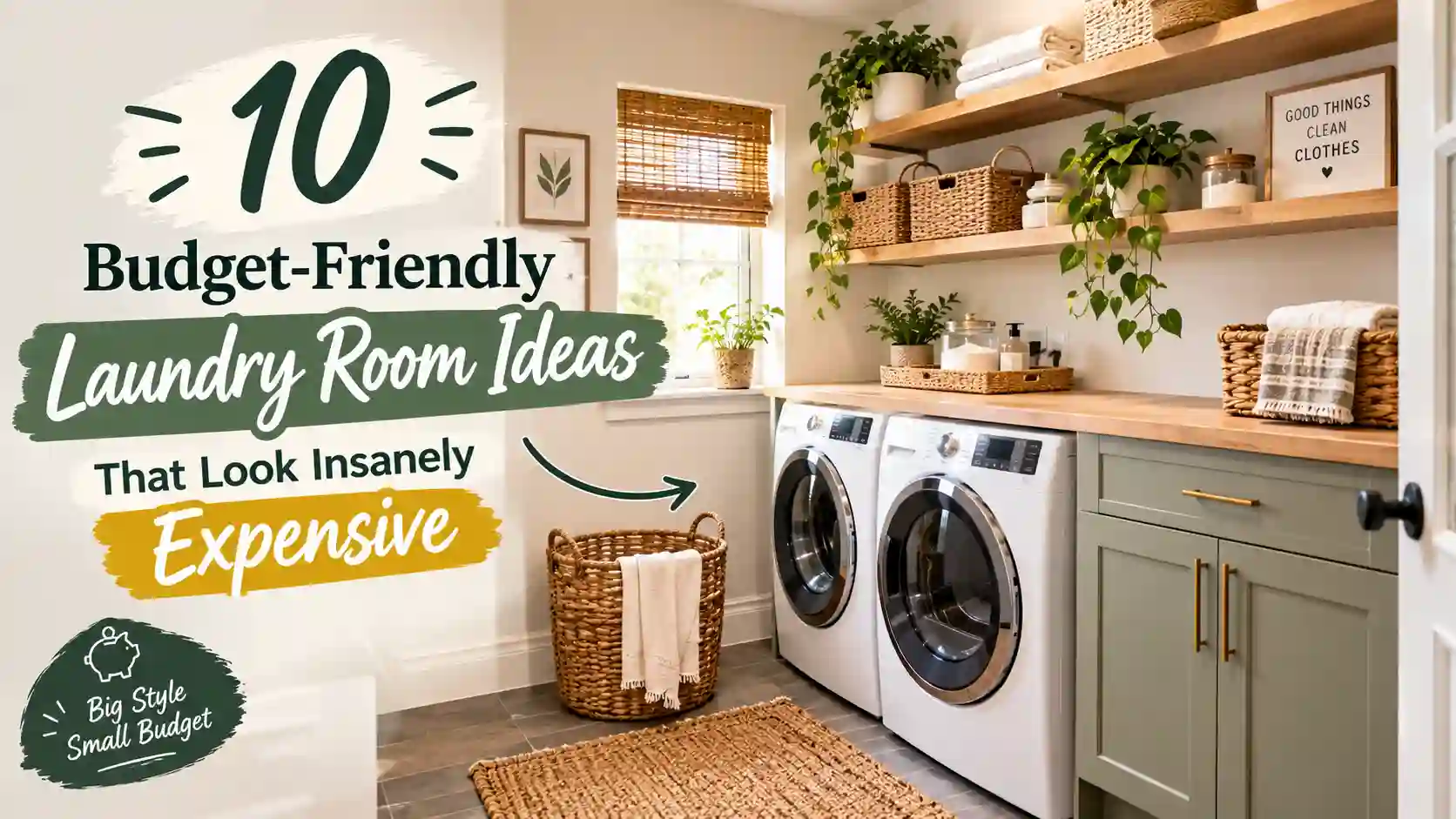
Budget-Friendly Laundry Room Ideas: Ten lessons from my grandmother’s laundromat, where nothing was fancy and everything looked cared for.
My grandmother Dolores ran a laundromat in Ohio for thirty-one years. It sat between a bakery and a shoe repair shop, and the machines were older than I was. Still, people drove across town to use it.
When I asked her why, she shrugged. “It’s clean, it’s bright, and nothing’s out of place. People feel looked after.”
I thought about her last spring, standing in my own laundry room. It had a buzzing light, a crooked plastic basket, and detergent jugs lined up like bowling pins. I spent hours a week in there, and it made me feel like I was losing to a sock pile.
So I borrowed her rules. Here are ten of them, with what each one cost me.
Lesson 1: “Pick a Color That Feels Like a Hug”
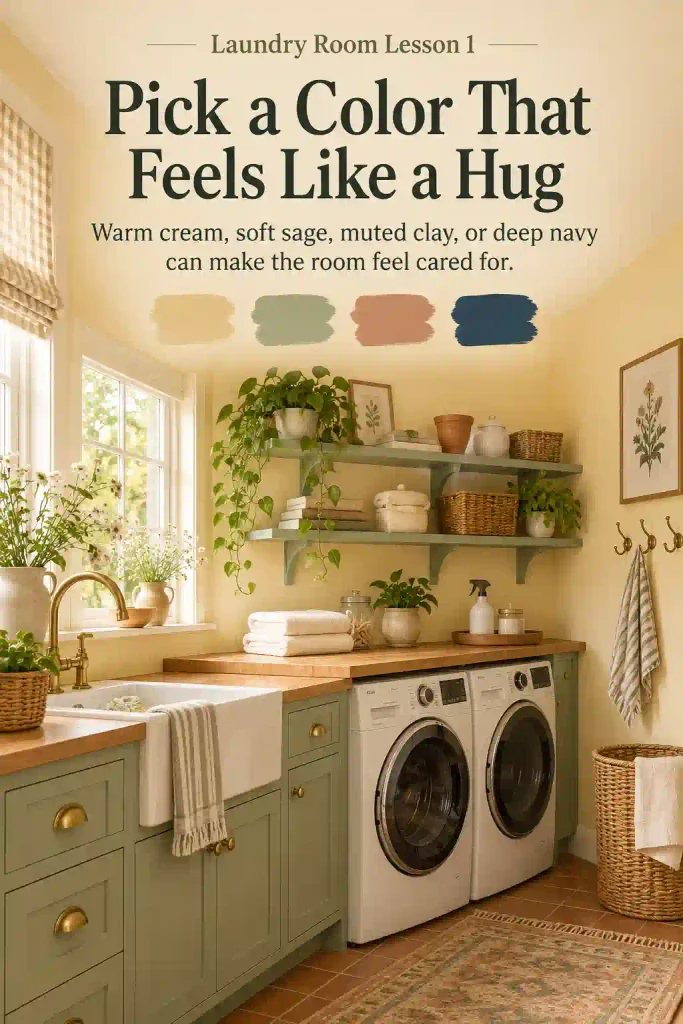
Dolores painted the laundromat walls a warm, creamy yellow, and nobody ever called it a laundromat color. Skip builder white or cold gray. Try warm cream, soft sage, muted clay, or a deep navy if you’re feeling bold.
Use a satin finish, since laundry rooms get steamy. A gallon runs $35 to $55, and a sample jar costs about $6. Check your sample at night under lamplight, because warm colors shift a lot.
Lesson 2: “Fix the Light First”
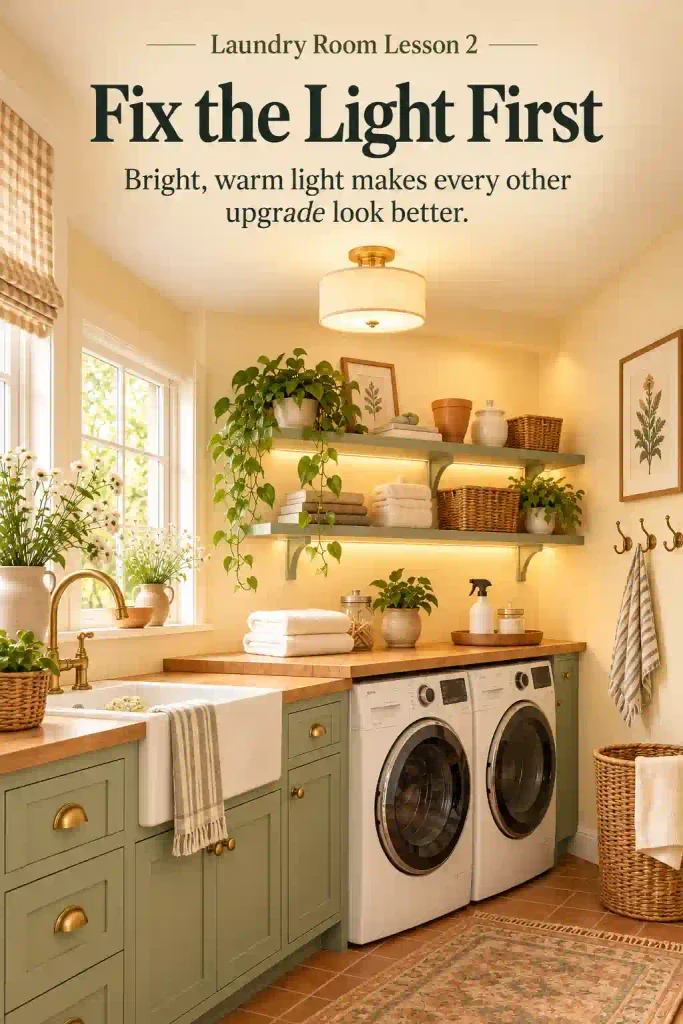
Her shop had bright, even light with no buzzing and no dark corners. Swap your bulb for a warm one around 2700K, and add a battery-powered strip light under a shelf.
A strip costs $10 to $20, and the bulb is a few dollars. This is the cheapest change on the list, and it makes everything else look better.
Lesson 3: “Match Your Metal”
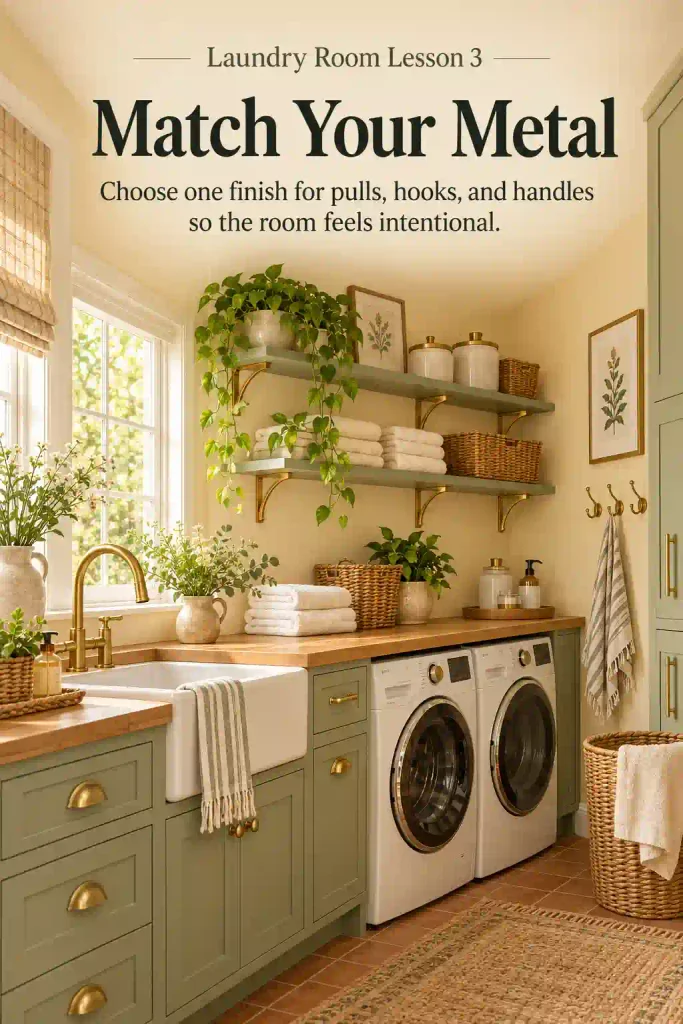
Dolores replaced every cabinet knob in the shop with the same brass ones. “Mismatched hardware looks like an accident,” she said. She was right.
Choose one finish, such as brushed brass, matte black, or brushed nickel. Replace pulls, hooks, and the cabinet handles for about $25 to $60 total. Bring an old knob to the store so the screws match.
Lesson 4: “Put Things Up High, Neatly”
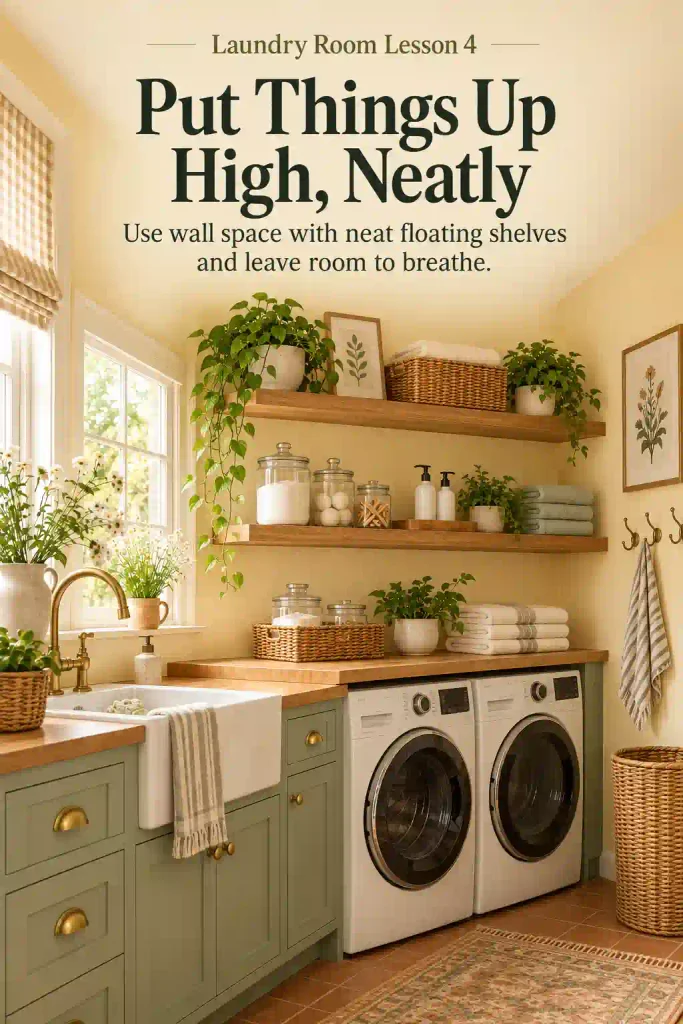
Floor space was money in her shop, so she used the walls. Mount two wood floating shelves above the machines, about 12 inches apart, and anchor them into studs. Detergent is heavier than it looks.
Wood shelves cost $20 to $50 each. A warm oak or walnut tone makes a utility room feel like part of the house. Keep each shelf to three or four items and leave some empty space.
Lesson 5: “Nobody Needs to See the Label”
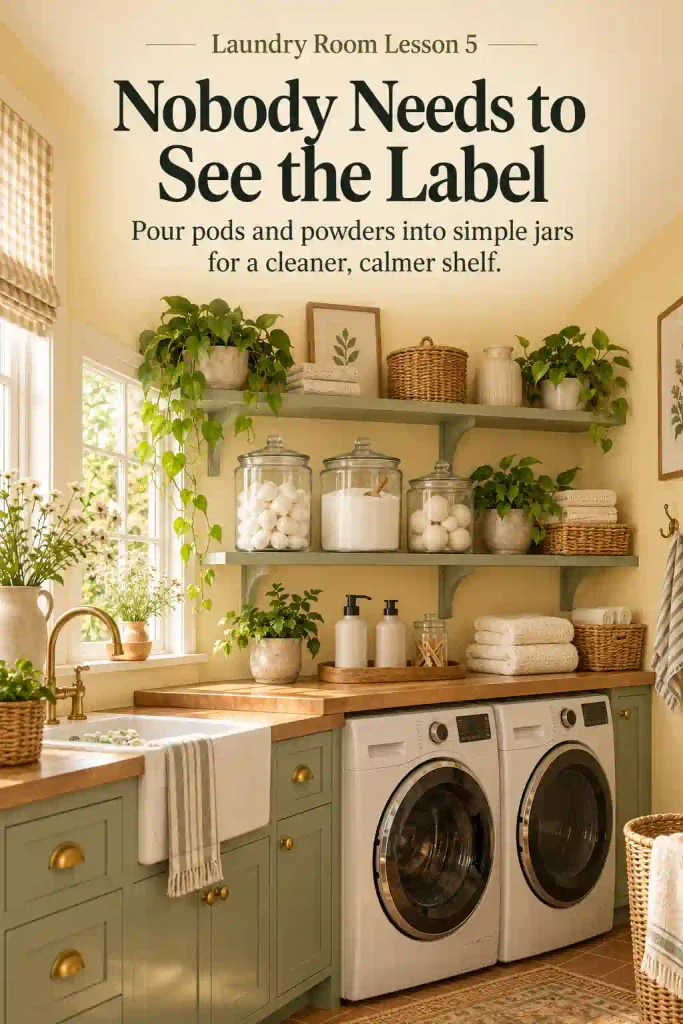
Her soap dispensers were plain, and nothing screamed from the shelf. Do the same at home. Pour powders and pods into glass jars with lids, and add a simple handwritten label.
Jars cost $5 to $12 each, and thrift stores often have them for a dollar. A row of clean lids looks like a boutique, and you can see at a glance when you’re running low.
Lesson 6: “Hide the Dirty Laundry”

Dolores kept a rolling wicker cart for customers’ wet clothes. It looked nice, and it hid what people wanted hidden. A woven hamper with a lid or liner does the same job.
Good ones cost $20 to $45. Choose seagrass, rattan, or cotton rope, and stick to one material so the room looks planned. Add a basket on a shelf for clothespins and dryer balls.
Lesson 7: “A Floor You Can Stand On All Day”
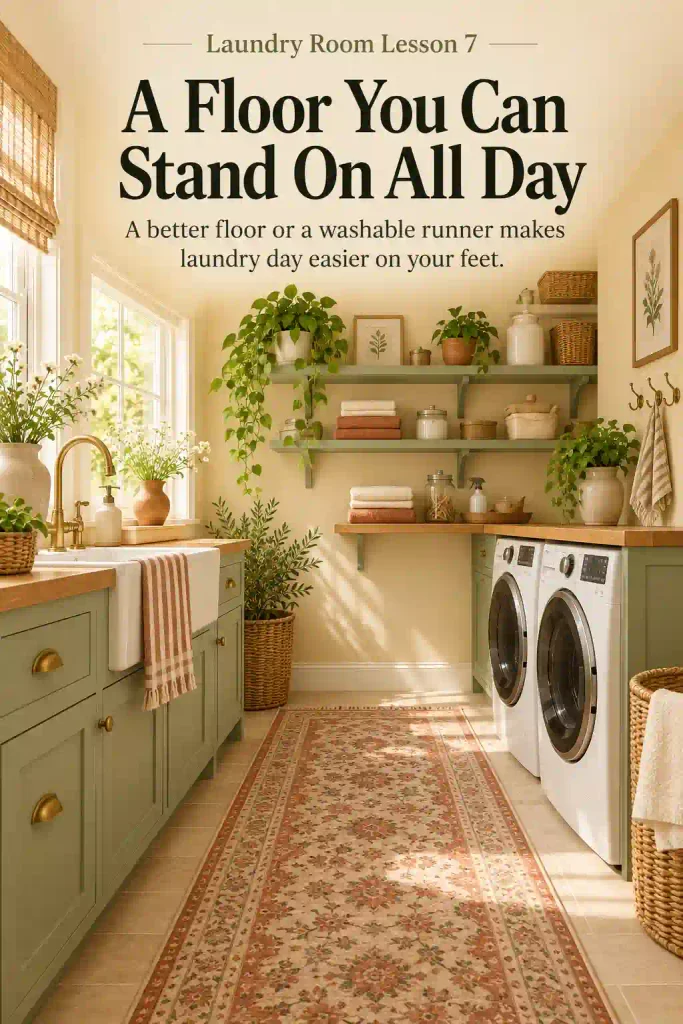
She hated cold, ugly floors. If yours is worn vinyl or dingy tile, peel-and-stick tile in a marble, slate, or checkerboard pattern is a big upgrade. A small laundry room fits into an afternoon for $50 to $120.
Clean the floor well first and line up the first row carefully. If you can’t tile, a washable runner in cream, rust, or a soft stripe warms up the floor for $30 to $80. Add a non-slip pad underneath.
Lesson 8: “Give Folding a Home”
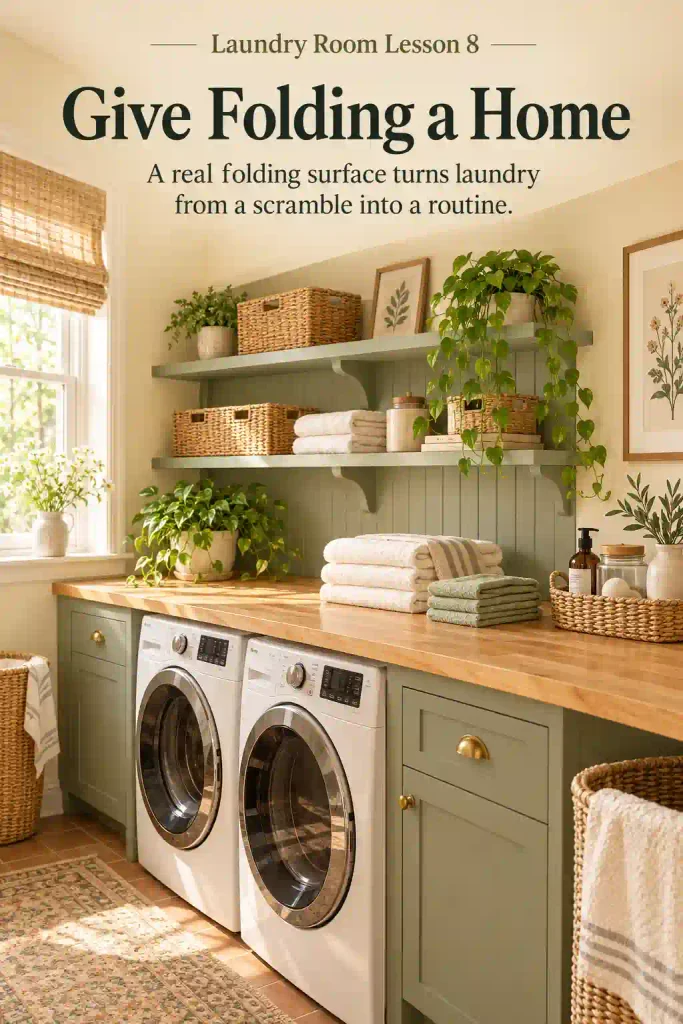
Her shop had a long, clean table where people folded in peace. If you have front-loaders, a butcher block or a cut-to-size board across the top gives you a folding surface for $40 to $120.
Top-loaders or stacked units can use a wall-mounted fold-down table ($40 to $80) that disappears when you’re done. A real surface makes laundry day feel less like a scramble.
Lesson 9: “One Pretty Thing on the Wall”
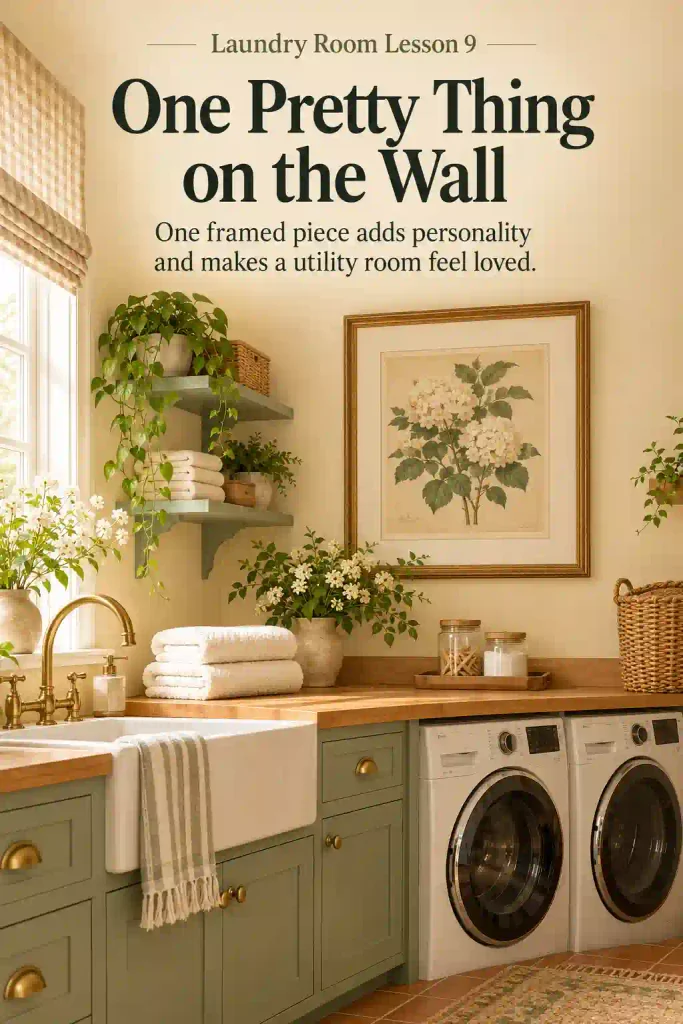
Behind the counter, Dolores hung a framed photo of the shop’s opening day in 1989. Customers asked about it constantly. A laundry room deserves one piece of personality too.
Hang a simple print, a framed vintage-style sign, or a photo you love, in a frame that matches your shelves. A print and frame cost $15 to $40. Hang it so the center sits around 57 inches from the floor.
Lesson 10: “Something Alive”
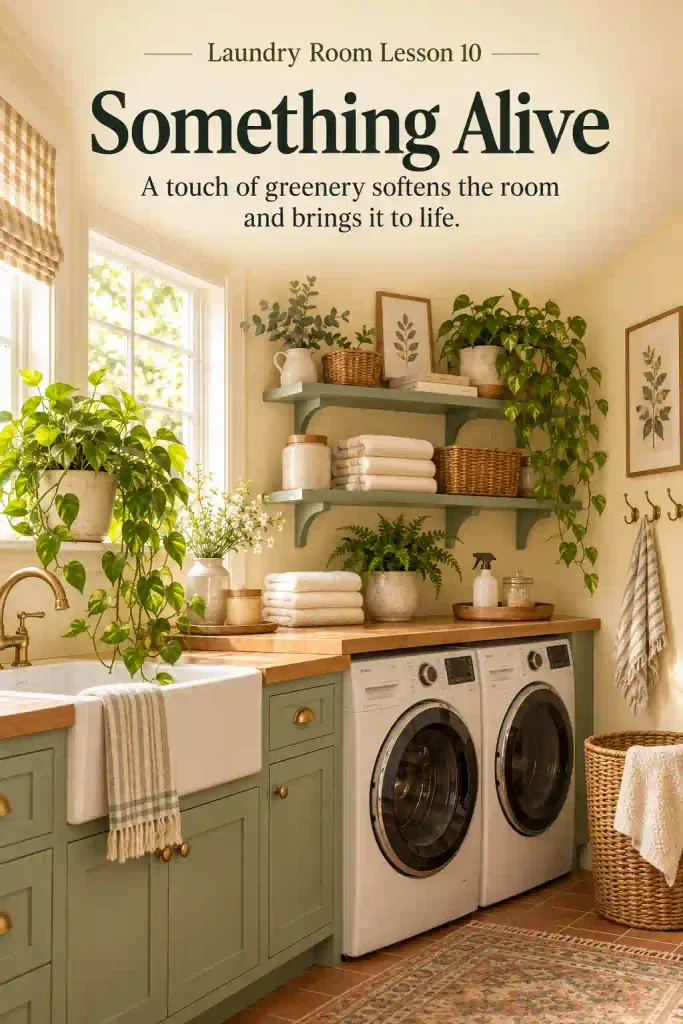
She kept a pothos on the windowsill that outlived two sets of dryers. Greenery softens all the hard edges of metal and plastic and makes a utility room feel like a real room.
A pothos costs $10 to $15 and forgives forgotten waterings. If your laundry room is dark, a good faux eucalyptus stem in a small ceramic vase looks lovely from a few feet away.
A Few Rules She’d Approve Of
Stay in three colors. Two warm neutrals and one deeper accent look calm and chosen.
Do it in layers. Start with light and paint, then add shelves, then the small touches. Stop when it feels right.
Shop secondhand first. Jars, baskets, frames, and shelves turn up for a few dollars at thrift stores.
Leave some empty space. A bare stretch of wall makes the pieces you kept look intentional.
Quick Questions
How much does this cost in total?
Most people spend $100 to $300 by choosing five or six ideas. Lighting, paint, and jars give the biggest change for the least money.
Can renters do this?
Yes. Use removable hooks, peel-and-stick tile, plug-in or battery lights, washable rugs, baskets, and freestanding shelves.
What if my laundry room is tiny?
Tiny rooms look polished fastest. Warm light, a few shelves, and a clean floor do most of the work.
What’s the one thing to do first?
Change the bulb. It takes two minutes and makes the whole room look kinder.
The Last Load
Dolores sold the laundromat when she was seventy-eight. On her last day, I helped her fold the final stack of towels on that long table. The shop was quiet. The light was soft and gold, and the pothos had grown over the window ledge.
“You know what I’ll miss?” she said. “Not the money. The folding. It’s a good time to think.”
I didn’t understand her then. I do now.
A few weeks after I finished my laundry room, I stood in the doorway with a warm towel in my arms. The walls were cream, the jars lined up on the shelf, and a little plant leaned toward the light. I folded that towel on my small counter, and I realized I wasn’t dreading it. I was actually enjoying the quiet.
That’s what she taught me. A room doesn’t have to be expensive to make people feel looked after. It only has to say, “Someone cared about this.”
So pick one lesson this weekend. Change a bulb, pour detergent into a jar, or set a plant by the window. Then fold something warm and notice how it feels.
You might find your laundry room becomes the calmest corner of your house.