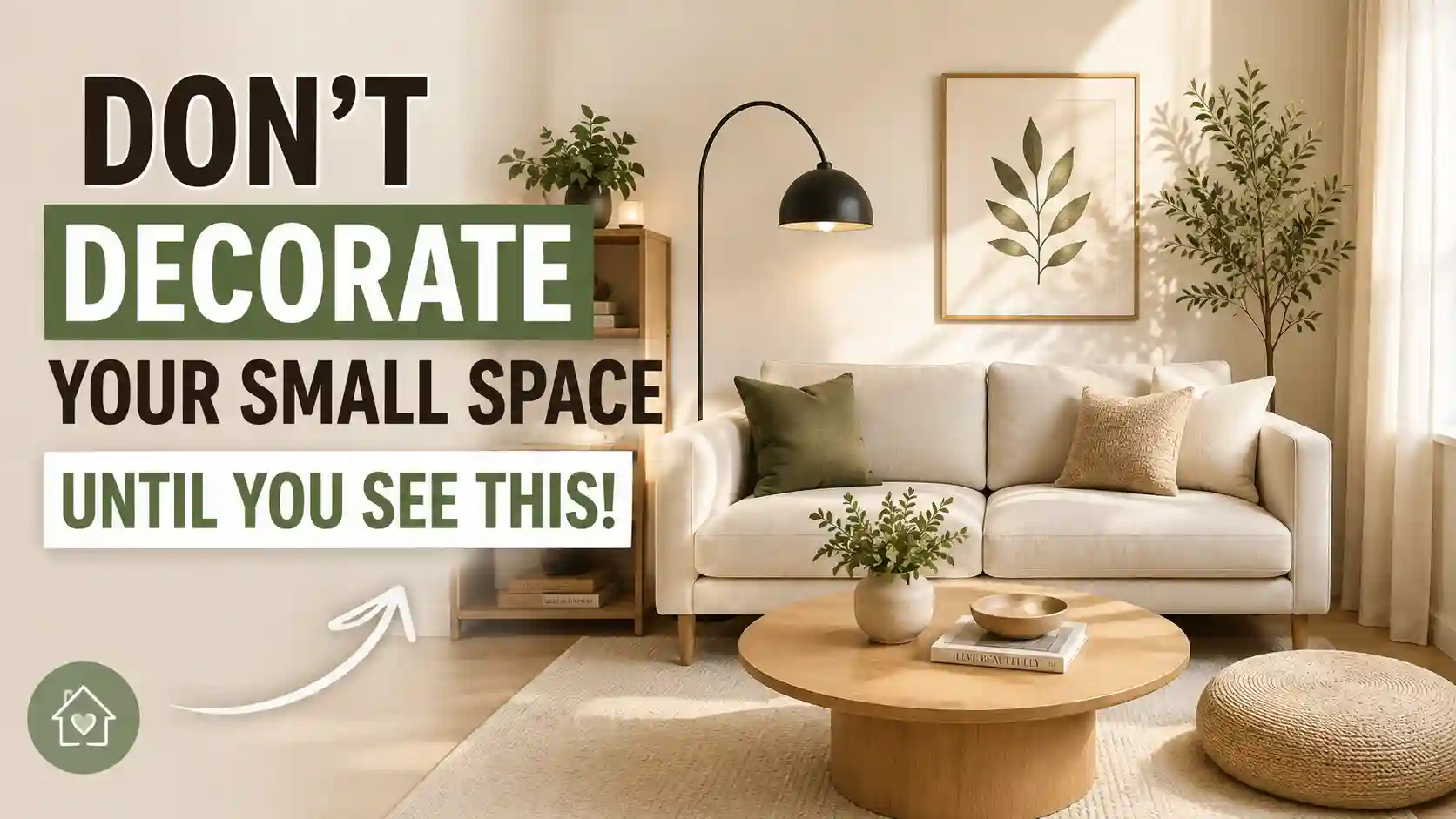
Before you buy another throw pillow or piece of wall art, stop. If your living room is small, more decor is usually the exact opposite of what it needs. The secret to a small space that actually feels calm, open, and expensive isn’t adding more—it’s editing down.
Here’s what to know before you decorate a small living room the minimalist way.
Start With an Empty Room (Even If Just Mentally)
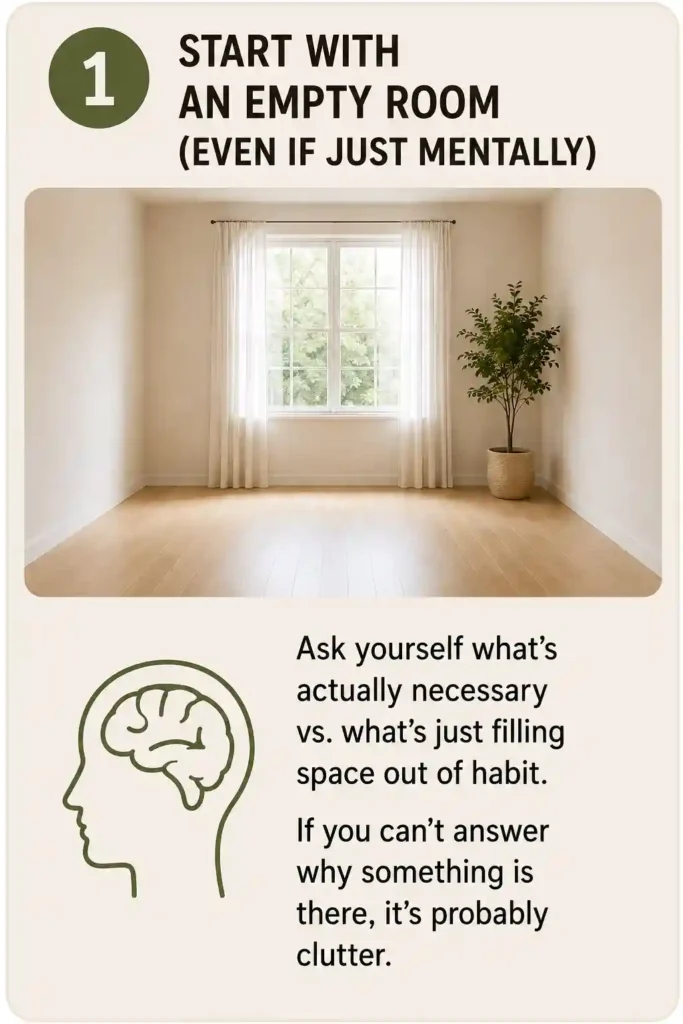
Before adding anything new, take everything out of the equation. Walk into your living room and ask yourself what’s actually necessary versus what’s just filling space out of habit.
Minimalist design isn’t about having an empty room. It’s about making sure every single item earns its place. If you can’t answer why something is there, it’s probably clutter.
Pick One Color Story and Stick to It
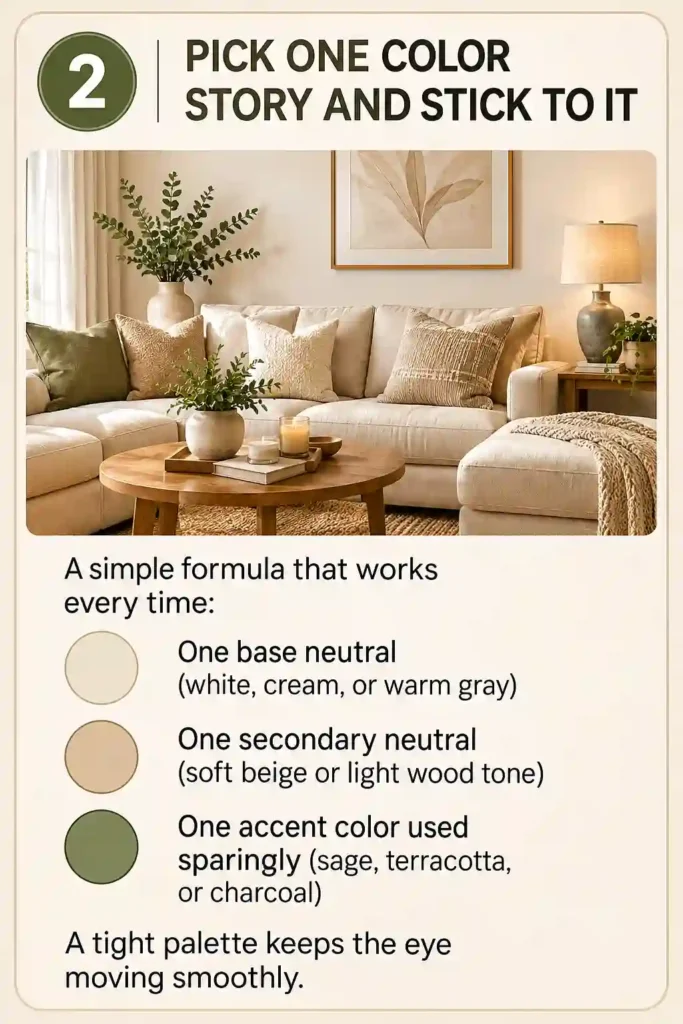
The fastest way to make a small room feel busy is to mix too many colors, patterns, and textures. Minimalist living rooms lean into a tight, cohesive palette instead.
A simple formula that works every time:
- One base neutral (white, cream, or warm gray)
- One secondary neutral (soft beige or light wood tone)
- One accent color used sparingly (sage, terracotta, or charcoal)
When your color palette is this tight, the eye moves smoothly through the room instead of bouncing around.
Choose Fewer, Better Pieces of Furniture
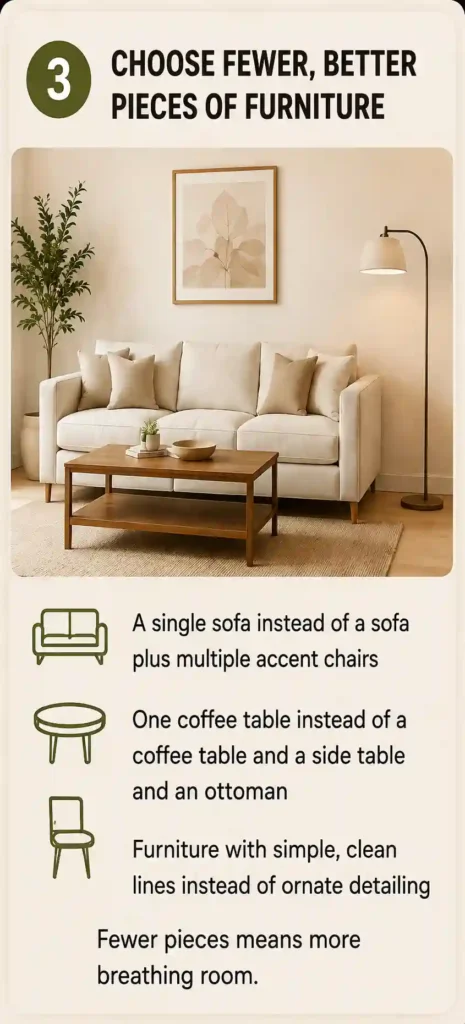
A minimalist living room isn’t sparse for the sake of looking trendy—it’s intentional. Instead of filling every corner with furniture, choose a few well-made pieces that actually serve a purpose.
- A single sofa instead of a sofa plus multiple accent chairs
- One coffee table instead of a coffee table and a side table and an ottoman
- Furniture with simple, clean lines instead of ornate detailing
Fewer pieces means more breathing room, and more breathing room is what makes a small space feel bigger.
Let Negative Space Do the Work
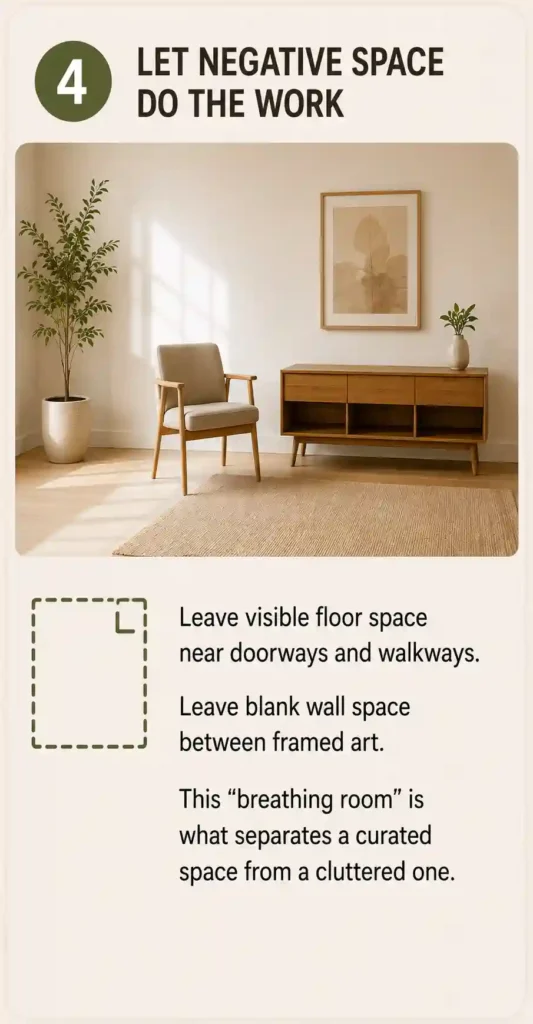
In design, negative space (the empty areas between objects) is just as important as the objects themselves. A small room packed edge to edge with furniture and decor will always feel cramped, no matter how nice each individual piece is.
Leave visible floor space near doorways and walkways. Leave blank wall space between framed art. This “breathing room” is what separates a curated space from a cluttered one.
Store Everything Out of Sight
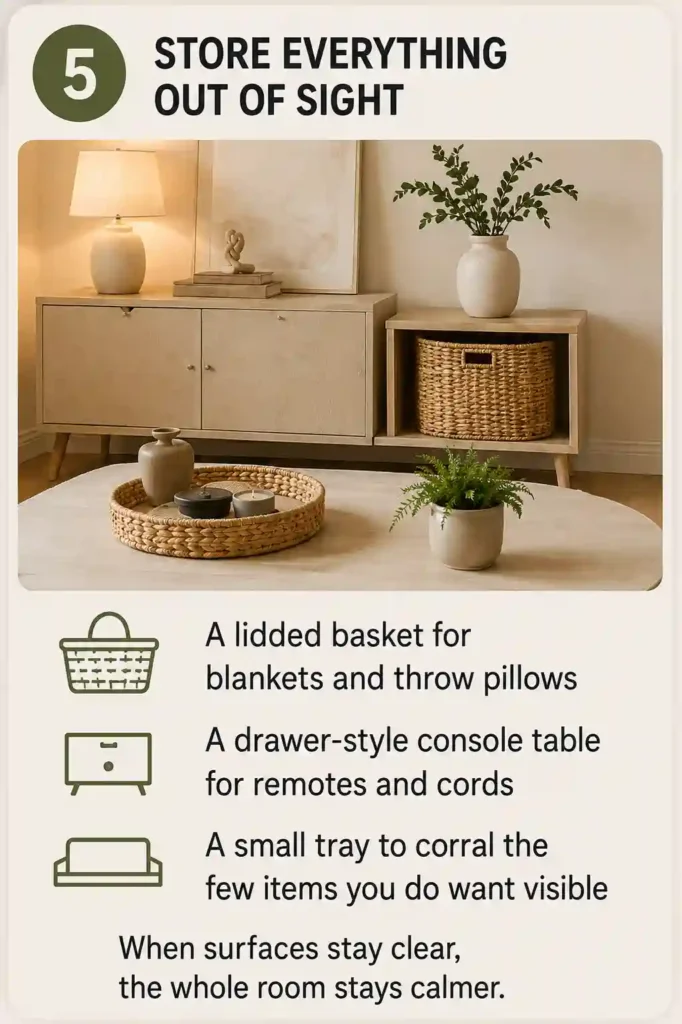
Clutter is the number one enemy of a minimalist living room. Remotes, chargers, mail, and random odds and ends need a home that isn’t your coffee table.
Easy storage solutions:
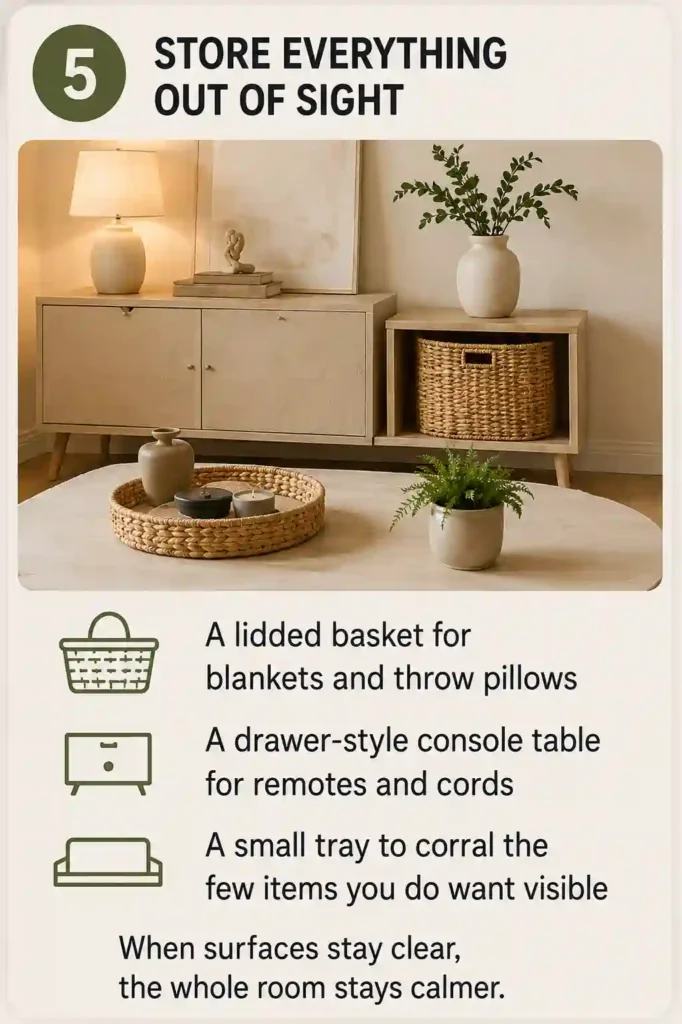
- A lidded basket for blankets and throw pillows
- A drawer-style console table for remotes and cords
- A small tray to corral the few items you do want visible
When surfaces stay clear, the whole room automatically feels calmer.
Use One Statement Piece Instead of Many Small Ones
Minimalist doesn’t mean boring. It just means being selective. Instead of scattering a dozen small decorative objects around the room, choose one or two statement pieces that carry all the visual interest.
This could be a bold piece of art, a sculptural floor lamp, or a textured area rug. Let that one piece shine instead of competing with ten other things for attention.
Keep Textiles Simple and Tactile
Texture is what keeps a minimalist room from feeling cold or sterile. The key is choosing texture through material, not pattern.
- A boucle or linen sofa instead of a patterned one
- A chunky knit throw blanket in a neutral tone
- A woven jute or wool rug instead of a busy printed one
These small tactile details add warmth without adding visual noise.
Edit Your Decor Down to the Essentials
Once everything is in place, do one final pass. For every shelf, table, and surface, ask if you could remove one item and the room would still feel finished. If the answer is yes, remove it.
Minimalist rooms often look effortless, but that effortlessness usually comes from several rounds of editing, not from getting it perfect the first time.
Final Thoughts
A small living room doesn’t need more stuff to feel finished—it needs less, chosen well. By sticking to a tight color palette, choosing fewer and better pieces, and leaving room to breathe, you can create a space that feels calm, spacious, and genuinely luxurious.
Which of these minimalist tips are you starting with? Save this post to Pinterest so you have it ready the next time you’re tempted to overdecorate.