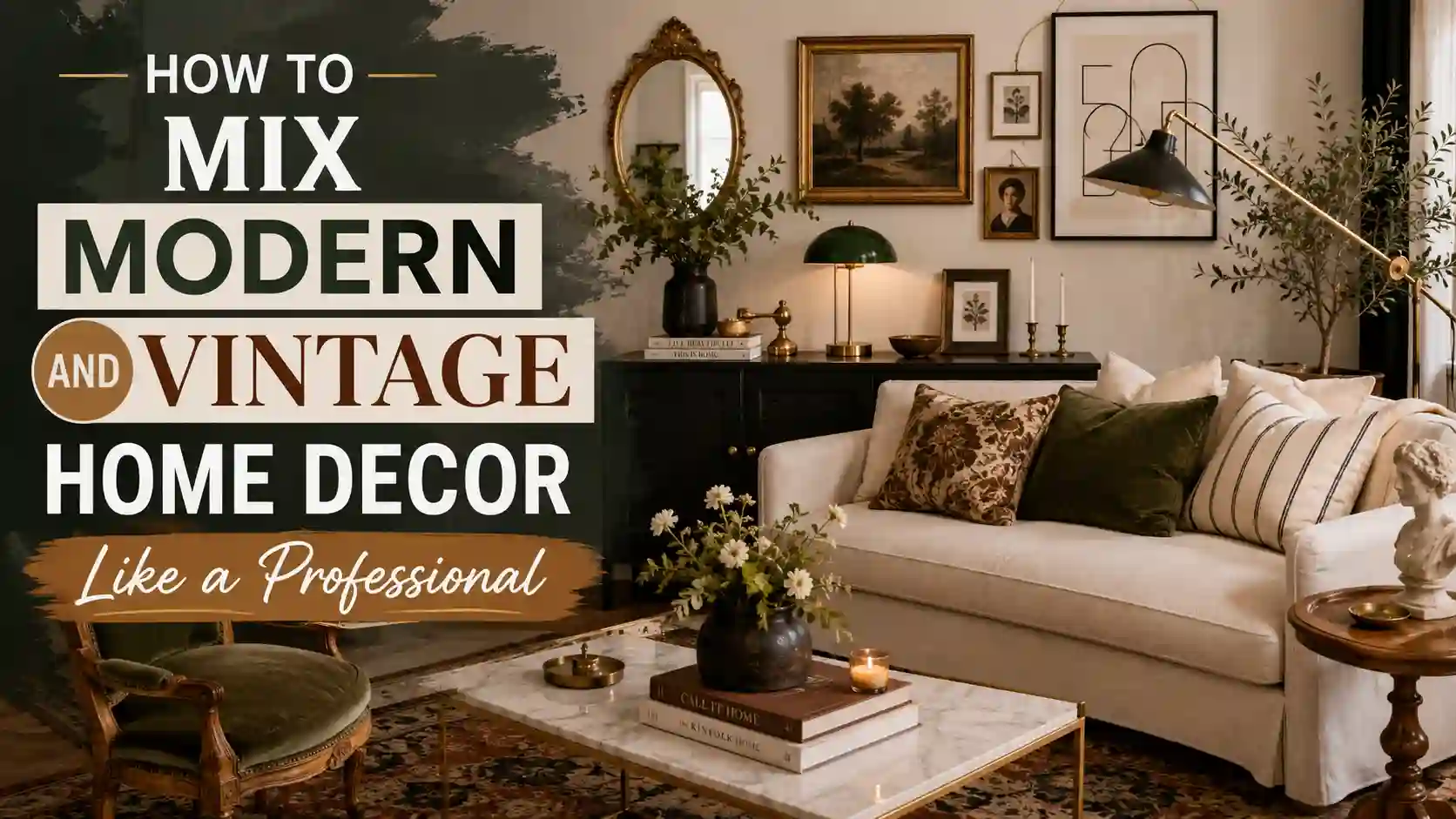
Modern and Vintage Home Decor: There’s a moment that happens in almost every home makeover journey: you walk into a beautifully designed room, and you can’t quite put your finger on why it feels so good. It’s not brand new. It’s not entirely old, either. It just feels layered, like the people who live there actually have a story to tell. More often than not, that feeling comes from one thing — a thoughtful mix of modern and vintage pieces.
It’s one of the most requested looks in interior design right now, and for good reason. An all-new, catalog-matched room can feel a little sterile, like a hotel lobby instead of a home. An all-vintage room, on the other hand, can start to feel like a time capsule instead of a place you actually live. The sweet spot is somewhere in the middle, and getting there isn’t about luck or a big budget. It’s about a handful of design principles that professionals use every single day.
If you’ve ever stood in a thrift store holding a beautiful old lamp, wondering whether it’ll clash horribly with your modern sofa, this one’s for you.
Start With One Standout Vintage Piece
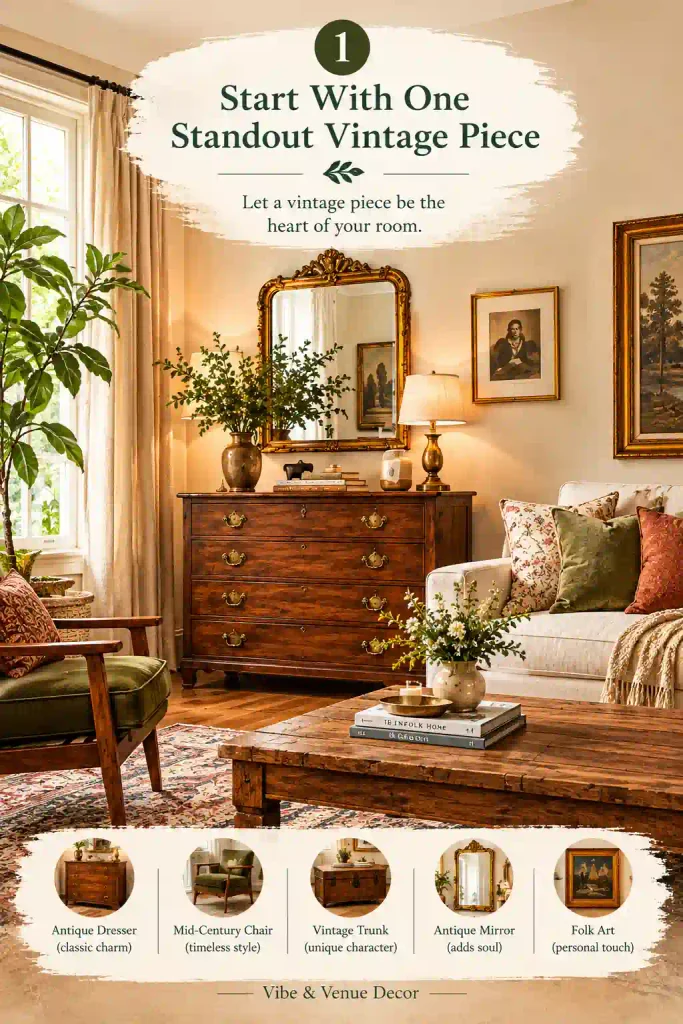
Every great modern-vintage room usually starts the same way: with a single, well-loved older piece that anchors everything else. This might be an antique dresser, a mid-century armchair, or a weathered wooden trunk used as a coffee table. Whatever it is, let it be the emotional heart of the room — the piece with the most character and the most history.
Once you have that anchor, everything else becomes easier to choose, because you’re essentially decorating around a story instead of starting from a blank slate. That vintage piece doesn’t need to compete with the rest of your furniture; it just needs a supporting cast that lets it shine.
Keep the Bones Modern
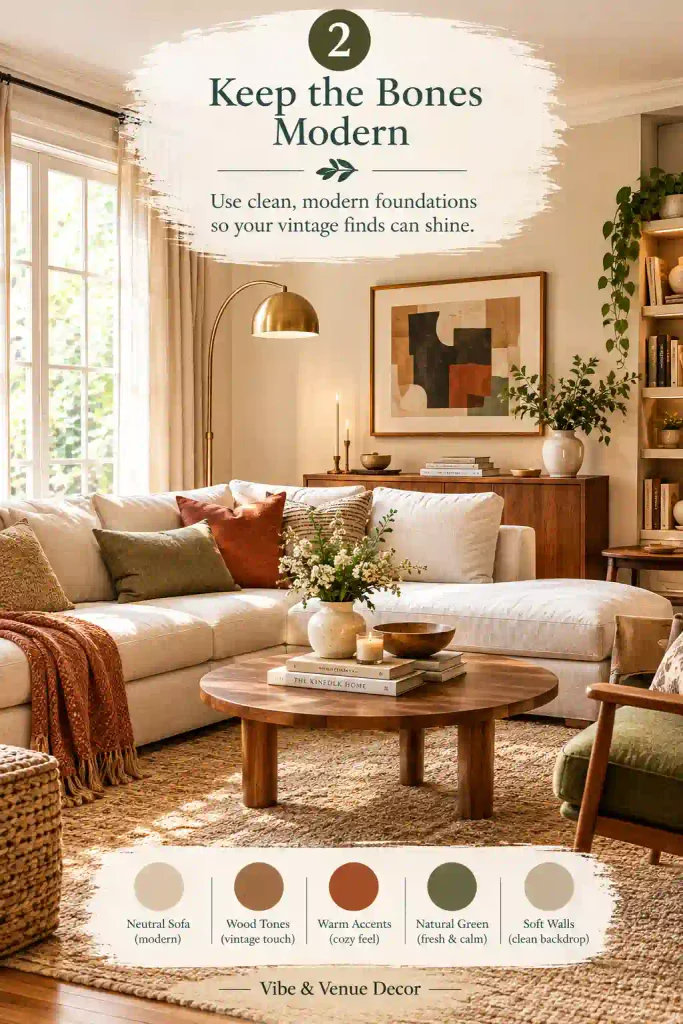
While the accent pieces can lean vintage, the foundational elements of a room — the sofa, the flooring, the wall color — tend to work best when they stay relatively current and clean. A simple, contemporary sofa in a neutral fabric gives an older side table or vintage rug room to actually stand out, rather than competing for attention.
Think of it like a piece of jewelry. A simple black dress lets a statement necklace shine. In the same way, a clean, modern backdrop lets your vintage finds become the focal point instead of getting lost in visual noise.
Repeat Materials and Colors to Tie Eras Together
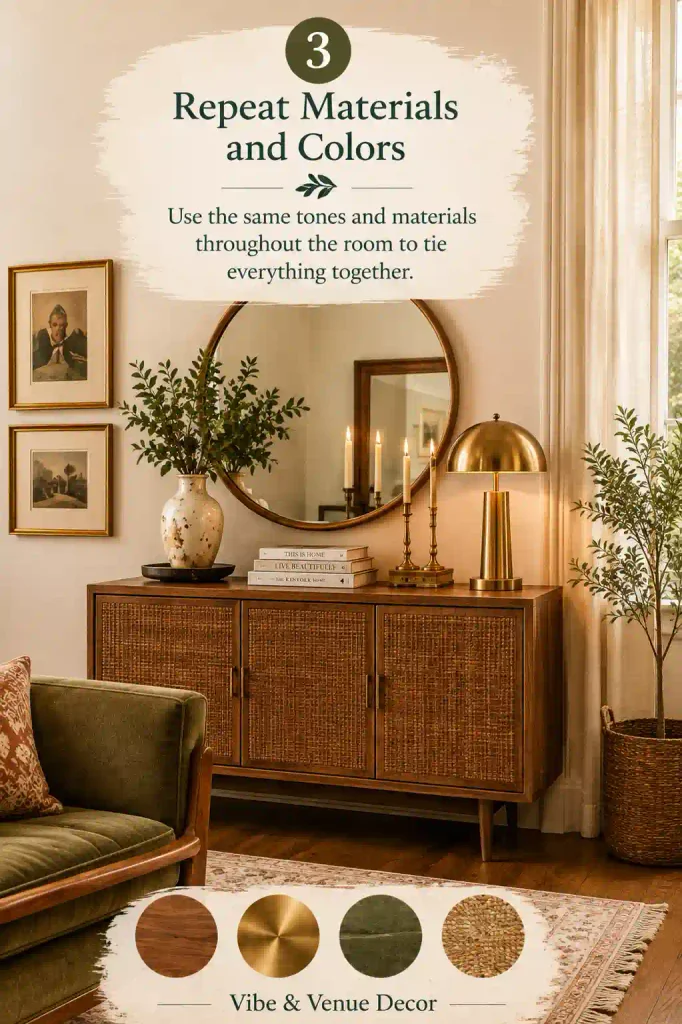
One of the easiest ways to make old and new pieces feel like they belong together is repetition. If your vintage armchair has warm wood legs, echo that wood tone somewhere else in the room — a modern coffee table, a picture frame, a floating shelf. If an antique mirror has a brass frame, bring a little brass back in through your lighting or hardware.
This is a trick professional designers lean on constantly, because it creates a visual thread that ties the whole room together, even when the furniture spans several different decades. Without that thread, a room can start to feel like a collection of unrelated garage sale finds instead of an intentional design.
Balance Ornate With Simple
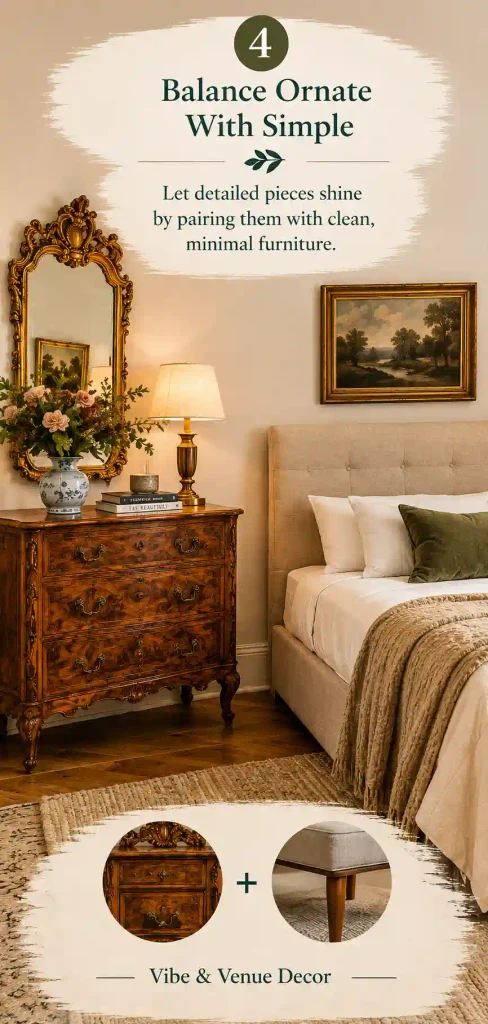
Vintage furniture often comes with more detail — carved wood, curved legs, decorative hardware — while modern pieces tend to favor clean lines and simplicity. That contrast is actually your best friend, not something to avoid. Pairing an ornate vintage piece with something plain and modern lets both pieces breathe instead of overwhelming the eye.
A good rule of thumb: if one piece in the room is highly detailed, let the pieces around it stay simple. An elaborately carved vintage mirror looks incredible above a plain modern console table. That same mirror above an equally ornate vintage cabinet can start to feel busy and cluttered.
Use Textiles as an Easy Entry Point
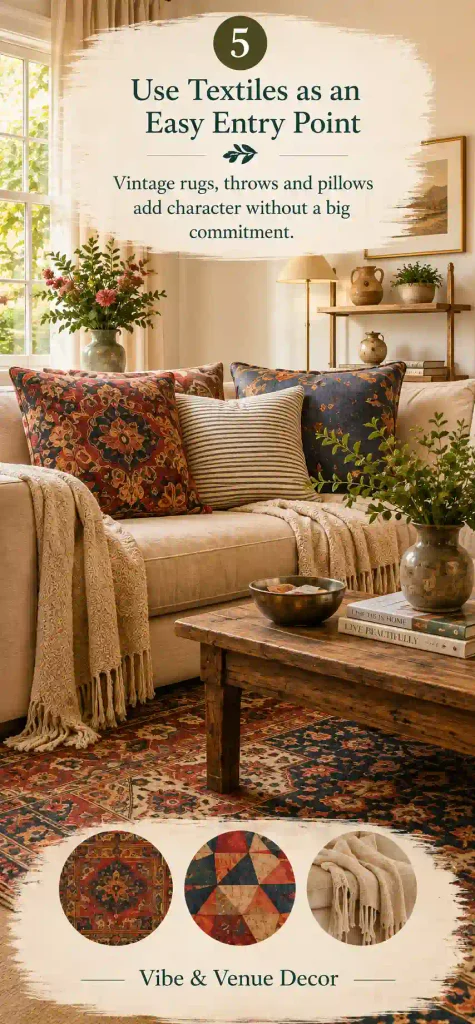
If mixing furniture eras feels intimidating, start smaller. Vintage textiles — an antique quilt, a hand-woven rug, embroidered pillow covers — are one of the lowest-risk, highest-reward ways to bring in vintage character without committing to a big furniture piece. They’re also easy to swap out if you change your mind later.
Layer a vintage runner rug under a modern dining table, or drape a vintage throw blanket over a contemporary sofa. These small touches add warmth and history to a room without requiring a full redesign, and they’re a great way to practice mixing eras before you invest in bigger pieces.
Don’t Be Afraid of a Little Imperfection
Part of what makes vintage pieces so special is that they aren’t perfect. A little wear on a wooden table, a slightly faded rug, a mirror with an aged patina — these imperfections carry a kind of warmth that brand-new furniture simply can’t replicate. Resist the urge to refinish every vintage find until it looks brand new. Sometimes the smartest design choice is leaving well enough alone.
This is often the hardest habit for people to embrace at first, especially if you’re used to everything in your home looking fresh out of the box. But that imperfection is exactly what makes a mixed room feel lived-in and personal instead of staged.
Edit Ruthlessly
The biggest mistake people make when mixing modern and vintage decor isn’t choosing the wrong pieces — it’s choosing too many of them. A room with five vintage statement pieces competing for attention will always feel chaotic, no matter how beautiful each individual item is on its own.
Professional designers tend to follow an unspoken rule: pick your best two or three vintage pieces per room and let everything else stay quiet. If you’re not sure which pieces to keep, try removing one at a time and see how the room feels. Often, less really is more, especially when each remaining piece gets the space to be appreciated on its own.
Let Your Personal History Lead the Way
At the end of the day, the most successful modern-vintage rooms aren’t built from a strict formula. They’re built from pieces that actually mean something — a chair from your grandmother’s house, a mirror you found on a trip you’ll never forget, a lamp that reminds you of your first apartment. Professional designers know that a room full of meaningful objects will almost always feel more collected and more beautiful than one filled with things chosen purely for how they look in photos.
That’s really the heart of what makes this design style so emotionally resonant. It’s not about following trends. It’s about creating a home that holds your actual life inside it — the parts you inherited, the parts you found by accident, and the parts you chose because they simply made you happy.
Final Thoughts
Mixing modern and vintage decor isn’t about following a rigid set of rules. It’s about learning to trust contrast, embrace a little imperfection, and let a handful of meaningful pieces do the heavy lifting. Start with one vintage piece you genuinely love, build a simple modern backdrop around it, and let the rest of the room take shape slowly, one thoughtful choice at a time. That’s how a house full of mismatched decades quietly becomes a home that feels entirely, unmistakably yours.