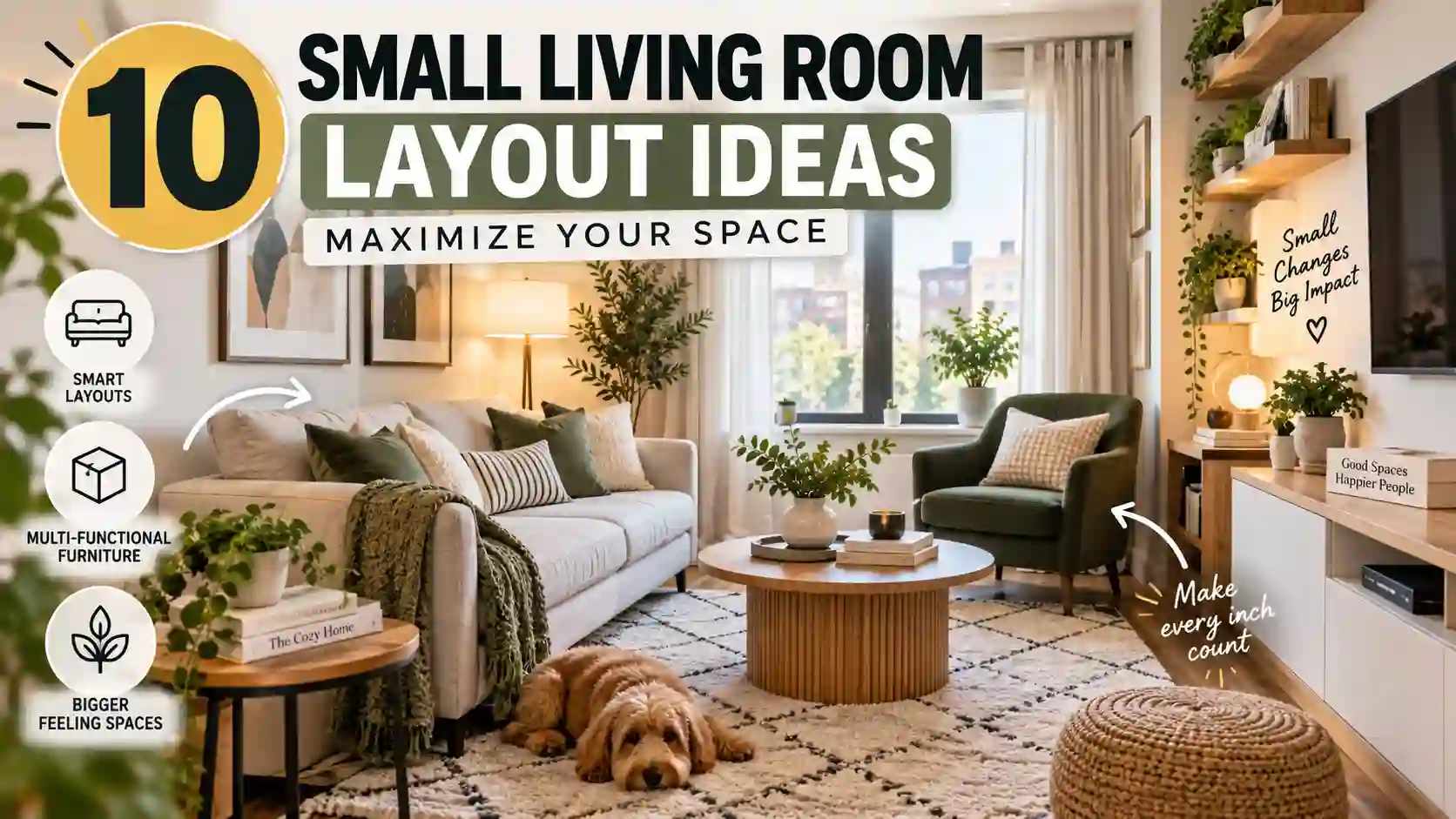
Small Living Room Layout Ideas: My first apartment living room measured 11 by 12 feet. I know because I measured it eleven times, usually while standing in the middle holding a tape measure and feeling a little defeated.
I made every mistake you can make in a space that size. I shoved the couch against the wall, bought a bulky coffee table, and wondered why I felt like I was living in a storage unit with a TV.
It took me almost two years of moving furniture at 10 p.m. to figure out what works. If your living room is small, here’s what I wish somebody had told me. Each idea starts with the mistake I made first.
Mistake: Pushing Everything Against the Walls

It feels logical, but it makes the middle of the room a dead zone. Pull your sofa out a few inches, even just six, and the room feels more intentional. If you have the space, float the sofa in the room and place a narrow console table behind it. That creates a natural boundary and a spot for lamps or a plant.
Mistake: Buying a Sofa Because It Was “Big and Comfy”

Oversized sofas swallow small rooms. Look for a loveseat or an apartment-size sofa around 72 to 80 inches wide, with slim arms and visible legs. Seeing a bit of floor underneath makes the room feel lighter. Comfort doesn’t have to be bulky, and plenty of smaller sofas feel great after a long day.
Mistake: Ignoring the Traffic Path
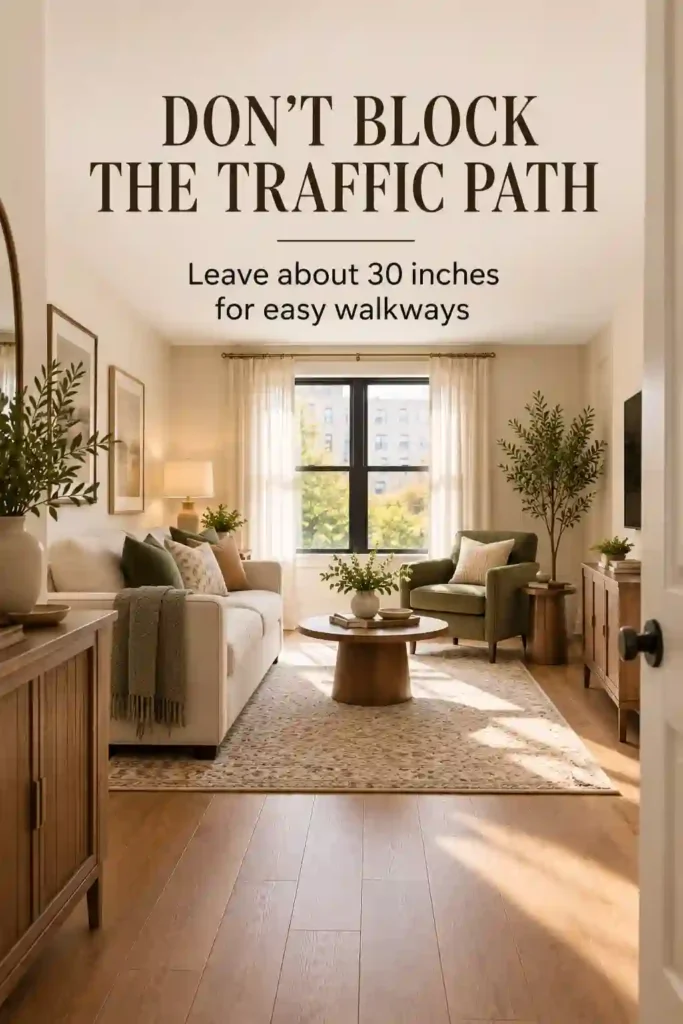
I once placed a chair so that everyone had to turn sideways to reach the window. Guests kept bumping into it, and so did I. Leave about 30 inches for walkways, and try to keep a clear line from the door to the main seating area. Walk the path with your eyes closed if you have to. If it feels awkward, move something.
Mistake: A Coffee Table That Fought Back

My old rectangular table had sharp corners that left bruises on my shins. Switch to a round or oval table, which lets you move around it easily. Better yet, try two small nesting tables you can pull apart for company and tuck together when you need floor space. Expect to pay $40 to $120 for a decent set.
Mistake: Forgetting to Look Up

I used all my floor space and left my walls bare. Floating shelves, tall bookcases, and wall-mounted TV brackets free up floor and give you storage. A tall, narrow bookshelf draws the eye upward and makes the ceiling feel higher. Anchor anything tall to the wall, especially if you have kids or pets.
Mistake: Hiding Storage in Boxes Under the Bed

Wait, that’s the bedroom. In the living room, my mistake was buying furniture that only did one job. Now I choose pieces that work double duty, like an ottoman with a lift-up lid, a bench with baskets underneath, or a media console with closed cabinets. Clutter is what makes a small room feel smaller, so hiding it matters more than you’d think.
Mistake: Choosing a Rug That Was Too Small

A tiny rug makes everything look like it’s floating. Go bigger than you think, ideally one where the front legs of your sofa and chairs rest on it. In a small room, a 5×8 rug usually works well. This ties your seating together and makes the whole area feel larger, not smaller.
Mistake: Letting Curtains Stop at the Window
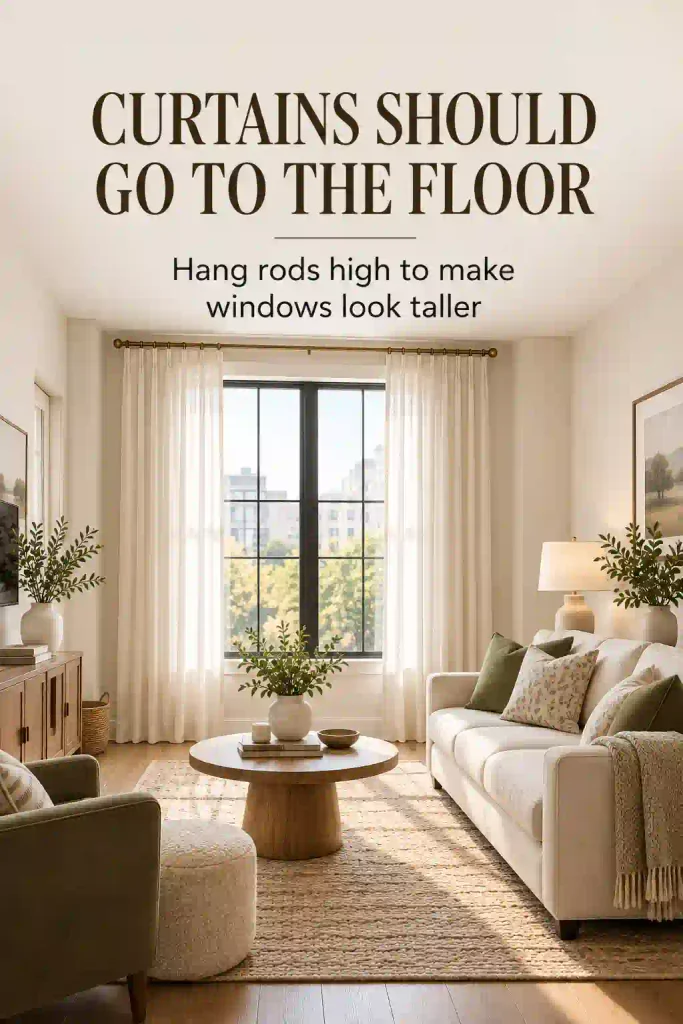
Short curtains chop the wall in half. Mount the rod a few inches below the ceiling, or close to it, and let light fabric fall all the way to the floor. Your windows will look taller and the room will feel more open. Choose sheer or light-colored panels so you still get plenty of daylight.
Mistake: Hanging One Small Mirror

I hung a small mirror over a side table and wondered why nothing changed. Go big. A large mirror across from a window bounces light around the room and doubles the view. Lean a tall floor mirror against a wall if you don’t want to put holes in it. It’s one of the fastest ways to make a small space feel bigger.
Mistake: Going Dark and Heavy
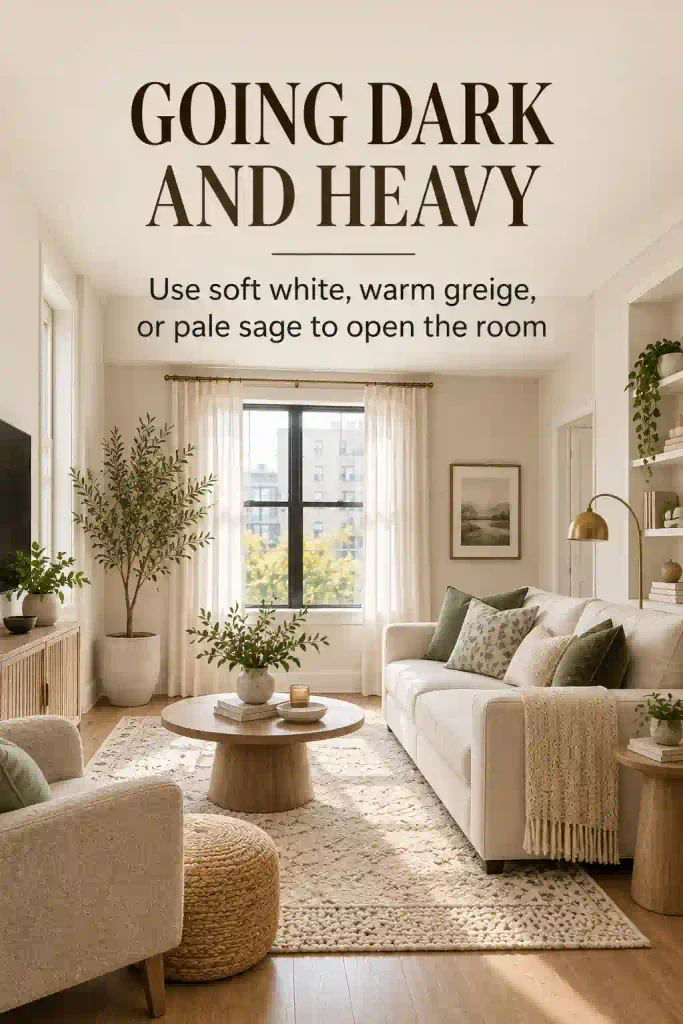
I painted the walls charcoal because a magazine told me it would look “moody.” It looked like a cave. Lighter colors, like soft white, warm greige, or pale sage, reflect light and open up the room. If you love dark colors, use them in small doses, like a pillow or a framed print.
A Quick Measuring Cheat Sheet
Before you buy anything new, try these simple rules:
- Leave 14 to 18 inches between the sofa and coffee table.
- Keep 30 inches clear for main walkways.
- Place your TV so the center sits about eye level when you’re seated.
- Try a floor plan on paper or with painter’s tape on the floor before you move anything heavy.
That last one saved my back more than once. Tape out the shape of the sofa on the floor, live with it for a day, and then decide.
Questions I Get All the Time
Where should the TV go in a tiny living room? On the wall, if you can. A wall mount frees up your console and keeps sightlines clean.
Can I fit a sectional? Sometimes. A small L-shaped sectional can use a corner better than a sofa and a chair. Measure carefully first.
What if I rent? Most of this works without drilling. Use furniture-based storage, lean mirrors, and tension rods for curtains.
Small Doesn’t Mean Less
Last winter, a friend came over after a rough week. She dropped onto my little sofa, pulled the throw over her legs, and said, “I don’t know why, but I always feel better here.”
I looked around that 11 by 12 room, with its slim bookshelf, round table, and crooked lamp, and I realized something. It had stopped being a space I apologized for.
That’s the real point of a smart layout. It isn’t about squeezing more things in. It’s about making room for the moments you actually care about, like movie nights, quiet mornings, and a friend who needs a soft place to land.
So grab a tape measure, shove a few things around tonight, and see what happens. Your small living room can hold more than you think.