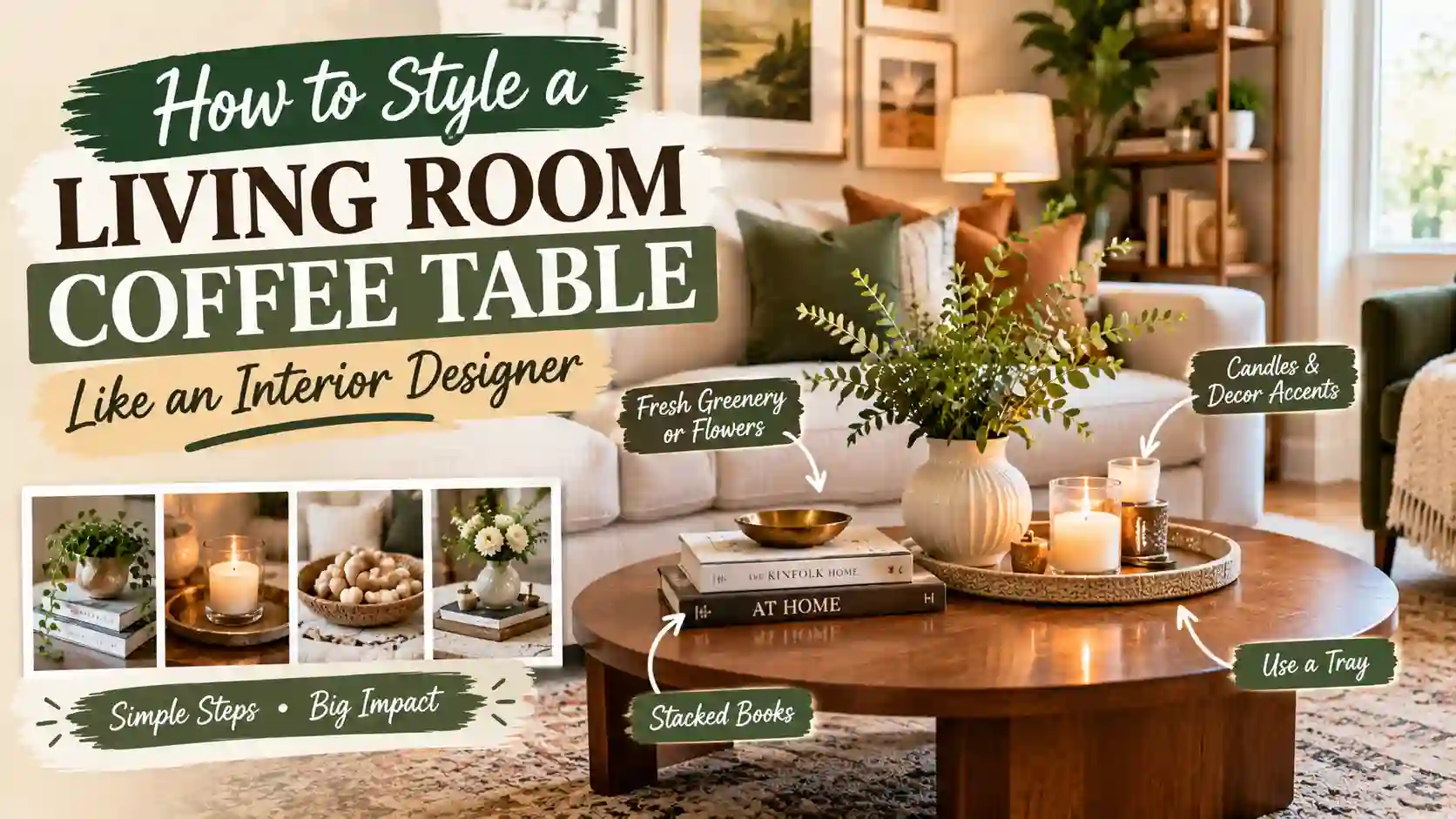
There’s a small, specific kind of pride that comes from walking into your living room and actually liking what you see on the coffee table. Not the version covered in mail, remote controls, and a half-empty water glass — the version that looks like it belongs in a magazine, even though nobody’s coming over and you didn’t hire anyone to do it. That little moment of “oh, this actually looks nice” can shift how the whole room feels to be in.
Most people assume coffee table styling requires either a professional eye or an expensive shopping trip, but the truth is, it comes down to a handful of simple principles that interior designers use over and over again. Once you know them, you can style a coffee table with things you probably already own. Here’s how to actually do it.
Start With a Clean Slate
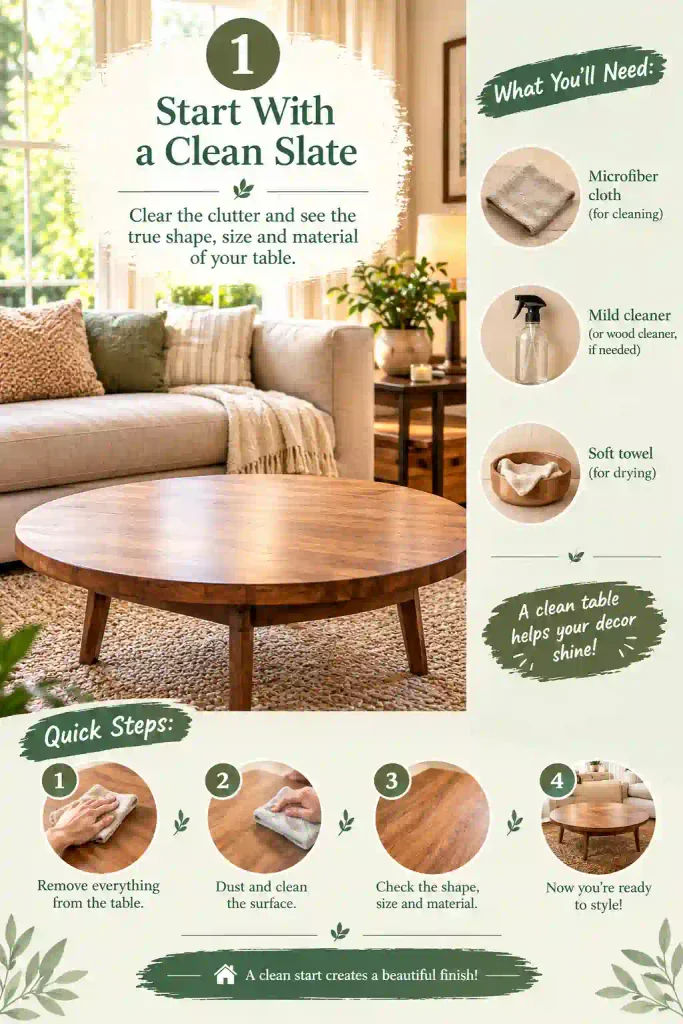
Before you style anything, clear the table completely. This might feel unnecessary, but it matters more than almost any other step on this list. It’s nearly impossible to create an intentional arrangement on top of yesterday’s clutter, and starting from zero lets you see the table’s actual shape and size instead of the pile of stuff currently living on it.
Once it’s empty, take a moment to genuinely look at the table itself — its color, its shape, the material it’s made from. This will guide almost every decision you make next.
Anchor With a Tray
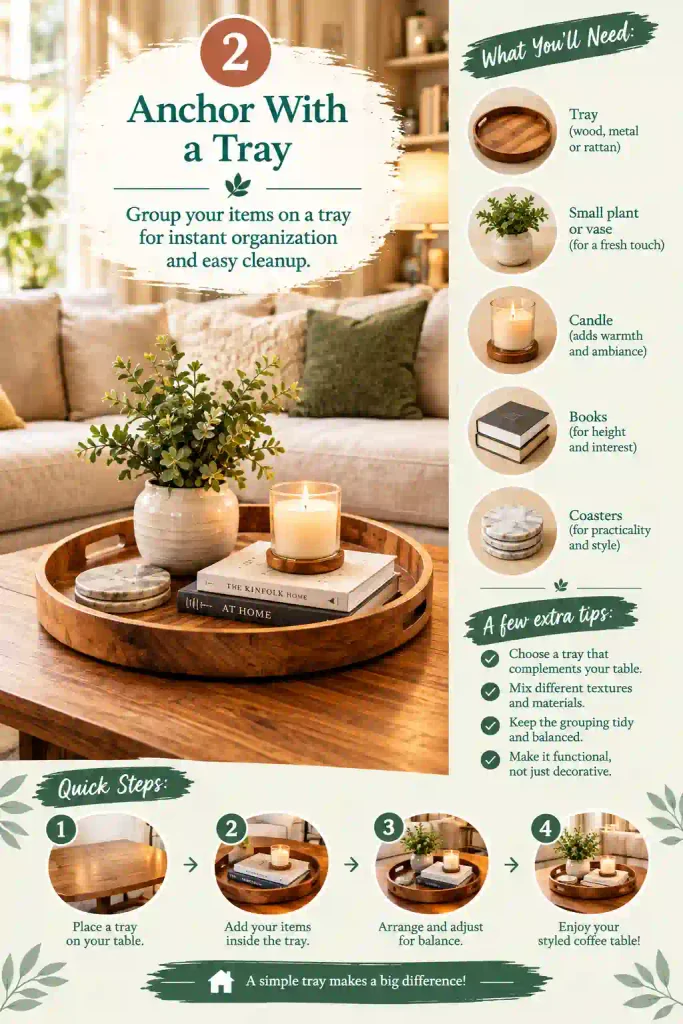
A tray might be the single most useful trick in coffee table styling, and it’s one professional designers rely on constantly. Rather than scattering a handful of small objects directly on the table, group them onto a tray instead. This instantly creates a sense of organization, even if the individual items inside it are a little random.
A tray also makes daily life easier, since you can lift the whole grouping off in one motion when you actually need to use the table, then set it right back down afterward. Choose a tray material that complements your table — wood for a warmer look, metal for something sleeker, woven rattan for texture.
Build in Odd Numbers
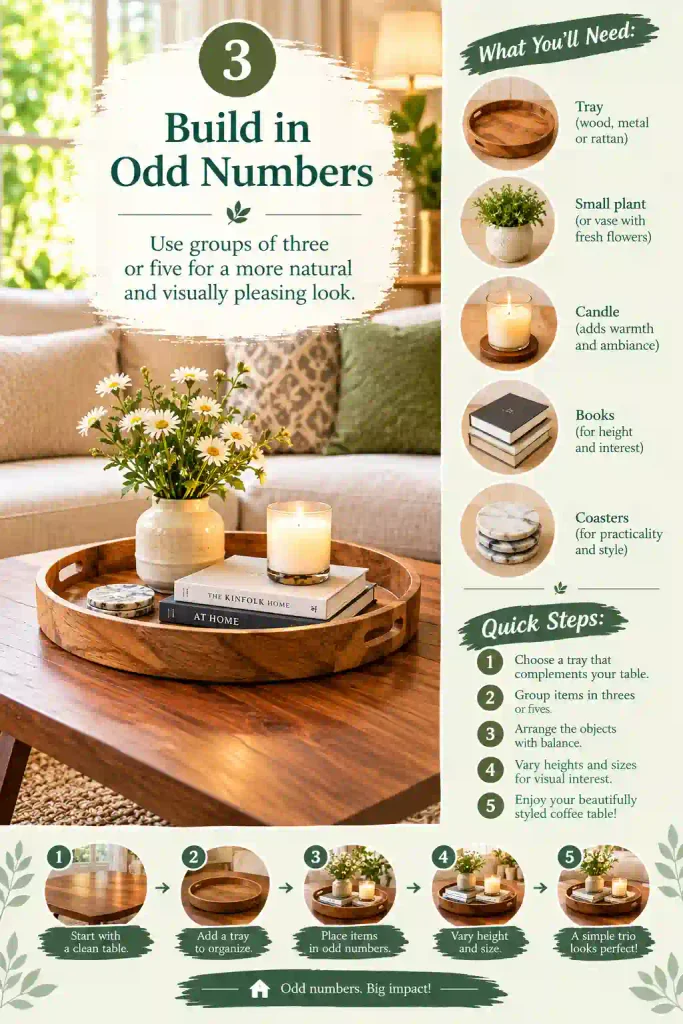
Interior designers lean on odd-numbered groupings constantly, and there’s a real reason it works. Groups of three or five tend to feel more natural and visually interesting to the eye than even groupings, which can start to look overly matched or stiff. Try grouping three objects together rather than two, or five rather than four.
This doesn’t need to be complicated. A candle, a small stack of books, and a single plant already forms a group of three that will look more intentional than any of those items placed alone.
Vary the Height
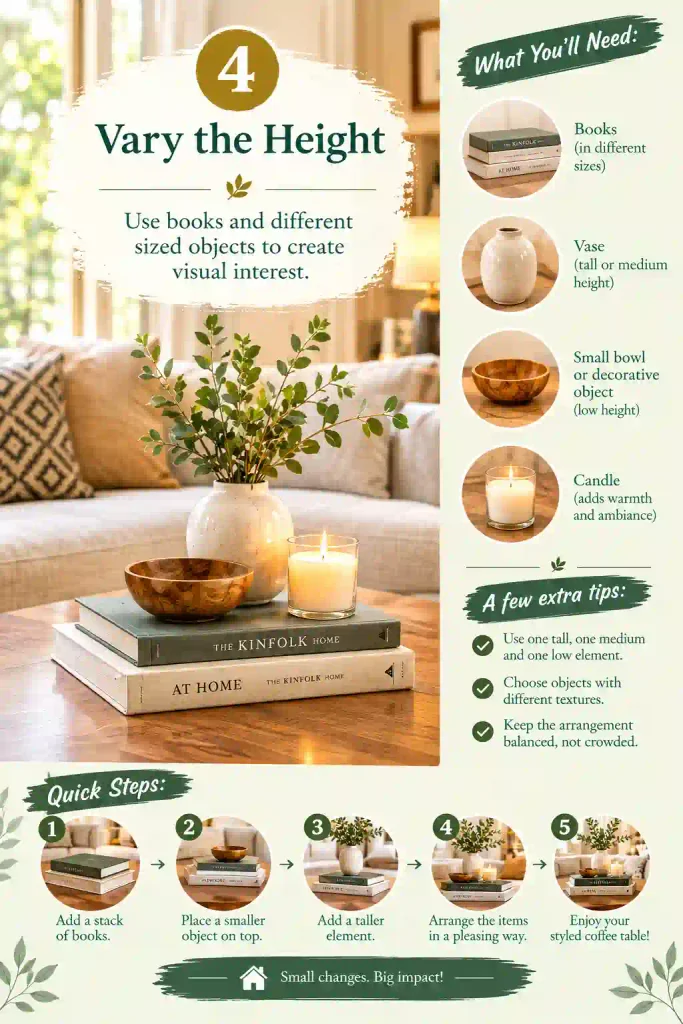
A coffee table full of objects that are all the same height reads as flat and a little boring, even if each individual piece is beautiful. The fix is simple: stack a few books to create height, then place a smaller object, like a small vase or a candle, on top of that stack. This creates a sense of visual movement, almost like a tiny skyline, that keeps the eye interested as it moves across the table.
A good general structure to aim for is one tall element, one medium element, and one low, flat element within each grouping.
Add Something Alive
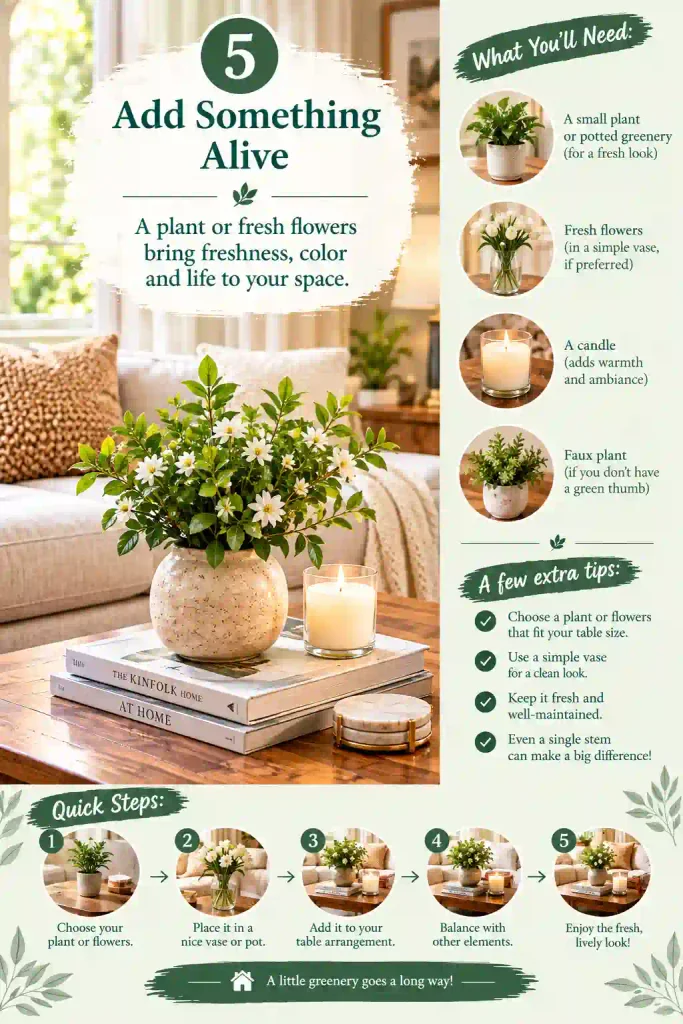
A small plant or a few fresh flowers in a simple vase brings a coffee table to life in a way that no styled object really can replicate. It doesn’t need to be elaborate — a single stem in a bud vase or a small potted succulent works just as well as a large, dramatic arrangement, and it adds a genuine sense of freshness to the whole room.
If you don’t have a green thumb, a well-made faux plant can serve the same visual purpose, as long as it’s a realistic one rather than something obviously plastic.
Stack Books With Intention
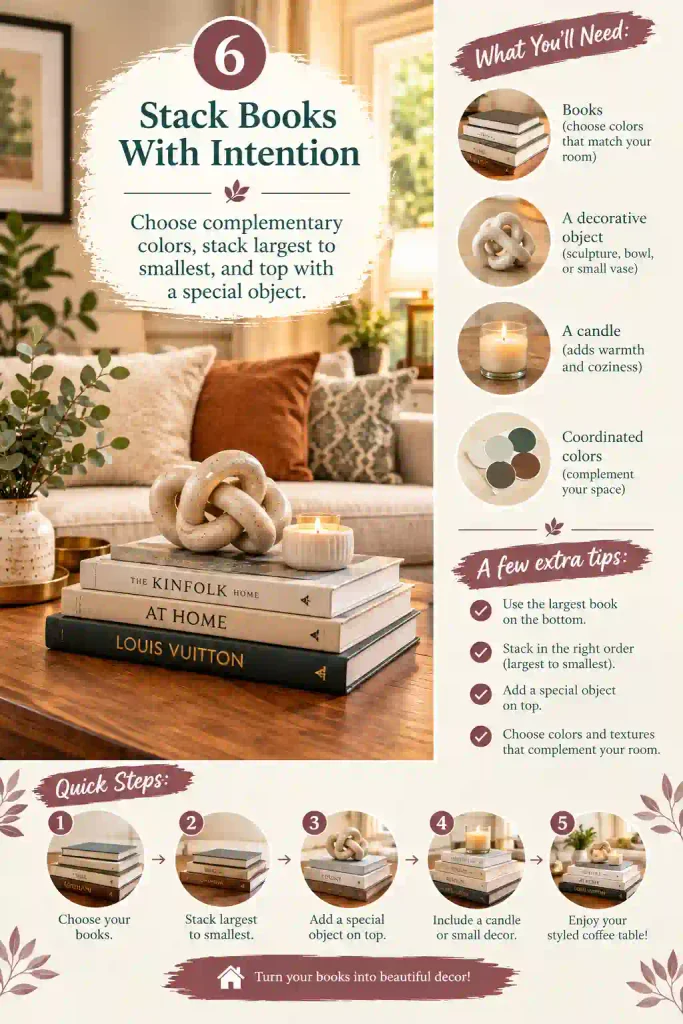
Books are one of the most versatile styling tools available, but the way they’re used matters. Choose books with covers or spines in colors that complement your room, and stack them with the largest on the bottom and smallest on top for a naturally balanced look. A single beautiful object placed on top of the stack, like a small sculpture or a smooth stone, finishes the moment.
This is also a great way to give books you actually love a second life as decor instead of hiding them away on a shelf.
Leave Room to Breathe
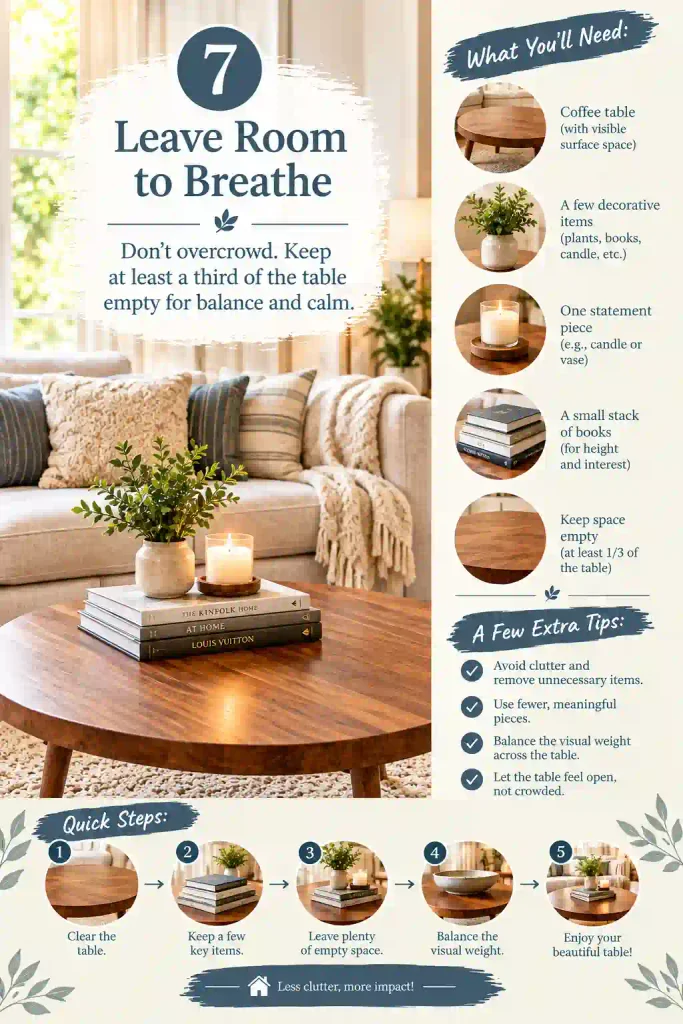
One of the most common mistakes people make when styling a coffee table is simply adding too much. A table completely covered edge to edge in objects starts to feel cluttered no matter how beautiful each individual piece is. Designers tend to follow an unspoken rule of leaving at least a third of the table’s surface completely empty.
That negative space isn’t wasted — it’s actually doing a lot of work, giving your eye somewhere to rest and making the styled objects feel more special rather than crowded.
Choose a Few Textures, Not Just Colors
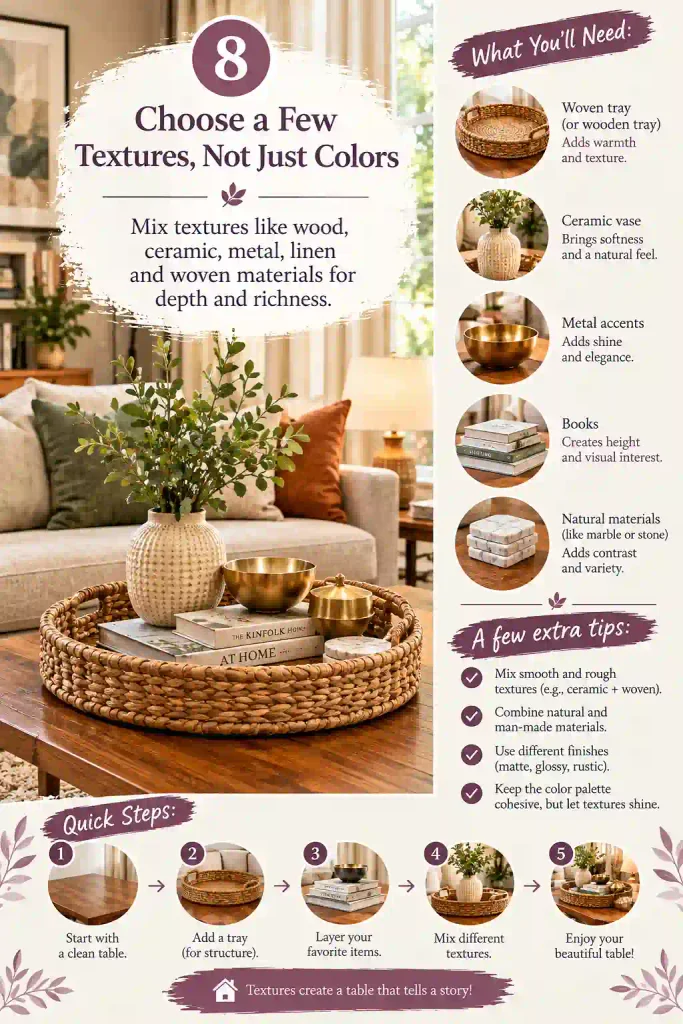
While color coordination matters, texture is often what separates a table that looks “fine” from one that looks genuinely designed. Mix a few different textures within your styling — a smooth ceramic vase, a rough woven tray, a glossy lacquered box, a soft stack of linen coasters. This variety adds visual richness in a way that a perfectly color-matched but texturally flat table never quite achieves.
Make Room for Real Life
A coffee table that’s styled so precisely it can never actually be used defeats the purpose. Leave a small, open corner for your coffee mug, your book, or the remote you’ll inevitably need in the next twenty minutes. The best-styled tables strike a balance between looking beautiful and still functioning as the table people actually gather around.
This small consideration is what separates a table styled for photos from one styled for real life — and honestly, real life is what your living room is actually for.
Personalize the Final Touch
Once the structure is in place — the tray, the books, the height variation — add one object that’s genuinely, unmistakably yours. A small dish that holds sentimental jewelry, a candle in a scent that reminds you of a favorite trip, a small framed photo. This final layer is what keeps a coffee table from looking like it came straight out of a showroom and instead makes it feel like it belongs to your actual life.
Why This Small Detail Matters So Much
A coffee table sits at the literal center of the room where you spend some of your most meaningful time — morning coffee, late-night conversations, kids doing homework, friends catching up after a long week. It’s easy to overlook because it’s small, but it’s also one of the first things your eye lands on when you walk into the room, which means it sets the tone for the whole space more than people realize.
You don’t need a designer’s budget or a big shopping trip to get it right. Start by clearing the clutter, add a tray, group a few meaningful objects in odd numbers, and leave a little breathing room. That’s really all it takes to turn an overlooked surface into one of the most satisfying little corners of your home.