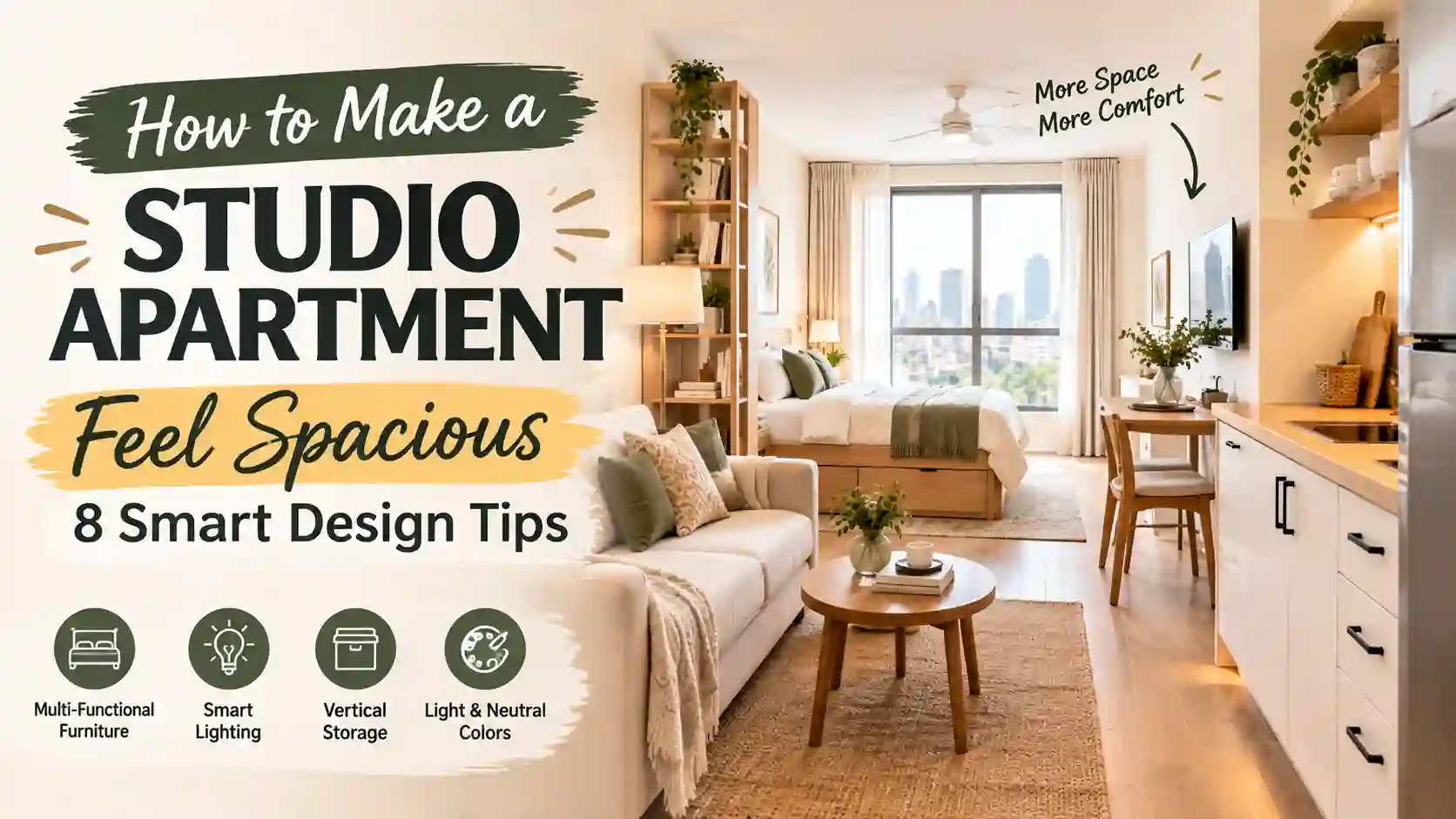
How to Make a Studio Apartment Feel Spacious: There’s a specific kind of tired that comes from living in a space that feels smaller than it actually is. Your bed doubles as your couch, your couch doubles as your office chair, and by 8 p.m. you’ve run out of places to physically go, even inside your own home. If you’ve ever felt boxed in by four walls that hold your entire life — kitchen, bedroom, living room, and workspace all rolled into one — you know exactly what that feeling is.
Studio living has become the reality for millions of Americans, especially in cities where rent climbs faster than square footage does. And while a studio apartment will never magically become a two-bedroom, the good news is that “small” and “cramped” are not the same thing. With the right layout choices, a few smart design tricks, and a little restraint, a studio can feel surprisingly open, calm, and even luxurious.
Here’s how to make that happen, room by room, without knocking down a single wall.
Define Zones Without Building Walls
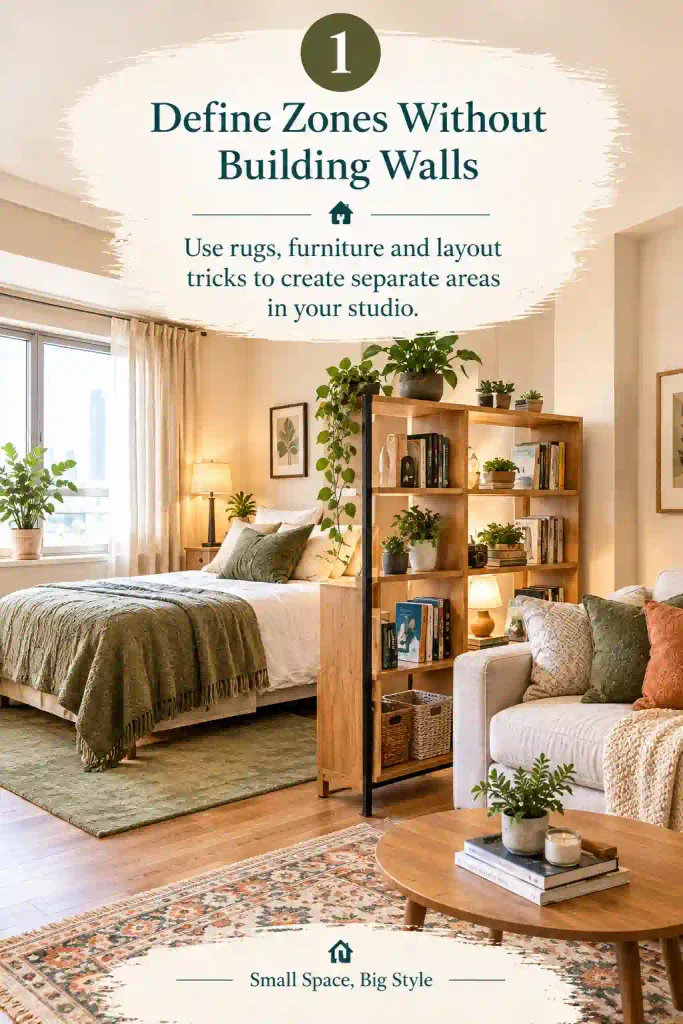
One of the biggest reasons studio apartments feel chaotic is that everything blends together. Your bed is right next to your desk, which is right next to your dining table, and nothing feels like its own space. The fix isn’t more walls — it’s visual zoning.
A rug under your bed can signal “this is the sleeping area” the same way a different rug under your couch signals “this is the living area.” Even something as simple as angling a bookshelf or a low console table can create a subtle boundary between zones without blocking light or sightlines. Your brain reads these small cues as separate rooms, even though there’s technically nothing between them.
Choose Furniture That Works Twice as Hard
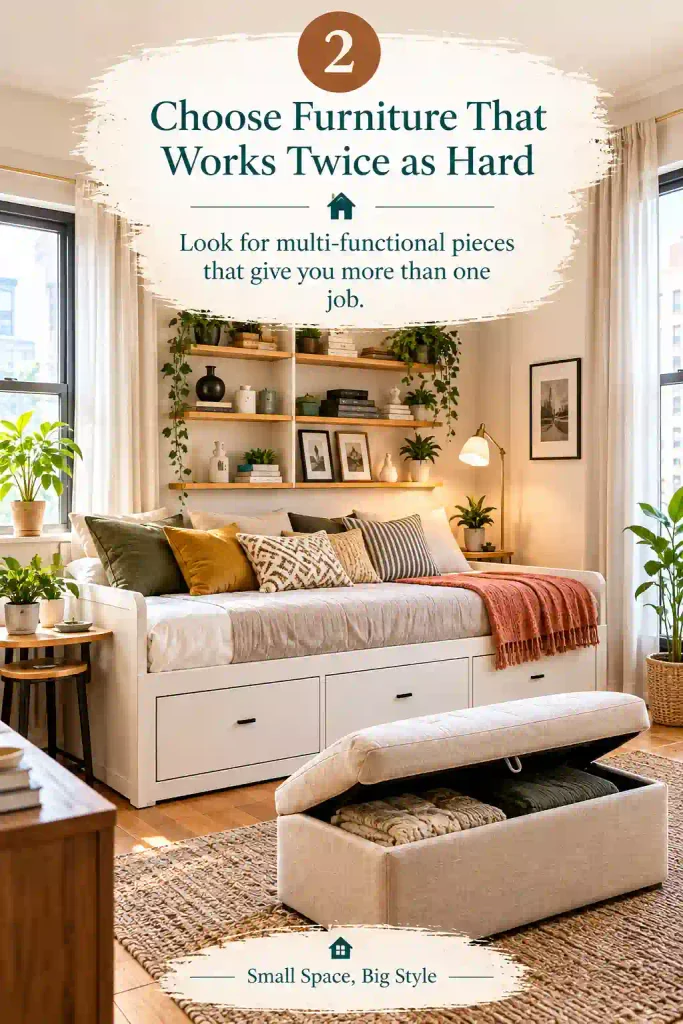
In a studio, every piece of furniture needs a job description longer than one line. A storage ottoman that works as a coffee table, extra seating, and a place to hide blankets is worth far more than a coffee table that only does one thing. A daybed that looks like a couch during the day and sleeps like a bed at night solves two problems with one purchase.
This is where a lot of people get stuck buying furniture that’s simply undersized rather than multi-functional. Undersized furniture doesn’t actually free up space — it just makes the room look sparse and a little sad. Multi-functional furniture, on the other hand, lets you keep everything you need while using less total floor space to store it.
Let the Light In, Then Bounce It Around
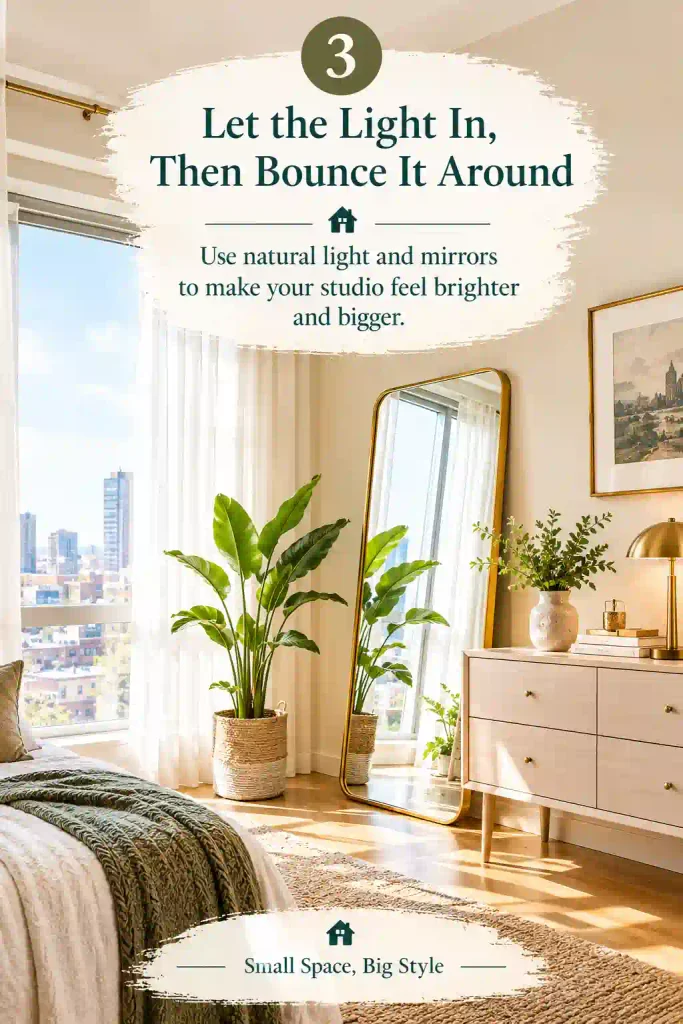
Natural light does more for a small space than almost any design trick you can buy. If your windows are covered in heavy curtains or old blinds, start there. Swap them for something lighter — sheer curtains, simple roller shades, or nothing at all if privacy allows — and let as much daylight into the room as possible.
Once the light is in, use mirrors to spread it further. A large mirror placed across from a window doesn’t just make the room look bigger in photos; it genuinely changes how the space feels to stand in, doubling the sense of depth and brightness. This is one of the oldest tricks in the book for a reason — it actually works.
Go Vertical With Storage
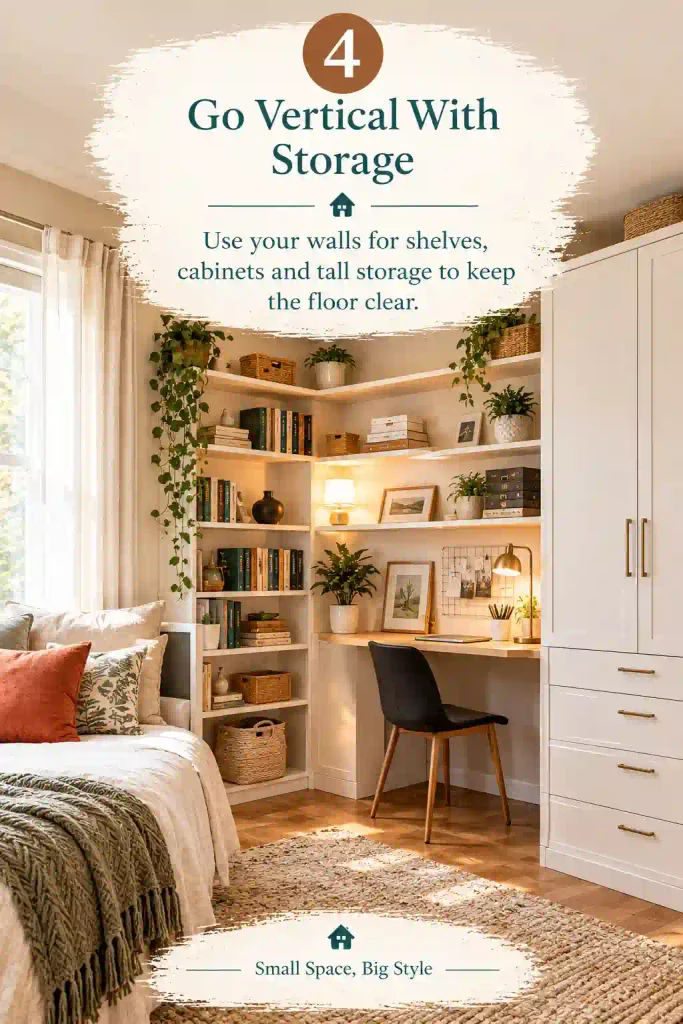
When floor space runs out, the walls become your best friend. Tall bookshelves, floating shelves near the ceiling, and wall-mounted cabinets all take advantage of vertical square footage that would otherwise go completely unused. This is especially important in a studio, where floor clutter is often the single biggest reason a small space feels smaller than it is.
The goal isn’t to cover every wall — it’s to move as much storage as possible off the floor and up toward the ceiling, keeping your actual walking paths clear. A room with clear floors almost always reads as more spacious than a room with more square footage but cluttered surfaces.
Stick to a Simple, Cohesive Color Palette
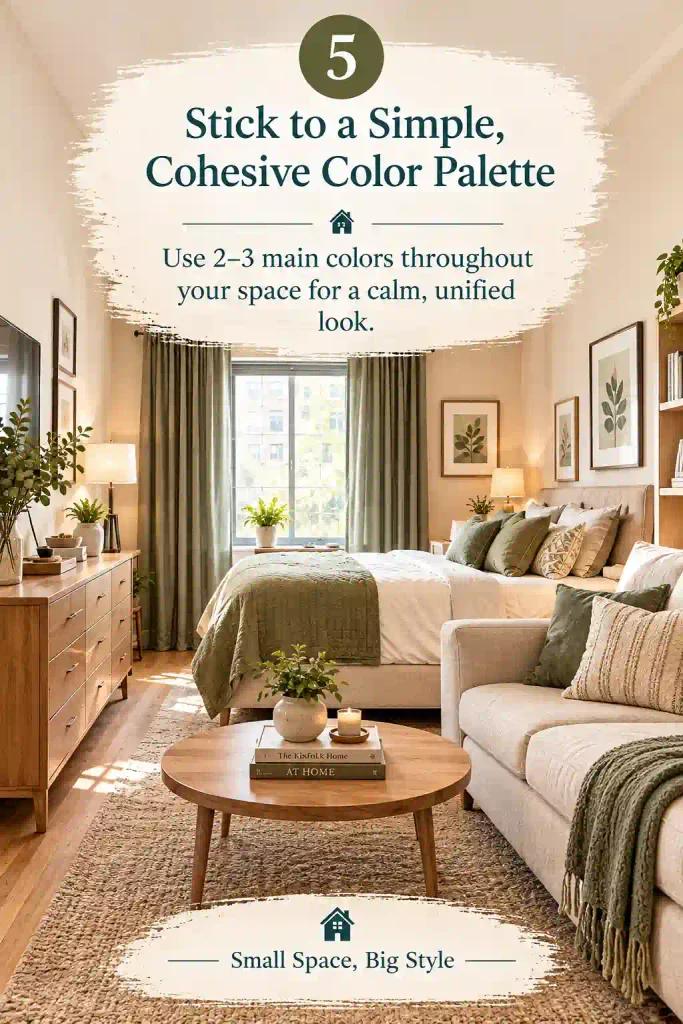
A studio apartment with five different colors competing for attention will always feel busier and smaller than one built around a simple, cohesive palette. This doesn’t mean everything needs to be white — it means choosing two or three main colors and letting them repeat throughout the space, from your bedding to your curtains to your throw pillows.
A consistent palette creates a sense of visual calm that makes the eye move smoothly through the room instead of stopping and starting at every clashing color. That smoothness is part of what makes a small space feel intentional rather than chaotic.
Use Furniture With Legs, Not Bulk
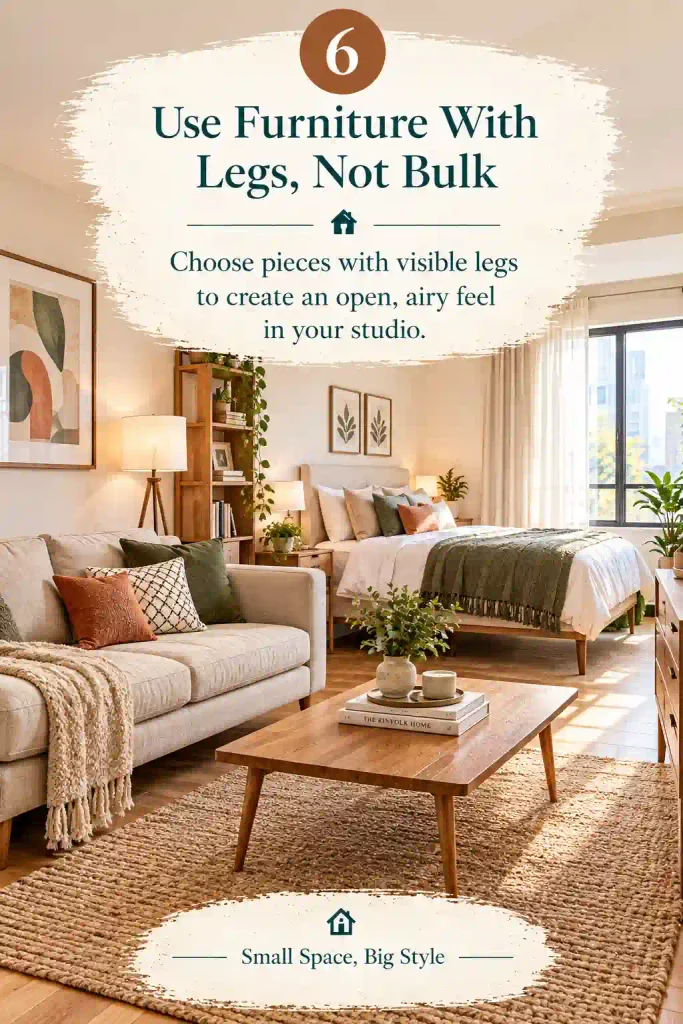
Furniture that sits directly on the floor with no visible legs — like a low platform bed frame or a boxy sectional — tends to make a room feel heavier and more closed in, even if it technically takes up the same footprint as leggy furniture. Pieces with visible legs let your eye travel underneath them, creating a sense of openness that solid, grounded furniture simply can’t match.
This is a small detail, but it adds up fast in a studio, where every visual choice either opens the room up or weighs it down.
Keep Surfaces Clear on Purpose
It’s tempting to let every counter, shelf, and tabletop collect the small items of daily life — mail, chargers, half-read books, stray dishes. But in a studio, visual clutter has nowhere to hide, which means it directly impacts how spacious the whole apartment feels.
Build in a daily five-minute reset where you clear surfaces before bed. It sounds small, but waking up to a clean, open space genuinely changes how the whole apartment feels first thing in the morning, and that feeling tends to carry through the rest of your day.
Create One Cozy Corner That’s Just for You
Ironically, one of the best ways to make a studio feel bigger is to make one small corner feel completely yours. A reading chair by the window, a little desk nook, a small meditation spot with a cushion and a plant — having one dedicated space that isn’t trying to do three jobs at once gives your mind somewhere to rest.
This matters more than it might seem. Living in a space where every corner is multi-purpose can leave you feeling like you’re never fully off duty. One corner that exists purely for comfort, with no functional agenda, can make the entire apartment feel calmer and more spacious in a way that’s more emotional than architectural.
The Real Secret to Spacious Small Living
Making a studio apartment feel bigger isn’t really about tricking the eye, even though a lot of these tips do exactly that. It’s about designing a space that respects how you actually live in it — where your sleep, your work, and your downtime each get their own small sense of place, even inside one room.
A studio apartment will always have physical limits. But the feeling of being boxed in is often more about clutter, poor zoning, and mismatched furniture than it is about actual square footage. Fix those, and even the smallest apartment can start to feel like more than enough.