
Mid-Century Modern Interior Ideas: I met Ruth at an estate sale, arguing with a stranger over a teak sideboard. She lost. She laughed about it anyway and invited me to see the house where she’d lived since 1983, a 1958 ranch with a low roof and big windows.
I walked in expecting a museum. What I found was the warmest room I’d ever stood in. So I asked if I could come back with a notebook, and over a few Saturday afternoons, she taught me what mid-century modern really is. Here’s what she said.
Start with the shape, not the stuff
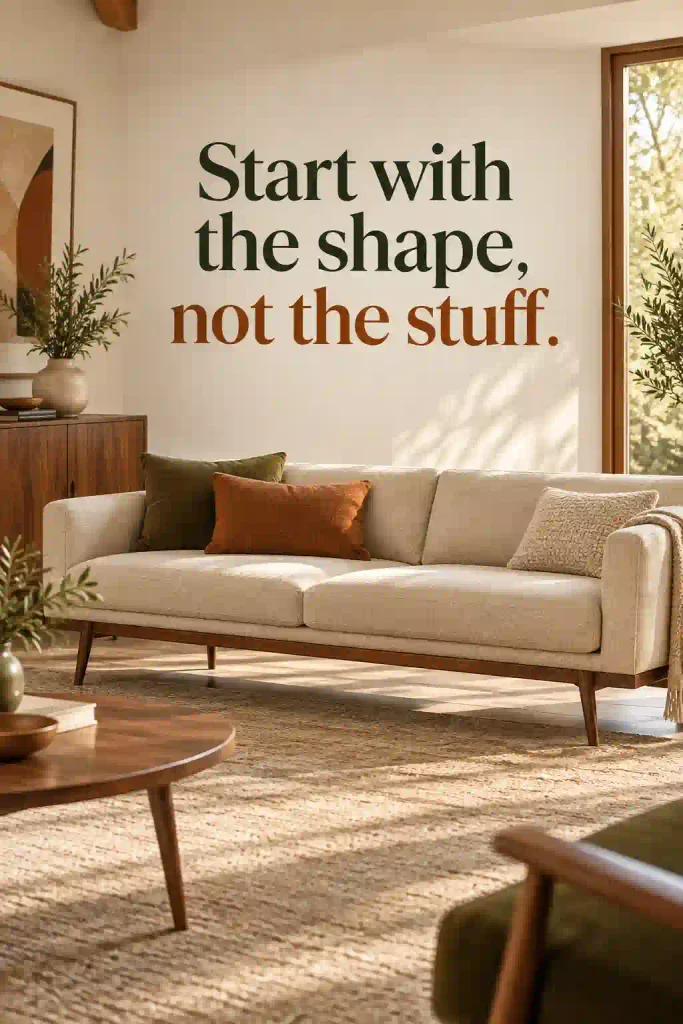
Ruth pointed at her sofa. Low back, slim wooden legs, clean edges. “See how you can see under it?” she said. “That’s the whole secret. The room breathes.”
Mid-century furniture sits lighter on the floor, with tapered legs and simple lines. If you’re buying new, look for a sofa around 72 to 84 inches wide with exposed wood legs. Decent ones start around $600.
Wood is the main character
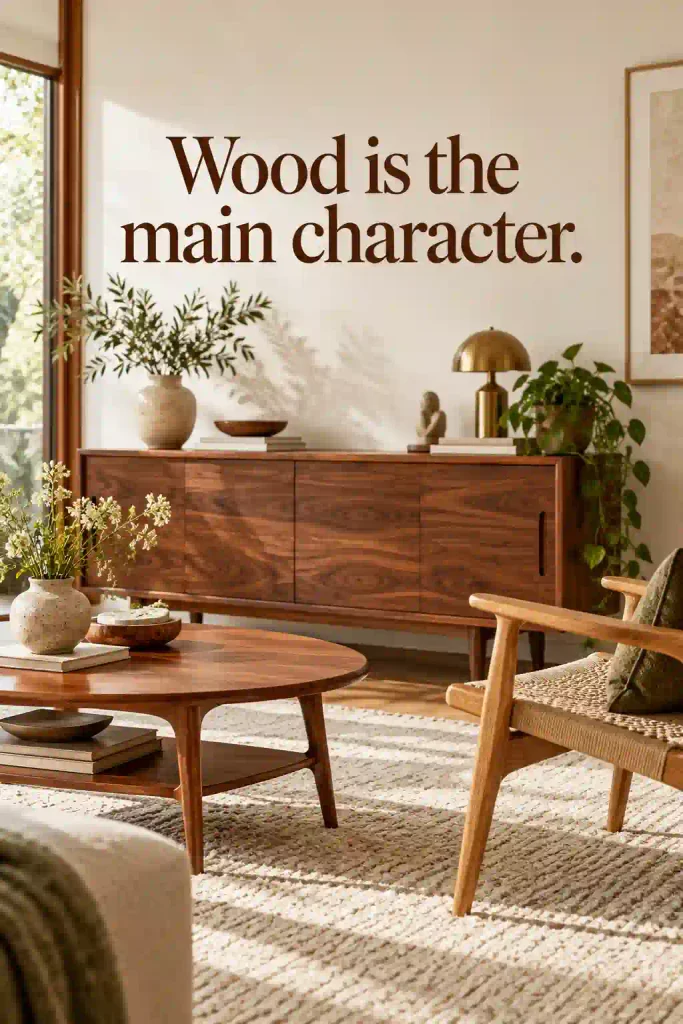
Her walls were plain, but the wood glowed everywhere: a walnut credenza, a teak coffee table, an oak chair. “Warm wood makes a room feel lived in,” she told me.
Stick with walnut, teak, or oak tones, and mix them a little. Perfect matching looks stiff. Secondhand shops and online marketplaces often have solid wood pieces for $50 to $200, and a little furniture oil brings them back to life.
Don’t be scared of color. Just pick it carefully
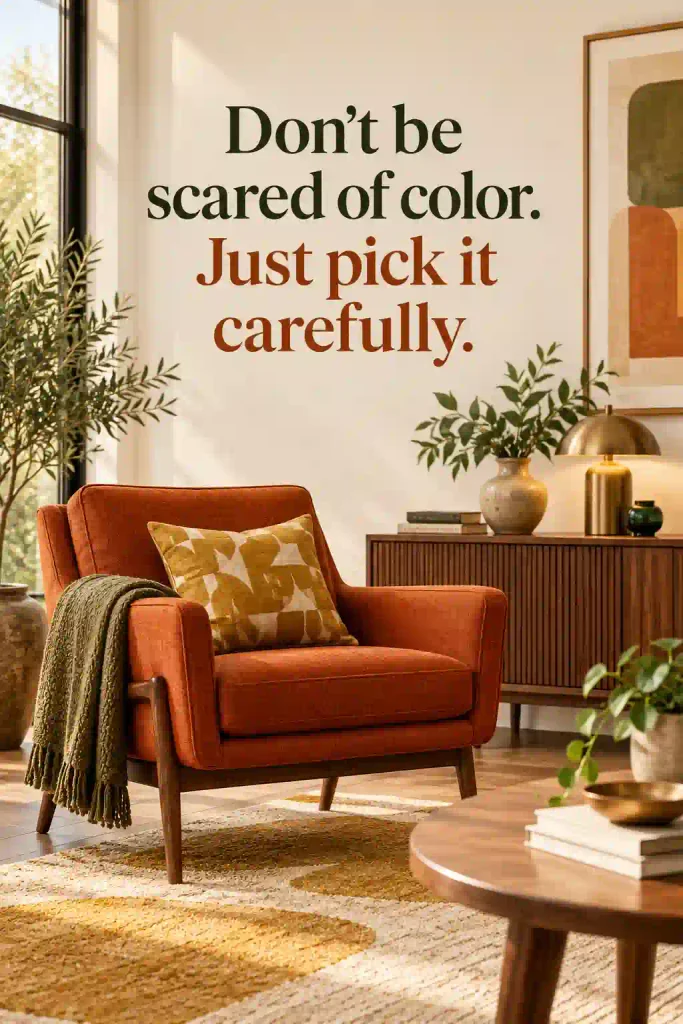
Ruth’s walls were soft cream, but her armchair was burnt orange, and a small rug had mustard in it. “Pick one or two bold colors and let everything else stay quiet,” she said.
Think olive green, mustard, burnt orange, teal, and warm brown. Use them in pillows, a chair, or art. The rest of the room stays neutral, so the color feels like a choice and not an accident.
A good lamp is worth more than a good painting

She had a tall arc floor lamp over her reading chair, and a small ceramic lamp with a linen shade on the credenza. “Overhead light is for cleaning,” she said. “Lamps are for living.”
Shop for globe lamps, arc lamps, or tripod floor lamps, and use warm bulbs around 2700K. Reproductions start around $40 to $100, and vintage ones can be even cheaper if you’re patient.
Let the windows do the decorating
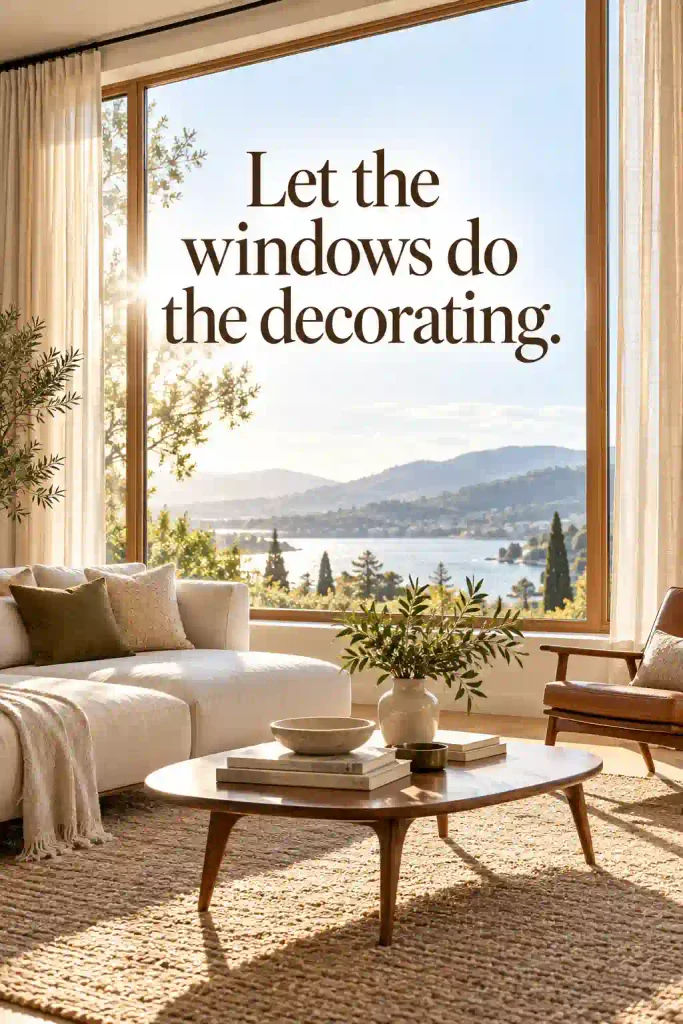
Mid-century homes were built around big windows, and Ruth kept hers nearly bare. She hung simple linen panels that let light spill through. “People spend thousands on art,” she said. “I’ve got a sunset every night for free.”
If your windows are small, you can still copy the feel. Use light, airy curtains hung high and wide, and keep the sill clear so more daylight comes in.
Hang art that makes you stop
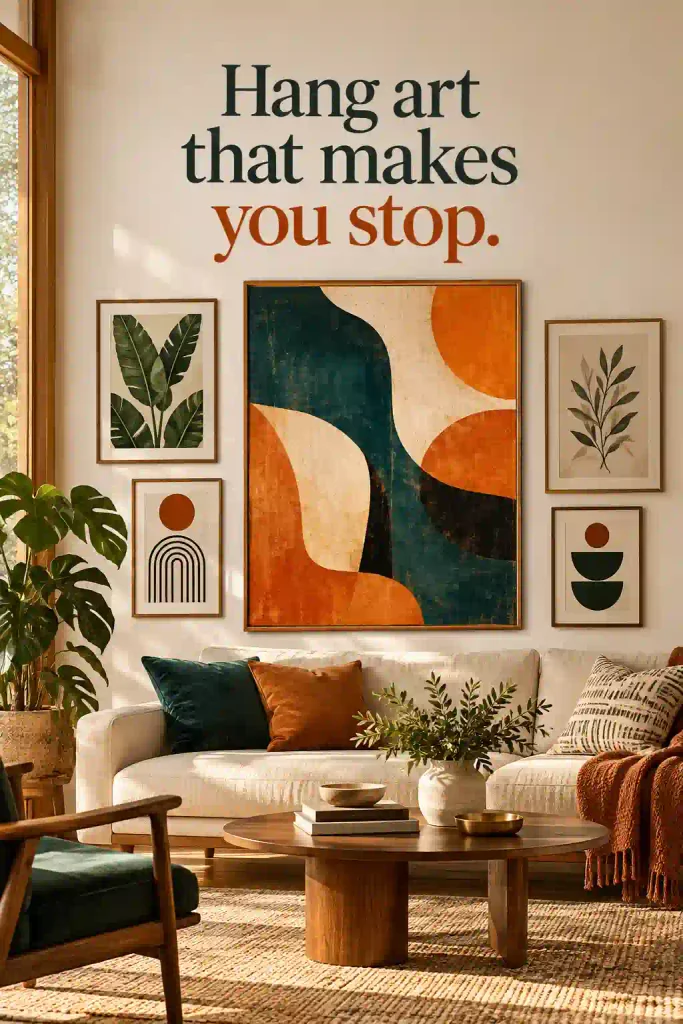
Over her sofa hung a big abstract print in orange and teal. Nearby, a small cluster of framed botanical drawings. “I don’t care what it costs,” she said. “I care if it makes me look twice.”
Look for geometric prints, abstract shapes, or botanical and atomic-era designs. Thrift stores and flea markets often sell great frames for under $15, so you can swap prints in them for next to nothing.
Every room needs one sculptural thing
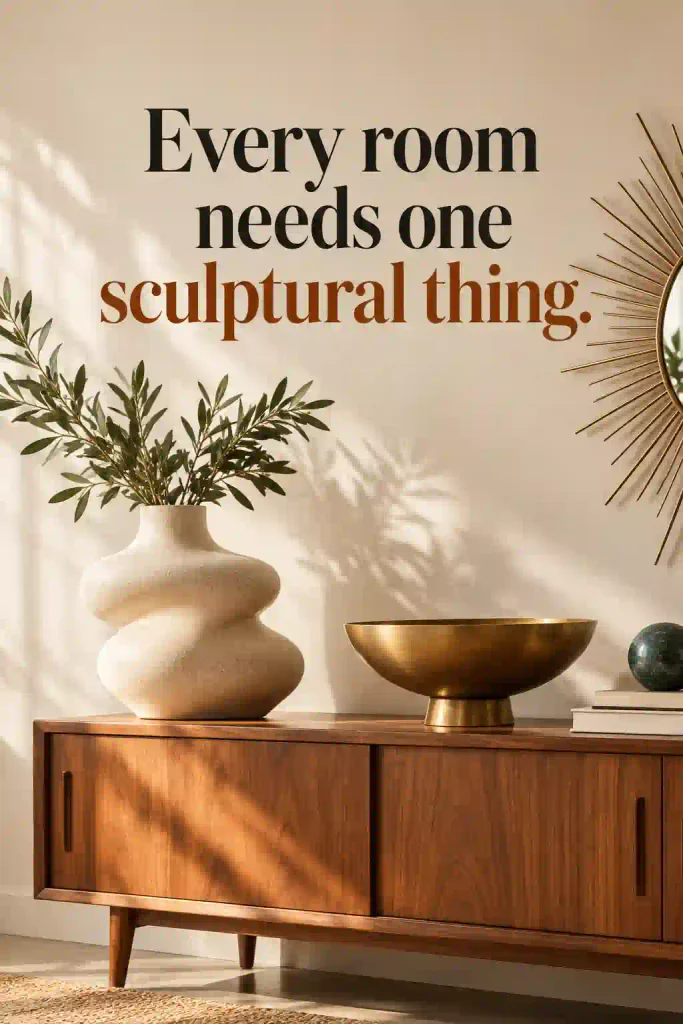
On her sideboard sat a chunky ceramic vase and a sunburst clock. “Something with a shape, like a little piece of art you can touch,” she called it.
Add one or two statement pieces, like a starburst mirror, a bold bowl, or a sculptural lamp base. Keep the surface around them clear so each one gets noticed. Three objects on a shelf looks styled, and ten looks cluttered.
Plants are part of the furniture
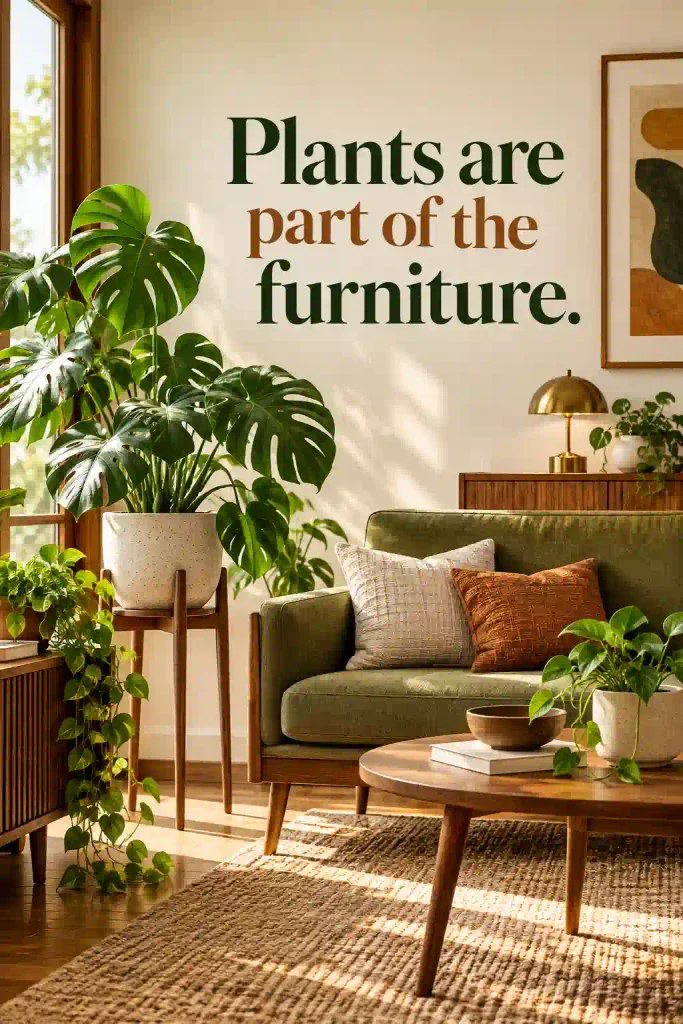
A big rubber plant stood in a woven basket by her window, and a trailing pothos hung from a wall hook. “Mid-century folks loved bringing the outdoors in,” Ruth said.
Choose snake plants, monstera, rubber plants, or fiddle leaf figs, and set them in simple ceramic pots on slim wooden plant stands. A basic stand costs about $25 to $50, and it lifts a plant to just the right height.
Texture keeps things from getting cold
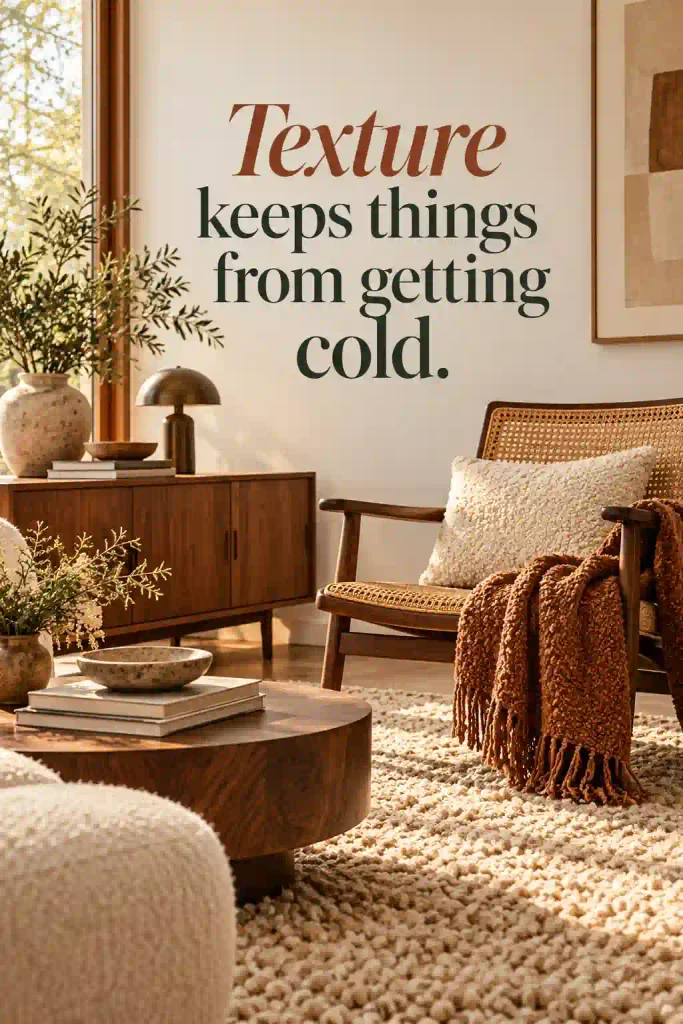
Clean lines can feel stiff on their own, which is why her room had a shaggy wool rug, a nubby throw, and a cane-back chair. “Smooth, rough, woven, soft,” she said. “You need a bit of everything.”
Add a wool or jute rug, a boucle pillow, or a cane or rattan piece. Mixed textures keep a simple room from feeling like a showroom.
Don’t buy it all in a year
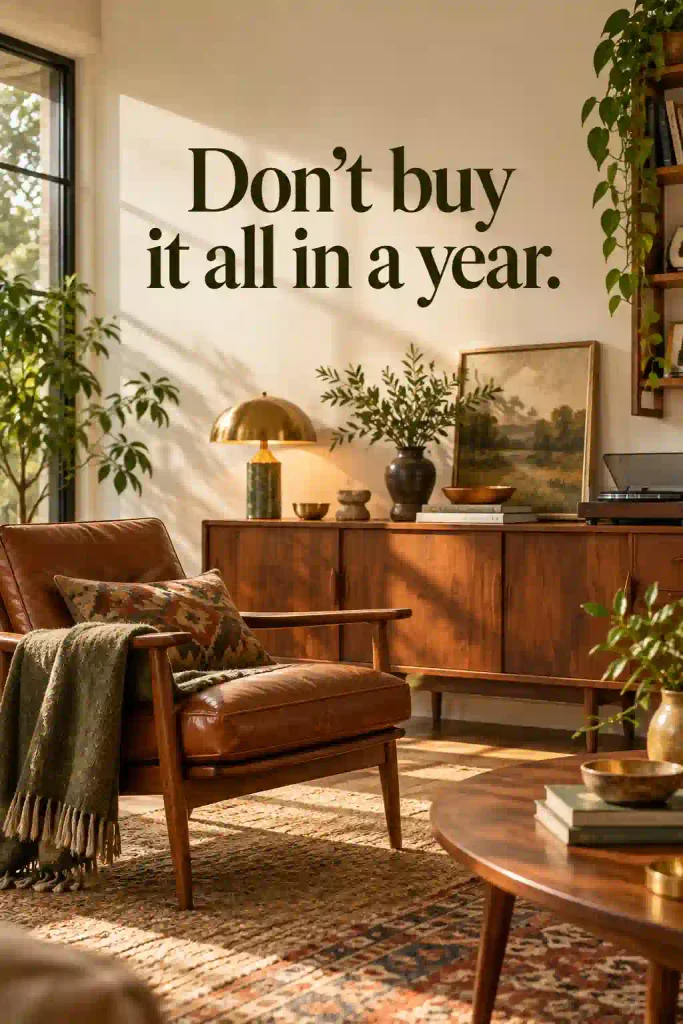
When I asked how she built the room, Ruth laughed. “Forty-one years. One piece at a time.”
That was the best advice I heard. Authentic mid-century rooms feel collected, not ordered from one catalog. Start with a single great piece, like a chair or a credenza, and build around it slowly. You’ll end up with a room that tells a real story.
Quick Questions I Asked Ruth (and Google Too)
Do I need real vintage furniture? Not at all. Reproductions look great and cost less. Mix a few real vintage finds with new pieces if you like.
Will this style work in a small apartment? Yes. Those slim legs and low lines save visual space, which makes small rooms feel bigger.
Is mid-century modern going out of style? It’s been popular for over 70 years. Clean lines and honest materials don’t expire.
What Stayed With Me
On my last visit, Ruth made coffee and we sat in two low chairs by the big window. The afternoon light had gone gold across the floor. She was quiet for a while, then said, “My husband picked this chair in 1962. I wouldn’t trade it for anything.”
I looked around at the wood, the lamps, and the plants, and understood that I’d been wrong about the style. It isn’t about owning famous furniture or following rules. It’s about a home that feels calm and honest, filled with things somebody loved.
So pick one idea from this list and start there. Maybe it’s a lamp, or a wooden chair from a thrift store, or an orange pillow on a plain sofa. Give it a few weeks. Then add another.
Decades from now, someone might sit in your chair and feel what I felt in Ruth’s living room: that a house can hold on to the people who lived in it.